Showing posts with label 1994. Show all posts

25 Sept 2021

CMX - Aura (1994)


1) Mikään ei vie sitä pois; 2) Sametinpehmeä; 3) Elokuun kruunu; 4) Ruoste; 5) Nainen tanssii tangoa; 6) Turkoosi; 7) Kultanaamio; 8) Raskas; 9) Talvipäivänseisaus; 10) Työt ja päivät; 11) Pilvien kuningas; 12) Aura

More focused and unafraid to be beautiful at times - practically a reinvention for the band, and it's now time to take them seriously.

Key tracks: "Elokuun kruunu", "Ruoste", "Kultanaamio"

I've sometimes seen Aura described as the Finnish OK Computer and while that's a slightly hyperbolic sentiment and the two albums have very little in common musically, there is a seed of truth in there as they do both represent a turn of the tide in the popular pop culture context. Much like Radiohead's epic third album signalled the shift from the bright-eyed optimism of Britpop to the anxiety-exhausted final years of the 1990s in the UK, Aura has become the representative of the shift in Finnish rock music, with the general audiences well and truly adopting the nearly endless wealth of weird rock bands that the late 80s-early 90s Finland was giving birth to. In the wider scheme Aura didn't start the revolution, but it became its face, representing the upgrade from cult success ti actual success for CMX and many of their peers, as all these lyrically adept and musically unique acts who had been bubbling underneath became unlikely radio stars and shaped the Finnish nineties in their own characteristic ways.

The wildest thing about Aura is where it came from. Keep in mind that up to this point CMX were a chaotic group of grizzly Northern men who were always restlessly stirring their own pot, intentionally awkward to adore. They were prog-rockers doing hardcore punk, a band who found it hilarious and thrilling to pervert their hooks with abrupt twists and whose albums ran amok. After a string of three erratic albums each one more unpredictable than before (and not necessarily always in the best way), they were incredibly unlikely heroes to ever get a real break - if they ever even wanted it. CMX were a band in a constant flux, a maelstrom of wild ideas and wilder energy. But they were also talented, ambitious musicians who were growing out of the playpen they had started in and though they had tried to fight change in Aurinko, eventually it became too tempting to resist.

Aura is where CMX took a deep breath and focused. If you want to keep drawing parallels to OK Computer, then Aura bears the same notion of the band putting their heads together to plan for something greater than the sum of its parts, something that would take them to the next level artistically and musically. In Aura's case, that move was allowing ideas to represent themselves calmly and slowly if needed. The old fire hasn’t disappeared: "Sametinpehmeä" is perhaps a bit too much of a throwback to the last two albums that's a little ill-fitting in its current company and only seems to be on the album to remind any old fans right from the start that yes it's still the same CMX, but "Raskas" is just as positively punchy as anything before and the delightfully bonkers tango/heavy metal hybrid "Nainen tanssii tangoa" is fueled by the flashes of complete insanity that was the main characteristic of early CMX. Even the shaman drum jams that were synonymous with the band are still intact as far as actually opening the album, but "Mikään ei vie sitä pois" immediately highlights the changes in the band's songwriting. Unlike all the other previous drum circle anthems it's guided by melody, and rather than just standing out as a weird novelty, it makes not just for an effective intro but stands out as a song in its own right, mystically leading into Aura's world. 

Those familiar throwbacks are largely there to bridge gaps though, and for most of its duration Aura looks both forward and elsewhere entirely. It is a gentler and softer record than the first three, undeniably; but it’s also more expansive and cohesive, and quite frankly more thought-out. Many of the songs are built around acoustic guitars and four tracks - a quarter of the album - are effectively ballads or mood pieces with A.W. Yrjänä's voice in the forefront in a manner it hasn't been before; among them are the elegant and softly spoken “Ruoste” that became the album’s runaway hit and the deceptively beautiful and secretly tragic “Talvipäivänkumous” that's like a light in the middle of the coldest winter night. At the center of it it's CMX embracing the concept that you can create something beautiful with a honest heart, and it opens so many paths for the band across even the harder songs. Arrangements are expanded with more keyboards and most notably a set of strings, which land a central role in every song they turn up in thanks to some sublime string arrangements that are overy and beyond the generic rock band orchestral wallpaper. The band’s prog influences are rising right to the surface as well, with the Pink Floydian “Pilvien kuningas” resting in its keyboard-trodden groove for a good nine minutes as the band lose themselves in the kind of instrumental jamming that they’d shy away from previously. “Elokuun kruunu” and “Kultanaamio” complete the band’s transformation into 90s alternative stars: they're two towering guitar anthems that sound as majestic on the hundredth listen as they do on the first, boldly soaring. "Elokuun kruunu" is fantastic in its own right, showing a little restraint even as it goes for the jugular in its anthemic chorus, but "Kultanaamio" is the album's centrepiece - you can predict right from the simple bass intro that the song is eventually going to explode and when it does, with the string section swooping in from the shadows like a gust of wind that just gave the song's wings flight, it's truly incredible. It's CMX well and truly reincarnated, unafraid to be a little more open towards its listeners but backing that notion up with a melodic abundance that begs to be heard.

As a first for CMX, it's also a set of songs that hold together remarkably. Aura is an album, a statement of intent for CMX's brand new form. It’s exciting in its cohesiveness, how dramatic arcs are built and sustained through several songs, where everything builds up on what appeared before. “Mikään ei vie sitä pois” and “Sametinpehmeä” bridge the gap from the past to the present, “Elokuun kruunu” reveals the band’s new more elegant side, “Ruoste” digs deeper into that and introduces the strings, “Nainen tanssii tangoa” incorporates those strings in something more conventional for the band, et cetera. They're also, for the most, part great songs. There's a few that truly make a stand - "Elokuun kruunu", "Kultanaamio", "Ruoste", "Talvipäivänseisaus" - but the overall flow is not only cohesive, but consistent. There was a lot of potential as well as flashes of greatness across the past three albums, but it's like it finally clicked for the band themselves what exactly those moments were, and they've removed the chaff around them. There's grace, there's fury and there's a constant sense of surprise and excitement, and it's not easy to understand why this album in particular lifted CMX on a pedestal. For me personally Aura is a few small steps away from being a truly classic album, but it is still undeniable in so many ways.

Rating: 8/10

21 Mar 2020

Manic Street Preachers - The Holy Bible (1994)


1) Yes; 2) IfwhiteAmericatoldthetruthitsworldwouldfallapart; 3) Of Walking Abortion; 4) She Is Suffering; 5) Archives of Pain; 6) Revol; 7) 4st 7lb; 8) Mausoleum; 9) Faster; 10) This Is Yesterday; 11) Die in the Summertime; 12) The Intense Humming of Evil; 13) P.C.P.

Confrontational, nihilistic, visceral - Manics unleash their anxiety and Richey Edwards digs deep into the darkest parts of his imagination.


Key tracks: "Archives of Pain", "Faster", "This Is Yesterday"

It's really rather impossible to talk about The Holy Bible, the Manics' third album, without talking about Richey Edwards at the same time. Edwards had never been an important member to the band musically - his guitar playing was rudimentary, non-existent on record and literally silenced on stage - but he drove the band forward thematically through their image-heavy early years, where their manifestos were as important as the music. Edwards was largely in charge of the band's visuals both in artwork and the frequent costume design, he was one of the band's primary spokespeople in front of the press and his idiosyncratic lyrical tone gave the band their own unique voice. While he shared many of these duties 50/50 with bassist Nicky Wire, The Holy Bible saw him take a larger creative control of the process. His mental and physical health began to deteriorate following the tour for Gold Against the Soul, and it spurred him on a wild creative spree. He was churning out lyric after lyric, and they had started to become increasingly cryptic and disturbed, filled with a sense of loathing for the self and everything else.

The Holy Bible by association has become a monument of a pained man lost in his own mind, and the band themselves lionise it as such, as Richey's album. Wire had moved to a new house after getting recently married and with Richey's new direction being so far in his own world, Wire found that he wasn't able to contribute to the lyrics in the same fashion as he had before. This lead to Edwards inadvertently taking direct control of where the band was heading thematically, with Wire merely contributing a few songs and the occasional title. Edwards' lyrics at this point barely functioned as such in form or format, and the material was also significantly darker and increasingly hard to decipher. Some of the new songs were painfully autobiographical even if disguised, most blatantly the anorexia-tackling "4st 7lb". Others were erratic political commentaries and allegories, some of which flippantly addressed the topics of the day while others were abnormally brutal (the band to this day still can't say whether the death-penalty favouring "Archives of Pain" is meant to be serious or sarcastic); though it's worth noting that the most blatant political cut, the obviously targeting "IfwhiteAmerica..." was mostly Wire's work. Heavy traces of deadpan irony and sarcasm lace through most lines, and prevalent throughout is particularly violent and morbid imagery: the opener "Yes" launches right into a narrative of tearing off an underage boy prostitute's genitalia in its first chorus and that's just a prelude for what the rest of the album contains. The words are cold, nihilistic, hopeless and free-form - the stream-of-consciousness journals of a man viewing the world and seeing nothing worth salvaging.

But Edwards is half the story behind The Holy Bible. While the album is undeniably centered around its primary writer, the rest of the band were under creative crisis of their own. The process behind Gold Against the Soul had left an unsavoury taste in the whole band's mouth - too bombastic, too American, too much of big studio production. Shortly after its release the band had also lost a close friend in their manager Philip Hall, who had been a key element of the Manics ever getting a chance in the music world and who had been their guiding mentor. The band were going through a loss of direction and weren't certain how to recover from it, but their label's offers of even flashier studios definitely felt like the wrong step forward. In retaliation the band opted for the opposite, to pare things down and impose limits. The Holy Bible was recorded in a cheap studio with a tightly regimented, intense schedule, in an environment removed from any additional distractions. Absolute focus, no social life, only work - the band worked extended hours from morning until evening, strict and disciplined. The songs were approached methodically, each element and section scrutinised. Every part of the band's existence was centered around and obsessed over the music they were making.

The Holy Bible is a very visceral and instinctual album, but its songs required that kind of scrutiny. The Manics always worked on their music lyrics first, and the words Richey were providing required a new kind of focus and inventiveness from principal songwriters James Dean Bradfield and Sean Moore in order to shape them into songs. The two responded to the challenge by similarly abandoning their former habits and the signature elements they had began to develop on the first two albums - and they went somewhere completely different. From a compositional point of view The Holy Bible is a humongous step askew for the Manics and at times it's borderline chaotic. The songs are full of various C- and D-sections that turn up once or twice and usually mutated in some way. Sometimes the songs suddenly change tract altogether, e.g. the intro to "PCP" is like from a wholly different song to the rest and "4st 7lb" flicks from anxiety-plagued dissonance to a waltz at halfway point. The verses erratically flip through vocal melodies because the structure of the lyrics dictate it so, and Bradfield's vocals are at times as abstract as the lyrics as he abandons all notion of English stress and syllable structure rules and squashes in Richey's lines into bars; the stuttering syllable blender of the pre-choruses of "Mausoleum" is a particularly brilliant example, and a key part of what makes that song hit so hard. If the words are off-kilter, Bradfield made their delivery to match.


The band also responded to the intensity of Edwards lyrics with a musical intensity of their own, so Bradfield's guitars scream and buzzsaw, while Moore's drums storm with military precision. Chaotic band breakdown outros are a regular occurrence, be it the accusatory and potently explicit screaming of "Of Walking Abortion" and "Faster" or the instrumental fury of "Archives of Pain", which corks its menacing intensity with an extended guitar solo that keeps accelerating before it hits the wall. While the words are full of dark thoughts towards everything, the music stays cold, detached and brutal, with mathematical precision in its curves and swerves rather than pathos or affecting melancholy. Rather than brood over everything, the Manics are detached, laying judgement but uncaringly of whether it's actually heard or agreed with - and that just makes songs like the ominously calm and collected "Yes" and the matter-of-fact delivery of "Faster" all the stronger. If there's a prevailing emotion peeking through, it's pure fury. The album is frequently cited as one of the darkest albums of the 1990s but that has always seemed a bit hyperbolic to me: it's vitriolic and grim for sure, but it's far from the kind of crushing defeatism that normally accompanies truly dark albums. The Holy Bible is, if anything, the opposite of wallowing in its anxiety: it's defiantly kicking around in the darkness, perhaps depressed but angry about it. It's full of vitriol, vim and vitality.

The Manics haven't fully abandoned their rock anthem genetics with The Holy Bible, but even the more traditional songs sound wraught and neurotic. Where Gold Against the Soul brought forward the notion of Manics as arena-embracing rock heroes, The Holy Bible's first taster was "Faster", a frantic post-punk fit where the closest thing to a crowd-pleaser is the repeated yells of "man kills everything". Much like the rest of the album, it's twitchy, twisted and detached, with outbursts of rage splattered across it. The Holy Bible is in a constant balancing act between sinking into that rage and finding some weird sense of humour out of it, with the sociopathically calm "Yes" in one end and the batshit dictator/sex-metaphore mashup pop punk of "Revol" on the other. "IfwhiteAmerica..." could have been a metal song if you tweaked its heaviness just a little bit, though in its current state it flips brilliantly between the molotov riot verses, Eagleland backing vocals of the bridge and riff-chugging choruses. The manic "Of Walking Abortion" and "Archives of Pain" are two of the album's most ravaged cuts where the neurotic flicks of the context surrounding the album push to surface. The latter in particular is fearsome in its inspired unhingedness, while also featuring one of the band's few iconic bass lines - and if anything describes the album's twisted nature, it's Bradfield sneakily slipping his own band's name into the litany of dictators and mass murderers as an off-the-cuff joke. That kind of erratic streak of attitude further stops The Holy Bible from being just a really dark album. Where Richey wasn't already hiding a very subtle sense of snark in the lyrics, Bradfield takes the opportunity to cut through the tension by occasionally sounding genuinely delighted he gets to go wild with the music. The devilish glee of "P.C.P.", kicking the walls down in peppy punk abandon at the end, finally offers a little bit of genuine free-spirit fun (or as close as you can get to it) right at the very end of the album in an unexpectedly light finale

Still, it has its dark spots. "4st 7lb" is downright harrowing because of how brutally naked emotionally it is, and the deranged verse melodies of "Die in the Summertime" give it a foreboding undertone that crawls under the skin. Even the unexpected tranquil of "This Is Yesterday", with its shimmery summery guitars and serene atmosphere, is ultimately a song that hides an incredible amount of sadness within its facade; but amongst its fellow songs, it still sounds like a momentary oasis in the middle of the frozen wasteland. "She Is Suffering" is an odd one out in first glance, with its more elegant production and disconcerningly groove-flirting, Nirvana-goes-disco rhythm sounding almost too suave in this kind company; but its haunting atmosphere placed together with the four-to-the-floor beat is a surprisingly effective combination. Even all these songs have pieces of them that stop them from going too deep, like the bright choruses of "Die in the Summertime" or the typically Manics-esque guitar solo breaking through "She Is Suffering". The only song that really just lingers in its mood is the brooding holocaust lament "The Intense Humming of Evil", which is as obviously serious as you'd expect: it's a sparsely arranged hollow ghost of a song built over an ominous drum loop, and it's utterly removed sound-wise from anything else the band had ever done. Out of everything on the album it's the song that most hammers in the sheer bleakness of the record's mindset, as if the band decided that the horror of its subject matter is too grave to not submit to it, and that in order to hammer it through the music should have only the most necessary elements and nothing more.

The diversity within its covers and the album's raw power is why The Holy Bible continues to amaze. On The Holy Bible the Manics accelerated furiously beyond their established scope and came up with something absolutely crazy, definitely inspired and absolutely unique. While they had already proven their worth as a powerful rock band, The Holy Bible's fixated intensity and irreverent musical attitude reveals a side of the band that they've very rarely let shine. Musically they're more adventurous, opening more doors than the last two albums combined, and some of the areas here still stand out in their uniqueness in the band's whole back catalogue. It's why The Holy Bible has always been to me more about its music as a whole than about its words - it's still thrilling in its off-the-cuff melodies and sheer strength, and listening through it is an intense experience because of how fervent it is. It's not quite a perfect record but it's close, and the gap is only down to personal minutae rather than any actual chinks in the armour.

In February 1995 Edwards left the hotel the band was staying right before the start of their American tour, and vanished; no trace of him has been found since. His disappearance closed off the first chapter of Manics' history, and ensured that the band could never really follow up on The Holy Bible even if they had wanted to (and much later on they would try). It not only sealed the album's legacy as Richey's last will and testament, but ensured that it would stay as a particularly fearsome and wholly unique creature within the band's discography. If their early days were characterised by the complete and sincere conviction in what the band were doing regardless of what the outside world was thinking, then The Holy Bible was its unexpected apex: it's singular in its vision and truly committed to its sound and themes, characterised by pure gut instinct far more than anything else they would go to record. As the most iconic line in the entire album puts it, "I know I believe in nothing but it is my nothing".

Rating: 9/10

20 Aug 2019

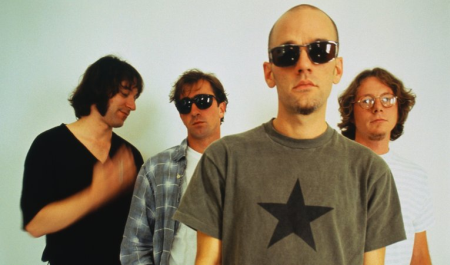
R.E.M. - Monster (1994)


1) What’s the Frequency, Kenneth?; 2) Crush with Eyeliner; 3) King of Comedy; 4) I Don’t Sleep, I Dream; 5) Star 69; 6) Strange Currencies; 7) Tongue; 8) Bang and Blame; 9) I Took Your Name; 10) Let Me In; 11) Circus Envy; 12) You

Glam! Sleaze! Fuzz pedals! Riffs! And a whole load of great and surprisingly conflicted songs hiding underneath the loud textures.


Key tracks: "What's the Frequency, Kenneth?", "Crush with Eyeliner", "Bang and Blame"

By 1994, R.E.M. had become a grand success story with critical and commercial acclaim pouring from everywhere, but very atypically they had done this without touring for their two recent hit albums. What had started as a temporary hiatus turned into an extended studio venture where the band didn’t feel the need to restrain themselves to a four-piece live setup. The spark of life for Monster was R.E.M.’s plan to return to the live setting and to go with it, after two relatively calmer albums, have a record more suitable for the stage. They’d become a signature band for the 90s alternative rock movement but without much of the whole ‘rock’ part of it, but that was about to change.

Monster isn’t quite as straightforward as its idea of a rock 'n’ riff record (or as someone on the internet once put it, the album where Peter Buck discovers the fuzz pedal) would seem to be at first glance. The elaborate string arrangements and acoustic guitars have been pushed off from the way of more and even more electric guitars, but when Monster is described as a rock record, it’s just as much an album about rock and roll. It’s full of cocksure rock star posturing, the kind where cool shades and suggestive poses pave way for trashing hotel rooms, with a hint of detached irony you’d expect from a rock band in the 90s. The more you familiarise yourself with Monster, the more apparent it is that the album openly embraces that semi-cliched rock star bravado, both honestly as well as on a meta level.

It goes far enough that it feels like straightforward escapism for the band. Despite their recent success R.E.M. were in fact in a bad shape at the time, culminating in a literal (obviously temporary) split during the sessions. Monster’s masquerade act is almost like deliberately moving away from what being in R.E.M. was meant to be like, running away from the fame by being something completely different. Michael Stipe, a known introvert, had turned into one of the world’s most known rock stars over the last couple of years and his lyrics on Monster are frequently written from the point of view of lust-driven, brashly egomaniac characters so at odds with his usual self that initially it can be downright jarring. The grunge-esque posturing and relentless walls of fuzz are deliberately exaggerated and over-the-top, almost as an act against the people who joined the band’s followers with the previous albums. Occasionally Monster seems to acknowledge this - one of the unused song titles listed in the liner notes is “Yes, I Am Fucking With You” after all - but the lines between R.E.M. the rock band and R.E.M. the Conceptual Rock Band are constantly blurred.

Approach it from whichever angle you will, Monster acts as a big reminder that actually, R.E.M. can be a real strong rock band when they want to. Buck’s guitar approach here is relatively straightforward but he knows what he’s doing with all the fuzz and distortion, and still scatters the occasional neat little detail here and there like the little “fills” of “King of Comedy”. Mills’ bass actually ends up taking most of the melodic leads this time. which slots in just fine with his style. The songs themselves are more basic than on most R.E.M. albums but the focus is on the right parts: make each section hook you in and hit you with a good musical muscle. Just as importantly, Monster is a really fun album, regardless of the mental health of its creators or the meta-side of its lyrics. It’s irresistibly rock and roll, sometimes in a knowingly dumb way: full of swagger and posture, glam winks on top of groovy bass riffs and walls of loud guitars. Stipe’s characters here may mostly be sleazebags but he performs them with such bravado that it’s hard to resist their rock star charm. The tunes are bouncy and filled with all kinds of tongue-in-cheek twists and details from particularly fun backing vocal cameos to little musical tidbits that make the songs bounce and come alive. And with straightforwardness comes a certain kind of strength in simplicity: focus on instant hook choruses and effectively snappy verses, which lend the songs a power of their own when done this well.
image
Most of Monster is made out of songs built from the same kind of loud guitar walls with a hint of a groove leading the rhythm underneath, but you’d be surprised how much variance the band squeeze out of the same elements. The swaggering “Crush With Eyeliner” and statement-of-intent like “I Took Your Name” are most exemplary of what Monster tries to go for, but you’ve got off-shoots like the garage punk-like “Star 69” which utilises the same building blocks for a completely different mood. Lead single “What’s the Frequency, Kenneth?” comes closest to a more typical R.E.M. cut pushed through a fuzz filter and has that infectious hit quality to it, and it’s a great song, but as a contrast you’ve got hypnotic deep cuts like “Bang and Blame” and the cold and mechanical “King of Comedy” which are far from sing-along crowd-pleasers. They’re among the album’s best though, and “Bang and Blame” in particular is a little masterpiece: it’s largely guided by Mills’ bass with Buck taking a shockingly minimalist guitar direction to contrast the rest of the album, which already gives it a strangely unnerving disposition when in context, but the way the song tweaks its verses with little additional instrumental parts and how the simple but effective chorus breaks the tension down are almost ingenious.

Even slow cuts like the torchlight anthem “Strange Currencies” or the moody swivel of “I Don’t Sleep, I Dream” operate largely by the same standards as rest of the album. “Tongue” is the big outlier for the entire album, with its slow dance comedown vibes and fragile falsetto. It’s a very bittersweet song, full of ache yet somehow sounding really adorable, lyrics full of disgust but presented in a song that’s musically ideal for tender cuddling. Out of the quieter songs it’s the big standout, but it’s hard to say whether it’s the best one or if that title belongs to “Let Me In”, which is a polar opposite musically. “Let Me In” is the one part of Monster where R.E.M. drop all antics and sound completely genuine - tragically, it’s due to grief. It’s their eulogy to Kurt Cobain, a close friend of the whole band, and it’s as devastating as you’d expect. The shoegaze-like atmospherics, full of distortion and noise only broken by faint other elements like light percussion and a simple keyboard melody, do little to hide the band’s grief. It’s an arresting song, and amidst all the fun it’s a bit of a reality check to how the band was genuinely feeling at the time. And to some sequencing credit, Monster doesn’t do a 180 after it, with “Circus Envy” sounding more muted compared to the other direct rock cuts and the closer “You” curls up into a claustrophobic, slow-burning mood drop of a closer, far from the rock and roll feel-good stroll the album started out with.

And what an intriguing album it is. Monster’s nature, with all of its stylistic subversions and sudden sonic transformations, makes it one of the most conceptually curious parts of R.E.M.’s discography and something far deeper than its more straightforward tendencies and fashionably grungy sound give it credit to. That alone makes it interesting, but what rarely gets said is just how tight a listen it is. Compared to the previous few it’s downright basic in its approach, but R.E.M. nail down those basics: while musically the album might consist of little more than loud electric vibes and snappy choruses, they’re pulled off really damn well on Monster. Each song is a standout of some sort and contributes something unique to the whole, and they’re all infectious in a way you want a muscular rock song to be like. Or to put it as directly as the album presents itself, in the end Monster’s qualities boil down to a very simple thing: a band in their peak performing great songs with immense gusto and refreshing - if a bit strange and potentially utterly false - sense of fun.

Rating: 8/10

15 May 2019

John Frusciante - Niandra LaDes and Usually Just a T-Shirt (1994)


1) As Can Be; 2) My Smile Is a Rifle; 3) Head (Beach Arab); 4) Big Takeover; 5) Curtains; 6) Running Away into You; 7) Mascara; 8) Been Insane; 9) Skin Blues; 10) Your Pussy’s Glued to a Building on Fire; 11) Blood on My Neck from Success; 12) Ten to Butter Blood Voodoo; 13) Usually Just a T-Shirt #1; 14) Usually Just a T-Shirt #2; 15) Usually Just a T-Shirt #3; 16) Usually Just a T-Shirt #4; 17) Usually Just a T-Shirt #5; 18) Usually Just a T-Shirt #6; 19) Usually Just a T-Shirt #7; 20) Usually Just a T-Shirt #8; 21) Usually Just a T-Shirt #9; 22) Usually Just a T-Shirt #10; 23) Usually Just a T-Shirt #11; 24); Usually Just a T-Shirt #12; 25) Usually Just a T-Shirt #13

Rough, rambling, drug-addled rudimentary demos. For hardcore fans only, and even then there's likely little to cherish beyond the curio factor.


Key tracks: "As Can Be", "Curtains"

There’s no way I can comfortably say that this is a good album, let’s make that clear from the get-go. Niandra LaDes and Usually Just a T-Shirt was recorded on and off during the months leading to John Frusciante’s first departure from Red Hot Chili Peppers, crushed by anxiety and wasted on the drugs he took to combat it. Frusciante’s adventures with drugs are far from the rock-romantic tales of hedonistic craze and the man you hear on this album is a complete mess heading towards even worse. To combat Peppers’ ever-increasing popularity Frusciante’s first solo releases were barebones bedroom recordings, but the only thing the lo-fi nature of the album achieves is not leaving him any room to hide his deteriorating health.

From a fan’s point of view this is an interesting album though, because you can hear Frusciante’s style evolving. There’s a big gap between the funk rock riffs he wielded during his first stint in the Peppers and the more melodic signature style he came back with in the late 90s, and Niandra LaDes and Usually Just a T-Shirt shows the first steps on that path of change. There are some neat instrumental parts scattered throughout the abundance of tracks that aren’t far away from his later lo-fi recordings, and you can even hear his songwriting style starting to take shape. Frusciante’s first two solo albums tend to be isolated from his later records - and for a good reason - but Niandra LaDes makes a decent point about not being quite as far from them as you would have expected. In fact, as a collection of instrumental early demos this could have been a far better curio: Frusciante’s voice is largely shot and he alternates between mumbling, wailing and occasionally shrieking – none of which are particularly comfortable to listen to.


The more fascinating material is largely restricted to the album’s first, Niandra LaDes half. These songs were purposedly recorded to be released as a solo album, with Frusciante taking time to develop each song before he saw it was fit for release. You can easily hear potential for a genuinely good, fleshed-out version in a number of them and even in a rudimentary state like this they still make for a decent, even if not completely enjoyable listen. It’s only really Frusciante’s voice and haphazard performance letting them down. When the Usually Just a T-Shirt half switches on is when the album begins its decent into a patience-grinding crawl. The thirteen untitled songs that make for the second part were recorded in a seemingly semi-improvised manner in a single take during Frusciante’s last tour with the Peppers, this time far more drugged out. The nondescript songs are largely aimless and sound terrible, and they’re such a struggle to get through that the faint positives of the first half vanish completely from memory. Even when it’s not outright terrible it’s just terribly dull, and that’s not much better - in any case, it’s largely incoherent rambling.

Even without the second half Niandra LaDes in itself still wouldn’t be anything that would ever receive actual proper listening time - in its own way it’s fascinating to hear much like any embryonic demos are for a big fan, but in musical terms it’s closer to the dump pile. The best description for it is that it’s a mess, and the only reason why it’s not a case study for why drugs are bad is because the follow-up took it way further. At least with this one Frusciante had some artistic motivation, claiming he recorded it because the world needed more “interesting music”. That, unfortunately, doesn’t automatically equate to decent. 

Rating: 3/10