5 Aug 2019

R.E.M. - Fables of the Reconstruction (1985)


1) Feeling Gravity’s Pull; 2) Maps and Legends; 3) Driver 8; 4) Life and How to Live It; 5) Old Man Kensey; 6) Can’t Get There from Here; 7) Green Grow the Rushes; 8) Kohoutek; 9) Auctioneer (Another Engine); 10) Good Advices; 11) Wendell Gee
The IRS Years Vintage edition bonus tracks: 12) Crazy; 13) Burning Hell; 14) Bandwagon; 15) Driver 8 (Live); 16) Maps and Legends (Live)


Slower and moodier - R.E.M. add subtlety to their arsenal


Key tracks: "Feeling Gravity's Pull", "Maps and Legends", "Life and How to Live It"

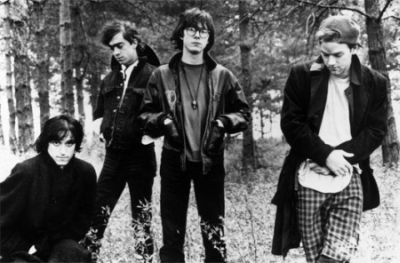
Fables of the Reconstruction marks a change for R.E.M. After two albums recorded with Don Dixon and Mitch Easter back in their home country, for the recording of Fables R.E.M. found themselves in the UK, recording with Joe Boyd. It didn’t go quite as expected: the extended period spent in a strange country full of the typical British gloom and rain left the band homesick and miserable. Stipe fought the homesickness by burying himself into the US lorebook - tales of great wild frontiers, mythic individuals and events and the unique characters from where he grew up. Meanwhile the overall malaise affected the music the band came to record. Fables isn’t a melancholy or dark album, but murky might be a more appropriate term. It’s more downcast and the band’s famous energy they tried to especially showcase on Reckoning has been replaced by a number of mid-tempo, contemplative numbers. The cover of the album isn’t a particularly good one but its overwhelming browness and the photos of the band members lurking in shadows make it one of R.E.M.’s most descriptive.

The band turning inwards paves good way to expand on the flashes of new tangents that Reckoning’s more curious sidetracks showed, and Fables is R.E.M.’s most nuanced so far by a long shot. R.E.M. have always been brilliant in treating their album openers as perfect introductions to their albums, and “Feeling Gravity’s Pull” is no exception. It’s full of pathos and mood, it slumbers rather than pushes forward and its driving element is Peter Buck’s piercing, foreboding guitar riff that’s a long way away from the happy-go-lucky jangling of the previous two albums. It’s when the song suddenly brings a string section to take the melody to a fragile, emotionally wraught rise, accompanied by Buck’s squealing guitar before bringing the song down again, that “Feeling Gravity’s Pull” really intones the album’s characteristic nature. It’s a small section of the song but so crucial to it, the pay-off to the ever-rising tension the song otherwise represents: a moment so great that it brings the whole song to a new light. It’s these moments that Fables is all about. The songs are largely one-track, one-tone affairs which come off practically monotonous for the longest while, until a sudden detail emerges that shifts the song to a new rail and absolutely makes it. Fables of the Reconstruction is an album of moods, and its highlights are the details that make the moods come alive.

To put it in another way, Fables isn’t an album where R.E.M.’s songwriting as a whole necessarily shines, but it’s full of moments that stay with you and colour your impressions of the rest of the songs. For some, it’s a staple part of the song like the guiding bass riff and the atmospheric guitar of “Old Man Kensey”, a song that’s on the brink of becoming a slog if those two riffs didn’t carry it afloat, or the gorgeous guitar riff that bridges the various sections of “Green Grow the Rushes” together (Fables is by and far where Peter Buck really steps in, after Mills and Berry dominated the first two albums; his guitar carries so many of the songs here). In others, it’s a single moment that uplifts the whole song. The railroad anthem “Driver 8” is one of Fables’ most famous songs and I’m of the opinion that it’s solely because of its middle 8 which, much like with “Feeling Gravity’s Pull”, pulls out the emotional chord of the song for a concentrated strike, underlining the wistful tone of the song that’s always there but somewhat obstructed, primarily by the little nothing of a chorus. Much of Fables operates on this basis. Particularly towards its latter half, with the stretch of the muted “Kohoutek” and “Good Advices” and the tense “Auctioneer”, it turns into an album where it’s not the songs that necessarily stick with you but abstract ideas of them and individual parts, be it how Stipe raises his voice during the title drop of “Kohoutek” or how wound-up and anxious “Auctioneer” gets by its chorus (if the band weren’t having the best time during the recording of the album, it’s definitely audible in the mood of this song).
image
That’s not to say that there aren’t a handful of consistently gripping, A-game songs within Fables, and in fact the album is frontloaded with them - and I’d also include “Feeling Gravity’s Pull” here because despite its one standout moment, the way the song rides its lurching melody and Buck’s brilliant guitar riff is consistently excellent throughout and the choruses are sweet in their subtleness. “Maps and Legends” behaves like the big standout single even if it never was one: Stipe’s americana storytelling meets a melodically rich song which has a clarity the rest of the album intentionally avoids, packed with the album’s peak standout chorus enhanced by Mills’ backing vocals. It’s probably the most comfortably R.E.M.-esque song here, but I’m uncertain if the best because its major competition is right round the corner in the tracklist. “Life and How to Live It” is Fables’ concentration point for all of the band’s early days energy, unleashed into a tour de force song where the band relentlessly thrust forward with a hyper pace as Stipe shouts out one long stanza after another. It only breaks for a moment for Stipe to yelp out the title before picking up again, sounding even more frantic as it kickstarts after the brief pause. “Wendell Gee” closes the album in a complete opposite manner: all guns lowered and tension removed, it’s a gentle goodbye into the night where R.E.M.’s grand backing vocal power duo lay their vulnerable lament all over the song and right into the heart.

(There is also the mystifying case of “Can’t Get There from Here”, a song that takes the band’s tradition of once-per-album novelty/style-breaking songs and hammers the point down with its ridiculously cheery, jangly bouncing full of southern drawl and punchy horn sections. It really has absolutely no place on this album, and yet by the end of the song you’re smiling with the band and jamming along to the silly chorus. It’s a song that quite possibly works better outside its context than within, and I’ve really no idea how to place it within these broad categories I’ve created.)

Perhaps the key thing to take away from Fables of the Reconstruction is that it acts a little like a prototype for the band’s moodier side which they’d ride to triumph later on. It’s their first full step outside their original signature sound and like a lot of first steps go, it’s not quite firmly on the ground. It’s an album of lovely moments and sudden gorgeous surprises, bound together by a lot of appealing atmosphere but perhaps not so many real highlight songs. It also admittedly takes a while to grow on you - out of all R.E.M. albums it’s been the most slow-burning of the lot, for a long time being one of my least appreciated of the lot but slowly revealing its charms on me. It’s still not one of the band’s strongest collections of songs, but even now it’s got a unique charm to it that picks things up when the songwriting occasionally falters.

The I.R.S. Years Vintage edition bonus tracks are actually not half that bad. “Crazy” is a cover of a song by the band’s peers Pylon and could just as well have been a lost R.E.M. gem, so well it fits the band’s style; the punchy chorus alone is a lot of fun and it’s actually one of the better 80s R.E.M non-album cuts. “Burning Hell” and “Bandwagon” are two R.E.M. original b-sides and they’re curious if nothing else: the former sounds almost like a R.E.M. take on 80s hard rock (but keeping it constrained enough), and “Bandwagon” is a silly throwaway more notable for Buck’s wildly chord-skipping guitar line than actual merit as a song. The live version of “Driver 8” keeps the reissue series’ trend of suitably enjoyable but kind of pointless live cuts, but the version of “Maps and Legends” at the end is actually an acoustic version which suits the song well, and works well as an interesting alternative take of a great song.

Rating: 7/10

3 Aug 2019

John Frusciante - Inside of Emptiness (2004)


1) What I Saw; 2) The World's Edge; 3) Inside a Break; 4) A Firm Kick; 5) Look On; 6) Emptiness; 7) I'm Around; 8) 666; 9) Interior Two; 10) Scratches

Loud guitars. There's more to it than that, but wish there was also more of things to truly cherish.


Key tracks: "What I Saw", "A Firm Kick", "Look On"

Inside of Emptiness begins with a sturdy riff and a steady beat, and with those two sounds it pinpoints where the focus is on this time. Frusciante albums always (or at least around this point) have a heavy emphasis on guitar as a lead instrument for obvious reasons, but there's emphasis and then there's putting it as the key focus of the arrangements as is done here. The first instinct is to call Inside of Emptiness Frusciante's rock-out guitar album but it'd be more accurate to describe it as the guitar-and-drums record: Josh Klinghoffer has been a constant companion for Frusciante throughout his 2004 recordings but here his drumming gets an equal spotlight in the mix to Frusciante's guitars. You get the impression the origin of these songs was the two J's bashing out songs with their chosen lead instruments before fleshing out the rest much later; you could strip down the songs here to just those two instruments and only in a couple of cases would you lose anything integral to the arrangements.

In general Inside of Emptiness is still clearly within the realm of Frusciante's other 2004 albums, so much of the same sonical elements apply. The more melodic approach to songwriting is still there, the production is cut from the same cloth as the rest of the albums and it's still got the same no-frills approach where sparseness is a key value. Where it stands out is that here it's Frusciante fully leaning on the muscular side of his playing after hinting at hit periodically in the prior albums, where style in the past has been to reserve his unleashed rock and roll guitar moments for particularly climactic moments in chosen songs, now each guitar riff is played out like the intense last section of a song.  and it results in the kind of album that benefits from cranking the volume high. It's the opposite of an oasis among its largely calmer counterparts during the 2004 wave of records.


The big, obvious explosive moments, such as the opener "What I Saw" and the late-album powerhouse "666" jump out as the most defining moments of Inside of Emptiness. These are full of sound wall riffs and loud cymbal-heavy breakdowns, and are what you'd imagine when you think about Frusciante doing a rock-heavy album. "666" even features a curveball demonic scream from Frusciante, amidst its borderline-headbanging riffs courtesy of the album's sole guest spot Omar Rodriguez-Lopez. Not all them are as confrontational: "Look On" is a classic centrepiece anthem with an above-average length of which half is spent on a seemingly everlasting coda, and it's far calmer than the other two songs addressed before. Still with its high-in-mix riffs and multiple stand-out solos as well as lead guitar parts which might as well be solos, it's just as much of a rock beast as the other two. In general, these are the songs that will leave the initial strongest impression - the ones you carry away from the album in the first place because they take such a break from Frusciante's usual albums. They're arguably the album's highlights too, with "What I Saw" especially not just being a great intro to the album but a cavalcade of great hooks in general, and because I'm a sucker for a good extended finale "Look On" is probably my favourite of the lot here and one of the album's standout songs to begin with.

Despite how dominating the hard rockers are in leaving the most lasting impression, they're not actually that characteristic of the full tracklist. There's a handful of slow-burners that are similarly amplified in volume but release it in careful bursts rather than drenching in guitars throughout: "Inside a Break" and "Emptiness" build up a careful momentum coiling up the tension before uncurling into a series of sharp, powerful bursts of sound, and they keep you on your toes nicely. There's also a number of gentler moments that bridge the gap between Inside of Emptiness and the rest of Frusciante's 2004 albums, and while the contrast between, say, "I'm Around" and the melancholy closer "Scratches" with the rest of the album is so wide, they end up forming a natural part of its ebbs and flows. "A Firm Kick" is even one of the best songs on the album: its graceful vulnerability is a flashback to The Will to Death, with its fantastic backing vocal parts and accentuating keyboard arrangement. Between it, the thrashing of "666" and the whiplashingly perky and jolly "Interior Two" Inside of Emptiness covers a surprising lot of ground; it's not just the big rock album it makes itself out to be at first.

It's quite fun to hear Frusciante just kick the energy into overdrive and play the rock hero in his solo records for once in a while, so it's actually a little bit of a shame that the album stretches its territory so much. When it starts stepping on the stylistic lines of other Frusciante albums, it also becomes clear that the songs are on a slightly lesser tier. There are no straight-up weak cuts here, but only "Look On" at most has a chance to stand up among the general highlights of the 00's Frusciante records. It's an album that's great when it's on but whenever it's not, it ends up a little forgotten; one where the songs are good but not so great they'd jump to surface. Discounting Automatic Writing (a side project) and DC EP (an EP), out of the mid-00's group of Frusciante albums this is the weakest one - or least good, however you want to phrase it - and where the others have highlighted the various sides of Frusciante's songwriting one by one, Inside of Emptiness only gets about halfway there. For the supposed riff album it's not as excitingly loud as it could be and if you're in the mood for a more nuanced Frusciante album, there's a lot more of those that do it better. This has always been somewhat buried under the other albums of this era, and I don't mean to dismiss it because I do enjoy it, but the years since have somewhat highlighted where it's lacking and there's some solid ground behind why this seems to be the least mentioned album of the lot.

Rating: 7/10

1 Aug 2019

R.E.M. - Reckoning (1984)


1) Harborcoat: 2) 7 Chinese Bros.; 3) So. Central Rain; 4) Pretty Persuasion; 5) Time After Time (AnnElise); 6) Second Guessing; 7) Letter Never Sent; 8) Camera; 9) (Don’t Go Back To) Rockville; 10) Little America 
The I.R.S. Years Vintage Edition Bonus Tracks: 11) Wind Out (With Friends); 12) Pretty Persuasion (Live in Studio); 13) White Tornado (Live in Studio); 14) Tighten Up; 15) Moon River

One foot in leftovers, another foot in haphazard ideas where to go next.


Key tracks: "Harborcoat", "So. Central Rain", "Time After Time (AnnElise)"

Reckoning was released nearly exactly a year after Murmur. Within those 12 months the band had to actively write new songs and find the time to record them, while simultaneously juggling with the intense tour behind their debut album. Murmur had been the result of picking the best out of the material they were happy with at the time, so album #2 effectively had to start from scratch - apart from the idea of trying to capture the band’s live energy in studio.

Understandably Reckoning is like Murmur’s little brother, more or less. Same style, same sound, same production team - there simply hadn’t been any time for the band to focus on anything else. To further underline this, the album also leads off with three direct Murmur leftovers: songs the band were already playing around their debut but didn’t fine-tune until after the album. “Harborcoat” kicks off the album right where Murmur left off in fact: there’s some really delightful bass runs and post-punk drumbeats powering its verses, while the chorus gets a melodic lift-off rich of harmony. It’s both sides of R.E.M.’s early days brought together but kept separate, excitingly flicking back and forth. “South Central Rain” meanwhile is a deceptively simple tune of longing with one of Buck’s classic jangle melodies, but the biggest credit here goes to Stipe. His grippingly yearning vocal delivery transforms the straightforward song into an evocative three minute era highlight, eventually leading the song into an explosive ending that stands at such contrast to the meek nature of the rest of it, but which works perfectly. “7 Chinese Bros.” is perhaps a bit unfairly  sandwiched between: it taps into the band’s strengths at the time and is a fine song, but feels a little overshadowed when among the album’s two best songs.

Once the album deals away with its predecessor’s remains it starts to reveal shades of its own personality, and ironically starts to lag. The most notable difference between the two albums is that Reckoning is more rapid in its pace: shorter songs and less of them in total, many of them which breeze by. Not necessarily by design, either. A good chunk of Reckoning feels like a collection of sketches, indicative of the rush the songs were completed in - simple structures, repetitive lyrics and heavy usage of nearly wordless placeholder vocals. “Second Guessing” and “Letter Never Sent” in particular sound like half-baked demos, with hints of good ideas present but with not enough focus to make them into good full songs. “Pretty Persuasion” is another casualty of this, though this time the band knew they had a brilliant chorus kicking around, full of energy and vigour - shame that the verses, which I always struggle to even remember, let it down. This is the case even with some of the more fully realised songs: “Little America” is a capable rock-out that feels more fleshed out than any of the ones listed earlier, but it still feels flat. As close as the two albums are, major parts of Reckoning fall very short from Murmur. Half the album screams of the band pushing things through just to get enough songs for a follow-up album.
image
The last set of songs sees R.E.M. stretch their wings, to mixed results. While most of Reckoning is carved from the same tree as Murmur (even if only from its chippings), these are the parts of it where the band do set their sights on brand new territories - and in a very varied fashion. The moody “Camera” is relatively tame in that aspect, but its steadily unhurried atmospheric direction still feels like night and day from the energetic pace of the rest of the album: but for all that and its wonderful organ, it’s rather overlong and not particularly interesting. “Time After Time (AnnElise)” on the other hand is very interesting, with a sudden steer towards more intricate arrangements and acting as an exercise in layering, from percussion to guitars. Buck’s stand-out lead guitar riff swivels around a march-like rhythm with a curiously Eastern twang, and you end up with a very curious and rather good oddball of a song. “(Don’t Go Back to) Rockville”, then, is an interesting case in a different way. The country-twanged bar singalong has become an iconic R.E.M. moment over the years and it is absolutely one of the band’s biggest smile-raisers, but the thing is that it’s very much Mike Mills’ song: his writing, his experiences (a wildly exaggerated love letter to a brief crush) and his voice. Except that in its original guise Stipe still sings the lead vocals and while the song is largely the same, that little extra charm that Mills’ vocals bring to it are gone. It’s a lovely song that comes alive when performed on stage, the album version feels like it’s missing a key piece.

That’s Reckoning in a nutshell really - some solid ideas and moments but wavering in its execution to the point that nearly half the album barely registers as a result. After years and years of listening I still can’t remember how big chunks of the album sound like, and that’s even more obvious as I sit down to write about it. The best songs of Reckoning are either ones they brought with them from the previous album’s sessions or take a rare wild stab in the dark, and in the case of “Rockville” it’s not even the album version that I particularly love. Most of the rest are quickly scrambled together rock-outs that likely sounded better on stage than how they came together on the album. If Murmur is downright surprisingly strong in its songwriting, Reckoning really fails to live up to it - and the rest of the band’s catalogue included. It’s not so much a weak release as it is just a little unmemorable: a stop gap release to tide things over, albeit one with inarguable highlights. It’s a music cliche, but this is a classic sophomore slump really.

Much in the vein of the rest of the early 90s I.R.S. R.E.M. re-releases, the bonus tracks for Reckoning are little more than curios: a few live cuts and a couple of rough covers. “Wind Out (With Friends)” is an alternative take on a soundtrack cut that’s also available on Dead Letter Office, this time with the band’s brothers-in-arms Bertis Downs and Jefferson Holt in vocal duties; musically it’s the same dumb fun punk throwaway as it always was. Both live versions of “Pretty Persuasion” and “White Tornado” are pretty pointless: both songs were mostly live-in-studio takes anyway and these versions come across almost identical to the originals. Curiously the overall feel of “Pretty Persuasion” here is slower and more phlegmatic, which is rather bizarre considering the album version was meant to represent the band’s live energy to begin with. The two covers are a little more interesting. The early funk song “Tighten Up” has become an instrumental (bar Stipe’s improvised yelping) in the band’s hands and thus finely continues (or begins) the band’s tradition of enjoyable, if a little throwaway, instrumental b-sides; it’s the best song out of these five, in any case. The best part of the band’s rendition of the classic “Moon River” (here a piano and voice moment straight out of the dramatic climax of a musical) is the odd, out-of-nowhere synthesizer outro it features, which comes off as downright radical for this band during this period. Still, much like all the other bonus tracks, not essential in the slightest.

Rating: 6/10

30 Jul 2019

R.E.M. - Murmur (1983)


1) Radio Free Europe; 2) Pilgrimage; 3) Laughing; 4) Talk About the Passion; 5) Moral Kiosk; 6) Perfect Circle; 7) Catapult; 8) Sitting Still; 9) 9-9; 10) Shaking Through; 11) We Walk; 12) West of the Fields
The IRS Vintage Years Edition bonus tracks: 13) There She Goes Again; 14) 9-9 (Live); 15) Gardening at Night (Live); 16) Catapult (Live)
 

So different from where the band would end up but contains such obvious traces of their entire development throughout. The kind of debut that creates a legacy.


Key tracks: "Radio Free Europe", "Perfect Circle", "Shaking Through"

There’s a lot of preconceptions flying around Murmur. It’s knee-deep in R.E.M.’s mumbling phase where Stipe mutters nonsense incoherently, befitting of the murkiness of the album cover. The phrase “college rock” gets bandied around a lot around this period too, which brings its own associations of ragtag indie groups. It’s also the debut album of a band with a long, long career ahead of them and whose - arguably - most famous works were a decade and a stylistic evolution away. Or maybe it’s just me and my own pre-assumptions, but based on my past experiences I was expecting R.E.M.’s first full outing to have little to do with the band I had known.

If you’ve come to this from Chronic Town, which already had some identifiable R.E.M.-isms in it, it probably doesn’t come as a surprise that a lot of those preconceptions are somewhat overstated, but the extent of how fully formed R.E.M. already are here is still notable. The songs are a little simpler here and there, but the album loves to throw surprises to mix things up: tracks where the arrangements and grasp of melody suddenly perk up with refinement, like the band had already been perfecting their art for years. The band that created “Shaking Through”, “Sitting Still” and “Laughing” is already miles away from the group of people behind Chronic Town; those songs also have some absolutely gorgeous moments lurking within, in particular the former with its superb vocal melodies and harmonies in its soaring chorus. Meanwhile “Talk About the Passion” is already R.E.M. as we know it, and a wonderful prelude to the more acoustic-based sound they’d become truly famous with. These are all songs where Murmur really comes alive, and they’re all classically R.E.M.-like moments where all the components of the band’s signature sound are already there and highlighted.

The best example of this is “Perfect Circle”, however. It’s Murmur’s big curve ball - an atmospheric, arrestingly beautiful and haunting mood piece driven by Mike Mills’ piano, full of misty-eyed melancholy and intimate vulnerability. It’s the kind of song that could have had a home in literally any R.E.M. album, regardless of decade - a song before its time, really. It’s very clearly a stylistic standout from the rest of Murmur, but yet there’s enough of its individual elements scattered across the album to make it feel at home in context. And it’s a brilliant song, of course - a great tune married to a great lyric, enunciated by Stipe clearly in a manner that makes the song a clear spotlight moment for him.
image
But just because those more nuanced moments are Murmur’s peaks, there really shouldn’t be any dismissal of the songs where the band’s post-punk roots have a bigger emphasis. Murmur is really Mills’ and Berry’s album in that respect, the former practically leading the songs with his melodic playing style while Berry backs him with the tightest drum playing - Buck’s famous jangling is all over the place but more often it’s there fill the gaps between the various rhythm section spotlight moments. “Radio Free Europe” demonstrates this brilliantly. It’s an iconic debut single and much of it is because of how free-spirited and energetic it is, right from the intro that cuts the quiet build-up with an intent-affirming set of drum bangs. The bass line is great fun as Mills runs up and down the frets, and Stipe yelps his way through a melody that begs you to shout along even though you can’t really be clear of the words.

It’s a stormer of an opener, and sets way for a number of tracks in similar vein. “Pilgrimage” and the pounding “Catapult” are near-anthemic shout-alongs where Stipe commands the front with the kind of clarity that should bury the whole mumbling exaggeration, while “9-9” and “West of the Fields” are frantic high-speed numbers more reliant on their energy than anything. “West of the Fields” in particular has an almost-menacing urgency which gives the album a final punch of an ending, particularly as it launches after the quirky but fun almost-novelty singalong “We Walk”, which starts the band’s grand tradition of throwing something lighthearted out of nowhere amidst an album.
The most astonishing thing, though, is that Murmur was released in 1983 and it still sounds fresh today. Not only fresh, but unique. R.E.M. managed to cook up an album that at the same time lays the basic foundations for so many future bands yet sounds like none of them. Unlike so many other older classic albums which either sound incredibly dated or simply weaker when compared to the artists that took their inspiration from them and expanded and developed on the ideas, Murmur has its own sound even today and stands above the competition. The only thing that nibbles away its timelessness is the production but the music has no era, and even the production issues are fixed by the 2008 remaster which sounds gorgeous. It’s not just a fantastic start, but a classic album through and through.

This comes off as awkwardly abrupt after all that gushing over, but the IRS Vintage Years re-release which I happen to own adds practically nothing of major interest in terms of bonus tracks. There’s a cover of Velvet Undergrounds “There She Goes Again” that’s thoroughly adequate but nothing to write home about, especially given R.E.M.’s tendency for rather faithful cover versions and my own particular aversions towards the VU. There are also three live tracks which are fine on the basis of the strength of the originals, but which offer nothing beyond that - “Gardening at Night” doesn’t feature on Murmur and is the best cut of the Chronic Town EP, so in that way it’s a handy bonus. By and far though, nothing particularly enticing. A better option is simply to spend a bit more money instead and get the aforementioned 2008 re-release, for the remastering job alone. Murmur has never sounded better.

Rating: 9/10

28 Jul 2019

R.E.M. - Chronic Town EP (1982)


1) Wolves, Lower; 2) Gardening at Night; 3) Carnival of Sorts (Box Cars); 4) 1,000,000; 5) Stumble

It's lowkey incredible how a humble debut EP can nail down so much of the band's magic already.


Key tracks: "Wolves, Lower", "Gardening at Night"

A solid debut EP can really add to a band’s legacy. Ones that still offer something so unique and exciting that you happily return to them even after the band has been releasing music for decades afterwards, especially so. Viewed from that angle, Chronic Town EP is one hell of a release. It’s a snapshot of a young and hungry band who are still compensating the lack of honed craft with pure energy, but who make it work and create the kind of memorable entrance I imagine got a lot of people very, very interested back in the day.

Most of Chronic Town runs on a single trick: Buck jangles his guitar, Stipe mumbles through lyrics, Mills and Berry provide a formidable rhythmic backbone that not-so-secretly carries the disc. That one trick is all it needs. There’s an exhilarating energy running through the five songs, the quite frankly exciting instrumental parts weaving simple but strong melodies in a manner that merges the urgency of post-punk with the lushness of jangle pop. Stipe is already a commandeering front man, incoherent as he may be here but already exhibiting the mannerisms and range he’s known for. There’s an obvious greenness to the band but it’s far from being an obstacle because so many pieces are already falling in place.
image
It’s the actual songs, not the sound, that make Chronic Town notable though. Very few debut EPs carry an essential cut in them, but Chronic Town has “Gardening at Night”, the first real R.E.M. classic. It’s where the EP’s formula hits perfection, and the combination of Michael’s higher register, the sharp chiming notes of the guitar and Mills’ steady and sturdy bassline creates an alluring atmosphere and it’s got the strongest set of melodies of the EP scattered consistently through the track. It would absolutely have a place in any R.E.M. retrospective even today, and given it’s become the most enduring track of the EP even in the band’s eyes means I’m not the only one who thinks that way. “Wolves, Lower” and “Carnival of Sorts (Box Cars)” are brilliant accompaniments to it. The former is thick with murky atmosphere until it suddenly bursts into its perky chorus, a sudden gear switch that’s quickly showcases the EPs primary ingredients and makes for a fitting introduction for the band. “Carnival of Sorts” is the other big standout: it’s as close to a rock-out as R.E.M. would get this early on, with a killer hook in its chorus vocal arrangement as Mills and Stipe trade off lines amid the rush of energy. It’s a thrilling swirl of rhythm and melody interweaving.

The flip side of the EP isn’t quite as exciting but it’s still strong enough. “1,000,000” is the weakest of the lot but only because it adds nothing new to the mix: everything it has to offer the band have already showcased in a stronger fashion during the first three songs, and as a result it falls of the wayside somewhat. “Stumble” is arguably the weakest song of the lot, being a structurally monotonous jam that doesn’t quite have enough meat to support its full length, but the band’s talent as instrumentalists really shines here, Mills in particular: the bass parts of “Stumble” are incredible in all their vibrating spring-like glory and them, along with the rest of the instrumental prowess at display, stop “Stumble” from stumbling over. It caps off the EP in a rather solid fashion despite being a bit of an oddball of a song, leading to a finish worthy of the first three songs. And while it’s a decent finish, it’s those opening songs that not only pave the way forward but gets you coming back.

The actually impressive thing is how well they still stand within the bigger picture of R.E.M.’s whole discography: Chronic Town is by no means the curio early days release just for the hardcore fans you’d probably expect, but it’s a relevant thing to check out even now. A lot of the signature magic is already in here.

Rating: 8/10

25 Jul 2019

The Shins - Oh, Inverted World (2001)


1) Caring Is Creepy; 2) One by One All Day; 3) Weird Divide; 4) Know Your Onion!; 5) Girl Inform Me; 6) New Slang; 7) The Celibate Life; 8) Girl on the Wing; 9) Your Algebra; 10) Pressed in a Book; 11) The Past and Pending

A humble beginning, with that one song that could change your life.


Key tracks: "Caring Is Creepy", "New Slang", "Girl on the Wing"

The Shins' debut comes heavy with expectations. It's not because of the infamous and over-referenced (guilty, natch!) "change your life" line from Garden State - I don't believe anyone takes that bit with any gravitas anymore and it's long since established itself as a running joke that's cruelly if well-intendedly forever levied against Oh, Inverted World and The Shins in general. It's "New Slang" that's the big weight. It's one of the hallowed group of songs with the power to force you to sit down and pay attention from the first instance. The emotional weight dripping from James Mercer's weary voice, the ridiculously simple but cunningly brilliant "ooh-ooh-ooh" hook, the gorgeous arrangement that seems like a straightforward campfire song at first but eventually reveals itself to host a multitude of depth and tiny but important details, the sheer gravitas of it for such a straightforward song - it's a brilliant, brilliant song. Yet it's a humble and unassuming song, but that's perhaps its most important strength - it resonates like a personal hidden treasure you've happened to come across and it could be special to you and you alone.

There is absolutely nothing on Oh, Inverted World that comes even close to "New Slang" and the song is its biggest curse: a legitimate classic weighing down the rest of its parent album that didn't have the luck to be just as majestic. Good news is that the sooner that thought is processed and dealt with, the sooner you come to realise the album's other strengths, even if it takes a long while like for the undersigned. They're just completely different ones.

Humble and unassuming describes Oh, Inverted World accurately enough as a whole. It's a literal bedroom recording, with most of it having been written and recorded in Mercer's own home before any hope of it seeing a true light of day was in anyone's minds. They're short, unassuming pop songs: warm, lithe melodies with songwriting where the backbone lies in straightforward singer/songwriter elements. That alone makes it a novelty within The Shins' discography. Mercer can be a genius within his genre when it comes to brilliantly clever yet still blindingly direct melodies, and Oh, Inverted World is the one album where that factor hasn't had the chance yet to become The Shins' de facto modus operandi. Each album since this has dressed those melodies up in grand, punchy arrangements like a bloodhungry indie pop barbarian - some very successfully and some less so. Oh, Inverted World plays with smaller stakes, if at any: it's homely and homey.


The one little flourish that Oh, Inverted World does allow itself is some rather tasteful keyboard work. They're not extravagant parts either, but they bring a change to a lot of the album's general sound world and the songs that hold them up the clearest generally end up being the album's best. "Caring Is Creepy" - as close to a big and explosive "rocker" as this album gets - highlights its love-at-first-sight hooks with vintage organs, the playfully ascending and descending keyboard riff of "Girl on a Wing" ends up stealing the show particularly as the song slows its pace from its cold open, and the brightly parading synths of "One by One All Day" practically make the song (as does the cunningly punctuating xylophone referenced in the song's lyrics), as enjoyable as its twee rollicking generally is. The keyboards overall lend kind of dreaminess all over the album that adds to its charms, and often turn out to be the main part that strikes a fancy in their respective songs.

There's one more ace to the album's sleeve and that's the closing track "The Past and Pending", which is more or less "New Slang" Part 2, just a little dreamier; it's a lovely way to close the album as its refrain seems to run forever and you want to cling onto it for as long as you can. The remaining tracks are fine even if not as strong. They contribute to the overall atmosphere of the album and there's frequent reminders of Mercer's cunning tricks (the dialogue-like vocal runs of "Know Your Onion!" for example), but there's a clear gap running between them and what's already mentioned. It's a classic case of the sum being better than the parts. the stronger set carrying the weight while what's in-between accentuate the overall feel. With only half an hour in length, even the lesser cuts never overstay their welcome and stay novel.

I tend to prefer The Shins when Mercer's a bit more vibrant in his expression, but Oh, Inverted World has more to it than its humble outlook and the endless weight of its Big Song offer at first glance. It's the cosiest Shins album, a more intimate wrapping for Mercer's tricks, and that's proven to be aspect that lures me in. It'd be great if everything was as strong as "Caring Is Creepy" or especially "New Slang", but this is one case where it's hard to hold the album against itself given how well the whole ultimately works.

Rating: 7/10

24 Jul 2019

Radiohead - Kid A (2000)


1) Everything in Its Right Place; 2) Kid A; 3) The National Anthem; 4) How to Disappear Completely; 5) Treefingers; 6) Optimistic; 7) In Limbo; 8) Idioteque; 9) Morning Bell; 10) Motion Picture Soundtrack

The famous reinvention. Not as radical to modern ears but it's hard to argue this didn't leave an impact and changed Radiohead forever. And it remains great. 


Key tracks: "Everything in Its Right Place", "The National Anthem", "How to Disappear Completely"

Kid A is an album with a Legacy. It’s defined by its origin story and cultural context so much that the music largely comes secondary: notice how Kid A is mostly talked about as a whole, rather than as individual songs. It’s the story of a rock band whose sound defined the late 90s abandoning all that, taking their music into a whole new world and who then ended up defining rock music as a whole afterwards. By now artists going electronic is a trope we’ve come to expect during the lifetime of every guitar band and it wasn’t exactly rare before Kid A either (see 1998, the year bands seemed to collectively discover samplers and synthesizers) but Radiohead’s open love for IDM and the sheer conviction they threw themselves out into the new world with – not to mention their global size at the time – changed gears forevermore. Add some flair about the usage of internet in its infancy and the disconnection and chaos the band themselves felt about what they were doing, and you’ve got the ingredients to a perfect analytical album retrospective. Even if it’s not all true, it sounds plausible enough to be so.

It’s not unusual for context-specific significance to fade away for those who come to the artefact later on down the line, having become used to the effects of the revolution. No one who’s gone through Modern Rock 101 would expect Kid A to sound as wild now as it did back then, even back when I got into this roughly a decade ago. Well, it does – kind of. It’s still a significant album in Radiohead’s discography. But there’s this nagging feeling at the back of your head whenever you listen to it, especially when you first put it on after all the raving and story-building and one which you can never shake fully even after you’ve come to readjust your views. Wasn’t this supposed to be an electronic album?

Kid A is more like a hedging-your-bets kind of transitionary album than the genre revolution it’s made out to be. Amnesiac took the full dive and Hail to the Thief moulded it all together but Kid A is still clearly the work of the same band who made OK Computer, logically progressing from one point to the next. A lot of guitar, a lot of conventional band playing, a lot of the same songwriting you’ve come to expect. The much touted electronic elements aren’t even the best part of the album. “Everything in Its Right Place” is really good but fizzles out into nothing rather than keeps its momentum, “Treefingers” goes all ambient but is ultimately an interlude and the parallel universe dance anthem “Idioteque” is great until you hear any of its live versions and discover how disappointingly flat the album version is. Only the glacial IDM gallop “Kid A” feels like a great idea meeting a fully fleshed out production. It’s the moment where your expectations meet reality, and it’s great.

image

But Kid A is an excellent album nonetheless. If conjures a soundscape of isolation and ice-cold otherworldliness perfectly – someone once said the cover art is like looking at a forest fire from a distance, observing the chaos from afar in silence, and it’s a great way to describe the album’s atmosphere. It’s filled with anxiety, terror and horror (“we’re not scare-mongering, this is really happening”) but it’s distanced from all of it, wrapped up in its isolation chamber and covering all the panic with a cool detachment. Here and there the shield breaks down – the soul-crushing existential loneliness of “How to Disappear Completely”, the bits of “Idioteque” where it almost goes mental (and would, without the production stopping it) – but Kid A picks itself back up quickly, fixes the front and returns to its wintery solitude. Radiohead have made a career out of standing at the verge of madness – here they sound calm and at ease, in a manner more disconcerting than when they’re about to break down.

The bit about no one ever mentioning Kid A’s songs makes sense the more you tug into the album. It’s not album where titles jump out of the tracklist in a “that is my jam” kind of way, but it’s a tracklist where each song knows its place in the greater whole. The “Optimistic”/”In Limbo” duo is the perfect example. “Optimistic” throws away any notion of this being an electronic album with what it being a rifftastic rock band effort and it’s nowhere near among Radiohead’s best in that regard, but its relative loudness and brashness acts as an excellent foil to the rest of the album and it sounds far better in its right place than it does out of it. “In Limbo” is effectively an extended outro that had the audacity to try to morph into its own song and it’s a little too formless to make it fully work, but it’s hard to not get wrapped in its groove when it slyly appears on the album. It’s a cliché but Kid A is first and foremost an album rather than a selection of songs, and the sum is far greater than the parts ever will be individually. That’s not to say that it doesn’t have songs that wouldn’t be great on their own. “Kid A” is an exciting glimpse into what the album could be, “How to Disappear Completely” is a spine-chilling classic and arguably Radiohead’s greatest “ballad” (“mood piece” is probably a better term), “The National Anthem” is one hell of a groove-monster you would not expect this album to contain, coming with an instant classic bass riff, and “Morning Bell” finds the band taking the sound elements of the title track and applying them onto a rock song in fantastic, hypnotic results.

None of it’s really revolutionary. In fact, you can hear traces of them all in Radiohead’s prior works and they’re only now becoming realized. Kid A’s supposed genre shift feels more and more out of place the more you listen to it, the more you listen to Radiohead and the more you listen to music. There’s countless albums that have been branded with “X’s Kid A” that actually do the Kid A thing better than the real deal does. But the more you listen to the album and the more you listen to Radiohead, the more it’s clear that the shift is mostly in the personal level. Whether or not it’s radical in how it does it, this album is where Radiohead re-wrote their own rulebook and took a new approach to writing and playing music that they still hold onto today. As an album it’s not quite the 90s gloom rock as the ones prior or the twitched-up art rock of the albums after, happily mediating in the middle. As a bridge it works perfectly – for so many people this was the album that made them realise sides of the band they’d never thought about and opened the way onwards, myself included. The legacy and the hype might not quite hit the nail on the head then, but it still holds an important place in the band’s history and in people’s record collections. That, however, is because of the music within and the overall experience the ten songs work together to bring.

Rating: 8/10

22 Jul 2019

Red Hot Chili Peppers - The Red Hot Chili Peppers (1984)


1) True Men Don’t Kill Coyotes: 2) Baby Appeal; 3) Buckle Down; 4) Get Up and Jump; 5) Why Don’t You Love Me 6) Green Heaven; 7) Mommy, Where’s Daddy?; 8) Out in L.A.; 9) Police Helicopter; 10) You Always Sing; 11) Grand Pappy Du Plenty

More energy than skill at this point, but there's a charm to its mindless flailing around.


Key tracks: "True Men Don't Kill Coyotes", "Baby Appeal", "Get Up and Jump"

You look at the Red Hot Chili Peppers’ debut and you kind of just have to wonder how they ever got signed, how the album ever got made and – most bafflingly – how a band like this could ever end up being so massive. It just makes no sense.

In a wonderful twist of cosmic sense of humour, Red Hot Chili Peppers officially began with what they’ve become semi-notorious with over the years: with changing members. The original Red Hot Chili Peppers featured the mainstays Anthony Kiedis and Flea alongside guitarist Hillel Slovak and drummer Jack Irons – four best friends having a laugh and a riot, their charismatic combination providing much of the wild excitement the band made their name with early on. They were ludicrous and had more energy than musical talent at this stage, but somehow someone decided they were worth signing for because why not. And then suddenly Irons and Slovak had to go – they had split their time with bands other than the Peppers and now they were forced to choose. After a lot of hard thinking and a lot of complications, they chose the other bands. So, the Peppers were meant to get ready to record their first album, while missing 50% of their tight membership. Issue one.

They soon ended up recruiting Cliff Martinez and Jack Sherman as the replacements. Martinez was a fine choice: his personality gelled with the band and so did his musical sensibilities (and he had a kickass moose hat). Sherman, less so. Kiedis’ autobiography goes into great detail about the Sherman situation (biased as it is) and how his attitude was vastly different to the rest of the band’s wild spirit. Half of the blame was arguably on Kiedis’ side as well – Sherman had the misfortune of replacing Kiedis’ BFF Hillel and got treated with a cold shoulder as a result, invoking Kiedis’ wrath through minor things that Hillel wouldn’t have done like e.g. wanting to add acoustic guitars on some of the tracks. Sherman ended up bonding with the record’s assigned producer Andy Gill, who didn’t really care for the band or their music and thus the studio time became an awkward, uncomfortable time of cold war between two factions forced to work together. Issue two.

The resulting album: 30-odd minutes of ramshackle funk rock played a little too stiffly, wrapped up in a zero-budget, typically 80s production work. Issue three. At this stage Peppers were primarily a live band because in such an environment they could work through their lack of musical finesse with pure manic energy. Not so much in the studio environment, and when recorded it’s easy to see how green the band still were. The production is dry and lifeless, sapping out most of the energy the band could carry into the studio. The album carries the feeling of a car crash, of everything that could have gone wrong doing so and leaving a young band completely helpless on the shore. Sometimes it feels like the short length is the result of no one simply wanting to continue any longer.
image
The most bizarre thing about The Red Hot Chili Peppers musically is how borderline adorable it is. It’s charmingly naïve, more akin a bunch of teenagers crudely jamming together in their first band than the wild-spirited maniacs the band were trying to be. The whole cock-in-a-sock sexed-up shtick we associate with the young Peppers shines with its shocking absence and in its place is a whole load of silly songs that occasionally borderline being downright cute: there’s even a song about how the band attracts literal babies instead of babes (“Baby Appeal”). Elsewhere it’s humorous love songs, funny party anthems, some generally weird stuff trying to be quirky (Cannot tell if the smooth grooving “Mommy, Where’s Daddy” is trying to be funny or creepy with its weird father/daughter dialogue) and a couple of attempts at political commentary turned daft when the lyrics start spouting about dolphin kingdoms and alike (“Green Heaven”, “True Men Don’t Kill Coyotes”).

That goofy charm keeps the album relatively afloat. There is little of musical value on the debut and absolutely nothing that would deserve a popularity revival or be mentioned in the greater scheme of things – this isn’t even a Pablo Honey case where a maligned hit makes an appearance and forces the album to be acknowledged. It is hard not to smile though whenever “Get Up and Jump”, “Buckle Down” or “Baby Appeal” make appearances, and that’s what ultimately gives the album the little saving grace it gets. It’s a silly, fun 30-minute splash that goes in and out but at least raises a smile. That’s something, arguably.

The album closes befittingly nonsensically. After ten tracks worth of varyingly ridiculous newbie funk rock, “Grand Pappy Du Plenty” appears and finishes the album with a moody Western-inspired instrumental out of nowhere. It’s like listening to a completely different band who’s interested in a wholly different musical direction, who suddenly have vision and talent. It’s a revelation that there’s so much more to the Peppers than they initially reveal to be and a small hint at why this band would end up lasting for a couple of decades instead of the couple of months the album otherwise hints at. That it’s immediately preceded by the short and frantic “Police Helicopter” and the thoroughly pointless shout-along “You Always Sing”, just makes the contrast even more absurd (and makes it feel like the album’s tail end was a dumping ground for random junk). The kicker is, of course, that “Grand Pappy Du Plenty” is not actually very interesting beyond that. The story of this album, then.

Rating: 5/10

20 Jul 2019

Mew - Half the World Is Watching Me (2000)


1) Am I Wry? No; 2) Mica; 3) King Christian; 4) Saliva; 5) Her Voice Is Beyond Her Years; 6) 156; 7) Symmetry; 8) Comforting Sounds
2007 re-release bonus disc: 1) Half the World Is Watching Me; 2) Her Voice Is Beyond Her Years (Live 2001); 3) Mica (Live 2001); 4) Wheels Over Me (Live 2001); 5) Wherever (Live 2001); 6) 156 (Cubase Demo); 7) Quietly (Demo); 8) Comforting Sounds (Do I Look Puerto Rican?) (Demo)

The first Mew album that really showcases their signature sound. You'll know most of it via Frengers, though.


Key tracks: "Am I Wry? No", "Mica", "Her Voice Is Beyond Her Years"

“What’s the point of tracking down Half the World Is Watching Me”, someone who’s not a completionist might ask. “I mean, two thirds of it is on Frengers after all”, they might continue. It’s a reasonable point I suppose, if you’re not the sort of geek who just wants to own every album a band releases (*cough*).  Mew’s second album isn’t the most convenient to find even after it was re-released, and it shares the majority of its tracklist with the more common follow-up Frengers. Frengers was the band’s international debut album after a couple of Denmark-only releases and for it, the band chose to include a number of their old favourites that they didn’t want to leave dusting away on some obscure indie releases. Nearly all of the old tracks chosen hail from Half the World Is Watching Me and for a good reason. Where the debut A Triumph for Man was a quirky lo-fi affair, Mew’s sophomore release presented a far more confident band and the production to back it up, with the bold power pop cuts a far cry from the first album’s whimsy.

Brushing off the irrational reasons (complete the set! Get everything! Collect!), the logical way to look at this dilemma is to look at the two different sides of it: the songs which were eventually remade, and the ones that didn’t make the cut.

The five songs on Half the World Is Watching Me which eventually got a facelift are “Am I Wry? No”, “Her Voice Is Beyond Her Years”, “156”, “Symmetry” and “Comforting Sounds”. The changes between the versions are as different as the songs themselves. The duet ballad “Symmetry” is largely identical to the point that I actually struggle finding any discernible differences between the two versions, including in the guest vocals, but the song was always built on a few simple elements anyway: it’s still the same minimal and wintery last dance of the ball, no matter which version you play. “Am I Wry? No” and “Comforting Sounds” are largely the same as their later counterparts, just a little less produced. The honestly epic “Comforting Sounds” is still the size of a small galaxy even if the final climax isn’t covered in an orchestra and it’ll always be an experience no matter its guise. “Am I Wry? No” is one of Mew’s finest honest rock songs and arguably the song that best nutshells them, and the main difference between the original and the re-make is slight arrangement decisions. If anything, I actually slightly prefer the version here as it introduces the keyboards after the second guitar part in the intro, as opposed to the other way around it’s performed in the remake: there’s a greater sense of drama to it and if anything, Mew love their dramatic entrances.

“Her Voice Is Beyond Her Years” and “156” on the other hand carry the major differences. The blissful indie pop mini-masterpiece “Her Voice Is Beyond Her Years” has an airier sound and a looser feel than its tightly-wound high-energy twin on Frengers and it suits the song and its delicate emotional touch better. The piano flourishes are also more similarly more elegant and contributes wonderfully to its shy poet boy romance vibe. There’s admittedly also a tacked-on extended outro that’s somewhat less essential. “156” goes even further and is almost a whole different song. It’s still recognisable and it features the same structure and melody as the re-recording, but the vibe and sound are wholly different. The “156” everyone knows from Frengers (because, let’s face it, unless you’re Danish you won’t have heard of this band before that album nor would you have obtained this before it) is ethereal and dreamy, full of beautiful melancholy and longing that ebbs between its placid verses and soaring choruses. The one here starts with a whimsical fairytale frolic of an intro, before it abruptly transforms into a more guitar-driven and laidback take on the song. It’s the closest tie Half the World Is Watching Me has to A Triumph for Man and carries that same whimsy, but it kind of fails to rise from the ground. It’s still a good song but clearly one still under construction. It needed the remake.

Mid-way tally: that’s two drastically different versions, albeit one which is more to please those who have a fetish for alternative versions, and a couple of minor differences that won’t make or break anything even if you can hear them. Not quite the selling point. But there’s still the other three songs.
image
One might wonder why “Mica”, “King Christian” and “Saliva” were left behind by the band. The initial assumption is because of quality: if Mew wanted to display their strongest back catalogue hits on their international entrance, surely it must mean everything that got left behind just wasn’t good enough? That assumption would be wrong. Rather, these three just wouldn’t have worked within Frengers. If you’ve heard that album (which I seem to assume you have, reading back on this review), you’d know that it’s not afraid to be aggressive, punchy and powerful: it’s full of dramatic energy and power riffs. These three songs, however, would have just been too damn fluffy and adorable for the serious image the band were trying to convey in Frengers. “Mica” is a super sunny pop ditty that’s so light and wonderful it practically floats, all heavenly falsettos, earworm choruses and shiny keyboards. “King Christian” is a daft romp with a stomping beat that could come out of a musical and which includes, of all things, a spoken word interlude featuring the titular king. “Saliva” is nothing like its namesake and sounds downright adorable – all sing-along choruses and handclaps, and some sudden tempo switches just to spice things up. These three are some of the most overtly poptacular moments Mew have committed to tape and they just wouldn’t have worked in the context of Frengers, whereas the others could with a little tweaking. They’re also the three best reasons to obtain a copy of Half a World Is Watching Me, with “Mica” and “Saliva” in particular being top class Mew.

(and besides, “Mica” and “King Christian” were re-recorded during the Frengers sessions anyway. They ended up as b-sides, and this time it was because they just weren’t strong enough. The transition tried to reshape and it didn’t quite work).

That tips the balance in favour of hearing Half the World Is Watching Me. Yes, even if you have an indepth knowledge of Frengers, this is still worth picking up. Granted, if you’re actually pondering about this you’re probably already too far in the fandom rabbit hole to back away, but suffice to say it’s a really good album with plenty to love. I should also point out that despite how I’ve titledropped other albums in this review way more many times than I’ve mentioned the one I’m actually reviewing, Half the World Is Watching Me definitely stands on its own feet as well. We’ve already established the tracks are great, the flow is good and despite only featuring eight songs it doesn’t feel too short. It’s definitely a transitional record but the transition itself is already great to listen to. So to answer the originally posted hypothetical question – the point of getting this is to get access to a bunch of great songs by a really good band who are on their way to become a great one.

The bonus disc that comes with the re-release shouldn’t really form any enticing factor, however. It doesn’t drop the ball quite as badly as the one attached to A Triumph for Man (we’ll get to that later) but still comes across as wholly inessential, even if curious. You’ve got the previously unreleased title track (s’alright) and “Quietly (Demo)” (which is pretty good and barely demo-like), but otherwise the b-sides and studio outtakes are once again missing. The live tracks go on to prove that Mew are a good live force but they offer little in the way of anything enlightening, apart from the take of “Wherever” (originally off A Triumph for Man) that’s already going through some changes from the original noise-slacker crawl to a loud, stereo-blasting guitar anthem. The Cubase demo of “156” is pretty anaemic, although the chorus is kinda entertainingly lazy in its delivery, and the demo of “Comforting Sounds” shrinks it even further: no longer a giant, it’s now “just” a big song still being worked on by a band in a room. It makes for a set of interesting curios that are good to listen to, but I don’t think I’ve ever actually had the desire to listen to the bonus disc beyond the sake of occasions like this review.

Rating: 8/10

17 Jul 2019

Grandaddy - Under the Western Freeway (1997)


1) Nonphenomenal Lineage; 2) A.M. 180; 3) Collective Dreamwish of Upperclass Elegance; 4) Summer Here Kids; 5) Laughing Stock; 6) Under the Western Freeway; 7) Everything Beautiful Is Far Away; 8) Poisoned at Hartsy Thai Food; 9) Go Progress Chrome; 10) Why Took Your Advice?; 11) Lawn and So On

Rough and uneven in sound yet with some songs so good they break through it. Still, just a little too underdeveloped.


Key tracks: "A.M. 180", "Summer Here Kids", "Laughing Stock"

You break down Grandaddy's signature sound into some basic concepts and you get a few identifiable elements: the man-meets-technology concept that runs in the background for most of their discography, the production that meshes together intricate detail with a more home-spun aesthetic flirting between lo- and hi-fi, and Jason Lytle's recognisable songwriting. On Under the Western Freeway those goals had already been established, but actually getting there is still shaky. The running concept only appears in infrequent glimpses, the production is unintentionally uneven rather than a genuine stylistic choice (there's a lot of curious mixing imbalances throughout which do not strike me as genuinely considered decisions) and the songs swing wildly from classics to glorified segues. That is to say, Under the Western Freeway sounds like a work in progress: a proof of concept waiting to be fully formed.

To put it in greater detail, compared to the scattershot demos and pre-album EPs compiled in The Broken Down Comforter Collection Lytle and co (but pretty much just Lytle on record) have found a way forward that works for them and they've expanded upon it for the debut full-length record. There's a lot to appreciate in the Grandaddy sound even in its more formative shape and part of that even works to the record's charm: the slight fuzziness of it all meshes wonderfully with the offbeat and somewhat dated synths and keyboard elements show their age in a way that suits the more rustic, slightly slapdash form the band is in here. In fact, compared to the rest of the Grandaddy discography the synths and similar textural elements arguably play a bigger role here than they do later on given how striking some of the sounds used are, whether it's intentional or not: the album even opens up with a particularly memorable synth lead courtesy of the pseudo-intro "Nonphenomenal Lineage" which is a great way to guide into the record. That particular sound preference lends Under the Western Freeway its characteristic tone, slightly weary and out of time with the rest of the world to an even greater degree than most of Lytle's records. It's the one thing that works with the production, given the rest of it is unpolished to a more awkward degree, from indecisive mixing to the general lack of any depth in sound. One of the worst in this regard is "Laughing Stock" where the drums are loudly on the forefront but without any depth to them that the flat snare thuds et al border on distracting. This is not a headphone album in the slightest - there is nothing to gain hearing these songs in even greater fidelity.


"Laughing Stock" still comes out as one of the best songs of the album though and has a good claim to be its unexpected highlight overall; when Lytle stumbles upon a great tune, even this early on he can pull it off to such a good extent that you forgive the occasionally amateurish sound. Lytle's songwriting and arrangements are more straightforward here than in the later albums, as probably expected from a debut, but the tricks he repeats are really good ones. "Laughing Stock" for example is six minutes of roughly the same mid-tempo beat, but Lytle's frail singing against the other elements lends it a strong atmosphere and the simple but powerful chorus clears the haze surrounding the rest of the song. Lytle reaching for the limits of his range as the music picks up gives it that extra necessary oomph. and when the song finally does break out and play loud, it's the kind of classic release of tension that works brilliantly. It's a trick Grandaddy would repeat often throughout their records, with seemingly monotonous passages transformed into something far greater and resonant than expected, and "Laughing Stock" is the progenitor for the others of its ilk, and its chorus and breakdown still play strong. Yes I wish it sounded a lot better than it did, but when it finds those particular magic notes and has them played with gusto, you forgive it for its flaws as you enjoy its strengths.

The same attitude goes for much of the album's peaks, and it certainly has some. The rollicking cult classic "A.M. 180" with its signature keyboard riff is classic Grandaddy in form and tone, and it's no surprise it's become the breakaway hit of the album, encapsuling not only something essential about Lytle but also about the late 90s American musical landscape in general. It's probably an even worse offender in sound than "Laughing Stock" (the vocal mixing is a mess and I swear the drums accidentally mess the beat at one point) but it doesn't prevent it from sounding like an anthem. The high-energy "Summer Here Kids", the other big song with a signature keyboard riff (though a piano this time), is a to-the-point rocker the likes of which Lytle has rarely ever indulged in and certainly not under the Grandaddy name, hinting at a less contemplative and more festival-storming hypothetical direction the band could have moved towards. It's a great, fun cut showing the band at their most guitar-oriented and the fuzziness of the production works actually really well here, complimenting the song's rough guitars and whirlwind nature.

You'll notice these are all songs from the first half of the album, and it's that second half which places Under the Western Freeway in the bottom of the Grandaddy rate list. Lytle isn't particularly conceptual on Under the Western Freeway but an attempt has been made to make it sound like an album that sticks together and where the whole is even greater than the individual parts. Somehow this has realised into a number of filler-esque segues dominating the album's runtime from the title track onwards. Apart from the admittedly quite nice "Everything Beautiful Is Far Away" (with yet more delightfully on-the-nose synths taking over good chunks of the soundscape underneath the chugging rock rhythm), the later section of Under the Western Freeway is made out of short songs which behave like interludes, one after another trying to act like songs that rise up on their own right without having the ground to stand on for it: unless the run of a seemingly improvised pseudo-skit ("Poisoned at Hartsy Thai Food"), a half-raw glorified demo sketch that's over before you realise ("Go Progress Chrome") and a two-minute outro followed by minutes of silence and bird tweeting ("Lawn and So On") somehow sounds like an exciting sequence. "Why Took Your Advice" is the only one that feels like a full song, but it's a really plodding one and in fact is overlong for what it is - a far cry from Grandaddy's future minimalist melancholy stills in time.

It's a really disappointing way to close an album - especially when we're talking about it taking up nearly half the tracklist. The sound issues are one thing, the general underdeveloped tone is another: both are forgivable when you have songs as good as what's around the first half ("Collective Dreamwish of Upperclass Elegance" is fine as well, for what it's worth, just not so fine it jumps out as something that beckons you to the album). In fact, I always feel like I underrate and misjudge this album when I start it because it's easy to get into it when it begins, and the run from the lush synths of "Nonphenomal Lineage" to the shy majesty of "Laughing Stock" has nothing to be ashamed of next to any other record from Lytle and co. Then the songs get shorter, the melodies barely make an appearance and everything starts feeling like an afterthought, and it's like you've hit a shuffle button somewhere and gotten all the filler cuts in a row. Anyone who enjoys Grandaddy - or even this music scene or period as a whole - will likely find a lot to appreciate on Under the Western Freeway, but it's nonetheless a limping first attempt that hasn't yet figured out how to run with the ideas and concepts it's got in its mind. It's a demo or a beta, to run with the technology analogies that would soon start to crop up all over the group's lyrics, though to its credit even these unfinished basics make it obvious there'd be great things ahead.

Rating: 6/10