Showing posts with label 1984. Show all posts

1 Aug 2019

R.E.M. - Reckoning (1984)


1) Harborcoat: 2) 7 Chinese Bros.; 3) So. Central Rain; 4) Pretty Persuasion; 5) Time After Time (AnnElise); 6) Second Guessing; 7) Letter Never Sent; 8) Camera; 9) (Don’t Go Back To) Rockville; 10) Little America 
The I.R.S. Years Vintage Edition Bonus Tracks: 11) Wind Out (With Friends); 12) Pretty Persuasion (Live in Studio); 13) White Tornado (Live in Studio); 14) Tighten Up; 15) Moon River

One foot in leftovers, another foot in haphazard ideas where to go next.


Key tracks: "Harborcoat", "So. Central Rain", "Time After Time (AnnElise)"

Reckoning was released nearly exactly a year after Murmur. Within those 12 months the band had to actively write new songs and find the time to record them, while simultaneously juggling with the intense tour behind their debut album. Murmur had been the result of picking the best out of the material they were happy with at the time, so album #2 effectively had to start from scratch - apart from the idea of trying to capture the band’s live energy in studio.

Understandably Reckoning is like Murmur’s little brother, more or less. Same style, same sound, same production team - there simply hadn’t been any time for the band to focus on anything else. To further underline this, the album also leads off with three direct Murmur leftovers: songs the band were already playing around their debut but didn’t fine-tune until after the album. “Harborcoat” kicks off the album right where Murmur left off in fact: there’s some really delightful bass runs and post-punk drumbeats powering its verses, while the chorus gets a melodic lift-off rich of harmony. It’s both sides of R.E.M.’s early days brought together but kept separate, excitingly flicking back and forth. “South Central Rain” meanwhile is a deceptively simple tune of longing with one of Buck’s classic jangle melodies, but the biggest credit here goes to Stipe. His grippingly yearning vocal delivery transforms the straightforward song into an evocative three minute era highlight, eventually leading the song into an explosive ending that stands at such contrast to the meek nature of the rest of it, but which works perfectly. “7 Chinese Bros.” is perhaps a bit unfairly  sandwiched between: it taps into the band’s strengths at the time and is a fine song, but feels a little overshadowed when among the album’s two best songs.

Once the album deals away with its predecessor’s remains it starts to reveal shades of its own personality, and ironically starts to lag. The most notable difference between the two albums is that Reckoning is more rapid in its pace: shorter songs and less of them in total, many of them which breeze by. Not necessarily by design, either. A good chunk of Reckoning feels like a collection of sketches, indicative of the rush the songs were completed in - simple structures, repetitive lyrics and heavy usage of nearly wordless placeholder vocals. “Second Guessing” and “Letter Never Sent” in particular sound like half-baked demos, with hints of good ideas present but with not enough focus to make them into good full songs. “Pretty Persuasion” is another casualty of this, though this time the band knew they had a brilliant chorus kicking around, full of energy and vigour - shame that the verses, which I always struggle to even remember, let it down. This is the case even with some of the more fully realised songs: “Little America” is a capable rock-out that feels more fleshed out than any of the ones listed earlier, but it still feels flat. As close as the two albums are, major parts of Reckoning fall very short from Murmur. Half the album screams of the band pushing things through just to get enough songs for a follow-up album.

image
The last set of songs sees R.E.M. stretch their wings, to mixed results. While most of Reckoning is carved from the same tree as Murmur (even if only from its chippings), these are the parts of it where the band do set their sights on brand new territories - and in a very varied fashion. The moody “Camera” is relatively tame in that aspect, but its steadily unhurried atmospheric direction still feels like night and day from the energetic pace of the rest of the album: but for all that and its wonderful organ, it’s rather overlong and not particularly interesting. “Time After Time (AnnElise)” on the other hand is very interesting, with a sudden steer towards more intricate arrangements and acting as an exercise in layering, from percussion to guitars. Buck’s stand-out lead guitar riff swivels around a march-like rhythm with a curiously Eastern twang, and you end up with a very curious and rather good oddball of a song. “(Don’t Go Back to) Rockville”, then, is an interesting case in a different way. The country-twanged bar singalong has become an iconic R.E.M. moment over the years and it is absolutely one of the band’s biggest smile-raisers, but the thing is that it’s very much Mike Mills’ song: his writing, his experiences (a wildly exaggerated love letter to a brief crush) and his voice. Except that in its original guise Stipe still sings the lead vocals and while the song is largely the same, that little extra charm that Mills’ vocals bring to it are gone. It’s a lovely song that comes alive when performed on stage, the album version feels like it’s missing a key piece.

That’s Reckoning in a nutshell really - some solid ideas and moments but wavering in its execution to the point that nearly half the album barely registers as a result. After years and years of listening I still can’t remember how big chunks of the album sound like, and that’s even more obvious as I sit down to write about it. The best songs of Reckoning are either ones they brought with them from the previous album’s sessions or take a rare wild stab in the dark, and in the case of “Rockville” it’s not even the album version that I particularly love. Most of the rest are quickly scrambled together rock-outs that likely sounded better on stage than how they came together on the album. If Murmur is downright surprisingly strong in its songwriting, Reckoning really fails to live up to it - and the rest of the band’s catalogue included. It’s not so much a weak release as it is just a little unmemorable: a stop gap release to tide things over, albeit one with inarguable highlights. It’s a music cliche, but this is a classic sophomore slump really.

Much in the vein of the rest of the early 90s I.R.S. R.E.M. re-releases, the bonus tracks for Reckoning are little more than curios: a few live cuts and a couple of rough covers. “Wind Out (With Friends)” is an alternative take on a soundtrack cut that’s also available on Dead Letter Office, this time with the band’s brothers-in-arms Bertis Downs and Jefferson Holt in vocal duties; musically it’s the same dumb fun punk throwaway as it always was. Both live versions of “Pretty Persuasion” and “White Tornado” are pretty pointless: both songs were mostly live-in-studio takes anyway and these versions come across almost identical to the originals. Curiously the overall feel of “Pretty Persuasion” here is slower and more phlegmatic, which is rather bizarre considering the album version was meant to represent the band’s live energy to begin with. The two covers are a little more interesting. The early funk song “Tighten Up” has become an instrumental (bar Stipe’s improvised yelping) in the band’s hands and thus finely continues (or begins) the band’s tradition of enjoyable, if a little throwaway, instrumental b-sides; it’s the best song out of these five, in any case. The best part of the band’s rendition of the classic “Moon River” (here a piano and voice moment straight out of the dramatic climax of a musical) is the odd, out-of-nowhere synthesizer outro it features, which comes off as downright radical for this band during this period. Still, much like all the other bonus tracks, not essential in the slightest.

Rating: 6/10

22 Jul 2019

Red Hot Chili Peppers - The Red Hot Chili Peppers (1984)


1) True Men Don’t Kill Coyotes: 2) Baby Appeal; 3) Buckle Down; 4) Get Up and Jump; 5) Why Don’t You Love Me 6) Green Heaven; 7) Mommy, Where’s Daddy?; 8) Out in L.A.; 9) Police Helicopter; 10) You Always Sing; 11) Grand Pappy Du Plenty

More energy than skill at this point, but there's a charm to its mindless flailing around.


Key tracks: "True Men Don't Kill Coyotes", "Baby Appeal", "Get Up and Jump"

You look at the Red Hot Chili Peppers’ debut and you kind of just have to wonder how they ever got signed, how the album ever got made and – most bafflingly – how a band like this could ever end up being so massive. It just makes no sense.

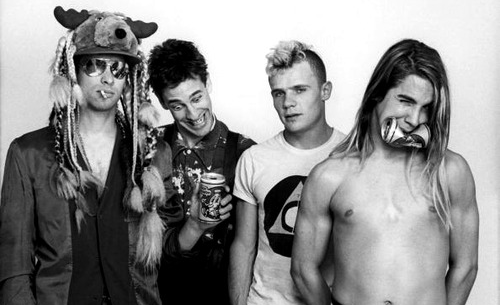
In a wonderful twist of cosmic sense of humour, Red Hot Chili Peppers officially began with what they’ve become semi-notorious with over the years: with changing members. The original Red Hot Chili Peppers featured the mainstays Anthony Kiedis and Flea alongside guitarist Hillel Slovak and drummer Jack Irons – four best friends having a laugh and a riot, their charismatic combination providing much of the wild excitement the band made their name with early on. They were ludicrous and had more energy than musical talent at this stage, but somehow someone decided they were worth signing for because why not. And then suddenly Irons and Slovak had to go – they had split their time with bands other than the Peppers and now they were forced to choose. After a lot of hard thinking and a lot of complications, they chose the other bands. So, the Peppers were meant to get ready to record their first album, while missing 50% of their tight membership. Issue one.

They soon ended up recruiting Cliff Martinez and Jack Sherman as the replacements. Martinez was a fine choice: his personality gelled with the band and so did his musical sensibilities (and he had a kickass moose hat). Sherman, less so. Kiedis’ autobiography goes into great detail about the Sherman situation (biased as it is) and how his attitude was vastly different to the rest of the band’s wild spirit. Half of the blame was arguably on Kiedis’ side as well – Sherman had the misfortune of replacing Kiedis’ BFF Hillel and got treated with a cold shoulder as a result, invoking Kiedis’ wrath through minor things that Hillel wouldn’t have done like e.g. wanting to add acoustic guitars on some of the tracks. Sherman ended up bonding with the record’s assigned producer Andy Gill, who didn’t really care for the band or their music and thus the studio time became an awkward, uncomfortable time of cold war between two factions forced to work together. Issue two.

The resulting album: 30-odd minutes of ramshackle funk rock played a little too stiffly, wrapped up in a zero-budget, typically 80s production work. Issue three. At this stage Peppers were primarily a live band because in such an environment they could work through their lack of musical finesse with pure manic energy. Not so much in the studio environment, and when recorded it’s easy to see how green the band still were. The production is dry and lifeless, sapping out most of the energy the band could carry into the studio. The album carries the feeling of a car crash, of everything that could have gone wrong doing so and leaving a young band completely helpless on the shore. Sometimes it feels like the short length is the result of no one simply wanting to continue any longer.
image
The most bizarre thing about The Red Hot Chili Peppers musically is how borderline adorable it is. It’s charmingly naïve, more akin a bunch of teenagers crudely jamming together in their first band than the wild-spirited maniacs the band were trying to be. The whole cock-in-a-sock sexed-up shtick we associate with the young Peppers shines with its shocking absence and in its place is a whole load of silly songs that occasionally borderline being downright cute: there’s even a song about how the band attracts literal babies instead of babes (“Baby Appeal”). Elsewhere it’s humorous love songs, funny party anthems, some generally weird stuff trying to be quirky (Cannot tell if the smooth grooving “Mommy, Where’s Daddy” is trying to be funny or creepy with its weird father/daughter dialogue) and a couple of attempts at political commentary turned daft when the lyrics start spouting about dolphin kingdoms and alike (“Green Heaven”, “True Men Don’t Kill Coyotes”).

That goofy charm keeps the album relatively afloat. There is little of musical value on the debut and absolutely nothing that would deserve a popularity revival or be mentioned in the greater scheme of things – this isn’t even a Pablo Honey case where a maligned hit makes an appearance and forces the album to be acknowledged. It is hard not to smile though whenever “Get Up and Jump”, “Buckle Down” or “Baby Appeal” make appearances, and that’s what ultimately gives the album the little saving grace it gets. It’s a silly, fun 30-minute splash that goes in and out but at least raises a smile. That’s something, arguably.

The album closes befittingly nonsensically. After ten tracks worth of varyingly ridiculous newbie funk rock, “Grand Pappy Du Plenty” appears and finishes the album with a moody Western-inspired instrumental out of nowhere. It’s like listening to a completely different band who’s interested in a wholly different musical direction, who suddenly have vision and talent. It’s a revelation that there’s so much more to the Peppers than they initially reveal to be and a small hint at why this band would end up lasting for a couple of decades instead of the couple of months the album otherwise hints at. That it’s immediately preceded by the short and frantic “Police Helicopter” and the thoroughly pointless shout-along “You Always Sing”, just makes the contrast even more absurd (and makes it feel like the album’s tail end was a dumping ground for random junk). The kicker is, of course, that “Grand Pappy Du Plenty” is not actually very interesting beyond that. The story of this album, then.

Rating: 5/10