Showing posts with label 2015. Show all posts

22 May 2022

CMX - Mesmeria (2015)

1) Rakkaudessa ja sodassa; 2) Hyperborea; 3) Laavaa; 4) Ojai; 5) Kauneuden pitkä varjo; 6) Mestarirakentaja; 7) Valles Marineris; 8) Teräs; 9) Mystiikan ontologinen sydän; 10) Tuleen kirjoitettu; 11) Tulisaarna; 12) Eksopaleoklimatologi

There's a hint of CMX attempting something here, but it's like everyone is coasting along with no real interest.

Key tracks: "Laavaa", "Teräs"

Mesmeria is CMX's 15th studio album, their second on their fourth decade of operation. In the wider sea of internet dwellers with too many opinions on music I am probably one of the more positive people when it comes to bands continuing past their unofficial "sell-by" date (as mandated by fickle music nerds who latch onto the old canonical classic and ignore the rest); old dogs can learn new tricks, they can surprise and not be shackled by their past. Plenty of artists have had incredible latter day albums. But the older artists get, the easier it becomes for them to stagnate. You have to start taking bigger creative risks in order to say something meaningful; or as we Finns say, a rolling stone won't grow moss.

On Mesmeria CMX aren't rolling with the speed they used to. There's an attempt to keep things fresh: Yrjänä has switched onto a more straightforward lyrical style, even going so far as being openly biographical for probably the first time in his career on "Teräs", and the band's trusted court producer of their last decade Rauli Eskolin has stepped back. His replacement is a special superstar producer, the Pariisin Kevät lead figure Arto Tuunela - and on paper that's a titillatingly unpredictable combination, because the idea of Tuunela's hyper-colourful hi-fi productions somehow meeting CMX's pure power is bound to be a fascinating mishmash. But Tuunela has let his inner CMX fanboy stay in control a little too much and he keeps things perhaps a little too faithful. The only real way Mesmeria differs at all in sound from any other CMX album of the past two decades is the few cheeky arpeggio synths in a couple of tracks. In most parts, Mesmeria resembles your average CMX album in most ways.

Mesmeria might in fact be less than average. I've been umm-ing and ahh-ing this album over in my head for a while now and I've tried to find an insightful reason for what's wrong with it, but I'm running up empty - which may just sum up the album the best anyway. You can detect small particles of what could make an interesting album between the lines - namely some of the arrangement decisions and the couple of more askew cuts in the vein of the more acoustic and vaguely Aura-esque "Ojai" (which dates back to the early 1990s and has suddenly resurfaced now) and "Teräs" which restraints itself to a mere piano and atmospheric textures for half its runtime. But it's not enough. Mesmeria is mostly made out of politely loud and relatively straightforward cuts, destined as playlist filler for the local rock (with a big rhotic rrrrrock) radio stations who kindly allow the respected veterans to play their latest singles in-between the old hits constantly on rotation. No rough edges, no sense of adventure - simply industry pros recording a selection of songs they could have written in their sleep. This is also the first real debut of the new drummer Olli-Matti Wahlström as an official band member, but he still sounds like a session drummer cautious not to bring attention to himself, which is not only not helping with the album's general blaséness but it really highlights just what the former drummer Tuomas Peippo brought onto the formula with his technical showmanship.

It's just all very... milquetoast. Even the token oddball, the sprawling and seemingly indecipherable closer "Eksopaleoklimatologi" which nods towards CMX's prog side, sounds like a gentle reheat of the previous album Seitsentahokas' similarly rambling closer. The lead single "Rakkaudessa ja sodassa" is the most anaemic fit-for-airplay single CMX have pulled out and the bubbly synths in its bridges aren't enough to make its middlingly rocking chorus any less stale. "Rakkaudessa ja sodassa" is about the only thing I actually frown at here though; Mesmeria largely just passes by and makes for a decent background listen, but rarely comes close to entice the listener to place it in the foreground instead. Few songs stand out either by way of form ("Ojai", "Teräs") or through a sudden appearance of something more captivating (the backing vocals of "Tuleen kirjoitettu", the smoothly soaring chorus of "Valles Marineris" that threatens to be something that sticks). The rest of it sounds like it was written under obligation or habit, almost as if knowing that no one was going to crave to hear these songs a few years down the line. Apart from "Laavaa", which ironically is the safest, most hit-seeking thing on the entire record and yet goes all-in on it, including having some actual fire in its belly. It's simple, direct and positively effective, with a snappily anthemic chorus that strikes straight into your spine (and some fun bass runs in its bridge which are really pleasing to play). It's the best thing on the album and the only real takeaway from it, proving that CMX don't need to be quirky or difficult to be great, they just have to approach the brief with some passion - it's the only song here where it sounds like the band are actively engaged with it and that makes the biggest difference.  

Across the last few CMX albums there's been a steep and steady decline as the band abruptly exited their golden years. Iäti was too safe and risk-averse but it brought in some songs and generally simply sounded like an experiment that didn't quite succeed, which happens to the best of us. Seitsentahokas doubled down on it by being flimsy on the songwriting department too, but it still had vigour at least. Mesmeria inadvertently makes it clear that those weren't just coincidental stumbles, but rather CMX themselves have been on decline and this marks the foot of the hill they've been spiraling down on - no passion, no energy, no songs of particular consequence. It's an entry towards the bottom of a long discography list that no one is going to click unless they're going for a deep dive; a middling album that even a big fan has little to comment on because it doesn't incite a strong enough reaction for it. 

That gorgeous cover picture deserved a lot better.

Rating: 4/10

10 Jun 2020

Squirrelhouse - Friends (2015)

1) Show You; 2) Jolene; 3) All That Shit; 4) Let the Right One In; 5) You Don't Know; 6) Friends; 7) Apocalypso; 8) Monster (Part 1); 9) Monster (Part 2)

A lost indie rock gem, buried in the annals of Myspace and finally resurrected in the modern age. I rejoiced. Others should too.


Key tracks: "Show You", "Apocalypso", "Monster (Part 1)"

Among the countless freshly started bands using MySpace to communicate (or trying to do so) to wider audiences in the late 00s, Squirrelhouse were one of the few that really struck me. When I encountered them, they were already one album down and were now busy posting demos from their upcoming second album, and I loved every single one. They had a great thing going on: the guitars were bright, shimmering and swimming through the busy rhythm section, who themselves had a great thing going on with their combination of a loose indie rock dynamic and an undeniable backbone-tapping groove to the interplay between the drums and the bass. They even had a permanent French horn player on the lineup, layering each song with gorgeous horn arrangements which was a win for me back then too. I only had a chance to listen to debut album SPQR retrospectively so it wasn't until many years later that I realised this is exactly what that debut had foreshadowed, with the new songs taking the strongest, most identifiable elements of the band and developing further from the best parts of that debut. Squirrelhouse were still in line with the mid-00s idea of indie rock having a more expansive, epic sound, but the new songs still kept it up close and personal, threatening to reach bombastic heights the band could easily pull off if they wanted to, but keeping it as a tantalising hint in the background for most of the time.

Three songs in particular became repeat hits quickly. "Apocalypso" was the band's signature song of sorts in my mind, perfectly capturing that dry groove of theirs but throwing a fantastic curveball with its sudden switch to a plaintive, almost epic breakdown with that gorgeous French horn coming front and centre with its elegiac melody; it was a band realising they could master two very different tones and experimented by bringing them together, in a way that only made each one that much stronger. Meanwhile the two-part "Monster" was a stellar duo of songs which were completely different from one another but worked in unison perfectly, with the first part a moody drawl preceding the second part's injection of sudden energy into the otherwise decidedly cool and collected sound. I loved those songs to the point of hoping I'd find someone else who loved them as much as I did: when I made a post about them in my very first music blog, I found myself getting contacted by the band's lead writer Paavo Hanninen thanking me for it, which at the time felt special (the fact that he had a Finnish name despite his US upbringing was pretty cool too and made for some nice casual chatter in the emails). While they already had one album out, I never ended up hearing it because ordering it from the US at the time was something I couldn't easily do without a credit card to my name, and truth to be told, at the time I wasn't as interested about it; more than anything else, I was yearning for that second album to be released to hear more songs in line of what the band were teasing with their recent uploads.

The second album never came, for reasons I don't know why. The world forgot about Squirrelhouse, and maybe even Squirrelhouse themselves forgot about Squirrelhouse. I didn't - I had downloaded the demos and kept them around from one hard drive to the next, made them into a little EP and gave it a place in every iPod and MP3 library I had across the years.


One of my favourite moments of the universe showing its more magical side is when years later, as the naive teenager had turned into an office-crawling adult, shortly after I started using Bandcamp I typed in Squirrelhouse's name in the search on a whim. I found something I did not expect at all: Hanninen had uploaded the rest of the sessions for the lost second album there. Several years later, on a brand new music network, I discovered something I never thought I'd find, and stumbling onto Friends is genuinely some of the most excited I've been when it comes to discovering music.

And it's great. It's really great, even if you remove all the obvious nostalgic ties from the mix. The arrangements are excellent, keeping in line with the band's strengths and stand-out sound that the initial set of songs displayed. Brand new cuts like "Let the Right One In" and "Show You" are worthy of just as much love as the familiar songs I had listened to years. "Jolene" and "All That Shit", the other two familiar demos which always felt a little lesser compared to my favourites, have showed a great amount of longevity and endurance - the lazy disco beat and squelchy OTT synths of "Jolene" especially have become a stand-out moment of its own, bearing an off-beat jovial charm in contrast to the more firm and proper tone of the other songs. The old favourites are still just as great, and "Monster (Part 2)" even has a brand new finale now that gives it that one final extra oomph to close the record with, that I never knew it needed until now but which sounds absolutely integral to it. "Apocalypso" of course is still brilliant, its imaginary-stadium sized breakdowns now echoing with extra bittersweetness because it never had the chance to become as widely loved as it deserves to be. It's a lost classic, well among one of the 00s best songs in my books (and even if it was finally fully released in 2015, it would still make onto that list).

Squirrelhouse as a whole are a lost treasure. One of the sad facets about the infinite amount of new music the internet can provide is that not everyone gets the chance to get the recognition they deserve, especially so back in the MySpace days. In the digital-centric, streaming-friendly modern world you can easily cultivate a devoted fanbase, no matter how small, with your bedroom recordings and get them out on any major platform where they can be discovered by any; in the late 00s, you still needed the extra clout of a proper label backing you up to make the jump to to the more visible leagues. It's not something you think about that much until you discover an act who hit all the right boxes for you, but who you never see grow the audience you think they deserve. At the time of writing this I am the only person in Bandcamp who owns a copy of Friends and it's probably destined to live its life as a particularly obscure part of my library that I try to shove onto people where possible, and that's a little sad I guess. Friends is a great album in pretty much every regard: a characteristic style that sets it out from others of its genre, memorable instrumental performances and arrangements all across the board, Hanninen's vocals are full of quiet desperation that suit the sound, and the songs are excellent. The only complaint you could give it is that it's obviously a little rough around the edges, but at no point does it become a hindrance - you only wonder about the even greater heights these could reach with further polish. I don't think it'll ever get the retrospective recognition it deserves in my opinion but I am so glad it's finally out there, and most importantly, it's finally in in my music library.

Rating: 9/10

4 Oct 2019

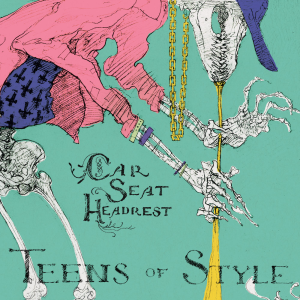
Car Seat Headrest - Teens of Style (2015)


1) Sunburned Shirts; 2) The Drum; 3) Something Soon; 4) Times to Die; 5) No Passion; 6) Psst, Teenagers, Take Off Your Clo; 7) Strangers; 8) Maud Gone; 9) Los Borrachos (I Don't Have Any Hope Left, But the Weather Is Nice); 10) Bad Role Models, Old Idols Exhumed (Psst, Teenagers, Put Your Clothes Back O); 11) Oh! Starving

Toledo and gang wave goodbye to the self-release days with a selection of re-recordings, and  have a whole lot of rockin' fun doing it.


Key tracks: "Something Soon", "Times to Die", "Strangers"

Teens of Style is the first proper Car Seat Headrest album, if we're being a bit glib about it. And we can be, comfortably. Part of Will Toledo's mythology is the knowledge that he started out with troves of haphazardly recorded EPs and albums thrown out into the world via Bandcamp, but it'll take a special type of obsessive at this point to backtrack through all those scruffy home recordings to find the good things worth more than a curious glance. I think Toledo's great and all, but I'm not that kind of obsessive, and while there are definitely reasons to look into some of those BC-era releases it gets a bit close to finding golden needles hiding in haystacks. 

Teens of Style was aimed for us lazy people. It's the first Car Seat Headrest record for an actual label, recorded in an actual studio, but it's intended to be a sort-of-not-really beginner's guide to Car Seat Headrest: a set of re-recordings of select songs from the Bandcamp days. It's not a best of - note how the tracklist contains nothing off either the canon darling Twin Fantasy or the actual best BC-era release How to Leave Town. Rather, it's a selection of Toledo's favourites which work well together and which could easily be given a longer lease in life through this kind of canonisation. It's intended to establish early Car Seat Headrest in a nutshell but with the benefit of accrued experience in tow, and the songs have been given a more consistent sound quality along the way - even if the production is intentionally still kept a little raw as a tribute to those old demos, including Toledo's voice being nearly unintelligible underneath all the vocal fuzz. It's the big boy version of Toledo making noise on his own, and thus an appropriate bridge between the two stages of Car Seat Headrest - closing off an era and starting the next by shifting songs from one to the other.

In doing so, Toledo has effectively released the ultimate version of all his teenage disillusionment and the need to escape from it. He outright states "I want to romanticise my headfuck" on "Something Soon", before shortly breaking down into another loud section of messy guitars and raw vocals. It's snapshots of breaking down in the bedroom and then celebrating surviving through it with every living fibre of your body, and it's made to sound like a hell of a lot of fun. The more far-reaching scopes of Toledo's songwriting are held back and rather than drawn-out dramatic epics, Style is a tighter set of shorter firecracker cuts, kept scrappy, snappy and loose. Feel-good foot-tapping rhythms, loud and distorted guitars and Toledo belting out his voice in full half the time come together to an album that's part punky teenage defiance, part party songs for slacker youths. It's playful too, with little interludes that throw a channel-hopping curve, the depression in the lyrics is laced with cheeky black humour and wink-and-nudge self-awareness, and the suddenly switching dynamics and little production twists (like the skip-start vocals halfway through "Times to Die") keep things a little positively unpredictable. Sure there's a lot of soul-searching and navel-gazing within the album, but it sounds wild and free and like it's having a blast, and that's the spirit of Teens of Style. It doesn't wallow in its problems, it rocks them out.

Despite the self-restrained confinements of Teens of Style - the lo-fi glamouring sound, the more direct material - it still packs a good amount of variety within it, extending its indie grooves into different branches effectively. The loud rock and roll of "Sunburned Shirts" and "The Drum" and the urgent escapist powerhouse "Something Soon" are the sound of a full band intent to get the crowd jumping, the chopped up indie disco hit "Times to Die" and the drum machine -driven mellow melancholy of "No Passion" are closer to Toledo on his own playing with his music software. "Los Borrachos" flicks wildly between slapdash synth pop exercises and the band joining in on a sudden burst of volume throughout, in one of the album's quirkier moments. "Maud Gone" is a lament; the part of the album where the album's recurrent subtexts finally reach the surface.With a simple organ riff and Toledo's wailing it becomes the big centrepoint ballad, the one respectful but solemn gaze onto the floor - it's both the right thing in the right place in terms of sequence but genuinely a gorgeous song, a minimalist late night ballad with an earnestness the rest of the album actively shies away from. "Oh! Starving" is the exact opposite, closing the album with an ostensibly silly farewell that could double up as a musical number, though it then transforms itself to match the rest of the album's aesthetics right before its final bow.

But "Strangers" needs to be singled out specifically. It's unassuming at first but it's a curveball, though even in its initial form it's impressive enough. Its melodic runs, the air-punching choruses full of boastful defiance and the subsequent instrumental bridges where the lackadaisical playing from the rest of the album is suddenly gone and replaced with a smoothly operating and incredibly tight unit - it all screams like it could be a genre classic, and nods at the more finely arranged material that would come later down the line. And then after the second chorus it goes for the jugular. Toledo uttering "When I was a kid I fell in love with Michael Stipe / I took lyrics out of context and thought he must be speaking to me" in one of the few lucid moments of the album where he's completely and perfectly audible, backed by an atypically brightly singing guitar melody, is such a moment on its own already, but Toledo uses it as a springboard. From there "Strangers" rises into a finale of wordless hollers, desperately pleading final verses and grand instrumental stands. It becomes the anthem it promised to be, and if the rest of the album slightly obscures Toledo's talent as a songwriter by its intentional aesthetic choices, this is where it's clearly pointed out. 

"Strangers" is the one big lofty-ambitioned classic of Teens of Style; the rest of the album doesn't even try to aim towards that direction. In the greater scheme of things the album is little more than an amuse bouche before the brand new material kicks in, a quickly recorded nod to the old fans done with the new ones in mind and a way to tease the actual First Big Budget Car Seat Album to come. And it's lovable in all that intentional scrappiness of it. Teens of Style wasn't meant to be anything with a greater meaning, but the songs are great, it's got gusto and charisma and the overall lackadaisy vibe is exhilarating. The word that keeps coming to my head over and over again is fun: it's an honest-to-god bouncy rock album from a source where you perhaps didn't expect one, but who deliver it excellently. If you consider this to be the "official" start of Toledo's discography, its destiny was always to be the kind of humble debut that is bound to be overshadowed by the albums the come; but the kind of record you'll shout about being underrated because it's just too charming to be buried beneath the other albums.

Rating: 8/10

20 Jun 2019

John Frusciante - Renoise Tracks 2009​-​2011 (2015)


1) Genex 44; 2) Singular Scope 85; 3) Motiern 58; 4) Hew Brenderson; 5) Unending 126 Mix; 6) Culminate; 7) 90/180; 8) Anea 18

I mean, these are discarded demos... but honestly, these sound more refined than most of the other electronic material Frusciante put out.


Key tracks: "Unending 126 Mix"

John Frusciante has always been good with his internet releases for fans: his scattering of free downloadable albums are outtakes for the hardcore followers, but they've been notably insightful ones. Renoise Tracks 2009​-​2011 is ostensibly a selection of songs from the period when Frusciante first abandoned his guitar-oriented direction and moved towards a more free-form electronic sound, billed as practice rounds from when he was still messing around with his new tools. That's the surprising thing about it; this sounds far more like Frusciante is already comfortable with what he's doing and has specific direction in mind, acting like a prelude to his IDM/acid house-oriented Trickfinger records more than his somewhat messy set of electronic albums under his own name. One of Frusciante's electronic sound's bigger downfalls is the aimlessness they often fall victim to - and yet, this set of early attempts sounds much more like an intentional album than the ones that actually had commercial releases.

Renoise Tracks strikes real gold with "Unending 126 Mix", which sounds like what electro-Frusciante has the potential to be but with a focus that material of its ilk generally lacks. High-energy beats come together with a careful application of his guitar and some nice synth samples, with Frusciante's voice bringing them together. It sounds like what you'd expect an IDM track from a rock songwriter to sound like, and it really works. The rest of Renoise Tracks are slight variations on the same themes, altering largely on whether it emphasises the beats or Frusciante himself. It's where you get the only real notion that these were originally intended just for Frusciante himself, uncertain whether to go for a fully instrumental route echoing his inspirations or trying to express his old ways of writing through new means, and finding ways to bring the two together. It's enjoyable to a surprising degree and it's strange how the actual albums released chronologically after these songs didn't develop further on the ideas here.

Renoise Tracks leaves you wanting for something developed from the ideas presented here, even if it doesn't exactly leave you wanting to come back to it frequently either. It's a decent listen but only kicks into a really memorable gear occasionally. Yet, for the time it plays it's engaging and even outside its better moments it has a bunch of neat ideas which maybe could have crossed over onto something really good with a little more development. For what is effectively a group of discarded demos, it's unexpectedly solid.

Rating: 6/10

2 May 2019

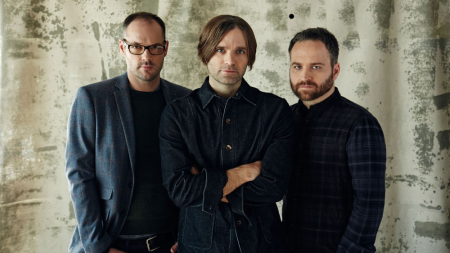
Death Cab for Cutie - Kintsugi (2015)

Image result for death cab kintsugi


1) No Room in Frame; 2) Black Sun; 3) The Ghosts of Beverly Drive; 4) Little Wanderer; 5) You’ve Haunted Me All My Life; 6) Hold No Guns; 7) Everything’s a Ceiling; 8) Good Help (Is So Hard to Find); 9) El Dorado; 10) Ingénue; 11) Binary Sea

Such a generic 2010s rock album this could have come from anyone, and it coming from a band going through various internal crises isn't making things better.


Kintsugi is a technique where broken pottery is glued back together with gold lacquer, to highlight the damage as a part of the item’s history rather than hide it. The broken pottery in this case was Death Cab for Cutie themselves, as Chris Walla announced halfway through the recording sessions that he intended to leave once the album was finished. Ben Gibbard wasn’t in the best shape either, with a high-profile divorce behind him and still reeling from the changes brought by it. And the gold lacquer? A high-profile outside producer for the first time in the band’s history with the radio-friendly Rich Costey, a direction leaning heavier on synthesized elements and Gibbard’s continued, intentional move away from his previous lyrical and music songwriting habits. Kintsugi, the album, is pretty on the nose about being directly driven by change and piecing together a new path; that lack of subtlety characterises the album fairly well too. 
It’s not a complete skin-shedding moment for the band. Codes and Keys already flirted with increased programming and synthesizer elements, as well as a less verbose way of writing for Gibbard, and Kintsugi is a direct successor in both regards. Codes and Keys had its flaws though, and Kintsugi finds the band doubling down on them. The sound is sterile to the point of dulling down the emotional impact, the electronic ideas feel like they’re used simply because it’s 2015 and that’s just what rock bands do now, and Gibbard’s once-evocative storytelling is now so toned down that it’s at best indifferent and at worst so awkward it’s impossible to ignore. “Little Wanderer” is hands down the worst set of lyrics Gibbard has released on record, with verbal snapshots about kissing by the baggage claim so mundane that it actively brings down the song. At no point does Kintsugi sound like it could throw a curve ball or excite with something unheard; it’s the kind of adult, middle-of-the-road album you dread for any aging band to release. 
image
To be fair, Kintsugi isn’t devoid of good ideas but the album is bent on trying to obscure them. “Little Wanderer” for example is so clunky lyrically that it’s hard to enjoy the genuinely lovely gentle drive it has going on musically, sounding effortless and light despite all the studio coating over it. Elsewhere it’s the production keeping things down, like with the slowly building introduction “No Room in Frame” or the new-wavey pop grab “Good Help (Is So Hard to Find)”, both of which have good ideas but sound breathless and about as intricate as a plain white wall. Kintsugi’s studio wizardry is a whole universe away from e.g. Plans’ lush, rich textures: here there’s no details, just a steady lifeless texture that invokes the grayscale colour scheme of the cover. Costey’s more mainstream-oriented production approach frequently misjudges where the band’s strengths lie and as a result so much of Kintsugi sounds like it could come from any band in contemporary radio, and it’s not a choice that works for Death Cab. Whenever the album slows the pace down, as Death Cab albums frequently do, its cracks really start to show. “You’ve Haunted Me All My Life”, “Hold No Guns”, “Binary Sea” et al are reheated leftover takes on the band’s former tearjerker moments, only now with less engaging melodies and worse lyrics. The shallow and treacly “Hold No Guns” is a particularly bad offender in this regard: it’s hard to put into words how far away it is from e.g. “I Will Follow You into the Dark” even though they’re both stripped down guitar numbers from the same songwriter. 
There’s some silver linings. “Black Sun” and “The Ghosts of Beverly Drive” are the two big keepers of the album and they’re the closest it has to this set’s Death Cab classics, even if the album’s general issues still hover over them. "Black Sun” in particular has the kind of dark restlessness the band has always been good at conjuring, this time in the form of a steadily pulsating slow-burner teetering on the edge of breaking down, and just about goes through with it with its guitar solo which has more edge to it than anything else on the album. “The Ghosts of Beverly Drive” is the closest the album has to a rocker and it injects the otherwise softly paced collection with some urgency and muscle. Some of the less outright exciting cuts have their moments too, with "Everything’s a Ceiling” and “Good Help” serving basic melodic hooks good enough to find enjoyment out of them. It’s a far cry from the usual compliment you’d give to Death Cab deep cuts, but I can’t deny not enjoying them when they’re on, even if they’re not the sharpest of tracks. “Everything’s a Ceiling” in particular is the one song on the album where the slick, synthy sound comes across like it has some purpose and intent behind it, its atmospheric textures lifting it up. 
It’s clear though that the band weren’t focused enough with Kintsugi to pull off anything more. Walla was suffering from demotivation in the first place and his departure announcement likely caused a wave of the same to go through the rest of the band. Gibbard has since mentioned that he tried to avoid bringing too much of his own life or specific details into the lyrics in fear of becoming under scrutiny in the Hollywood-centric life he had become immersed it around the time, which lead to his writing turning so generic it’s become blase. Kintsugi does what it can to turn the work of a broken band coasting along into something you could call an unified statement, but it goes too far with the polish. I don’t want to call Kintsugi bad but it’s certainly disappointing, taking the most effort to find the few reasons to ever go back to it. Worse, it sounds like it could have come from anyone, with Death Cab losing their own identity within the processed, sterile sound. 

Rating: 5/10