Showing posts with label 2017. Show all posts

4 Feb 2022

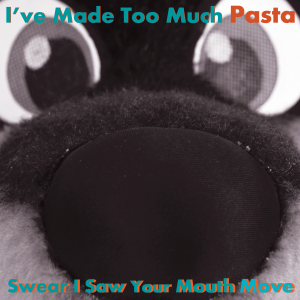
I've Made Too Much Pasta - Swear I Saw Your Mouth Move (2017)

1) Fleas; 2) Raccoon Song; 3) Evil Boys and Evil Girls; 4) Never Ending Thirst; 5) I Had a Great Time in the Trash; 6) I Would Eat the Moon; 7) Macaroni and Disease; 8) The World's Not Big Enough for the Both of Us; 9) God of Outer Space; 10) Maybe We Can Steal Our Neighbors' Cable; 11) Lemurs in the Walls; 12) Ferret Without Any Whiskers

An abundance of vocal harmonies and passion project energy - who know raccoons were such great songwriters?

Key tracks: "Macaroni and Disease", "Maybe We Can Steal Our Neigbors' Cable", "Ferret Without Any Whiskers"

In my completely sincere opinion, one of the most exciting ‘indie’ scenes happening right now (early 2020s, if you're reading this much later on) isn’t found in the persistently cool New York clubs or in Northern English factory towns, but within the borderless world of the furry fandom. The growth in recent years of what now falls under the vague ‘furry music’ umbrella has been a joy to witness, given that for the longest time the fandom's taste in music was practically synonymous with bedroom dance jams of various (and often dubious) quality. This past half a decade, though, has seen an influx of various styles of songwriters with cartoon animal personas rise from the fandom almost overnight, and there's a particularly strong subset of those musicians who seek their inspiration from early 90s alternative rock and singer/songwriters, and often the weirder side of that in particular. Many of those artists also go on to support others, with everyone collaborating and bringing their unique flairs into each other's music. It's like an offbeat version of the Elephant 6 collective - except with a chance of someone actually being an elephant this time. It’s a genuinely exciting scene of wildly talented individuals and promising upcomers, flying completely under the radar of most people.

I'm not necessarily saying that Swear I Saw Your Mouth Move is going to convert anyone to believe me just like that - for one, it still operates on a distinctly furry aesthetic that some less imaginative people are automatically repelled by - but it is one of the most charming and personality-abundant releases in the "scene" it's in, and an overall good representative of the sounds so much of this fuzzy invasion leans in on and what makes it such a fun movement to follow. I’ve Made Too Much Pasta - AKA lead figure Scurrow and his changing group of companions, on this record primarily the fandom superstar Pepper Coyote and the stalwart patron of furry music Bob Drake - play their ramshackle pop songs with big nods towards They Might Be Giants and R.E.M., thrown in a blender with Tiny Toons and run through a filter of creative eccentricity that makes that combination their own. There's an accordion serenade about eating the moon, a jubilant punk anthem about moldy food in the fridge, a stadium singalong celebrating stealing cable and a snappy slacker rock cut about two giant monsters beating the hell out of eachother, among other half-neurotic, half-charismatic stories and anecdotes ostensibly sung by a rabid raccoon. It's surreal and it's cartoony, but the music itself is backed by serious conviction and fuelled by the grassroots conviction of turning daydreams into something real. It's fun and at times funny too, but it takes itself seriously and has audible passion behind it.


There's a lot of great, neat detail to Swear I Saw Your Mouth Move. The songwriting is obviously a big thing, and Scurrow knows how to write a great hook. That knack more specifically shines in his vocal melodies. The lyrics are full of witty turns of phrases and so many of the utterances and anecdotes are hooks on their own thanks to how they're sung, with the carefully tethered manic energy looping through effectively sharp melodies. The songs themselves are all dressed up in a mid-fi, lackadaisical raccoon-core sound that nods towards its inspirations without ever really revealing a clear bridge to them (which in a roundabout way means that Pasta's sound is their own), but it's an eclectic set of tracks behind the aesthetics. Quirky solo cuts like the opener "Fleas" (with its brief organ coda being the album's first twist of many) pave way to full-blown trashcan bubblegum pop ("Raccoon Song", "Evil Boys and Evil Girls")  and parallel dimension cartoon musical interludes ("I Would Eat the Moon", "God of Outer Space"). Beef up "Maybe We Can Steal Our Neighbors' Cable" a little and you'd have an alternative rock single that would've slotted just perfectly in an MTV rotation in 1992: by the time it gets to the handclaps and crowd vocals you've got a rock solid anthem at your hands. 

The secret weapon of the album lies in its backing vocal arrangements, though. From the joyous rush of voices in "Macaroni and Disease" to Pepper flexing his a cappella arrangement skills in "Ferret Without Any Whiskers", the album is full of voices wondrously hollering and harmonising, accentuating hooks and highlighting melodies. They contribute a great deal to the album's joie de vivre and overall energy, balancing between a communal band jam atmosphere and meticulously planned vocal orchestral flourishes. The aforementioned "Ferret Without Any Whiskers" is particularly incredible all around - it's the closer that turns the album upside down and suddenly reveals a level of vulnerability that the rest intentionally avoids - and it's overall one of the album's very finest in music with those dreamworld parade breakdowns, the lyrics and the suddenly emotionally spitting delivery of them. But it's the rich vocal harmonies that make it a grand stand-out, haunting behind the lead vocals throughout until echoing alone through the instrumental bridge in a moment of brief but powerful poignancy. As a backing vocal junkie I'm always so excited to encounter an album that revels in them, and it's a big part why I've latched onto Swear I Saw Your Mouth Move so much.

There's this search for the Holy Grail that many music geeks seek to take, where they hope to find something that sparks with greatness that many others haven't yet found; as if you're uncovering a hidden treasure that speaks just for you. The furry music scene right now is the most consistent place in which I keep tapping into that high, and Swear I Saw Your Mouth Move is there at the forefront of discovery for me. It's endured as a set of charismatic and potent - sometimes surprisingly so - songs that have become a fixed part of the listening routine, which have burrowed their way into parts of my head where they live rent free and pop out without warning at frightening frequency. It's a delightful, inspired debut speaking with its very own voice I'm not hearing much elsewhere

Bonus points for the wonderful CD packaging, with a fun lyrics booklet and a full comic detailing the titular character's (yes, I've Made Too Much Pasta is a character name) backstory. It all adds to the labour of love charm of the album.

Rating: 8/10

7 Jan 2022

Ville Leinonen - Hei taas (2017)

1) Kultani mun; 2) Tahdon sinut; 3) Vastaa jo, please; 4) Nasta pimu; 5) Sadepisaroita; 6) Sinä olet hän; 7) Anna rakas raju hetki; 8) Ota kii; 9) Tyydytys; 10) Me emme laske viiteen

A brief introduction to Finnish 80s synth-disco fever. In the form of a covers record.

Key tracks: "Kultani mun", "Anna rakas raju hetki", "Ota kii"

The late 2010s/early 2020s have seen a renewed interest in Finland on how our nation experienced and interpreted the 1980s and the synthesizers that came with it, both in form of a clear inspiration in new acts as well as through various selector compilations reintroducing the known and more importantly the now-unknown acts for modern audiences. Like so many countries Finland too was seduced by the new possibilities provided by the shiny technology of the era, and the various continental European sub-scenes (particularly italo disco and anything that was happening in Germany) acted as a firmer influence than what was happening in the Anglosphere. When those influences met up with the grand Finnish schlager tradition or our other charmingly awkward cultural peculiarities - including the language that at best was a clumsy match in this new environment - they lended the familiar electronic sounds a distinct feel: an imprint of our own that has now started to be re-appreciated as newer generations have embraced it rather than be embarrassed by it.

The adult contemporary singer Ville Leinonen was a frontrunner in this regard with 2017's Hei taas, the sequel to his 2007 album Hei!. The first Hei! found Leinonen digging through the 70s Finnish schlager songbook, covering a selection of carefully chosen songs with a faithful and loving touch. Hei taas does the same but this time the scope is aimed at the 1980s and the uneasy companionship that disco and synth pop made with traditional Finnish easy listening music. Five of the songs are Finn-originals, the other five are based on translated versions of international hits which success-seeking artists and producers converted into a more linguistically palatable form: most notably Modern Talking's "You're My Heart, You're My Soul" ("Ota kii") and Irene Cara's "Fame" ("Me emme laske viiteen"). Leinonen keeps his versions loyal to the originals: the sounds and arrangements aren't 100% 1-to-1 but for most parts they're as close as you can get and the production sticks to the 80s aesthetic throughout and imitates the original synthwork as much as possible in tone (and most importantly the songs retain all those wonderful arpeggio fills that seems to be a signature move of this decade). Nine out of ten songs were originally sung by women and it's made very obvious in a very eighties-esquely stereotyped way, and Leinonen retains those original lyrics while keeping a straight face: there's definitely a clash between the lyrics and the performance here that's absolutely intentional and in itself a gimmick for some of these songs, most obviously "Sadepisaroita", originally sung by the then-12 year old Jonna Tervomaa and coming across nearly surreal when sung by a grown man.

The song selection is in general really well put together and bears the feel of an archival passion project where Leinonen has avoided any obvious big hits and instead he's chosen personal favourites and lost gems that time has forgotten. Some of these are real treasures and unearthing them for people who weren't there originally to discover now is a real cultural boon. "Kultani mun" (as made famous by Berit) is a dramatic 80s torchsong that's absolutely on par with any international classic, the aforementioned "Sadepisaroita" is lovely bubblegum sweetness, "Anna rakas raju hetki" (Nisa Soraya) has become a Finnish camp cult favourite and struts with confidence, and "You're My Heart, You're My Soul" is an absolute evergreen smash no matter what language it's in and thus "Ota kii", which doesn't dare to stray away from the original beyond the vocals, gets full points by default. Bringing them to the spotlight is a chance to give them the respect they deserve, especially non-translated songs - Finland could be toe to toe with the best (or worst, depending on your point of view) of the decade and before Hei taas and the various archival releases that have followed over the years, it wasn't something I really had realised. There's just one issue here, in this selection of various crate-digging catches - and that's Leinonen himself.

The thing is, Hei taas can't escape from sounding like a karaoke album.You can tell Leinonen is genuinely into this music, but it's also obvious that he's operating well outside his musical comfort zone and there's no way you can turn him into a convincing disco diva with his dry, almost timid vocals. His singing takes some time getting used to and even after you do get used to them, it just becomes more apparent that Leinonen himself doesn't actually add anything to these songs. If you play those original versions side-by-side as a comparison, you start to wish this was a compilation, a mixtape someone made to showcase some old favourites. The best of the best of the songs still shine bright even with Leinonen in the lead, but with many of the others you get this feeling like you've loaded up a track in a playlist and accidentally added a license-dodging "as made famous by..." version instead. Hei taas looks and talks the part, but doesn't walk it. Plus while the tracklist is mostly fine, when the album does take a dip it absolutely plummets. Funny enough, the most offending numbers are the onest that feature the most creative freedom in contrast to the originals: "Sinä olet hän" (another Berit cut) is destroyed by Leinonen's creative decision to turn the chorus into a monotonous churn with distracting backing vocals, and "Nasta pimu" (Kake Randelin) wasn't particularly good to begin with but the mindnumbing repetitiveness of it and the endless key changes and tempo increases that are piled up on its plain bones (which the song mistakens to be something actually interesting) turn it actually obnoxious. Even though Leinonen performing along a karaoke VHS for the rest of the album isn't ideal, it feels positive given what seems to happen when he finally doesn't.

I have a slight soft spot for Hei taas because it was what first piqued my interest to dig deeper into the Finnish synthesizer histories, but as it is sometimes the more you start listening to the originals the more the recreations begin to lose their shine. I practically feel bad for criticising Leinonen like I have - no one records an album like this unless they really love the source material - but it's him that has effectively converted this into a niche release and a collection curio rather than something genuinely unique and exciting. There's a great compilation inside these covers and the liner notes, which include brief biographies of the original artists and recordings as well as a general history of the period being paid tribute to, just further emphasise that. But that collection becoming a covers album simply leaves me conflicted.

Rating: 6/10

Physical corner: Standard jewel case, with a rather interesting booklet as described above.

31 Jul 2021

The Shins - Heartworms (2017)

1) Name for You; 2) Painting a Hole; 3) Cherry Hearts; 4) Fantasy Island; 5) Mildenhall; 6) Rubber Ballz; 7) Half a Million; 8) Dead Alive; 9) Heartworms; 10) So Now What; 11) The Fear

Charmingly erratic and surprisingly consistent return, but also lacking in the sort of highlights you'd rave about whenever Mercer's got a new album out.

Key tracks: "Painting a Hole", "Dead Alive", "So Now What"

Port of Morrow saw James Mercer officially turn The Shins into a fully autocratic venture for his own whims, but it's the Shins album with the least of Mercer's own personality and that's in good part thanks to the radio-friendly big name production. Heartworms, then, sounds closer to what Mercer perhaps intended all along, tying his musical language inseparably together with his quirks and influences. It's self-produced, a whole lot more idiosyncratic than Port of Morrow and Mercer's pulled together a strictly limited number of collaborators to act as a band of sorts for when he needs something to sound like a group effort instead of pure studio craftsmanship. Its inspiration also stems from the whole spectrum of James' singer/songwriter past, The Shins' melodic jangles, his electronically oriented Broken Bells side project and the 1980s indie acts that he worships, and it splices them all together into a genuinely somewhat weird concoction; that at-first uncharacteristic cover art makes perfect sense in context because there's that streak of unpredictable surreality to Mercer's operations here.

I honestly have a lot of admiration for Heartworms conceptually and it's especially clear why if you spend a good time with Port of Morrow and then this album right afterwards: there's simply so much more excitement to what Mercer is doing here and the album is full of surprise. The main thing is that it, as in a blink of an eye Mercer can move from his trademark stylistics with e.g. the reliably Shins-like singalong ditty "Name for You" and the cosy acoustic daydreaming of "Mildenhall", to something as neurotic and twitchy as "Painting a Hole" or the string-swept resignment of "The Fear". There's a constant momentum to Heartworms that's the result of it being a jumble of influences and ideas which  form a sum that makes a strange logic out of its disparate strands. It's the most varied album released under The Shins moniker so far

What's also apparent if you come into this directly after Port of Morrow is how Heartworms lacks a real stone cold classic or two, when even Port of Morrow had its title track and "The Rifle's Spiral" which kept you coming back to the album and contribute to why I do actually like that album to some extent despite how harsh I'm towards it here. Heartworms is arguably one of the most interesting Shins albums, but it's not got its own killer hit that Mercer has always managed to sneak into any album he's released. The closest we get is "Dead Alive", a throwback to the early Shins sound laced with a barking mad Halloween spookiness twist which works incredibly well - but as fun as it is it's not the kind of first place trophy song that becomes synonymous with the Mercer project it's associated with and draws you back in. I like plenty of songs on Heartworms - "Mildenhall" is quaintly heartwarming in its earnest and happily cheesy nostalgia, "So Now What" stretches the kind of lush centrepiece swoon moment most songs save for the finale into a full song length and it strikes a particular level of beautiful as it does so, and both "Painting a Hole" and "Half a Million" are great examples of the more hyperactive mad genius concoctions Mercer is comfortable cooking under the reimagined Shins. None of them are songs you'd rave about to anyone who cares to listen though. There's no "New Slang", no "Mine's Not a High Horse", no "The High Road" that you'd truly fall in love with and which would pull you into the album as a whole even when the rest doesn't match it, and while that might perhaps be a high ask it's something that Mercer has always been reliably solid with otherwise. Heartworms' curse is that while it's consistent, it also doesn't plateau particularly high. And then on the other hand, it houses a couple songs that are actual stinkers: the bubblegum float of "Fantasy Island" with its irritatingly coy chorus and the wishywashy indie-pop-by-numbers "Rubber Ballz" are probably the worst two songs in The Shins' back catalogue so far, going beyond plain forgettable and actually being a little annoying.

Heartworms is a decent album but it's the worst kind of decent album: one with the potential to be great. A lot of it is delightfully quirky and it marries well with the more conventionally Mercer-like songs, but it's all a step or two away from being something truly great, something that would stick around. During the Heartworms sessions Mercer had the bonkers idea of doing an alternative version of each and every song, one as the songs were 'intended' to be (i.e. the ones here) and another where he went completely wild and which he would later release as the companion album The Worm's Heart. The two are inseparably linked as much as I'd like to judge them on their own, and while Heartworms is the more cohesive and sensible of the two, some of the ideas from the alternative takes could have taken these songs to the next level when transported over and converted into the type of vision James had here. So not only is it an album with potential but you can practically touch that potential. But that's all could've would've should've,  and the reality is that Heartworms is another appealing yet flawed album into The Shins canon - though at least you can give Mercer credit that he always lets you down in a different way, at least.

Rating: 6/10

1 Mar 2021

Arcade Fire - Everything Now (2017)


1) Everything_Now (Continued); 2) Everything Now; 3) Signs of Life; 4) Creature Comfort; 5) Peter Pan; 6) Chemistry; 7) Infinite Content; 8) Infinite_Content; 9) Electric Blue; 10) Good God Damn; 11) Put Your Money on Me; 12) We Don't Deserve Love; 13) Everything Now (Continued)

What you may know it from: awkward and clunky antics. What you should know it from: its restless and quirky pace and fun grooves.

Key tracks: "Everything Now", "Signs of Life", "Put Your Money on Me"

Following on from Reflektor, by the mid-2010s Arcade Fire had embraced their conceptual side, marrying their music together with visuals and elaborate theatrics to create something greater and more meaningful than "just" a new record. That was one of the great aspects of Reflektor that I particularly responded to on a personal level, and so the band continuing on that route was a development I quite liked in theory. But three years later, when the band tried to focus even harder on making an all-encompassing conceptual setpiece around Everything Now, the results were the complete opposite.

It's almost impossible to discuss Everything Now and not mention all the peripheral material, and that's largely because the band made such a big deal about it themselves that it succumbed the actual album. I'm a cynical millennial who has by now lived through three economic recessions in my lifetime but even I admit that the shtick about an all-devouring Jeff Bezos corporate wet dream hellscape was an ill-fitting and sometimes even ill-advised angle to try and make your campaign revolve around on: instead of nodding in agreement as Arcade Fire preached to the choir, the execution was painfully heavyhanded as the ideas and inspiration turned out to be little beyond how consumerism and capitalism are, like, bad. Between the band's social media profiles getting 'taken over' by their corporate overlords, the fake advertisements that got spammed through them and the overconceptualised press releases, the point got lost somewhere within all the anvilicious satire. It wasn't inventive, original or even that smart or funny, and yet the roll-out was pushed with such self-certainty of its own strengths that it actively got you thinking whether the more ironic moments of the band's past antics were ever that ironic after all. It was all getting a little too close to U2 at their worst.

The real tragedy of the Everything Now roll-out is that all the shenanigans managed to completely drown the record itself underneath the noise and the reputation that still lingers around the album, which is undeserved because Everything Now is a seriously great and weird album that its clichéd concept does absolutely no justice to. There is no clear angle to Everything Now musically: while its sound is rooted in the same slick groove-laden synth-rock vibe that was introduced on parts of Reflektor, it's far more accurately a record that sounds like whatever it wants at any given time. If anything, it's the anything-goes mentality of the first half of Reflektor taken to even further lengths, where no idea is too preposterous or absurd to be corporated into to the Arcade Fire repertoire. It's not just the band playing dress-up, but they're irreverent and rowdy about it, testing out new outfits and discarding them abruptly immediately afterwards, taking the listener for a ride that's likely to raise more than few confused exclamations the first time around. But the particularly cheeky way the band pull this through is what makes it also a genuinely fun album in all its sound-twisting delivery. You can hear the audacity and the rebellious joy that the band operate on throughout Everything Now, which once again runs against so much of the po-faced delivery of its promotional run. Even the lyrics get in on the fun more often than they wave a finger at CEOs: for example the synth freak-out "Creature Comfort" is a fine song in itself (there's definitely something to marvel at in its busy and untamed production) but its clear highlight is "she dreams about dying all the time / she told me she came so close / filled up the bathtub and put on our first record", which is pretty much the perfect jab to place within a record that is bound to alienate even further those who think Funeral was the band's last real triumph. It's the kind of self-aware nod that most of the promotional mess around the record tried to handle but failed. I honestly don't know what the end game for the revolving roulette of ideas of Everything Now was, but it doesn't get enough credit for being an album that constantly keeps you on your toes and does so in positive manner, where tonal whiplashes form into a strange but incredibly catchy journey along the way.

 
Which makes the title track, which was released as the lead single and which opens the album after the looping intro/outro reprises, a gigantic red herring even though it's arguably come to represent the album the most. From a band who always sounded like their sound would only ever fit stadiums, comes their first genuine stadium anthem: complete with a group vocal featuring literally hundreds of people captured in the kind of live setting that this song was made for, a bluntly open invite to ask people to partake into its charms. "Everything Now" is a fantastic song, don't get me wrong - it's a masterclass example of how to make a stadium pop song genuinely come to life and to sound absolutely magical in its size. It is also, however, a very conventional song to front and to represent an album that really isn't one in the slightest, and so it in no way prepares for what's actually coming up after it.

Take for example the disco/funk assault of "Signs of Life", right behind. It's perhaps not so unexpected as a stylistic exercise after Reflektor's foray under the mirrorball, but there is no way you can be prepared for the knowingly cheesy call-and-answer backing vocals and Win Butler spending a verse rapping through the weeks of the day. From there the song just goes more and more beautifully over-the-top as it progresses, becoming a delirious joyride -  there's so much excitement and fun to it and its delivery, right down to the delicious disco violins, and it's where co-producer Thomas Bangalter's Daft Punk backbone-tapping groove magic shines the most. "Chemistry" tipsily wobbles around a light reggae vibe and has a real wink in its eye with its lovelorn lyrics and it comes across like an oddball cover of an old showtune, and why it's on an Arcade Fire record who knows but it slyly charms with its wiles. The bubbly slow jam "Peter Pan" feels almost normal in this context, but that sense of harmony is quickly broken down when the "Infinite Content" duo storms the stage: first by blowing the door open with a ramshackle punk attitude, before it abruptly cuts into an americana ballad for its second act. Both of those halves could be a brilliant song on their own if fleshed out into a full-length segment (especially the first one with its downright exhuberant instrumental breaks): as the two halves are bashed together like this, you have a bewildering but thrilling double-interlude wrecking havoc in the middle of the record.

Towards its end Everything Now starts to calm down as it moves towards a more emotive, perhaps a more sincere finale, away from the bait-and-switch antics of its first half. The Regine-sung "Electric Blue" is a wonderful synth pop anthem for dancing by yourself through a 3am city centre (I only nick some points off for the atypically shrill vocal production which grates against the rest of the song's atmosphere) and the subtle "Good God Damn" has grown from the obvious filler cut of the album to a suavely captivating little brooder whose bass-heavy drawl learns to linger around in your head much longer than you originally anticipated, but they're primarily the bridge for the traditional Arcade Fire big finish. "Put Your Money on Me" is where everything comes together: it's as slick and refined as anything on the record but it also speeds into a surprising whirlwind of a post-chorus where the spirit of ABBA possesses the band seemingly out of nowhere. The sound is the closest approximation to what could constitute as Arcade Fire's core in 2017, but the heart and emotion in it is practically vintage in its earnestness, resonance and urgency. It it, as they say, a hell of a song. "We Don't Deserve Love" effectively starts as its extended coda, pulling that emotion right into the forefront, before coming to life as its own majestic entity. It's a space-age synth power ballad slowly unfurling into a supernova explosion of lights and dramar, covering itself in layers of melodies and harmonies and sounding so vulnerable despite its size. There's so much acting and facade in the whole story arc for Everything Now, but for the closure of the album itself the band simply serve the same kind of great emotional warmth that they've always done best - as if to say that even though it's been an unexpected trip, they're still the same band.

And that, I guess, is my hot take on Everything Now: that despite everything trying to point otherwise it's still by the same band who were behind the previous set of records too and it carries the strengths they've always had. It's absolutely a different frontier for Arcade Fire and Everything Now is without a doubt a mystifying record, one which I can't wait to read a detailed postmortem on some day in the future simply because it does sound like the band snapped one day when brainstorming ideas for their next record. But it's also a captivating, engaging and at the end of the day - and perhaps most of all - a powerfully entertaining record. Its anthems aren't often the emotionally evocative kind, but it's hard to complain about the record when I'm tapping my foot to its rhythms, unexpectedly dancing in my living room to it and getting swept by the melodic rush of energy that surges through the record. Even though it presents itself as some kind of an attempt at a deep statement on capitalism and corporations, that angle turns out to be more window dressing than actual real content, and you can count the songs on the album that tap into those Deep Thoughts just by using fingers on one of your hands. What Everything Now does represent is a record where the band in fact let their hair down for once. It's addictive and just so damn fun to listen to that I'm beginning to wonder if its detractors have ever even really paid attention to it. 

This post has been sponsored by our friends at Everything Now®.

Rating: 8/10

Physical corner: Everything Now came with two different cover versions, the ‘day’ version (pictured and owned) and the more limited ‘night’ variant; I chose the day one simply because the warm orange shade appeals to my tastes more. Gatefold housed in a plastic sleeve which bears additional artwork details and the tracklist (depicted as corporate logos). Fold-out lyrics sheet in classic Arcade Fire style, this time stylised as a newspaper’s adverts page.

4 Oct 2020

Manic Street Preachers - Send Away the Tigers (10 Year Collector's Edition) (2017)


CD1: 1) Send Away the Tigers; 2) Welcome to the Dead Zone; 3) Your Love Alone Is Not Enough; 4) Indian Summer; 5) The Second Great Depression; 6) Rendition; 7) Autumnsong; 8) I'm Just a Patsy; 9) Imperial Bodybags; 10) Winterlovers; 11) Working Class Hero; Bonus tracks: 12) Send Away the Tigers (Faster Studios Demo); 13) Underdogs (Faster Studios Demo); 14) Your Love Alone Is Not Enough (Demo - 60's Jangle); 15) Indian Summer (Cassette Home Acoustic Demo); 16) The Second Great Depression (Faster Studios Demo); 17) Rendition (Cassette Home Acoustic Demo); 18) Autumnsong (Faster Studios Demo); 19) I'm Just a Patsy (Cassette Home Acoustic Demo); 20) Imperial Bodybags (Faster Studios Demo); 21) Winterlovers (Faster Studios Demo)
CD2: 1) Leviathan; 2) Umbrella; 3) Ghost of Christmas; 4) Boxes & Lists; 5) Love Letter to the Future; 6) Little Girl Lost; 7) Fearless Punk Ballad; 8) Your Love Alone Is Not Enough (Nina Solo Acoustic); 9) Red Sleeping Beauty; 10) The Long Goodbye; 11) Morning Comrades; 12) 1404; 15) The Vorticists; 16) Autumnsong (Acoustic Version); 17) Anorexic Rodin; 18) Heyday of the Blood; 19) Lady Lazarus; 20) You Know It's Going to Hurt

B-side manna for the collectors, but they retrospectively mess up the actual album even more than during the original release. 

Key tracks: Of the bonus material, "Welcome to the Dead Zone", "Boxes & Lists", "Anorexic Rodin"

(this is a review of the 10th anniversary reissue of Send Away the Tigers. For the actual album review, please click here).

In case anyone’s keeping tally, the Manic Street Preachers reissue series has been... erratic in its schedule. Rather than sticking to a chronological order, the band’s deluxe re-releases have followed a somewhat more random pattern, finding an anniversary year as and when it suits them. There is some logic to it: the critical favourite The Holy Bible got its turn first, then the popular classic Everything Must Go. Rather than make the logical and chronological step to re-release the international hit This Is My Truth Tell Me Yours next, the more cult-favoured debut Generation Terrorists got its turn first - but then, it’s also the one Manics album that actually needed a genuine remaster. Everyone was expecting This Is My Truth to get its due next but suffice to say it was a bit of a whiplash when out of nowhere, the 10th anniversary edition of Send Away the Tigers got announced.

Which speaks a lot about the band’s opinion on the album’s importance to them. Following a couple of intentionally less crowd-pleasing records, Send Away the Tigers was their first taste of mainstream success in several years and gave them their last genuine hit with “Your Love Alone Is Not Enough”. It did spawn a new generation of fans and the band consider it a motivational booster, but I don’t think anyone was clamouring for a celebratory reissue for it over some of the historic albums. And that’s without the personal bias, i.e. that Send Away the Tigers was more or less the band’s nadir and giving it the big box treatment over the actually great records is akin to putting makeup on a pig and trying to prop it up as your hot new date.

Which brings us to the most controversial aspect of this reissue. One of the bigger flaws of Send Away the Tigers is the obvious laziness that’s all over the record, from songwriting to production. “Underdogs”, the album’s unofficial lead single, became the poster boy for this at the time of its release: intended as a tribute to the fans, the fanbase was less than thrilled to have a hackneyed old man punk cut directed at them, calling them freaks, dodgily insisting that “people like you need to fuck people like me” and having a copy/paste edit so bad it became infamous. And so, on the tenth anniversary reissue, it’s just gone. Off the track list. There’s no mention of it in the liner notes and the promo material made little to no mention of its absence, like it had never existed. It has been replaced by the b-side “Welcome to the Dead Zone” and had they made an argument that ‘this is how the album was originally intended’ it may have flied, but “Underdogs” isn’t even included in the bonus material. A demo of it exists in the original’s place in the demo section of the record, and that’s it.

I’m not a big fan of “Underdogs” either, but there’s still something awkward about tampering with the tracklist of the original record to this extent. You can understand why the band would want to pretend it doesn’t exist, but it’s replaced one disingenuous problem on the album with another. It doesn’t help that, true to the album, even the switch-up has been lazy. “Welcome to the Dead Zone” is a great song and actually one of the best songs of this entire era, a starry-eyed mid-tempo anthem with a glimmer in its eyes and more heart than most songs on the album itself - but it’s not track 2. Swapping the songs one-to-one has been the easy way out but the album basically grinds to a halt right off the start because the flow is so, so bad now - a shining example of why sequencing does matter. So not only is there the problem that the reissue effectively blocks you from listening to the album as it was actually released, but the substitute version that’s given is too clunky to work as a listening experience as well.

At least the bonus material is good. The obligatory album demos offer little of interest beyond the mysterious “Underdogs” suddenly making an appearance (for what it’s worth, it sounds identical to the original version, just a little scruffier and without the edit blunder), and are mostly either slightly less produced versions of the album takes or James’ acoustic versions. The only item of major interest is the “60’s jangle” version of “Your Love Alone Is Not Enough” which actually works well as an alternative version of the song and in some ways, is more interesting than the album version. The real treat is the second disc, which gathers together b-sides and non-album material from this period. Even though I'm lukewarm about the album, the single bonus tracks for this period somehow managed to keep up with the band's usual standards in most parts and you could have made a much, much stronger album if some of these had been included. Of particular interest are "Boxes & Lists" which does the whole 'back to rock' shtick of the main album with actual conviction, the impassionate and almost angrily wistful "Anorexic Rodin", the atmospheric acoustic piece "Morning Comrades" and the "Disarm"-esque bombast of "Fearless Punk Ballad". The two instrumentals "The Vorticists" and "You Know It's Going to Hurt" showcase the band's growing fascination with wordless songs and how much their treatment of such has changed, the former coming in with some particularly jaunty angular guitars and the latter acting almost like a try-out at post rock. There's also the novelties of the band's cover of Rihanna's "Umbrella" (actually rather good and excellently Manics-ified) and their suitably cheesy Christmas song "Ghost of Christmas" (now a regular jaunt in my Christmas playlists), and the charity compilation cut "Leviathan" which dates a few years before the actual record but which signalled the return to guitars, and which has the stems of a really good song but which ends way too quickly.

Elsewhere, there’s also a DVD that features interviews, music videos, performances, behind the scenes footage and the other usual material, as well as the band’s 2007 Glastonbury show. I had somewhat tuned out of the band around this time and none of the live footage from this period particularly excites me as a result, but in terms of amount of material it’s a solid offering. The packaging has changed from the thick boxes of the previous reissues to a thin book format that's akin to the standard deluxe versions they've been releasing alongside their later studio albums, and the larger format is mainly used to present the original lyric sheets in the liner notes - as per usual, the new liner notes place more emphasis on visuals than any text beyond the obligatory introduction essay. It’s not as flashy as the previous re-releases just because it’s so like the band’s normal deluxe releases but that’s not really a criticism per se (apart from how this began the band’s decision to change the physical format for the reissues each time, ensuring none of them fit next to each other in one’s shelf) and in terms of bonus material, this is exactly what I personally seek out from a reissue - i.e. b-sides, accompanying additional studio material and if possible, some demos (even if they're not that interesting here). Which means that I do actually rate this a few notches higher than the original release - and why wouldn't I, because so much of the additional studio material beats what's on the album? The album itself is in a worse shape than ever ironically enough thanks to the sudden tracklist twists, but given it never needed a remaster to begin with, it ends up being almost like an afterthought on its own anniversary release. This is a completionist's dream for b-sides and so disc 2 will be a great addition to any Manics collection. Or your self-made digital rip compilation which throws away the superfluous acoustic versions (literally just the original album vocal and guitar tracks but with most other layers muted) and adds in "Welcome to the Dead Zone". Send Away the Tigers isn’t an album I particularly enjoy and I’m one of the people who think this was perhaps an unnecessary release at its point in time, but beyond that this is nonetheless a really good reissue.

Rating: 7/10

18 Sept 2020

Slowdive - Slowdive (2017)


1) Slomo; 2) Star Roving; 3) Don't Know Why; 4) Sugar for the Pill; 5) Everyone Knows; 6) No Longer Making Time; 7) Go Get It; 8) Falling Ashes

The comeback album that re-establishes the band by bringing together everything they did before the break.

Key tracks: "Star Roving", "Sugar for the Pill", "No Longer Making Time"

Shoegaze and I have a weird relationship. I love the concept of thick textural walls of sound hiding gorgeous melodies underneath them, atmospheric noise washing over rock rhythms and sheer overbearing volume coating fragile emotions. The amount of shoegaze bands I really listen to? Barely any. I'm stuck with a very romanticised notion of what the genre is in my head, while in the real world I flick through recommended bands and albums in search of something that would resemble the perfect formula I've conjured in my imagination. I am, to put it honestly, a picky eater and I’m struggling to find an entree on the menu that's all to my liking. Slowdive have come closest to a band who frequently offer what I seek, but then what does it say about me that their 2017 self-titled comeback record is my favourite record of theirs (up until this point in time) and at times it only just registers as a shoegaze record?  

Before Slowdive entered their extended hiatus in the mid-90s, they had started a move towards a more ambient territory. Slowdive reels things back towards the signature shoegaze sound that Souvlaki established them with, but leaves the marker somewhere partway between both worlds. Shoegaze and dream pop are frequently the best of friends, but with a little nudge on either side and Slowdive could comfortably fall fully one way or the other: one foot in the dynamic explosions of their genre-faithful debut and another in the dreamy soundscapes that followed it, with most songs comfortably displaying aspects of both. If you were a fan before I'd imagine this would sound comfortably like the band you loved no matter which way your preferences leaned; if it took you until this record to really get familiar with the group like what happened with me, it sounds like the perfect marriage between the very first few albums. 

The end result of meeting halfway like this is that from a production perspective, Slowdive places just as much importance to the excess of sound as it does to its absence: its songs alternating between areas where that comfortable wave of sound looms over the listener and ones where the empty stretches of space between the different elements are just as important. Its most vital aspect is its spatial nature and how everything hovers within an infinite vacuum, each note and drum hit echoing into the distance, with the vocals faintly floating amidst everything else to offer a faint sense of human warmth in the center of that space. The production job on the record is absolutely spectacular and one of the album's stand-out features, with both depth and clarity that offer space for detail while allowing for the sound to really envelop your senses when it needs to. It’s an album that sounds massive but because of any epic bombast, but because of how small it makes you feel underneath all that sky.


There's a minimalistic, almost economical way to how Slowdive treat that adopted approach. This is a record where every aspect matters because there's rarely too much else going on, where sparse melodic and productional elements layered on top of steady rhythms that make every note the lead star when they play out. Every single sound is a hook simply by way of existing. It's once again where I need to point out just how spacious this album sounds, because you can practically hear the gaps between the elements that the delayed and echoed sounds then bridge together. It's almost like taking the traditional aspects we associate with shoegaze and playing the game by a new set of rules, which the opener "Slomo" so effectively demonstrates. The colossal hits, the ethereal keyboards and the celestial guitar lines ring out into the void in a way that's perfectly alike the hazy walls of sound of Souvlaki, but played with the bare minimum of layers required while retaining the scope and weight of something traditionally louder. 

 The band can still operate in a more expected fashion if they want to, and they flash that throughout the album: the gossamer guitar walls of "Everyone Knows", the crashing thunder of "Go Get It" and the swirling rhythms of "Don't Know Why" are rock anthems, or as close as you can get in the context of the rest of the album. Big, guitar-heavy songs where the band's past works rear their head the clearest. Most familiary with "Star Roving", which I have very deliberately isolated from the rest of the pack. If I'm a picky diner who's never satisfied, then "Star Roving" is the perfect dish I've been craving for - it is everything I love about shoegaze from the energy to the etherealness, with the way the it pushes forward almost exuberantly and dresses itself in fuzz and static from head to toes, but with a killer melody as its beating heart underneath it all. It's majestic and while in no way any kind of shining example of originality, it's the model example of how great you can get when you simply execute a formula to perfection.

As wonderful as "Star Roving" is, the album's centrepiece duo of "Sugar for the Pill" and "No Longer Making Time" might just be even better. Alongside "Slomo", it's these two songs that demonstrate just how great you can get when the combo of production, arrangement and songwriting work together perfectly. They're twin songs: both mid-tempo, both carried by a steady bass and beat and both characterised by simple but incredibly effective lead guitar melodies. "Sugar for the Pill" is the gentler of the two, elegantly swaying in a dream state like it's calling back home from another dimension,  building its momentum gently as it reaches the album's strongest chorus. There's a very petite melody (guitar? synthesizer?) that pops up for a brief moment after every other line in that chorus that practically steals the show, proving how even the tiniest details can make a grand show on this record - it exists for a literal couple of seconds during the chorus, but it simply sounds so great in the place it inhabits, the sonical cherry on top to crown the song. "No Longer Making Time" on the other hand drowns its yearning into a haunting storm of guitars, flicking from melancholically longing to emotionally ablaze throughout, the album's two dimensions holding hands and taking turns leading the song. It's these two songs that most represent the strengths of the album: the ones that hang onto the listener the strongest afterwards.

The sparse piano lullaby "Falling Ashes" leads the album's brief run of songs into a close by slowly fading into the void that the rest of the album has been circling, and ends it on a note which gives the record a full stop and logical end, but also leaves you wanting more. Adhering to the album's minimal-maximal approach there's only eight songs on the album, but all of them feel essential to its runtime. It does leave you wanting more though, and I guess that applies for the album in general - I gush about it a lot but it's still not quite there among the very greats and the only explanation I can give about it is that it's right on the border but missing that one last step - I'm left wanting a little more, and not only in terms of song numbers. But if bands name their records after themselves whenever they want to re-establish themselves, as is tradition, then the main hope I have is that there's more that builds up on this. Slowdive is a great, gorgeous record - and one of the few that brush against its mother genre I've found and latched onto.

Rating: 8/10

18 Apr 2020

Disney - The Legacy Collection: Robin Hood (2017)


CD1: 1) Main Title; 2) Whistle Stop; 3) Oo-De-Lally; 4) Hail John; 5) It's Only a Circus; 6) Fortune Tellers; 7) Enter the Sheriff; 8) Skippy's Birthday Gift; 9) A Lost Arrow; 10) Meeting Maid Marian; 11) To the Winner; 12) The Archery Affair; 13) Fooling Ol' Bushel Britches; 14) Archer's Processional; 15) Sir Hiss Suspects; 16) Well, Well; 17) The Loser; 18) Seize the Fat One; 19) Fight on Wisconsin; 20) There You Are; 21) Love; 22) The Phony King of England; 23) Double the Taxes; 24) Not in Nottingham; 25) Not Yourself Today; 26) Bird Brain; 27) Lower the Bridges; 28) All's Well That Ends Well 
CD2: 1) Whistle Stop (Ragtime Demo); 2) Oo-De-Lally (Country Western Score Demo); 3) Not in Nottingham (Prince John Demo); 4) Love (Robin Hood Version); 5) The Phony King of England (Country Western Version); Louis Prima Audio Book Tracks 6) King Louie & Robin Hood; 7) Robin and Me; 8) Sherwood Forest; 9) The Phony King of England; 10) Friar Tuck; 11) Merry Men; 12) Love; 13) Robin Hood

Oo-de-lally, oo-de-lally, golly what a gift for the fans.


Key tracks: "Whistle Stop" "The Phony King of England", "Not in Nottingham"

Disney's 1973 animated rendition of Robin Hood is an odd one. The film had a long, ever-changing gestation period before finally becoming reality, with a number of tonal changes during the production; the final product even features recycled animation loops from prior films as a cost-cutting method. It has barely any plot; things happen in a sequence to form a narrative but there's no sense of drama or progression to it, and instead it resembles pocket stories that interconnect in a fairly relaxed fashion. There's no Big Disney Song moments and the presence of the occasional sung song is almost coincidental. And yet, it's one of Disney's most charming films: much greater than the sum of its parts, it's a movie that simply feels good to watch. It's so full of personality, brought to life by the wonderful art and the fantastic voice acting, that few Disney films can actually match it in that department. Part of its magic is in fact in how it's relatively low-stakes; it's a film you can put on in any kind of mood and be guaranteed to enjoy and be captivated by.

The act of releasing the score as part of Disney's Legacy Collection soundtrack reissue series to begin with is worth an applause. Despite being beloved by many especially in Europe, the film hasn't really had the right amount of financial clout to be acknowledged by the US-centric Disney and so has been stuck in an unfortunate limbo when it comes to any peripheral material. The Legacy Collection release is the first official release of the soundtrack since the 70s, and the first time the entire score has been released, beautifully remastered but keeping the warmth of the original. This means that we finally get the chance to hear some of the score cuts fully audible and unedited, and truly appreciate the score that's otherwise gone somewhat unsung.

Much like the film itself, its score went through some redesigns and tweaking. The film was originally intended to feature a deliciously contrasting combination of British and American folklore, set in the High Sierras of the American west. By the time the film design had toned down the Western flavours and returned the setting to its country of origin, enough work had been done on its initial musical themes that they made it to the final film to an extent. The final score is an interesting mix of worlds, operating somewhere between whimsical cartoon orchestral songs of yore, a more traditionally Disney-esque cinematic approach with period-accurate instrumental flair, and the folk/country approach inspired by the original drafts. The score, largely composed by George Bruns, is a delightful, memorable little thing: matching the film's tone its cosy and down to earth, more in favour of quaint and subtle melodic pieces rather than big set piece compositions (even the climactic ending scenes are covered by a single composition). It's not a score that jumps out and shouts for attention, and it's clearly been made with a supporting role for the visual side in mind. But listening to it outside the film reveals all kinds of little touches and details you may have missed out when the dialogue has been set over it, and it's a testament to how well the music marries with the film that each song here is so fully evocative of the scenes they're set to that they replay clearly in your head as the music plays. Of the fully instrumental songs, it's e.g. the variations on the regally bombastic Prince John's theme (e.g. "Hail John") and the light-hearted scene-setting of "Skippy's Birthday Gift" that are particularly close to my heart; they're also good examples of the film's rich use of leitmotifs, that then get fleshed out by the vocal songs later on, which is always an aspect I appreciate in soundtracks.


Speaking of the vocal tracks, Robin Hood was released near the start of Disney's transitional period from the fairytale musicals of their older features, and the airplay-enticing hit song extravaganzas of more modern Disney, and so while a few sung songs are scattered throughout the film, they're treated more like narrative interludes than big centrepieces. The closest thing to it is the Oscar-nominated "Love", sung by Nancy Adams, and even it is an atypically gentle song for the big love theme of the film; but thanks to its softer touch, it does manage to reach something actually genuinely romantic. Three out of the film's five vocal songs are sung by the omnipresent troubadour narrator Alan-a-Dale, voiced by the country legend Roger Miller: "Oo-De-Lally" is little more than an establishing intro piece though it's thoroughly lovely in its own right, but "Not in Nottingham" really showcases the value of getting a proper soundtrack release, because now its gorgeous church organ outro gets the chance to finally play in its entirety, uninterrupted. Getting the full version had been a personal daydream for many years, and the Legacy Collection feels worth it for that alone. Miller also contributes his charisma to "Whistle Stop", which oddly might just be the film's most iconic song even though its vocals are fully wordless - it runs through the gamut of film's styles in its three minutes and has a dangerously catchy hook, andit  has managed to establish itself as the first thing that comes to mind musically from the film. The most elaborate song of the lot is "The Phony King of England", the closest the film gets to the kind of sing-along number you'd come to expect from most Disney films. It's a load of good fun, full of quotable lines, and it's where you can hear remnants of the film's original musical direction the clearest.

In terms of the extra things that The Legacy Collection issue brings to the table, it's a fantastic set for a fan and a collector. The packaging is incredible, full of gorgeous custom artwork as well as a long, detailed history of the film's and the score's production, full of information about the various changes and plans both went through; the sheer level of love clearly put into the overall set makes it one of my favourite physical packagings in my collection. The second disc is devoted to various bonus material, from demos to alternative versions cut from the film to songs from Let's Hear It for Robin Hood, an obscure musical storybook version of the film, featuring Louis Prima as a facsimile of The Jungle Book's King Louie narrating the film. The demos are particularly great as they really highlight the original country western direction, with the full-on country hootenanny version of "The Phony King of England" being the creme de la creme of the set. With the alternative versions/reprises, you can understand why they were ultimately chopped and it's especially disappointing that the otherwise delightful Robin-lead version of "Love" isn't sung by Brian Bedford himself, but elsewhere it's still fun to hear Peter Ustinov chew the scenery as Prince John in his own reprise of "Not in Nottingham". The big band style cuts from Let's Hear It for Robin Hood are interesting supplemental material; the original songs aren't the most memorable perhaps but they retain some of the original source material's charms, and by this point "The Phony King of England" has fully established itself as the kind of song that I can happily listen to in countless different versions (why it hasn't become a canonical Disney classic is bewildering). The bonus material doesn't account to much in terms of runtime, only around 26 minutes in total, but it's fascinating archival material for fans of the film. I.e., the exact kind of thing you'd hope from a celebratory re-release.

And honestly, this whole set and this review are effectively preaching for the converted. In the wide sea of Disney films Robin Hood is more of a cult classic, and while its score is a very good one it's arguably not flashy enough to swoon anyone who hasn't already drank the Sherwood kool-aid. But as someone who at the very moment of writing this has two sets of artwork related to this film on the nearby wall and whose second copy of a similarly themed mug is a permanent fixture of his PC desk, and as someone who is a big enough music fan to review things, this is about as essential as a piece of merchandise can get. You can also tell that they wanted to make the release as comprehensive as possible, from liner notes to bonus material (the notes even lament a few particular archive takes they learned about while researching for this edition, the recordings of which are seemingly lost forever); it's a celebration of something that hasn't had its day in the spotlight yet. It's opened up a way to fully enjoy a specific aspect of the film in a way that hasn't been possible before, and for a fan of the film it's only made the entire experience even greater. Oo-de-lally.

Rating: 8/10