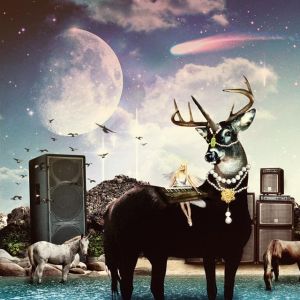
Showing posts with label 2005. Show all posts

13 Apr 2022

CMX - Pedot (2005)

1) Eteläisen tähtitaivaan kartoitus; 2) Pedot; 3) Uusi ihmiskunta; 4) Mustat siivet yli taivaan; 5) Kain; 6) Suojelusperkele; 7) Taivaanääreläiset; 8) Näkyvän valon olennot; 9) Tuulenkosija; 10) Syysmyrkkylilja; 11) Sanansaattaja; 12) Valoa nopeammat koneet

Another palate cleanser, but this time just as cohesive and impactful as the more conceptual pieces.

Key tracks: "Mustat siivet yli taivaan", "Kain", "Sanansaattaja"

The CMX cycle holds water and after the tightly cohesive conceptual hell of Aion, the subsequent Pedot is simply a selection of songs held loosely together where individual moments take precedence over the whole- but this time the influence of the preceding album hasn't subsided completely. Pedot is an altogether more freewheeling experience in spirit than its older sibling but it shares its soundscape with Aion and with its often-segued songs creating tangible links from mood to mood and style to style, the focus on the greater whole ends up sneaking in small, almost unintentionally light ways. The previous CMX palate cleanser albums were clear 180-degree breaks from the albums that preceded them, whereas Pedot is like Aion's little brother, sharing the same DNA but growing up differently.

The one common thing is that Pedot is just as muscular as its big brother, with Rauli Eskolin returning to man the production desk and making sure that every guitar riff, drum fill and baritone scream from A.W. Yrjänä leave a tangible impact when they boom through the speakers. The songs, however, are a different beast. Aspects of the depths explored on Aion are present, in particular the title track's scifi-metal which is just about the heaviest thing CMX have committed to tape, growing wilder and meaner with each time signature tick; Yrjänä's sped-up vocals after the first verse is the most mental moment across the two records, even taking into account Aion's general insanity. Pedot can get heavy if it wants - but mostly it treats that aspect of CMX as a side flavour that throws an unexpected flair into an otherwise overwhelmingly melodic record. 

CMX have for the longest time masterfully balanced between melody and weight, but here that combination is straight-up exciting. I want to call it joyous even, although that would perhaps give the wrong impression of the album's mood: there's a lot of ache and sorrow throughout the album lyrically and you could consider it a Trojan horse that delivers its melancholy hidden behind unusual wild abandon. It sounds lush even when it wants to crawl into a corner. "Kain" aches with forlorn and ancient melancholy, "Taivaanääreläiset" sounds like the moment the sky falls down and sun falls dark until the spiralling synth arpeggios appear and pull it to safety - and they're both built around such widescreen melodies that they embrace the listener and soar mightily through the sky like grand statements. "Sanansaattaja" is a song ostensibly about holding onto a sense of false hope even as everything looks intensely futile and yet its chorus radiates with a sense of freedom, pushing down the throttle with wind in its hair. It's the moment that arguably defines Pedot the best.

Even when the band do add their signature edge onto things they still retain that resonant kind of immediacy - the hard turns and aggressive push of "Suojelusperkele" hide behind a starkly emotional giant, and how the band turn the chorus of the ramshackle chugga-chugga-rhythm gremlin "Näkyvän valon olennot" into such a sharp and cunningly catchy moment is mad genius in action. At its most direct Pedot shows a glimpse of a world where CMX are a more straightforward alternative rock band, with the majestic choruses of "Mustat siivet yli taivaan" not being too far away from Manic Street Preachers at their most towering and the bright and atmospheric "Syysmyrkkylilja" bringing the band's R.E.M. fan club merits onto the surface the clearest they've ever been, with its Peter Buck-esque guitar lines ran through a CMX filter. Turns out, they are absolutely great at being such a band when the mood strikes, and Pedot turns out to hit really hard because of the careful balance between honestly melodic and still eccentric.

Pedot is also one of those albums where you could easily go ahead and list through it song-by-song, and it'd actually benefit from it because everything sounds so distinct and brings something different to the table. There's a range of ideas tucked between the celestially vast piano ballad "Eteläisen tähtitaivaan kartanot" (this is the only CMX album that starts with a whisper, not a bang) and the similarly cosmically soaring but wistfully world-weary "Valoa nopeammat koneet", the most beautifully resigned CMX have ever sounded as they finish the album with an intergalactic sigh. Guitar colossi, noisy shamblers, prog pastiches ("Tuulenkosija" with a flute solo, "Sanansaattaja" with a sax solo) - Pedot does a lot of things, but compare this to the most obvious counterpart i.e. Isohaara a few years before and the difference is obvious in how both albums go about their stylistic stretching. Isohaara pulled together just as many disparate ideas as Pedot, more if we're honest, but it also sounded like the ragtag quilt it was. Pedot sticks together as a cohesive entity where even the token radio single ("Uusi ihmiskunta", which slaps in its in-your-faceness and gets wonderfully mighty when the last choruses hit) works in context. Part of it is thanks to the production which treats each song with the same powerful seasoning, but in their heart all these songs are anthems and that's what ties them together. Not in the sense that they're all big gig-friendly crowd pleasers, but in how they all attempt to reach for a greater connection. It's definitely a large and loud record, but the more I think about the more it strikes me as a resonantly emotional one, closer to the listener than the usually somewhat personally distant CMX approach.

There is a personal element at play here, in that I got into CMX during my university years and for some reason I latched onto Pedot particularly hard when trawling through their already-immense back catalogue, and to this day there are parts of this record that remind me of idle moments in student halls and getting stuck in traffic on the bus home. It's an evocative album, and the music within has made it all the more easier to stick those memories to it. Pedot is unassuming: many of its hardest-hitting moments are slow-burn love affairs that wait patiently for the spark to ignite with the listener, it doesn't contain any obvious CMX classics ("Kain" and "Uusi ihmiskunta" were pretty big hits, but anything could've been a hit at this stage for them) and between Aion and Talvikuningas it practically fades into the background with its simple-presenting rock songs. But it's rewarding, with each of its rising cascades of choruses eliciting awe and its quietly burning despair converting into songs so enthusiastic and effortlessly inspired that the mix of emotions is an arrow aimed right in the heart. It's as if they looked at the selection of hits and fan favourites across their career, which often have been the outliers in their respective albums, and decided to carve an album in their shape. It sneaks in unexpectedly as one of their best.

Rating: 9/10

14 Jul 2021

Various Artists - Help!: A Day in the Life (2005)

1) Coldplay - How You See the World No. 2; 2) Razorlight - Kirby's House; 3) Radiohead - I Want None of This; 4) Keane & Faultline - Goodbye Yellow Brick Road; 5) Emmanuel Jal - Gua; 6) Gorillaz - Hong Kong; 7) Manic Street Preachers - Leviathan; 8) The Kaiser Chiefs - I Heard It Through the Grapevine; 9) Damien Rice - Cross-Eyed Bear; 10) The Magic Numbers - Gone Are the Days; 11) Tinariwen - Cler Achel; 12) The Coral - It Was Nothing; 13) Mylo - Mars Needs Women; 14) Maximo Park - Wasteland; 15) Elbow - Snowball; 16) Bloc Party - The Present; 17) Hard-Fi - Help Me Please; 18) The Go! Team - Phantom Broadcast; 19) Babyshambles - From Bollywood to Battersea; 20) George & Antony - Happy Christmas, War Is Over

A charity album turned scene compilation, mid-00s UK in a thrilling nutshell.

Key tracks: "Leviathan" (Manic Street Preachers), "Gone Are the Days" (The Magic Numbers), "Kirby's House" (Razorlight)

War Child - a UK-based charity established to aid children in war-torn regions - at one point in time realised that charity music compilations are an excellent way to raise funds for good causes, especially if you actually give the artists free reins rather than go for jolly charity singles. 1995 saw the release of War Child's first collection The Help Album, and since then the charity have been periodically releasing collections of brand new music to raise awareness and money, focusing on the current and contemporary artists of the given year the release comes out, each of whom contribute something new and unheard - whatever they want.

Because of the way they come about, War Child albums have inadvertently become snapshots of the British music scene of whichever time period one gets released in. The Help Album united the biggest names in and around Britpop as well the nascent threads of pre-millennium anxiety that was about to take over, becoming one of the decade's definitive various artist compilations if you're in any way that taste inclined. In 2005, on the tenth anniversary of the original release, the official sequel Help!: A Day in the Life acted as a similar definition of where British music was in the mid-00s: the rise of the new art rock scene, the oversaturation of landfill indie, the masters of yore exploring new paths and the mashing of other sounds and genres into the traditionally British songwriting, represented here through the twenty songs. Besides the returning veterans (Radiohead, Manic Street Preachers, Damon Albarn by way of Gorillaz) and the few then-upcoming future stars (Bloc Party, Elbow, The Go! Team), looking at the tracklist is a right blast in the past, glowing with names that at one point in time meant something but now have been lost completely in time: The Magic Numbers, Mylo, The Coral, etc, etc. If you want to know what music in the UK sounded like in 2005, Help!: A Day in the Life is practically a Nuggets compilation.

Each War Child selection comes with a gimmick and the one for Help! was that each song was recorded, produced and released within the same 24 hours, taking advantage of the growing digital download market (the CD arrived a little later). Given the circumstances, it's really surprising just how much effort nearly everyone involved has put in - maybe realising that going for zero effort in a charity compilation probably isn't cool, not that it stopped Babyshambles whose "From Bollywood to Battersea" is exactly the kind of "pub's closing in five, let's call it a day" garbage they were synonymous with (why we ever as a species thought Pete Doherty should have a record deal, I've no idea). Coldplay recycle a prior Japanese bonus track off X&Y and call it 'No.2' (though the differences are so minor I can't even detect them), but at least it's a good song, and Chris Martin sounds downright angry at one point in it which is a surprising turn of events. A number of artists also turn in covers, which isn't too unexpected: The Kaiser Chiefs turn "I Heard It Through the Grapevine" into a laddy pub disco anthem (shudder), Keane's "Goodbye Yellow Brick Road" sounds like a Keane song, and Boy George and Anohni dueting on John Lennon's "Happy Xmas" is some kind of a LGBT fever dream that strangely works, Ending the album on a Christmas song (and let's remember this was released in autumn originally) is a bit off-kilter and out of everything on the record it screams "charity album" the most, but there's sincerity and warmth in the makeshift duo's performance that closes the record in an unexpectedly poignant way.

It's the original material that keeps me coming back to this record though. The artists I already knew and loved are in strong form, with Manics previewing their imminent return to guitar riffs with the fiery and frivolent (those handclaps!) "Leviathan", Elbow's "Snowball" is full of barely restrained anger as Guy Garvey fantasises over the ghosts of war-killed innocents coming back to haunt Tony Blair over a deceptively pretty melody which by the end has morphed into a villain song, The Go! Team's "Phantom Broadcast" is a delightful Bollywood spaghetti Western theme, and the contemplative "Hong Kong" is one of my favourite Gorillaz songs and absolutely worth looking up for anyone who enjoys Demon Days. I don't think anyone else in Radiohead but Yorke ever even knew "I Want None of This" existed and it's certainly no "Lucky" (their original The Help Album contribution), but Yorke mashing his piano hauntingly is always engaging to at least some degree. Meanwhile the "forgotten" artists remind why they did inspire budding fanbases in one point in time - The Magic Numbers have always left me a little cold but "Gone Are the Days" genuinely makes me wish I'd love them because it's such a jubilantly lovely summer number, and Mylo's "Mars Needs Women" is a fun slice of mid-00s hipster house. Even the pub rock acts I could barely stomach back in the day cause me to question my 2000s self, courtesy Razorlight's "Kirby's House" and Hard-Fi's "Help Me Please" - both more engaging and inspired than anything else I've ever heard from the two acts, as if the mere presence of the more esteemed peers pushed them further (both acts also re-recorded these songs for their follow-up albums, which means even they were impressed by the tracks).

Not all here is gold and that's just the nature of twenty-track various artists compilations, and the slightly less exciting cuts most of the time pick up enough power through their peers that they work in the flow, next to a lot of great music from acts that may not have crossed your mind for eons. The thing is, I bought this for pennies for the sole purpose of nabbing a few non-album tracks off artists I like and yet it's turned out to be something very different: a rock solid scene compilation. The 2000s were when I really took off as a music fan and my attention was very heavily focused in the British music media and independent scene; Help!: A Day in the Life brings me right back to that time period, of online fanzines and forums, of hype machine going up and down on each new act. It was a genuinely exciting and fertile period for British music, and the wild and varied sounds and accents of this compilation represents it incredibly well.

Rating: 8/10

10 Apr 2021

Kent - The hjärta & smärta EP (2005)


1) Vi mot världen; 2) Dom som försvann; 3) Ansgar & Evelyne; 4) Flen/Paris; 5) Månadens erbjudande

The epilogue for the Du & jag döden chapter - more of the same with diminishing returns.


The phrase “victory lap” originates from racing sports, where the winner of the race drives an extra lap as a form of celebration and to give the audience a chance to congratulate them. In context of music, the connotations for the term tend to be inconsistent - it’s used for referring to releases that follow a successful album without changing things too much, but it differs from person to person whether it’s used in a positive (more of the same great stuff, yay!) or negative (a comfortable if safe and unexciting follow-up) light, and I'm guilty of being just as wishywashy with my usage of it in the past. Released six months after Du & jag döden, The hjärta & smärta EP is without a doubt a victory lap for Kent, basking in the success of the preceding album where Kent perfected their guitar sound as it continues where the album left off. The immediate idea that this is Du & jag döden: The B-Sides is proven wrong by the mere virtue that those b-sides were already released with the actual singles (and they were all great, and honestly worth a check for anyone who loves the album), but the long and short of the EP is that it's five more songs of the same dramatic guitars and bombastic rock twists, pushed out into the world seemingly to give the era an epilogue of sorts. 

If there is a difference between the preceding album and The Hjärta & smärta EP, it's that the EP feels a little lighter. As the covers have changed from Du & jag döden’s black to the EP's angelic white, the songs have a little more levity to them. “Vi mot världen” has a glimpse of positive defiance to it, “Ansgar & Evelyne” gets close to euphoric when Berg lets his wordless vocals roam, and “Månadens erbjudande” almost sounds celebratory. But that’s vague at best, and by most parts The Hjärtä & smärta EP feels like a storage clearance for songs the band had in their pockets before moving onto the next record. In other words, as much as Kent were riding high on their imperial phase wave at this stage, the biggest fireworks had already been used up by this point and we're left with consistently enjoyable but not particularly essential material. The "single" of the EP “Dom som försvann” is about the only thing that acts like something that should be brought up when discussing Kent's discography: it’s the closest thing to Du & jag döden that the EP has both in sound with all its impassioned guitars and dark underpinnings, but also in quality. It also makes a terrific use of a children's choir, exchanging betlittlements with Berg's narrator and lending a song a slightly more twisted vibe that makes it a bit more unique within Kent's back catalogue. "Ansgar & Evelyne" is the other highlight of the set, a real beam of light in an otherwise musically melancholy year for Kent, lifting off with a little bit of hope into an effortlessly lovely chorus.

The other three songs inspire fewer ecstatic ramblings: "Vi mot världen" is up to the standards of the period even if not as striking as most of its peers, the speeding "Flen/Paris" doesn't have much to say for itself and is clearly the last thing the band dug out of their drawers for the EP, and "Månadens erbjudande" does have a little something special going on for it with its wedding dance atmosphere but despite a four-minute length it feels like it ends before it actually gets going. As songs they're fine, but run-of-the-mill. More of the same isn't a bad thing, especially in EP length, but The hjärta & smärta EP sees mostly diminishing returns for the style Kent had perfected on the preceding album. Which in reality means that there's no particular reason why I would turn to these five songs instead of Du & jag döden if I were in the mood for this particular era of Kent, given for most parts the songs aren't strong enough. It's a victory lap release: more of what made the previous album so great, but ultimately just there for the show.

Rating: 6/10

9 Apr 2021

They Might Be Giants - A User's Guide to They Might Be Giants (2005)

1) Minimum Wage; 2) Meet James Ensor; 3) Particle Man; 4) Don't Let's Start; 5) She's an Angel; 6) Cyclops Rock; 7) Istanbul (Not Constantinople); 8) Purple Toupee; 9) James K. Polk; 10) Birdhouse in Your Soul; 11) Ana Ng; 12) The Guitar (The Lion Sleeps Tonight); 13) Bangs; 14) The Statue Got Me High; 15) New York City; 16) Doctor Worm; 17) Boss of Me; 18) Your Racist Friend; 19) Why Does the Sun Shine? (The Sun Is a Mass of Incandescent Gas); 20) They'll Need a Crane; 21) I Palindrome I; 22) Put Your Hand Inside the Puppet Head; 23) John Lee Supertaster; 24) Older; 25) We're The Replacements; 26) Dr. Evil; 27) No!; 28) Clap Your Hands; 29) Spider

An eclectic compilation for an eclectic group.

Key tracks: "Particle Man", "Ana Ng", "Birdhouse in Your Soul"

They Might Be Giants falls into the category of artists where I can understand why people love them so (they seem to be the one band that everyone in my social circles likes to some degree and who inspire a lot of adoration even among people who otherwise don't get geeky over music), but I can't necessarily relate to that myself. Compilations are my way of meeting halfway with artists like these, and for a part-time appreciator the benefit of A User's Guide to They Might Be Giants is that it really does hammer down how there's a lot more to John and John than just the affectionally nerdy twee pop ditties about obscure historical figures and events that they're arguably most associated with.

That desire for comprehensiveness is also what somewhat lets A User's Guide down, just to tackle the downsides first. They Might Be Giants wear many hats and this compilation wants to showcase them all: the ingenius pop wizards, the nerdy folk historians, the style experimenters, the soundtrack stars, the children's edutainers, the whole lot. I'm normally all for this kind of comprehensiveness, but some of these categories are stronger than others and so I just question the need for the barely-recognisable-as-TMBG "Dr. Evil" (from the Austin Powers OST - did anyone really think this was in any way essential to the film?) or four different entries from their children's music side adventures to be included here, particularly when really only "Why Does the Sun Shine?" feels substantial enough to merit inclusion. The compilation's tracklist has been organised to run according to Gaussian distribution based on the track lengths so that the shortest songs start and finish the disc, which works disturbingly well for most parts ("Minimum Wage" as a cold open kick is probably the best way to open this potpourri), but it hasn't stopped the compilers from oversaturating the end of the disc with a whole load of the collection's most inessential parts: meaning that in effect everything after "Put Your Hand Inside the Puppet Head" is complete filler and it spoils the mood. They Might Be Giants songs aren't particularly long for most part and this is one of these cases where 29 songs on a disc seems perfectly appropriate, but it's an album that still manages to outstay its welcome. It ends up rubbing in exactly why my dabblings in the band's studio albums have been less than successful, because there's always a throwaway novelty peeking its head around the corner. "Spider"? On a best of? Really?

 
On the plus side, the delight in A User's Guide is the recurring realisation of what a pair of sharp indie pop craftsmen lie behind They Might Be Giants. Underneath all the twee singalongs, TV features and the reputation as the ultimate nerd musical act, the fact that John & John are an incredibly talented and imaginative songwriting pair gets unfairly lost in the noise, and so the comprehensiveness of A User's Guide equally puts this in the spotlight. They're a duo who can more or less tackle anything through their sheer imagination on how to approach even the strangest ideas, and then pull it off via genuinely cunning writing. The marvellously smart and impeccably charming "Birdhouse of Your Soul" is obviously the perfect showcase for that - its cavalcade of layered vocals, sharp lyrics and heck of a load of hooks making it the most perfect and honest pop song the duo have ever pulled off and even then it sounds completely unique - but there's a lot here that matches its strengths. "Ana Ng", "Don't Let's Start" and "Put Your Hand Inside the Puppet Head" are brilliant pieces of quirky 80s art pop, which is the side of They Might Be Giants that tends to slip past the public consciousness the most, and certainly surprised me as someone who was mainly aware of their 90s catalogue and beyond. The later reinterpretations of the same ideas also work just as well, such as the delightfully unhinged "Cyclops Rock" (with a great Cerys Matthews cameo) or "I Palindrome I" which has so much more to it from a purely musical perspective than just its titular gimmick. A User's Guide keeps catching by surprise and it does it in a myriad of ways: whether because something is unexpectedly earnest, affectionate or direct ("New York City" is all three and could be a Magnetic Fields song), or you simply encounter a curveball you didn't see coming such as the cheeky interpolation of "The Lion Sleeps Tonight" on "The Guitar". And of course, like any millennial who grew up with Tiny Toons, I too have a lot of love for "Particle Man" and "Istanbul (Not Constantinople)" - the former a razor-sharp ditty jam-packed with wit and hooks in its 1:50 length, the latter a superbly fun cover that fits the They Might Be Giants brand so perfectly that it may as well have been theirs to begin with. Overexposed as they may be, they are genuinely great and evergreen, and a very good reason to keep hold of the compilation as-is.

The good absolutely outweigh the bad. There are probably better compilations of They Might Be Giants' collected works out there - real fans of the duo can answer that - but for a willfully casual listener this makes for a good selection of the songs that everyone mentions and the deep cuts you’re glad to get to know better. It is also, I think, sufficient to my needs. I'm not certain what the takeaway here is when I say that owning this, I've little desire to resume with my efforts to listen to more of the actual albums and I'm satisfied with that complacency - as much as there's a lot of quite frankly excellent material here, it feels like it's enough. A User's Guide does make a strong case of why They Might Be Giants could be someone's favourite band and I'd genuinely love to adore a group with such a witty writing pen (both lyrically and musically), but the first 22 songs here will do for me for the occasional revisit to their intriguing world.

Rating: 7/10

5 Apr 2021

Kent - Du & jag döden (2005)

1) 400 slag; 2) Du är ånga; 3) Den dödä vinkeln; 4) Du var min armé; 5) Palace & Main; 6) Järnspöken; 7) Klåparen; 8) Max 500; 9) Romeo återvänder ensam; 10) Rosor & palmblad; 11) Mannen i den vita hatten (16 år senare)

Stark, dramatic, emotional and above all, focused - Kent take note of having become Sweden's biggest rock band and decide to create a record to match their status.

Key tracks: "400 slag", "Klåparen", "Mannen i den vita hatten (16 år senare)"

As it’s the first thing you’ll see (in the tangible world), a special mention goes out to how the physical version of Du & jag döden presents itself. To compliment the title ("You and I, death"), Kent dressed the record in an appropriate funeral wear. Not only is the booklet jet black, with the lyrics written in a font so small it's barely visible, but the jewel case itself is tinted black as well which means the artwork in reality looks much darker than on the image up there. The CD follows suite and the front label is completely black, but so is its underside and it's the only time I've seen a CD like it. It’s ultimately a simple trick, but it's done in such an over the top (and perhaps a bit blunt) way that it turns out to be a powerful one. It's dark and dramatic, guiding towards an album that in many ways is exactly that.

One of my many embarrassing musical confessions is that I spent a lot of time intentionally brushing Kent off to the side simply because of their choice to sing in their own tongue. In my early-to-mid teenage years full of musical hubris and preconceptions yet to be knocked down, I didn’t think Kent would ever genuinely resonate with me because I could barely understand the language. But I got better, and in good part thanks to Du & jag döden. Kent have always been the masters of the perfect opener song (I can’t honestly think of a band who rivals them in this department apart from R.E.M.), and “400 slag” was what tipped me over to the fan club. The true kick-off at the end of its lengthy intro, slowly building instrument by instrument atop a stone-cold rumbling bass before flashing into full bloom, was what got me to stop living in denial and start embracing the band on the spot. "400 slag" is the kind of a song that aims to leave an impression and the way it draws open is majestic to behold, as the band command the song’s immense sonic space effortlessly.

Du & jag döden lives by its dramatic flair, painting in grand dynamic strokes and marrying Kent's rock band streak with theatrically grand gestures. Much of it is in the lyrics of course - it's hilarious in hindsight that this became the album that finally got me into Kent after thinking I’d never be able to crack through the language barrier, even though you could argue it's a concept album with the amount of running themes it has going through it. Revising the liner notes with my barebones knowledge of Swedish and online translators in the present day, it’s clear just how much more importance Berg placed in his lyrical work here - the death that lurks around its lyric sheets is moreso the death of youthful innocence rather than literal demise, and it's a theme that repeats over and over again and inches more and more towards biographical as the album progresses. Much of the rest of the songwriting also acts like it highlights and underlines the lyrics, with the general flow of the songs built around Berg’s voice and the narrative and the impact he pushes. It's not a dark album, as much as it looks the part - but it is melancholy and aching, and treats them with grandeur.

 
But the power of Du & jag döden doesn't lie in its lyrics, but in how vividly the band translate those themes and feelings into the actual musical notes and arrangements. The impetus behind the record was to be a direct reaction against the previous album Vapen & ammunition, the super-slick, hyper-produced pop songs of which had started to grate the band after a few years of repeating them over and over on tour. Going into the follow-up Kent wanted to shake off any formulaic trappings and to write songs that wouldn't always repeat the same verse-chorus structures, to move away from production tricks and to reveal the humanity underneath the sound. Likewise, where Vapen & ammunition was intentionally a selection of disparate songs bound together by the same aesthetic, Kent were looking to write an album again: a set of songs with a common narrative told through chosen aesthetics, flow and tone. The guitars are back with a vengeance too after their relative backstage presence on the previous album, now louder in the mix and intricately layered with Kent taking full advantage of having at best three guitarists on stage where needed. The songs that ended up forming Du & jag döden are still big songs, fit for the large concert venues the band were now accustomed to, but they are being played with the gravitas that’s required to keep them close and personal. Melancholy and anxiety are almost triumphant topics in the world of alternative rock, and Kent embraced the inherent melodrama in that for Du & jag döden: guitar anthems for lost souls searching for something to hold onto.

Which means that while knowing what Berg sings is a great bonus and it helps the overall concept of the album to click, the resonance of the album's music alone is universal in nature. You don’t need to know the language to understand the weight under the emotionally detached maelstrom of "Klåparen" exploding into a rage of guitars, or to hear the personal importance behind "Mannen in den vita hatten" unfurling as the band speeds up past the string-laden bombast of its chorus and towards the finale where Berg begins to spill his guts out with such intensity it practically becomes a rant. It's a record that wears its heart on display on its sleeve exposed and awaiting, its melancholy and vulnerability obvious and immediate. Both of the above mentioned songs are among Kent's finest ("Klåparen" perhaps more personally, but the latter has become the canonical classic of this record and for a very good reason), and they were so long before I started parsing what they really stood for, because of the strength of the arrangements and performance alone. Same with "400 slag" right from the first listen and still on the so-and-so hundredth listen, same with the sweep of "Den döda vinkeln" as it accelerates, same with the exhausted weightiness and deft guitars of "Du var min armé". These are songs where in practice it doesn't matter what the actual meaning is, because the colours the band use are so vivid that the listener has the power to illustrate their own interpretations into the songs with them.

I've tried to come up with a more artful way to say this but the crux of it all is that Du & jag döden is where Kent reach the peak where they'd go on to stay for a while: it's the apex of their rock sound, and among their best albums overall. Every promise made across the last five albums, every classic song, every emotional moment of brilliance - they all pay off here, perfected and delivered with a tight grip to how everything should be presented and how it all should connect. The dramatic peaks of its emotionally intense journey are presented like movie scenes that lead artfully from one revelation to the next, building up the stakes. The songs are great of course, but the flow of the record really is immaculate too, where throughout there's a constant feeling of momentum being built, which is then resolved in the more obvious tracklisting climax points: the restrained quiet of "Järnspöken" leads beautifully into the anguish of "Klåparen" as the mid-album palate cleanser, and the quiet-loud extremes of "Rosor & palmblad" build up the theatrics carefully in preparation for the epic resolution of "Mannen i den vita hatten". And while the band may have turned their backs towards Vapen & ammunition to some extent, they have adapted the more immediate strengths they leaned onto that record into their new guise: the punctual powerhouse energy of "Palace & Main", the fantastic backing vocal action on "Romeo återvänder ensam" and the precise piano hooks and epic stadium lift-offs of "Den dödä vinkeln" aren't too far removed from the previous album, but they're now clad in black and played with the passion of where every note played could be the last. It's a gorgeous, powerful listen and feels instantly personal.

Given Kent's tact change from the next record on, Du & jag döden has in hindsight become the last hoorah for the musical ideas that Kent had built their career so far on, and it honestly feels like an intentional gambit move. The overstuffed Hagnesta Hill and the radio-friendly Vapen & ammunition had landed them wider adoration but perhaps weren't something the band thought deserved that spotlight, and so they went on to create something that did. The detail in the arrangements in tandem with a muscular performance, each song a part of something greater, piecing together a journey through big emotions and the music to match them - Du & jag döden is a model example of a classic record to the point that it sounds like the band were completely aware what they were doing with it, and it sounds bold, inspiring and personal. While I think Kent equaled the quality of Du & jag döden later on down the line with other releases, there's no doubt that this is where Kent perfected what they as a band stood for. 

Rating: 9/10

20 Mar 2020

Viola - Melancholydisco (2005)


1) Sad Eyed Disco Dancers; 2) Violentia (Boys of Scandinavia Remix); 3) City Silhouette (Roger® Remix); 4) Nostalgia Amnesia; 5) Deepspeed (Kris Kylven Reconstruction & Remix); 6) Three Minutes Later (Iconcrash Remix); 7) Strange Delights; 8) Kiss and Break Up (Verneri Lumi Remix); 9) Halo Goodbye (Alien Mindbenders Rework); 10) Dim Challenger 

An EP inside a remix album. There's a clear winner between the two sides but you have to give some props for doing a convincing job marrying them together.


Key tracks: "Sad Eyed Disco Dancers", "City Silhouette (Roger Remix)", "Strange Delights"

Melancholydisco started out as an EP, with two members of the then-quartet Viola playing around with moving into a more synthesized sound. Then someone came up with the idea of inviting the band’s friends to play with the back catalogue and the project expanded into a remix album, released as a breather between albums. 
I mention this because the original EP is still buried inside Melancholydisco. Four songs of hearts being broken by the mirror ball, bittersweet synthpop for the sad eyed disco dancers. They’re exactly what the title says: melodramatic, danceable and utterly enthralled by their own cool. “Sad Eyed Disco Dancers” is nearly iconic in this regard, its pulsating bassline driving the hopelessly romantic yet stylishly nonchalant miserabilia onwards. “Nostalgia Amnesia” is hyperspeed heartache and its mad percussion section is borders between dancefloor filler and too hectic with its own energy. “Strange Delights” is a carefully optimistic sing-along anthem where the band’s pop heart explodes into full bloom. The last slow jam “Dim Challenger” finally calms the wild night down with its instrumental, near-ambient mood scape. They’re four great songs where Viola stretch their own borders and open new doors they’d walk through in their future, and they could have made an excellent EP on their own. 

The six accompanying remixes are almost a sideshow, not by virtue of being weak but because in comparison with the original tracks, they’re a much more incohesive bunch. That’s just the nature of remix albums obviously, but the internal consistency between the original tracks leaves the remixes to feel like added-on bonus tracks. But, it’s still a grab bag of quite successful reworks. Roger®’s version of “City Silhouette” and Alien Mindbenders’ “Halo Goodbye” are particularly excellent: Roger® turn “City Silhouette” into an atmospheric, high-speed night drive soundtrack that’s closest in spirit to the new tracks, while Alien Mindbenders ingeniously reverse the usual remix treatment by turning the keyboard/programming-heavy “Halo Goodbye” into a rock ballad, and it’s actually all kinds of brilliant. Meanwhile The Boys of Scandinavia’s funked up take on “Violentia” isn’t necessarily the most exciting one out of the lot but it’s the largest earworm and the most instantly irresistible. Iconcrash merely flesh out the formerly stripped down “Three Minutes Later” and the Verneri Lumi remix of “Kiss and Break Up” is a neat atmospheric, glitched-out treat that has its charms as it progresses and builds up on its atmosphere. It’s only really Kris Kylven’s version of “Deepspeed” that feels lacklustre, carrying the vibe of countless rock song remixes I’ve heard scattered across CD singles over the years which awkwardly remove the key points of the original version’s strength while failing to establish a real identity of its own either. 
But despite the remix selection having an arguably higher hitting ratio than most remix albums, they’ll always end up playing second fiddle to the original cuts. “Sad Eyed Disco Dancers” and “Strange Delights” are iconic Viola classics in my eyes, and none of the remixes can really compete with the inspiration and excellence of the new songs, no matter how good. You can practically hear how excited the half of Viola who worked on these were over the new possibilities provided by letting go of the strict band format. Admittedly, it would shortly mean radical shake-ups in the band’s line-up, but man – what a way to make a case for switching the course. They’re worth the price (or the free download these days, rather) alone: the remixes are bonus. 

Rating: 7/10

17 Nov 2019

LCD Soundsystem - LCD Soundsystem (2005)


CD1: 1) Daft Punk Is Playing at My House; 2) Too Much Love; 3) Tribulations; 4) Movement; 5) Never as Tired as When I'm Waking Up; 6) On Repeat; 7) Thrills; 8) Disco Infiltrator; 9) Great Release
CD2: 1) Losing My Edge; 2) Beat Connection; 3) Give It Up; 4) Tired; 5) Yeah (Crass Version); 6) Yeah (Pretentious Version); 6) Yr City's a Sucker (Full Version)

A slightly slapdash establishment of the basics of James Murphy and LCD Soundsystem, and some essential non-album singles bundled together to both support and carry the official debut.


Key tracks: "Daft Punk Is Playing at My House", "Tribulations", "Losing My Edge"

Much like Murphy's self-cultivated image as the guy who's slept in the same suit for a full weekend, the self-titled debut for LCD Soundsystem is stylishly unkempt. Murphy was a producer, a DJ and a label head who found himself to be above average age in the crowds he was hanging out with and then made a snarky one-off song about it for his own fun, which then ballooned into a full-time band. So, the self-titled debut album for that band isn't a cry of passion from a set of young hopefuls, but rather a producer mashing together collected ideas from the past three decades of dance and rock music, like a DJ mixing his own songs. It's irreverent, but that's also its charm. At this stage LCD Soundsystem was still more about singles than albums, and the debut is really just around because he found an audience that wanted one. No grand statements or glimpses into the inner state of its creator just yet: it's all about having a good time in a way only tragically cool urbanites can.

There's a real act of fan service here in that the second disc that is included as standard with the album collects all the loosies released prior to the album. The mix of foot-tapping indie disco, ragged garage rock and off-kilter pop hooks is something that would form the backbone of the actual album too, so both discs are kindred spirits in that regard, but the one-offs are naturally a bit more uninhibited and some of the essential LCD Soundsystem cuts are in fact gathered among them. "Losing My Edge" is the obvious one, of course: Murphy's debut single is a glorious seven-and-half minute sardonic rant sent to a slick groove, it's full of immortal and infinitely quotable lines and it culminates in the most beautifully manic listing of one's record shelf in a fit of madness dear and near to any music geek's heart. It's a perfect debut single in how it establishes everything there is to know about LCD Soundsystem right from the get-go, from Murphy's dry delivery and the wit in his words to the music built on repetitive but gradually intensifying jamming, all introduced clearly. The "crass version" of "Yeah" is another mainstay favourite, offering more of that extended jamming in what is one of Murphy's best long-form dance-offs, and with other highlights like the brilliantly punchy house deep cut "Beat Connection" or the 'pretentious' brother of "Yeah" (instrumental but longer and slightly fancier arrangement), the pseudo-bonus disc would be worth the price of admission alone. The only real below-par song is "Tired", a stab at grimy garage rock which later morphs into a more recognisable LCD Soundsystem form but never shakes off coming across as an ill-fitting set of clothes you're trying to force yourself into.


The difference between the one-offs and the actual album is that the latter is a little tighter in its composition, with its shorter songs steering clear of too much jamming and with some semblance of a cohesive structure in tow. Only some; the nature of the album is still more resembling of a curated mixtape, flipping between styles and sounds. Some of these would form the basis of LCD Soundsystem to come, e.g. the swerve, swagger and post-millennium ironic snark of "Daft Punk Is Playing at My House" would form the pattern for many of Murphy's later lead singles. Others are curio snapshots of Murphy trying his hand out with different things without a greater plan in mind: the ragged near-punk of "Movement" is more of Murphy's early fascinations with something rowdier and "Never as Tired as When I'm Waking Up" is a 90s alt rock ballad through and through, and neither sound would make another appearance again after this album. While those offshoots have their charms (I have a particular affinity towards the somber laziness and nostalgic guitar of "Never as Tired..." especially), the strengths of the tracklist lie clearly in the material Murphy would later choose to expand upon. The lightning-in-a-bottle feeling of "Daft Punk Is Playing at My House" is enduringly exciting in its wonderful 'dance hit for people who are too cool to dance' aesthetic and the synth-heavy floor fillers "Tribulations", "Too Much Love" and "Disco Infiltrator" deliver the hooks like uppercuts, striking right to the nerve. Of these, "Tribulations" especially is a bit of a hiden gem: its urgency and a more fixated tone is a mile away from the rest of the album and it picks up steam brilliantly as it progresses until it sounds like Murphy is fighting to steer it.

If not already apparent, the accurate take to take away from the album is that's more of a blueprint or a template for later works. Whether or not Murphy foresaw himself taking the band beyond this in the first instance is one thing, but it's evident that at this stage he was still testing the waters and stretching his wings, operating on a more single-oriented mindset even within the actual album. They're fun waters and LCD Soundsystem has nothing to be ashamed of next to its more famous counterparts, but it's decidedly a little rough around its edges and while the Murphy trademarks are on full display, the overall sound is lacking the later albums' greater vision and realisation of how he can merge the extroverted and introverted. It's also an odd case where the "bonus" disc is just as if not even more essential than the album itself: the two really are rather inseparable even if they're ultimately independent works, and as a full package this is so much more because of its inclusion. Summa summarum, Murphy and co's debut is a lot of fun and is full of charm, but it's very rarely anything actually essential; it's a slapdash party album for music nerds who don't want to go to parties and doesn't set its sights beyond it, but it's got the hooks and grooves to make it a load of fun regardless.

Rating: 7/10

13 Nov 2019

Regina - Katso maisemaa (2005)


1) Elokuva; 2) Pidä varasi, tyttö!; 3) Tokio; 4) Katso maisemaa; 5) Olisitko sittenkin halunnut palata; 6) Kohtaamisia kaupungissa; 7) Pieni ystävä; 8) Nyt on jo myöhäistä; 9) Uusi resepti; 10) Minua ollaan vastassa

Retro kitsch synth pop. Doesn't quite ride its concept as far as it could but gets almost there.


Key tracks: "Pidä varasi, tyttö!", "Katso maisemaa", "Olisitko sittenkin halunnut palata"

In this day and age Katso maisemaa might not seem like much of a big deal stylistically: enticingly 80s-inspired production together with a female singer full of personality is commonplace as anything. In Finland though, and in 2005? This was wild. And it still kind of is, or at least it has stayed remarkably fresh because Regina go over and beyond that descriptor on the album. Here Regina sound like the concept came first and the band was formed solely to make it come true: songs that curtsy around retro sounds and revelling in careful simplicity in how it’s been written, musically and lyrically. Iisa’s child-like delivery and the naïvely direct lyrics about everyday things (watching a movie, moving house, looking at the scenery on a road trip) are right in the forefront and blur the line between knowing winks and genuine expression, and the music desires to be catchy so unashamedly that the song about going to Tokyo features a koto-esque melody and sudden Japanese words - which of course it would. Katso maisemaa is so twee it’s practically kitsch.

The sheer dedication to their chosen musical concept makes the first four songs of Katso maisemaa still a thoroughly giddy, incredibly charming little journey into a world where everything can be seen through wide-eyed wonder and there’s a big hook around each corner to accompany it. “Pidä varasi, tyttö!” still feels like a signature song for the band even if they abandoned the style it represents right after this album: its three minutes are a near-perfect condensation of Katso maisemaa, as Iisa warns about the bad girl in school over a ridiculously addictive chorus that bounces around so jubilantly. The only real niggle is that it’s perhaps a little too pristine for its bedroom production aesthetic: I don’t mean to go all “the demo is better” here but I have heard the originally released the demo and the slightly more lo-fi soundscape does suit the retroism better. “Elokuva” and “Tokio” are bright and colourful energy rushes that suit the unicorn reindeers and rainbow comets of the album cover perfectly, and together the three songs form an introduction that still sounds fresh and genuinely gets you giddy. The title track rounds off the start perfectly: there’s a bittersweet tang to its atmospheric swoops and dreamy textures, and the way they build up make the premise of simply watching the world go by from the passenger seat feel otherworldly. It’s the best song on the album, and befittingly to its theme it’s also a milestone on the album’s flow because after it, Regina changes things up slightly.
image
It’s not too radical - the shtick is still firmly there - but Regina start thinking beyond their concept for the latter half of the album. The songs begin to introduce little added nuances beyond the faithful verse-chorus-verse template and extend their lengths, the mood starts to vary from technicolour explosion and the lyrics start tackling adult relationships, albeit still in a charmingly direct fashion. It’s welcome because a full album of Regina’s brand of musical cotton candy might have been a little too much ten songs in a row, but more seriously toned songs like “Olisitko sittenkin halunnut palata” and “Nyt on jo myöhäistä” move some of the overt cutesiness aside at a comfortable pace. The former manages to launch a formidable build-up towards the end despite its short length and “Nyt on jo myöhäistä” has brilliant house piano breakdowns cutting through its tense urgency. Admittedly, on a more general note the latter stages of Katso maisemaa aren’t as immediate (or excellent) as its first run of songs, and the almost annoying “Uusi resepti” is a decent example of how badly Regina’s chosen style could easily bite against them, utilising every trick in their bag in a somewhat more grating way. In fact, apart from “Minua ollaan vastassa” which closes the album in a more solemn rendition of what the first set of songs aimed to do, towards the end Regina are in danger of becoming a little too ordinary for their own good. It’s a dangerously front-stacked album.

But don’t let that tarnish the fun too much. Katso maisemaa is still an inspired, engaging album which succeeds in sounding one-of-a-kind even as rest of the world caught up - and Regina’s own decision to move away from its sound after its release certainly helped with that. It’s not anything more than a fun pop record but Regina make it their own: you can’t mistake the 30-odd minutes they’ve created here for anyone else’s creation. In the end what stops it hitting any higher echelons isn’t the fault of the style in one direction or another, and regardless, what you have is still a good album and one impression-leaving debut.

Rating: 7/10

17 Oct 2019

John Frusciante - Curtains (2005)


1) The Past Recedes; 2) Lever Pulled; 3) Anne; 4) The Real; 5) A Name; 6) Control; 7) Your Warning; 8) Hope; 9) Ascension; 10) Time Tonight; 11) Leap Your Bar

Somber and sparse introspection centered around an acoustic guitar and a heavy voice. Frusciante at his most intimate, but no less carefully arranged.


Key tracks: "The Past Recedes", "Lever Pulled", "Ascension"

It got delayed by a month but Curtains still managed to hit its target window, and with its release John Frusciante completed his absolutely bonkers decision to shove out as many albums as he could within 12 months, most of them within the last half of it (or the last half plus one month, given the delay). You could have possibly expected the last of the lot to be some kind of culminating triumph of a victory lap, but Curtains is anything but. It's the quietest and most delicate of the bunch, intentionally focused on Frusciante and either an acoustic guitar or a piano with select few accompaniments to go with them. Where much of the 2004 collection was clearly coloured by the people Frusciante collaborated with, on Curtains it's largely just about just the man himself, with the few collaborators undisturbingly doing their work in the background.

It's somewhat inevitable for albums like this to have a certain kind of emotional gravitas, and much of Curtains is, as expected, world-weary and melancholy. That kind of weight comes to Frusciante naturally, given his life experience and the struggles he's by this point left behind but never forgotten. Curtains weighs heavy with somber introspection, cut with a hint of the relief that he survived through everything he went through - it brings to the front what's always been coursing behind the lines and melodies in the previous albums. Frusciante puts it well himself in "The Past Recedes", bluntly defining much of his 00s mindset: "to be here you first got to die / so I gave it a try / and what do you know / time was so long ago". But the person who sings those lines isn't a haunted man, it's a gentle voice full of warmth and hope. Curtains is sad album but it's interpreted by someone who's found peace from his ghosts, and its overall feel is more meditative. Somber, but not bleak.


"The Past Recedes" is a gorgeous song: it's also very lush and meticulously arranged, full of layered guitars, backing vocal harmonies and other elements that make it sound orchestrated despite largely just featuring Frusciante on his own. Curtains does this a lot, where it uses the sparse building blocks of each song with powerful intent, so that every time something beyond an acoustic guitar appears it feels monumental, and something as gently crashing as the sudden choruses of "Control" - which throw a great contrast to its fade-in/out verses - feel bold and explosive as a result. The contrasts are so stark that when "Ascension" brings out simple keyboard texture to back Frusciante, it comes across like a stylistic whiplash and the equivalent of sticking an electronic song in a rock album. Songs where things are actually stripped down to the very basics, like how you'd expect from the typical Acoustic Album, are relatively few and far between. The change in approach shows particularly clearly when the full band does come out to play and Frusciante grabs onto his electric guitar - the excellent early album trilogy "Lever Pulled" / "Anne" / "A Name" is like a direct bridge to the earlier albums (most notably The Will to Death) but all the instruments are clearly playing back fiddle to the man in front, gently making their presence known in a cool and controlled fashion - each one treated with the same gentleness as the acoustic.

Even when there aren't any other instruments, Frusciante turns his own voice into one. Rich background vocals aren't an anomaly in his body of work but due to the sparseness of Curtains, their constant presence here is highlighted even further and frequently underline the emotional centerpoints of each song. Similarly, when there's nothing else to steal your attention away it's the voice that gets you, and so a lot of Curtains' most memorable moments come directly from Frusciante himself. Sometimes it's particularly overt: "Ascension" is a showstopper parade of killer vocal hooks in all forms (lead melody, wordless hook, background harmonies, you name it), "Your Warning" becomes the album's big tearjerker song through Frusciante's fragile falsetto sinking into his own loneliness towards the song's end in an utterly heartbreaking and memorable way, and the piano arrangement of "Leap Your Bar" is so skeletal that it's Frusciante's vocal delivery that literally makes the song. When I think back on Curtains without listening to it, it's the vocals that I remember the clearest - they effectively determine each song's general mood regardless of the musical or lyrical content, driving the rest of the composition, and it's the little inflections and details in how Frusciante sings that become the sticking points. Curtains isn't where Frusciante shows off his pipes the loudest and it's instead rather restrained throughout in that department; but it's the album where out of any of his albums he really hammers down the emotional weight his voice has.

Frusciante's overall winning streak throughout this period continues on Curtains, even if out of the albums released under his name it's the least song-y: one not defined by its big songs but rather intended to be taken in as a whole, ideally played in a setting that suits its low-key tones. Or in other words, it's the album that suffers the most if the songs are removed from their context due to the very nature of how subtle they are, gorgeous as they may be; some of Frusciante's most tender work and most beautiful moments can be found concentrated here. His music has always been very personally direct and that's one of his solo material's main appeals - Curtains is that at its most intimate level.

Rating: 8/10

16 Oct 2019

Sufjan Stevens - Illinois (2005)


1) Concerning the UFO Sighting Near Highland, Illinois; 2) The Black Hawk War, or, How to Demolish an Entire Civilization and Still Feel Good About Yourself in the Morning, or, We Apologize for the Inconvenience but You’re Going to Have to Leave Now, or, ‘I Have Fought the Big Knives and Will Continue to Fight Them Until They Are Off Our Lands!’; 3) Come On! Feel the Illinoise!; 4) John Wayne Gacy Jr.; 5) Jacksonville; 6) A Short Reprise for Mary Todd, Who Went Insane, but for Very Good Reasons; 7) Decatur, or, Round of Applause for Your Stepmother!; 8) One Last 'Whoo-Hoo!’ for the Pullman; 9) Chicago; 10) Casimir Pulaski Day; 11) To the Workers of the Rock River Valley Region, I Have an Idea Concerning Your Predicament; 12) The Man of Metropolis Steals Our Hearts; 13) Prairie Fire That Wanders About; 14) A Conjunction of Drones Simulating the Way in Which Sufjan Stevens Has an Existential Crisis in the Great Godfrey Maze; 15) The Predatory Wasp of the Palisades Is Out to Get Us!; 16) They Are Night Zombies!! They Are Neighbors!! They Have Come Back from the Dead!! Ahhhh!; 17) Let’s Hear That String Part Again, Because I Don’t Think They Heard It All the Way Out in Bushnell; 18) In This Temple as in the Hearts of Man for Whom He Saved the Earth; 19) The Seer’s Tower; 20) The Tallest Man, the Broadest Shoulders; 21) Riffs and Variations on a Single Note for Jelly Roll, Earl Hines, Louis Armstrong, Baby Dodds, and the King of Swing, to Name a Few; 22) Out of Egypt, into the Great Laugh of Mankind, and I Shake the Dirt from My Sandals as I Run

The height of the mid-00s indie maximalism, in the form of a personalised road trip to the great state of Illinois. History lessons and heart-tugging emotional resonance.


Key tracks: "Come On! Feel the Illinoise!", "Chicago", "Casimir Pulaski Day"

Whether or not the 50 States project was ever an even remotely serious thought in Sufjan Stevens’ head, Illinois is an album that sounds like it was borne out of commitment for such a gigantic theme. The first ‘States’ album, Michigan, already hinted at a larger sound but it had its feet firmly on the ground. By Illinois, fans and critics alike had already ran full-steam ahead with the concept and thus the album too goes all the way, fully over the top with giant arrangements, ludicrous song titles, lyrics that drip with trivia and namechecks and a general world-engulfing ambition. Even if Stevens never intended to complete the other 48 states, he was fully aboard his own hype train when composing Illinois.
All the better for it - that indie pop bombast is what makes Illinois such a great album. It bears a sound aimed to create a sense of awe and wonder, utilising choirs, horns, string ensembles and any other kitchen sinks it can cram in (the instrument list for Sufjan alone is overwhelming) to create something that sounds larger than life. Through it, the state of Illinois transforms into a fantastic realm of miracles, immortal characters and epic myths, a treasure trove of legends rivaling the Greek mythology. Michigan, the obvious comparison point, used the state concept as a framework for Stevens’ more characteristic introspection; here, he’s out to create a love letter to the state itself. Sufjan himself reveals another side of himself as a charming tour guide full of dry wit and smart wordplay, shedding his usual downcast troubadour form for something more befitting of the album. There’s a particular kind of joy and awe to music that wholeheartedly believes there is no point to restrict its expression and here Sufjan shows just how well he can wield a massive set of tools.

The personal touch is still there, importantly. Had
 Illinois just been a state tour it could still have been a great album, but it’s Sufjan’s own connection to the state (he frequently visited it growing up) that gives the incredible sound a matching warm soul. This time it’s not as much on spotlight as it was on Michiganand things never get too dour (this is a celebration of the namesake state, after all), but it focuses the grand scope of Illinois to something closer and relates its context to a more human level, with the two sides often mingling together and subtly morphing into eachother, with the twist on “Come On! Feel the Illinoise!” and its brilliant turn from an anthemic welcome to a confessional halfway through serving as an example almost right away. The interweaving of the personal then appears throughout the rest of the album, comfortably moving amidst the whimsical history lessons. It also forms the heart of the album, with “Chicago” and “Casimir Pulaski Day”. They’re two complete opposites (one a grand anthem, the other a quiet and sparse affair) with their emotional core tightly wound to Sufjan himself. “Casimir Pulaski Day” is gorgeous and utterly heartbreaking though little to do with the state on its own (which does not undermine just what a great song it is), but “Chicago” is the ultimate mix of everything the album has to offer - it’s a stupendous signature song worth all the reverance it gets for how incredibly moving, stunning a track it is. It’s the pinnacle of Sufjan’s personal angle for the state, the tale of running away somewhere else to find something new to life, and he pours his heart over the song’s singalong-choirs, rousing choruses and sweeping string arrangements. It’s arguably Sufjan’s crowning achievement overall.
There’s certainly a lot more to the album than “Chicago”. The length - 21 songs, 75 minutes - plays into the album’s grand scale and seems like it could be a problem at first but Illinois keeps up its pace brilliantly throughout its length. For one, the number of tracks is largely inflated by the various interludes which aren’t really a big deal - they’re short (it’ll probably take you longer to read the titles for some of them) and more importantly, they’re segues done right. They bridge together the larger key tracks in a manner where the transitions blend together, allowing for the tonal and musical switches to flow from one to another without coming acgross abrupt; Illinois is a great example of interludes used effectively, weaving its many moods and elements together in a way that makes the whole so much greater. The actual songs between are all various degrees of great, to the point that listing them all out feels redundant - pick a non-interlude and it’s going to be either inspirationally fun, genuinely touching or most likely a mixture of both. It’s the final notch on Illinois’ list of achievements: despite its massive scope and size, it holds together consistently and frequently surprises with yet another new twist after you had thought you’d already heard it all. If there’s a single dipping point it’s at the very end, with the outro-esque “Out of Egypt…” fizzling out in a muted manner that is at odds compared to the rest of the journey.
After the release of Illinois and the subsequent non-appearance of any real follow-up, Sufjan would end up publicly cancelling the 50 States project while claiming it was just a publicity stunt, and whilst it would have been fascinating to say the least, it’s ended up becoming a boon to his body of work. No other state album that had come after Illinois could have topped the amount of heart, soul and creative madness that went into it: it may be just a single album but it’s a concentrated explosion of all the ambition and imagination that the entire project would have detailed. Rather than suffer from diminishing returns from recording countless more albums, each more distanced from Sufjan himself (Sufjan has admitted that he already had to relocate some anecdotes to Illinois to make them fit this album), Illinois now stands (nearly) alone among Sufjan’s works. It further emphasises just what a wonderful and unique record it is: a one-of-a-kind road trip.

Rating: 9/10

30 Aug 2019

Moby - Hotel / Hotel Ambient (2005)


 Disc One: Hotel: 1) Hotel Intro; 2) Raining Again; 3) Beautiful; 4) Lift Me Up; 5) Where You End; 6) Temptation; 7) Spiders; 8) Dream About Me; 9) Very; 10) I Like It; 11) Love Should; 12) Slipping Away; 13) Forever; 14) Homeward Angel; 15) 35 Minutes [hidden track]
Disc Two: Hotel Ambient: 1) Swear; 2) Snowball; 3) Blue Paper; 4) Homeward Angel (Long); 5) Chord Sounds; 6) Not Sensitive; 7) Lilly; 8) The Come Down; 9) Overland; 10) Live Forever; 11) Aerial

Moby as a rock star. The tunes are there but it's not a perfectly comfortable fit.


Key tracks: "Raining Again", "Dream About Me", "Slipping Away". Hotel Ambient: "Swear"

Moby, always the honest nice guy, has openly admitted that he spent most of the 00s cruising around on auto-pilot, trying to write popular music that he felt was expected of him rather than what he was personally inspired to write. He had become a global superstar and was treated as such and he struggled to cope with it. His last album 18 had struck a few huge international hits with “We Are All Made of Stars” and “Extreme Ways”, which were effectively rock songs played through an electronic filter and where Moby took a proper front role in his music. Thus, when two rock songs became some of the biggest hits of his career, he didn’t want to disappoint his million-head audience and saw this as people wanting more of the same. He grabbed his guitar and started writing big rock hits, taking on a true frontman role for the first time when facing the big audience. Technically he had already done this once before with Animal Rights but this time people actually wanted to hear the songs.

Which brings us to our main point of contention: Moby is not a rock star. He’s a great musician, a fantastic producer and an all-around lovely guy but not a rock star. He’s a good performer but his voice isn’t cut out for stadium-sized rock songs and his lyrics can’t take being so exposed. He mumbles rather than soars, his vocal range is fairly limited and he’s the kind of writer who’s willing to earnestly use “thou” just to get a rhyme in (“Lift Me Up”). Furthermore, his preferred style of production is fantastic for the line of music he normally associates himself with, but the clean, polished sound takes the edge off any attempt at a rock song. Moby mentions in the liner notes how he doesn’t want to make sterile music, which is downright ironic considering how cleanly-shaven and dirt-free Hotel is. Listen to the drum and piano intro to “Raining Again”: what tries to be an energetic build-up comes across flat, like a basic pre-set rhythm loop on a set of cheap keyboards. The music in Hotel is something that wants to be played loud but lacks the balls for it, written by someone whose forte lies in instrumentals and which is performed by a man who’s far more comfortable behind his synthesizers than he is in front of the microphone.

It’s also still good music, even though it really doesn’t make a lick of sense considering all I’ve said. For the duration of the entire album you’re repeatedly reminded of the myriad of issues stemming from the points raised above, and yet nearly every track manages to survive through it. With most it’s a simple case of the actual songs being good to listen to. Rock-Moby isn’t a particularly intricate or complex songwriter and Hotel is largely made out of very basic verse/chorus/verse structures (with a big emphasis on the chorus part), but that worked well for him with “Extreme Ways” and “We Are All Made of Stars” and it works well for him here. It helps the songs overcome their weaknesses: “Raining Again” blows away its limp intro into a faint memory as it turns into a joyous stadium-stomper and despite its lyrical shortcomings “Lift Me Up” is an exciting roof-raiser that acts like a rock-rearranged dance track. Now and then Hotel also uses its building blocks exquisitely and everything falls into place the right way. The clean and shiny production compliments the sunny and happy feeling of “Dream About Me” perfectly and really emphasises its utter loveliness, while “Slipping Away” utilises Moby’s weary voice for a perfect bittersweet punch when combined with the song’s melancholy melodies.
image

Hotel goes on for 15 songs (including the intro and the hidden track) and besides the ones already mentioned, particularly noteworthy are also the bombastic “Spiders” (with even more baffling lyrics) and the New Order cover “Temptation”, which successfully turns the original electro-stomper into a sweet, quiet ballad sung by the guest vocalist Laura Dawn. The run mostly goes without a hitch even if some parts point out the album’s inherent awkwardness more than others. Only the cringy bedroom jam attempt “I Like It” veers into the bad territory: it tries to be sexy but is sung by two people who really can’t sing sexy, and it bears so little relevance to the album’s general concept to the point that it almost actively sabotages it. Hotel generally starts spreading its wings in the latter half, with the pure dance interjection “Very” and the two instrumental ambient pieces at the end making appearances like the album had started to get bored of its own concept. The general unravelling makes the last parts of the album a little bit more of a trek that could’ve done editing, but it still manages to hang in place. And for what it’s worth, the “official” closer “Homeward Angel” is a wonderful, glacial piece of piano-lead ambient pulled off in the way Moby does best, like a reminder that despite the excursion to new waters he’s still in touch with his old strengths.

The ambient theme, as a matter of a fact, is just as notable as the rock material during the Hotel era. The special edition of the album came with the bonus disc Hotel Ambient, which got almost as much promo time on the album’s website as the main disc itself. It’s a selection of 10 original ambient tracks as well as an extended version of the already wonderful “Homeward Angel” and as far as bonus discs go, it’s borderline essential; especially if you enjoy Moby’s ambient works. The production that didn’t quite fit the main album is much more suited towards the minimalist electronic compositions, coming off as glacial and crystalline rather than sterile. As expected of an ambient album it’s not a particularly hook-driven collection, but each song feels as distinguishable as anything on the more obviously different main album. “Swear” and “Blue Paper” in particular are actual delights, as well as the extended version of “Homeward Angel” obviously. What makes the songs stand out from a lot of other ambient, including the majority of Moby’s own material, is that the atmosphere it produces is bright and perky for most parts, rather than the usual dreaminess. It’s the kind of ambient album you’d play during the day rather than at night.

One of the reasons I sometimes find numerical ratings really awkward are cases like Hotel. To me Hotel Ambient – which at the end of the day is a bonus disc – is such an essential part of Hotel that I find it hard to separate the two: together they’re the full Hotel experience and that brings a whole load of nerdy rating-related issues, especially when very few are going to get access to the extras (although Hotel Ambient has since been re-released separately on digital platforms). The main Hotel itself is hard to rate as it is, anyway. It’s a strange album where I can hear every single flaw and which I find easier to criticise than praise, yet when it comes down to it I’m more than happy to play it from start to finish and enjoy the ride. Part of it is probably honest nostalgia: Hotel’s release ties down to the period of time where I had started to become a heavy internet user and artists had begun to take advantage of the online world.  One of my biggest memories surrounding Hotel relates to the pre-album hype around it on Moby’s own website, which hosted a Flash animated mini hotel to explore and where you could find samples of the upcoming songs from. I spent ages there in awe of fancy modern gimmicks and repeating the samples, and I still associate the album with all that. The other part is that there’s a really good album within Hotel, but the inspirational wires got mixed somewhere and the musical ideas appeared in the head of the wrong artist. It’s a strange case of the artist sounding more comfortable with the bonus material than the main album itself and the whole thing has been puzzling me ever since the album was released. Hotel is the height of Moby’s post-Play wilderness years and while it has a way of getting you into it, it never stops being a slightly awkward dress-up performance.

Rating: 7/10

14 Jul 2019

Prologue - Stars Are Holes in the Sky EP (2005)


1) Serpentine; 2) Stars Are Holes in the Sky; 3) My Appletree; 4) Lines of Mouth; 5) Is It People?

A sweet and short melanchly pop EP that may have been a minor note in the Finnish music history, but strong enough to still leave a lasting impression for those who did hear it.


Key tracks: "Serpentine", "Stars Are Holes in the Sky"

For a short moment Prologue felt like the start of something great. The Finnish four-piece released their debut EP Stars Are Holes in the Sky in the mid-00s, and it turned out to be their final EP as well. Apart from a one-off download single Prologue weren't heard from afterwards and they became another yet another band with an expired home page and an abandoned Myspace profile. It's the sorry side of the great gold rush boom of the 00s when aspiring musicians realised that the internet was an incredible opportunity to find an audience: so much aspiring young talent putting their creativity out there, but now completely forgotten apart from the random few who happened to notice them at the right blink of time.

Had the stars aligned slightly more favourably, Prologue would definitely have had a chance to go somewhere further. Primarily, they had the title track of this EP - a gorgeous and melodically lush little gem characterised by an elegant piano riff, shimmering guitar that accompanies its notes and an effortlessly pretty and elegant chorus. It could have been a hit in the real, post-Parachutes world that was hungry for more Brit-styled piano moodiness, and comfortably slots alongside any of the landmark songs from more establishes names, even from a production point (there's a pretty strong mid-00s time stamp on this, which can either date it or act as a nostalgia device depending how you swing). 


While it shines the brightest, the rest of the EP is more than adequate company for it and Prologue know how to write a perfectly pretty, atmospheric tune. "Serpentine" and "Lines of Mouth" in particular stand out: they're all about aching piano melodies, emotive falsetto vocals and melancholy guitars in a way that may not be particularly original, but Prologue know absolutely how to utilise them - "Serpentine" in particular is a gorgeous song. "My Appletree" leans a little heavy on the twee side but it's the perkiest song of the lot, and shows that Prologue can be more than just slow jams for the romantically miserable. "Is It People?" at the end is a little bit of a retread of everything that came before and while it closes off the EP fine, it's the least memorable of the lot: it's more of the same, but with weaker central melodies.

While not the most original lot of songs, they've stood the test of time: certainly more than the obviously home-produced CD I own where the disc label is now in the danger of peeling off. Perhaps Prologue could have evolved into something of their own with time: the aforementioned one-off single "Ghost Writing" hinted at a more dynamic, anthemic direction, and that song too has had considerable staying power and still has a rush of excitement to it (even through the LQ MP3 I have). And yet, it still feels like a criminally overlooked little hidden gem from the extremely fertile mid-00s years of Finnish independent music, and the title song in particular. Perhaps it's my own personal attachment to the EP colouring my perception - I'm not sure if this marked the actual first time I bought a release directly from a completely new, unestablished atc via the internet, but it certainly was among the earliest times. By now it feels like an old friend and it strikes me as a little sad that I might be the only one who remembers it that way. Still, even as I try to peel off my personal biases, I can't help but think that there's plenty of strengths here to perhaps have found a larger audience in another timeline - one where "Stars Are Holes in the Sky" is a deserved classic song beyond just my record shelf.


Rating: 8/10