Showing posts with label R.E.M.. Show all posts

23 Jul 2021

R.E.M. - R.E.M. at the BBC (2018)

CD1: Live Sessions 1) World Leader Pretend (Into the Night 1991); 2) Fretless (Into the Night 1991); 3) Half a World Away (Into the Night 1991); 4) Radio Song (Into the Night 1991); 5) Losing My Religion (Into the Night 1991); 6) Love Is All Around (Into the Night 1991); 7) Walk Unafraid (John Peel Session 1998); 8) Daysleeper (John Peel Session 1998); 9) Lotus (John Peel Session 1998); 10) At My Most Beautiful (John Peel Session 1998); 11) Bad Day (Mark and Lard 2003); 12) Orange Crush (Mark and Lard 2003); 13) Man on the Moon (Drivetime 2003); 14) Imitation of Life (Drivetime 2003); 15) Supernatural Superserious (Radio 1 Live Lounge 2008); 16) Munich (Radio 1 Live Lounge 2008)
CD2: John Peel Session (1998): 1) Introduction; 2) Losing My Religion; 3) New Test Leper; 4) Lotus; 5) Parakeet; 6) Electrolite; 7) Perfect Circle; 8) The Apologist; 9) Band Introductions; 10) Daysleeper; 11) Country Feedback; 12) At My Most Beautiful; 13) Walk Unafraid; 14) Man on the Moon
CD3: Rock City (1984): 1) Second Guessing; 2) Hyena; 3) Talk About the Passion; 4) West of the Fields; 5) (Don't Go Back To) Rockville; 6) Auctioneer (Another Engine); 7) So. Central Rain; 8) Old Man Kensey; 9) Gardening at Night; 10) 9-9/Hey Diddle Diddle/Feeling Gravity's Pull; 11) Windout; 12) Driver 8; 13) Pretty Persuasion; 14) Radio Free Europe; 15) Wendell Gee; 16) Carnival of Sorts (Boxcars)
CD4: The National Bowl (1995): 1) What's the Frequency, Kenneth?; 2) Crush With Eyeliner; 3) Drive; 4) Turn You Inside-Out; 5) Try Not to Breathe; 6) I Took Your Name; 7) Undertow; 8) Bang and Blame; 9) I Don't Sleep, I Dream; 10) Strange Currencies; 11) Revolution; 12) Tongue
CD5: The National Bowl (1995): 1) Man on the Moon; 2) Country Feedback; 3) Half a World Away; 4) Losing My Religion; 5) Pop Song 89; 6) Finest Worksong; 7) Get Up; 8) Star 69; 9) Let Me In; 10) Everybody Hurts; 11) Fall on Me; 12) Departure; 13) It's the End of the World as We Know It (And I Feel Fine)
CD6: Glastonbury (1999): 1) Lotus; 2) What's the Frequency, Kenneth?; 3) So Fast, So Numb; 4) The Apologist; 5) Fall on Me; 6) Daysleeper; 7) The Wake-Up Bomb; 8) The One I Love; 9) Sweetness Follows; 10) At My Most Beautiful
CD7: Glastonbury (1999): 1) Losing My Religion; 2) Everybody Hurts; 3) Walk Unafraid; 4) Star 69; 5) Finest Worksong; 6) Man on the Moon; 7) Why Not Smile; 8) Crush with Eyeliner; 9) Tongue; 10) Cuyahoga; 11) It's the End of the World as We Know It (And I Feel Fine)
CD8: St. James' Church (2004): 1) Intro; 2) So Fast, So Numb; 3) Boy in the Well; 4) I Wanted to Be Wrong; 5) E-Bow the Letter (with Thom Yorke); 6) Around the Sun; 7) Aftermath; 8) Losing My Religion; 9) Walk Unafraid; 10) Leaving New York; 11) Imitation of Life; 12) Man on the Moon

The people's R.E.M. on the people's channel, from one decade to the next. If nothing else, you can say they've been a staggeringly consistent live act throughout the years.

Key tracks: How on earth could I even begin to choose here? Have you seen that tracklist?

The paradox of R.E.M. at the BBC is that the only kind of person who would ever think to get the chunky 8-CD, 1-DVD boxset version of this album instead of the summarised 2CD-edition is going to be an obsessive R.E.M. geek, and yet it's those completionist geeks who are arguably going to get the least out of this box.

On paper - and in reality as well - this is certainly an impressive set. Collecting together a number of concerts BBC have captured on tape over the decades, the spread of the sets is massive. The early 1984 gig captures R.E.M. during a time frame that's rarely been recorded in this quality and the 1998 John Peel session sees the band go through a number of rare Up deep cuts (which for any Up-truther like myself is manna from heaven), whereas the triumphant shots of the band on top of the world between the electrified rock and roll fever of the 1995 gig and the joyously hit-gloating 1999 Glastonbury headline set show just what a commanding force the band were at their peak years. The disparate radio session cuts compiled together on the first disc and the last set's intimate Around the Sun period concert where they traded arenas for a church round off the selection well. It's a display of R.E.M. literally through the decades and each time they knock it out of the park, with the recording quality staying solid throughout. You really can't complain if you're a fan and you're not averse to live material.

It just... gets repetitive, and occasionally even redundant if you are a fan and you're not averse to live material, meaning that you've picked up any of the other official live releases along the way like I have. These are all concerts for the general public so you'll be hearing the hits and particular fan favourites constantly ("Losing My Religion" and "Man on the Moon" are literally on every concert apart from the 1984 one) and though it's in a way interesting to track their live arrangements through the years, they're never that different. A good third of the boxset is around the 1998-1999 period as well, so no real change beyond the audience size. The 2004 gig is effectively just an abridged version of 2007's Live with the only real new feature being Thom Yorke backing Stipe so very hauntingly on "E-Bow the Letter" (even if it's not as incredible as the 1998 Tibetan Freedom rendition with Mr. Yorke also in tow). The first disc is by far the worst of the lot: if you've heard the MTV Unplugged sets third of the disc sounds like a reprise, and there's four songs taken literally from a 1998 John Peel Session, which you'll then hear in its full (on a separate night) on the very next disc. The only thing from the first disc that really feels like it warrants a separate release are the neat acoustic takes on "Supernatural Superserious" and Editors' "Munich", both of which display yet another period the box otherwise doesn't touch.

Practically speaking those are only issues if you've heard all the other live albums the band have released already and you've generally become so familiar with this band's touring output that there's no real excitement or revelation involved in these sets. Which is why for a completionist like myself this might be a little more underwhelming than you'd think because it's all very familiar territory, tried and tested and heard through b-sides, live DVDs and other concert recordings. But, don't let that make you think that the actual sets aren't quality - R.E.M. is absolutely on point on each and every single one of these and the 1984 and 1995 sets are particular delights. It's great to hear the band young and hungry on the former, playing parts of the back catalogue that they'd only really revisit when they were old veterans on Live at the Olympia nostalgia fest; meanwhile in 1995 they were just as hungry after returning to touring following an extended break across the last few album cycles, blowing off the roof with the new riff-tastic new songs and louder rock versions of the quiet acoustic songs they had blasted off to the stratosphere with in the early 1990s (the funk rock "Drive" is legendary). Each disc contains at least a few unique deep cuts as well, some of which are brand new to the R.E.M. live recording back catalogue overall. 

It's all really good if you think about it logically, really: great songs, great band, great performances. So necking points out of this feels downright performative, but even considering its sheer size it doesn't give me quite the same rush as some of the other R.E.M. live records I've rated higher. R.E.M. at the BBC doesn't have a particular angle beyond being an absolute metric ton of BBC recordings, so nine times out of ten when I'm in a live album mood for this band I'd end up reaching out for the more unique and stylised sets that have been released separately before, simply because they feel more tailored for specific moods and mindsets and that's just what my preference with live albums is. And yet, it's hard to fault any of the sets too much and I thoroughly enjoy them when they're on. So... a neat 7/10, good but not great, depends on the mood kind of score? Sure. But with no disrespect to the work ethos Messiers Berry, Buck, Mills and Stipe.

Just never binge this though or you'll really get sick of "Man on the Moon" in a way that you never, ever thought was possible.

Rating: 7/10

Physical corner: The box this is stored in is your 'typical' CD boxset: thick square box housed in a sturdy slipcase. The big booklet goes through some of the general background for each of the concerts and has a number of interviews from big name BBC DJs. It's nothing extravagant - functional at best perhaps - but it's got that solid feel-good physical aspect of a decent box set. The paper fold over the slipcase is a bit flimsy though, it's been barely glued on and one of these days I just know it's going to get ripped.

8 Apr 2020

R.E.M. - And I Feel Fine... The Best of the I.R.S. Years 1982-1987 (2006)


CD1: 1) Begin the Begin; 2) Radio Free Europe; 3) Pretty Persuasion; 4) Talk About the Passion; 5) (Don't Go Back To) Rockville; 6) Sitting Still; 7) Gardening at Night; 8) 7 Chinese Bros. 9) So. Central Rain (I'm Sorry); 10) Driver 8; 11) Can't Get There from Here; 12) Finest Worksong; 13) Feeling Gravity's Pull; 14) I Believe; 15) Life and How to Live It; 16) Cuyahoga; 17) The One I Love; 18) Welcome to the Occupation; 19) Fall on Me; 20) Perfect Circle; 21) It's the End of the World As We Know It (And I Feel Fine)
Limited Edition CD2: 1) Pilgrimage; 2) These Days; 3) Gardening at Night (Slower Electric Demo); 4) Radio Free Europe (Hib-Tone Version); 5) Sitting Still (Hib-Tone Version); 6) Life and How to Live It (Live); 7) Ages of You (Live); 8) We Walk (Live); 9) 1,000,000 (Live); 10) Finest Worksong (Other Mix); 11) Hyena (Demo); 12) Theme from Two Steps Onward; 13) Superman; 14) All the Right Friends; 15) Mystery to Me (Demo); 16) Just a Touch (Live in Studio); 17) Bad Day; 18) King of Birds; 19) Swan Swan H (Live Acoustic); 20) Disturbance at the Heron House; 21) Time After Time (AnnElise)

As comprehensive a best of as you could get, really. And for the fans, that bonus disc has some surprisingly nice rarities.


Key tracks: It's a best of album!

R.E.M. knew how to write a brilliant song right from the very start. While they're mainly known for jangling and mumbling during the days represented here, they knew how to vary their recipe and push their own boundaries, leading to a five-album streak that while varied, sounds like a logical path from A to B. The now-defunct I.R.S. and whatever labels that have since absorbed its material into themselves have been pumping out compilations of the band's early material at a steady pace throughout the years, and they've been doing an alright job in condensing the highlights from the period: after all, we're talking about only five albums and an EP here so it's not like picking up the key tracks is particularly difficult. 2006's And I Feel Fine... The Best of the I.R.S. Years 1982-1987 seems like an unnecessary release in that sense, but rather than pushing out yet another pointless copy/paste compilation, this one actually has the band behind it. It's a fully curated, carefully compiled selection that for the first time involves R.E.M. themselves influencing the song selection, with the idea that this would become the definite I.R.S. era R.E.M. compilation that clears out the rest into the bargain bins they were destined to.

It's a success. Whether you're a newcomer wanting to get a summary of the early days or already familiar with the material but wanting to just run through the best bits, And I Feel Fine is a successful cut-through the period. The 21 songs represented feature all the singles (bar The Clique cover "Superman") and most of the major album cuts; each of the five albums is represented with an equal, respectable amount of songs and the Chronic Town EP is rightfully represented by "Gardening at Night". Everything has been remastered well and the cross-era sequencing forms a brilliant, natural flow. The only nitpick is the lack of "Maps and Legends", which to me has always been one of the key tracks of 80s-R.E.M., but it's hard to really complain about it when the rest of the collection is so well done. It absolutely blows away the previous budget compilations and should do its job perfectly as an introduction.

And then the established fans can move onto the deluxe edition bonus content.


The second, extra disc starts from where the main package left off. Each of the four band members has selected a personal favourite deep cut, nicely picking some highlights left off the compilation proper. In addition you've got the excellent version of "Superman" that was missing off the main disc, the 'last song left off the compilation' ("King of Birds") and the original pre-Murmur single versions of "Radio Free Europe" and "Sitting Still" to round off overflow studio material. From there, the disc starts branching off into more uncharted waters. The deluxe edition bonus disc is primarily a collection of non-album choice selections, with an emphasis on variety - no studio b-sides have been included, probably because Dead Letter Office compiles all those pretty comprehensively. In their place are live highlights, including a storming version of "Life and How to Live It" that blows the album version off the charts with its sheer manic energy, and alternate takes such as an intriguing slowed down "Gardening at Night", and and some demos. Some of these demos offer the album's biggest fan-snags, by including the original demos of "All the Right Friends" and especially "Bad Day" (which is one of the few things here previously unreleased): songs which the band wouldn't actually finalise until the 00's, and it's fascinating how close the band kept the final versions to these demos. 

Some effort and quality checking has gone into compiling the second disc as well because it's far more consistent than simply the collection of thrown together curio rarities it looks like at first sight. A lot of the alternative versions, live or otherwise, are actually genuinely good and worth one's time beyond the initial listen, and the few pure archive clear-outs do not overlap with any other widespread R.E.M. release so they have a reason to be included. It's a treasure trove for any fan, and the cherry on top are the liner notes. The whole band including Berry go through each and every song, revealing historic anecdotes and personal feelings about them, in a thoroughly interesting way (as a disclaimer, the 2-disc version only contains descriptions for all the bonus disc songs, so I can't say for sure if the 1 disc version features the same for primary disc).

Whether it's the main content or the bonus disc, And I Feel Fine is far more a labour of love than your average compilation. A clear goal was set out here - to focus on quality above all else while presenting an accurate summary of a period that very few casual appreciators ever even think about. The second disc is the missing companion piece to Dead Letter Office that fans should seek out, covering everything essential it was missing and then a little extra. I'd be lying if I said this is a regular listen but out of the best of compilations I've heard across the years from artists I love, this is easily in the top tiers.


Rating: 9/10

12 Mar 2020

R.E.M. - Unplugged 1991 & 2001: The Complete Sessions (2014)


CD1 (1991): 1) Half a World Away; 2) Disturbance at the Heron House; 3) Radio Song; 4) Low; 5) Perfect Circle; 6) Fall on Me; 7) Belong; 8) Love Is All Around; 9) It's the End of the World As We Know It (And I Feel Fine); 10) Losing My Religion; 11) Pop Song 89; 12) Endgame; 13) Fretless; 14) Swan Swan H; 15) Rotary Eleven; 16) Get Up; 17) World Leader Pretend
CD2 (2001): 1) All the Way to Reno (You're Gonna Be a Star); 2) Electrolite; 3) At My Most Beautiful; 4) Daysleeper; 5) So. Central Rain (I'm Sorry); 6) Losing My Religion; 7) Country Feedback; 8) Cuyahoga; 9) Imitation of Life; 10) Find the River; 11) The One I Love; 12) Disappear; 13) Beat a Drum; 14) I've Been High; 15) I'll Take the Rain; 16) Sad Professor


The iconic Unplugged gigs, unedited. Cosy and acoustic, with the decade's difference creating a wide enough gap for both concerts to have a unique vibe. They were made for this format.


Key tracks: It's hard to choose particular songs given the general solid nature of both sets, so just to set the general gist here's the openers of both nights: "Half a World Away", and "All the Way to Reno".

R.E.M. were one of the few artists who took part in MTV's iconic Unplugged series more than once, and while the two sessions were only a decade apart they couldn't have taken place during more different times for the band. In 1991 R.E.M. had just become one of alternative rock's biggest names with their breakthrough album Out of Time featuring a notably acoustic bent, and so the Unplugged venue was a natural fit for the band to play through their recent hits and a selection of popular back catalogue favourites. Ten years later, their sound had turned studio-heavy and characterised by keyboards, programmed parts and synthesized effects. This time around R.E.M. found themselves having to reinvent songs from scratch to match the unplugged format, re-imagining the arrangements to an entirely different set of instruments as they opted for a set list dominated by deep cuts. There's a single shared song across the two sets - "Losing My Religion", obviously and deservedly - but otherwise the two evenings were completely unique from one another, and would likely have been close to such even with further repeat inclusions due to context alone. Unplugged 1991 & 2001: The Complete Sessions brings both performances together for the first time, and it's the first essential release of the band's post-retirement archive clear-out.

Out of the two, the 1991 concert is the more intimate one - or perhaps cosy is the better word here. The atmosphere is closer to a group of friends spending an evening playing together rather than a group of recent hitmakers performing a concert to strangers. The mood is jovial throughout: upbeat singalongs like "Get Up", "Pop Song 89" and "It's the End of the World" are all over the set, you've got charming curios such as the goofy instrumental "Rotary Eleven" and Mike Mills singing the naturally cheesy "Love Is All Around", "Radio Song" gets a lounge groove makeover, and other such jolly moments. That same closeness also benefits the somber moments of the session and many of them, such as "Half a World Away" and "Perfect Circle", get standout performances where already great songs sound drop-dead gorgeous. One of the core tenets of MTV Unplugged was to bring the artists closer to their fans not just by stripping down the sound but also in physical proximity, and the warm and inviting nature of the 1991 session is a great example of it in action.


In contrast, the general vibe of the 2001 performance is a little closer to that of a band standing in front of an audience: everyone's a little less chatty and there's no whimsical curios this time, and instead the outing is a little more seriously focused on the music alone. But then, the songs themselves aren't as natural a fit for the format. The bulk of the 2001 concert is taken from Up and Reveal, whose studio layers have not just been peeled off but often re-interpreted entirely: Stipe prefaces "I've Been High" by calling it "unabated", before the band move onto reinventing the synth-heavy original into an acoustic ballad. "I've Been High" bears the most radical change of the lot but many of the songs still bear a stark bareness to the studio materials - often bringing something new to the table for them, and always successfully. The innate beauty of the Up cuts get a chance to stand out loud when the electronic noise is left home, and the Reveal songs bridge across time to demonstrate their shared genes with the 1991 songs. The set list choices outside those two albums are rather tastefully chosen as well, and e.g. "Find the River" and "Cuyahoga" are such perfect fits for this format. The latter in particular just further drills it in how it's one of the great hidden gems of the band's back catalogue, and playing it softer removes none of its melodic brilliance. 

Both concerts are stand-out performances if we are honest, and neither is clearly better than the other either (though if we had to pick, I'd probably go for the feel-good first disc over the more professional seriousness of the second). Despite the shared concept, both have their individual strengths and obviously individual songs, and they're both brilliantly executed: the song selections leave nothing wanting, the band's live strength is up high both times and the new arrangements are often lovely. Binding the two sessions together like this is great, and not only for the convenience factor. Part of this set's charm is not just in hearing the subtle differences between the two sets, but also picking out the similarities. When the vastly different material is brought together under the same sonic umbrella, it really brings into light the core R.E.M. sound they all share despite the years between them. No matter how far they strayed away from a more acoustic-oriented style on record, their style of songwriting consistently moulds into that form well. What arguably helps is that both sets also feature a number of helping hands on stage, bringing the sound into further life: it's not quite as stripped down as you'd think, but it's arguably better this way as it gives the alternative arrangements a chance to shine better as it allows for the important musical details to still come through.

Being able to keep the richness of the sound helped in how successfully the band adapted to the format, which in turn surely played a part in them getting invited twice to the show. In fact, their mastery of it is the reason both of these sets have become classic chapters of MTV Unplugged history. Bringing the recordings out from the murky world of bootlegging has helped to canonise their landmark nature: even in the greater live R.E.M. discography alone this release stands out, and even more so in the extremely hit and miss Unplugged live album discography. As someone who did have those bootlegs for many years, having it officially here has only enhanced the seemingly endless replayability of them: when bound together, despite their differences the two gigs work as a really good whole and it's rare that I'll only ever listen to just one of the two anymore. Of all the R.E.M. live releases the Unplugged sets are arguably closest to the token Famous Live Recording for the world outside the main fanbase, and I find it hard to really disagree either: it certainly feels like the most essential R.E.M. live album to own.


Rating: 8/10

12 Dec 2019

R.E.M. - Collapse Into Now (2011)


1) Discoverer; 2) All the Best; 3) Ūberlin; 4) Oh My Heart; 5) It Happened Today; 6) Every Day Is Yours to Win; 7) Mine Smell Like Honey; 8) Walk It Back; 9) Alligator_Aviator_Autopilot_Antimatter; 10) That Someone Is You; 11) Me, Marlon Brando, Marlon Brando and I: 12) Blue

For their last hurrah R.E.M. sum up their entire career in 12 songs, interpreted through their recently rejuvenated form. It's both an apt goodbye as well as a little hit and miss.


Key tracks: "All the Best", "Ūberlin", "It Happened Today"

Here it is. After fourteen studio albums and thirty-odd years, R.E.M. present their curtain call. Collapse Into Now wasn't announced as such (the actual news hit roughly six months later), but it was intended to be one: R.E.M. knew it was time for them to bow out and ride the high wave of their autumn years into the sunset. In retrospect it's obvious - the lyrics skirt around the issue in a manner that's so clear in hindsight (I'm looking at you "All the Best" and your lines about showing the kids how to do it one last time), and the band even wave goodbye right there on the front cover. But at the time very few people had any idea that it'd be the case, and Collapse Into Now certainly didn't show any signs of the group stopping. Quite the opposite in fact: it felt like the band were continuing to sail with the new wind of energy that Accelerate had brought over.

Beyond that, Collapse Into Now also sounded like the band didn't want to focus on any one particular idea to go forward with - and so they went with everything. Once again, perhaps in hindsight it was a way to sum up what R.E.M. stood for musically as they were ready to place the final full stop at the end, and so Collapse Into Now goes a little all over the place. It's still firmly centered around the muscular and guitar-heavy direction familiar from the previous set of releases, but every other song they keep splintering away from it in various ways. So much of R.E.M.'s past vibes makes a cameo appearance throughout Collapse Into Now, although reflected by where the band were standing at the present. Even Buck's mandolin makes a return after several records of absence, giving a respectful nod to how it became the band's semi-signature instrument for a time. R.E.M. never were a purely nostalgic band and even when they openly dug up their own past (like with Live at the Olympia) they did it in a way that honoured their present - likewise, the familiar elements here are flashes rather than direct throwbacks. It's R.E.M. of 2011 clearly in the lead, but you can tell where the keyboard-heavy dreamers, acoustic ballads or other sudden sonic textures popping up throughout originate from. 

That variety comes with some inconsistency. For their last record, R.E.M. pull out a first for the band in creating a record that wildly swings from brilliant to awkward from one song to another (or even within the same song), in a manner that goes beyond the intentionally incohesive vibe the song selection has. It's an album that's difficult to build a consensus on, because how could you make up your mind when even the album itself can't. "That Someone Is You" and "Alligator_Aviator_Autopilot_Antimatter" are irreverent punk fun but border on throwaway, and then they're situated right next to rock anthems as full of life and vigour as "Mine Smell Like Honey" (a chorus so effortlessly soaring it comes out of nowhere) and the self-snarky "All the Best", which put the "kick" in kicking the bucket ("it's just like me to overstay my welcome, bless"). "Every Day Is Yours to Give" tries to be atmospheric but slows things down to a slog with little beyond the surface textures, yet "Oh My Heart" is a genuinely elegant and beautiful plaintive lament, taking its melodies from its direct Accelerate prequel "Houston" but removing the tension surrounding them, allowing the grace of it come to front. For every striking success there's a sudden clumsy step tripping over around the corner.

Within the up-and-down lot there are two rock solid classics which solidly slot into the greater canon, and go a good way in boosting Collapse Into Now's role in the greater whole. "Überlin" is the big one, though it never makes it out to be the case. It's almost dangerously unassuming, keeping things close to the ground and carries itself largely by its simple acoustic riff and steady beat. It conjures an impeccable atmosphere though, conveying getting lost in an urban metropolis and finding amazement from the sheer size of it through a dream-like sway, offering an evocative tone the rest of the album intentionally steers away from. Most of all, it's loaded with killer vocal moments, from the constant interplay between Stipe and Mills to the superbly strong chorus with a great melody and touching bittersweetness, and the little twists and turns that drill into your head (the interjecting "that's astounding!" where you can practically hear the parentheses is my favourite). It's an undeniably signature-like R.E.M. song in how it's grand without ever making itself intentionally so. 


"It Happened Today", meanwhile, is pure catharsis. Its first half doesn't make it out to seem so, admittedly: musically it's a neat throwback to 90s coffee shop alternative but not in such a standout fashion you'd highlight it specifically, and Stipe's lyrics could be seen as another self-deprecating nod to the split but other songs do it better. The big thing here is that Stipe leaves his lead spot halfway through to the song, and that's where the tune lifts off: a group of wordless vocal harmonies layer one on top of another, filling the song with counter-melodies and vocal tones and giving it wings, the music shooting off accordingly. The initial light touch turns out to be a build-up for something greater, and for that second half it's a song of pure jubilation - a hint of bittersweet ache haunting in the background, but drowned by the sheer power of a number of voices shouting into the skies in unison. It's a Moment. 

There's a lot of those Moments throughout Collapse Into Now, and it's amusing that in an album which frequently changes its tone so obviously from song to song, it's the small moments that really stand out instead of the great sound switches themselves. Even in its weaker moments, something inevitably jumps out: e.g. with "Every Day Is Yours to Give" it's that small bridge after the second chorus where the beat intensifies and carries the vocal melody for a short while. Some are big like the stand-out chorus of "Mine Smell Like Honey", others fleeting such as the beautiful string part of "Me, Marlon Brando, Marlon Brando & I" (which is otherwise a perfectly serviceable mood moment but nothing too excellent) or the moment the guitar melody emboldens and begins to carry the verses properly in the pretty but inessential "Walk It Back". Even "That Someone Is You", in all its throw-away nature, gets its own moment when Mike Mills shouts "You! You! You! You!" repeatedly, which is simultaneously hilarious, stupid and hilariously stupid fun. There's at least something in every single song, even when the rest of the tune falls short, and that keeps the album running and adds to its hodgepodge feel.

The overall way that Collapse Into Now's stop-start flow is constantly throwing one off the wheels is fun in a way, and it's certainly a stubbornly playful way for the band to refuse the listener a tragic end: Collapse Into Now honestly doesn't sound like the last album from an iconic band, it's too irreverent for that. No sad tears, no dramatic goodbyes, and most of the time the subject is vaguely touched upon the band actively ridicule themselves for staying together this long. The actual finale, the very last song on the very last R.E.M. album, plays around with the idea too. "Blue" is a heavily textured, almost discordant spoken word piece featuring Patti Smith's haunting wailing (which in itself is another flashback to the past), and it could almost pass as the final end of a sentence if left as is. But then after a brief moment of feedback, it kicks into a reprise of "Discoverer", the thunderous (and great) stadium call the whole record started with, and the album loops unto itself, the finale just going back to the start all over again. It absolutely works: it's a fantastic in-album throwback and one of those big Moments you'll take away from the album, simply because how smoothly "Blue"'s chaos transitions to the fist-pumping clarity of "Discoverer", with the latter giving the former its own closure. It's also another cheeky way for R.E.M. to not go down the way you'd have expected. They've delivered the perfect way to end an album that only serves the record itself; it doesn't matter that it's the last time they'll ever deliver one and the slot practically begged for a career-wide statement. 

That attitude, which is honestly charming, certainly doesn't excuse Collapse Into Now's flaws, and it certainly has them - it's far from the upper echelon's of R.E.M.'s discography with its varying quality of songwriting and it's maybe a little disappointing that I have to say that about their last ride. And yet it still stands out, makes a fuss and refuses to simply fizzle out into nothing: flawed or not, there's much to remember within it, even if sometimes it's just a short moment of brilliance within something else. It is maybe most of all a fun album, even with its occasional somber moment. For the album's creation they largely got together in the studio to play absolutely anything they wanted with little greater plan or consideration for any next steps; from the beginning they chose not to even think about touring the album. As such, it's charmingly casual. By intentionally stepping away from the shocker news that would follow it, it gives way for a genuinely natural ending: friends playing whatever they wanted together in a room, just like how it all started back in the day. Warts and all, it's a graceful bow-out to a long career.


Rating: 7/10

28 Nov 2019

R.E.M. - Live at the Olympia (2009)


CD1: 1) Living Well Is the Best Revenge; 2) Second Guessing; 3) Letter Never Sent; 4) Staring Down the Barrel of the Middle Distance; 5) Disturbance at the Heron House; 6) Mr. Richards; 7) Houston; 8) New Test Leper; 9) Cuyahoga; 10) Electrolite; 11) Man-Sized Wreath; 12) So. Central Rain; 13) On the Fly; 14) Maps and Legends; 15) Sitting Still; 16) Driver 8; 17) Horse to Water; 18) I'm Gonna DJ; 19) Circus Envy; 20) These Days
CD2: 1) Drive; 2) Feeling Gravity's Pull; 3) Until the Day Is Done; 4) Accelerate; 5) Auctioneer (Another Engine); 6) Little America; 7) 1,000,000; 8) Disguised; 9) The Worst Joke Ever; 10) Welcome to the Occupation; 11) Carnival of Sorts (Box Cars); 12) Harborcoat; 13) Wolves, Lower; 14) I've Been High; 15) Kohoutek; 16) West of the Fields; 17) Pretty Persuasion; 18) Romance; 19) Gardening at Night

We never got a proper, stand-alone live album from the early days but this'll do just as well. Nostalgia tripping, but with purpose and passion. 


Key tracks: Who could choose! And it's all really great anyway. May as well link to "Harborcoat" on the account there's a decent video of it.

"This is not a show". R.E.M. were very clear about pointing out the difference when hosting a five-night residency in Dublin's Olympia Theatre in 2007. It started out as an idea to quickly road test the new songs the band had been writing (most of which would see the light of day on the following year's Accelerate) in front of a small live audience, ironing out the bugs before heading to the studio. The idea soon turned into a full-on public practice session as the band wheeled out songs they had not played in decades, de-rusting them on the spot, while learning and rearranging their new material on a daily basis. The fans had a rare chance to get an intimate glimpse of their favourite band like they hadn't before - sharing their practice space. 

The band certainly felt at ease, despite the strange situation they had thrown themselves in. There's a marked difference between Live at the Olympia and the previous live album, 2007's Live, which featured a stadium band playing their hits like professionals working a shift. Live at the Olympia couldn't be any more different. Everyone's relaxed and loving it, trading comments back and forth between songs they're clearly having a great time with, with Stipe frequently breaking into entertaining, lengthy banter (most memorably when he addresses some ancient lyrics he's had to rely on the internet's interpretations on). The idea that this is a practice run is proven with a couple of mistakes left on tape, but they're more charming than anything, certainly when Stipe struggles to get back into the flow while stifling his own laughter. It's not just an atypical concert for the band, but it's not the kind of show you'd often think to record for a live release. The off-beatness makes it memorable though: a step beyond an intimate setting into a camaraderie-like relationship with the listener, smiling with the band like they're right there. It's a fun record, in ways you'd rarely come to expect from a live album.

The setlist is another big difference to the usual R.E.M. live footage. A good chunk of the band's lifetime from the 90s onward is passed by with barely a nod, and that includes all the big hits - no "Losing My Religion", no "Everybody Hurts", no "Imitation of Life", closest there is is "Drive". The main emphasis instead is on the 80s and specifically the band's years on the IRS label, which makes up the dominating majority of the 39 songs. Even then, they dodge the obvious big ones like "It's the End of the World" and in their place bring out an eclectic mix of fan favourite deep cuts, the band's own pet likes that haven't witnessed the light of day in decades and a few complete left-field obscurities (who even remembered that the rare soundtrack cut "Romance" existed in the first place?). Somehow the decades of difference have made them sound even more energetic than they did before: everyone is clearly loving the chance to blow the dust off these songs, like they're seeing old friends for the first time in forever, and the band inject an incredible amount of sheer force into each track. R.E.M. and their cohorts are on downright incredible form here, and any notion that this would just be a nostalgia-fest goes away fairly quickly just on the strength of the performance alone.


The select few songs from beyond the 80s are there to compliment the other songs, whether in sound (the guitar-crunchy "Circus Envy") or tone (the jovial mood of "Electrolite"). The always-incredible "New Test Leper" is the closest to an obvious selection on the entire album and it further reassures its place as one of the most quintessential R.E.M. songs that brings together the band's various facets, and here it's almost akin to a bridge between the eras. "I've Been High" is the most surprising inclusion and quickly becomes one of the highlights: the Reveal synth-ballad got a few stage reinventions during the band's autumn years and the gorgeous alt-country-esque take here is among the greatest. "The Worst Joke Ever" is presented like to prove a point, because when moved away from the overproduction of Around the Sun the strength of the actual song is allowed to shine, and it slots comfortably beside the rest of the back catalogue presented.

On the flipside of the all the golden oldies are the brand new soon-to-be Accelerate cuts scattered throughout, which have for the most parts already found their general shape save a few small arrangement details. The biggest difference is with "Superserious Supernatural", here still titled "Disguised" to emphasise how work-in-progress the song was as it apparently evolved across all five nights - the final night's version here still has a few major differences to the original (the choruses would eventually become the final bridge and the ending is completely different) and it's clearly not quite there yet, but it's an interesting alternative version. The other Accelerate songs largely also come across as well as they do on the actual album; their more naturally straightforward sound and the shared producer between the two albums makes them sound like slightly alternative takes. They're comfortable companions to the IRS songs: with Accelerate's origin being with the band bringing back their old, unused song drafts, there's a direct line you can trace between them and even the earliest material performed here.

The big fan bait are the two songs exclusive to this record: Accelerate candidates that didn't quite make the grade. "On the Fly" is a pretty torchsong that Stipe pegs down as his early favourite, its wailing guitars and atmospheric keyboards hitting heavy with melancholy. "Staring Down the Barrel of the Middle Distance" on the other hand has Accelerate's signature rock kick to it through and through, and somehow makes its clunky title into an efficient enough vocal hook. Neither of them are anything too exciting, unfortunately: "On the Fly" drags for a little too long while failing to hit the emotional cues it goes for, and "Barrel" comes across as a lesser version of all the other new songs that bear its style. If the two songs prove anything it's that R.E.M. generally have a good judgment on the material they take to the studio: nonetheless, for any big-time fan they're two nice curios to enjoy.

The whole angle of Live at the Olympia points to a curio release overall: the haphazard nature of the gig and the hit-dodging setlist choices mark this one as clearly for the biggest of fans, more so than your average live release. To just file it under that niche category does it a disservice though. Chronologically this is the beginning of the all-out rock and roll direction R.E.M. headed for their last stretch, and it doubles up as both a prologue and a mission overview. The pure energy that flows through the set is genuinely thrilling and engaging, and even though the anniversary re-releases have now brought forward more live material from the actual 80s, hearing R.E.M. revisit their oldest material with the seasoned grip of skillful veterans is a genuine treat (and this is coming from someone who thinks the band's peak golden years started in the 90s). Or to put it this way: it's a live album where I feel excited when listening to it, like I'm genuinely present in the moment and sharing it with the band themselves. There's a lot of R.E.M. live material out there these days and while a lot of it is important in its own way, Live at the Olympia is arguably one the more essential of the lot: even with the intentionally restricted set list, it does an incredible job in highlighting how strong they were on stage.

Rating: 8/10

13 Sept 2019

R.E.M. - Accelerate (2008)


1) Living Well Is the Best Revenge; 2) Man-Sized Wreath; 3) Supernatural Superserious; 4) Hollow Man; 5) Houston; 6) Accelerate; 7) Until the Day Is Done; 8) Mr. Richards; 9) Sing for the Submarine; 10) Horse to Water; 11) I'm Gonna DJ

Strip away any excess and back to good ol' fashion rock and roll, with a veteran's muscle. Don't call it a return to form, but they've definitely found a fountain of youth somewhere. 


Key tracks: "Living Well Is the Best Revenge", "Man-Sized Wreath", "Supernatural Superserious"

Accelerate is the course change that was promised. R.E.M.'s shift to a powerhouse rock direction was long precedented by a number of one-off songs in that vein, only to be suddenly interrupted by the whiplash lethargy of Around the Sun. As out of the blue as that album appeared, just as quickly the band moved forward from it like it had never happened. Accelerate is the culmination of R.E.M. going back to their early demo archives for inspiration, their growing confidence in becoming a rock band again even as a three-piece, and proudly refusing to let their advancing ages determine their pace.

It's a great thing to hear, even as a fan of mostly everything after Berry's departure. It's clear how much fun R.E.M. themselves were having again, and the energy present here is a real, excited energy rather than just higher tempos - which leads to a reinvigorated instrumental performance for the band too. Mills in particular is practically reborn, his bass riffs moving up and down the neck like back in the 80s and they're a de facto key element of Accelerate's sound. Buck, too, sounds refreshed and his guitar steps up to a more dominant role once again, with a more muscular riff based approach befitting of the rock and roll vibe the band aim for. There's a very marked difference between the band who recorded Around the Sun and the guys appearing here - it's such a strong second wind that they're practically a new group here. Jacknife Lee's production helps: I'm not a particular fan of Lee's production style, which is a very by-the-numbers modern rock production, but the change in producer after three albums with Pat McCarthy has given the band a fresh angle to work with, and Lee's style is suitably punchy for what R.E.M. are aiming for here. 

The central concept of Accelerate is a return to basics and stripping down excess. Since the 90s R.E.M. have utilised the studio as an instrument to a growing degree and with that, growing the running lengths of their albums. With a punctual 30-minute short run time and the sounds limited to the core trio and a few select cohorts, Accelerate intentionally pares things down. While much of the inspiration for the album was derived from the past, they steer clear from repeating it. There's very little of the old jangle on Accelerate and certainly none of the college rock groove; instead, the album is adrenaline-driven, quick and tightly performed, where songs are kept brief without much room for extended instrumental fanciness. This is an older and more matured band going towards another new direction, but with the rejuvenated attitude of their younger days in tow to guide them.  


Their latest direction really rocks, to be exact. Over the years it's been easy to forget just how great R.E.M. are as a pure rock band, but here's the proof that they still have it firmly at grasp. Take a song like "Living Well Is the Best Revenge", which might just be one of their very best in that regard, starting the album on full throttle and bringing forth Buck's tight riffing, Mills' integral backing vocals and Stipe's powerful frontman command into a sharp explosion of guitars, bounce-along choruses and a sense of force coming from the band. It's life-affirming in its genuine rush of good old rock 'n' roll power. R.E.M. keep up that pace and power throughout and Accelerate's short length feels jam-packed with excitement because of it.

What shines through the rock-out tunes is just how great the band are feeling. Accelerate is very much an album of its times, the current of the US political climate running through it clearly, and on surface it's almost an angry protest album: the political take-downs, the moments of introspection in a chaotic world and the riff-driven, muscular songs would indicate as much. However, with a few exceptions, such as the tense title track, the way the band perform the songs is downright giddy. Throughout Accelerate there's a sense of fun present that's largely been missing from the band's life as a trio up to this point and it's so great hear that again. Most notably "Man-Sized Wreath" is almost comedic (in a very brilliant way) in its ridiculous swagger, complete with Stipe's howling "ow!"s, and the closing "I'm Gonna DJ" is the band's fluffiest song since the early nineties, overflowing with tongue-in-cheek rock bravado so ridiculous it's charming. Even the more seriously taken songs are played through like feel-good hits: "Horse to Water", for one, sounds like R.E.M. learning about skate punk and dialing it to the max, frenetically ripping through a wall of guitars like they're on fire but most audibly having the world's greatest time doing so. Accelerate is a generally good to great collection of songs, but it's that radiant optimism that really makes them stand out. It's most obvious on "Supernatural Superserious", the most classically R.E.M.-esque cut out of the lot, instantly familiar with its phrasings and melodies, but so incredibly effortless that it's actually a little awe-worthy. It was the obvious choice for the album's lead single because even though it has a calmer spirit than most of its parent album, it's both an instant friend and an ear worm, suavely wrapping the listener around its shimmering chorus: it, above all, sums up the album's naturally upbeat nature.

Not all of Accelerate runs on rocket fuel, but the return to a louder volume setting is still present and powering everything. The teasingly short "Houston" is one of the album's major stand-outs, in fact: its driving force is its distorted organ that hauntingly steers the song's lament forward, lending it a deeply foreboding feel that suits the song perfectly. At barely over two minutes it feels like we're being robbed when it ends, a moment where Accelerate's brevity actually feels a little too much so. "Hollow Man" switches between the slower piano-lead verses and the sudden running speed of the chorus, and holds a kind of beautiful grace to both, a slow-burner that stands out more with each passing year. The closest thing the album has to a weak spot is "Until the Day Is Done", sounding a little too ordinary and on-the-nose with its torch song-like antics, but the sheer grace of its chorus saves it - Buck's subtle guitar fills are particularly lush, and a reminder that even with a bolder direction the band's knack for suave arrangements haven't gone anywhere.

The only distinguishable flaw of note that Accelerate carries is Stipe's lyrics, which continue the downward trend of overt simplification and occasionally awkward phrasing first noted on Around the Sun. On an album that cuts its running lengths to the point that it's rare to have a moment where Stipe isn't singing, it becomes a little more prevalent in just that tiny bit bothersome way - largely given for a good part of R.E.M.'s journey Stipe has been such an evocative lyricist. It's not so bothersome you'd deck any points forit , but it's worth a mention just to give an idea on how well Accelerate otherwise succeeds. It could have gone horribly wrong, after all. Bands switching to a no-frills direction after years of painting with an expanded palette can often come off almost disingenuous or misguided in the notion of taking it back to the basics. Accelerate is anything but, because it's not a fan-pandering repeat. There's echoes of the past, particularly to Lifes Rich Pageant's pace and Monster's guitars, and "Sing for the Submarine" intentionally references the band's back catalogue lyrically, but above all the band forge ahead with new ideas. Much of their work post-Berry has been introspective in sound and nature, and even with something as sunny as Reveal there was a push to move the sound to new places in order to re-learn how to walk again on their own terms. Accelerate simplifies in comparison, but it beams with the strength of a band who have moved on past their difficulties and have permitted themselves to smile again. Around the Sun had the air of a stadium band in danger of stagnation under their own global stardom; Accelerate sounds like a band who are hungry to take over the world all over again.

Rating: 8/10

10 Sept 2019

R.E.M. - Live (2007)


CD1: 1) I Took Your Name; 2) So Fast, So Numb; 3) Boy in the Well; 4) Cuyahoga; 5) Everybody Hurts; 6) Electron Blue; 7) Bad Day; 8) The Ascent of Man; 9) The Great Beyond; 10) Leaving New York; 11) Orange Crush; 12) I Wanted to Be Wrong; 13) Final Straw; 14) Imitation of Life; 15) The One I Love; 16) Walk Unafraid; 17) Losing My Religion 
CD2: 1) What’s the Frequency, Kenneth?; 2) Drive; 3) (Don’t Go Back To) Rockville; 4) I’m Gonna DJ; 5) Man on the Moon

R.E.M. in full stadium veteran mode for their first proper live album - a little too professionally so.


Key tracks: "I Took Your Name", "Leaving New York", "Walk Unafraid"

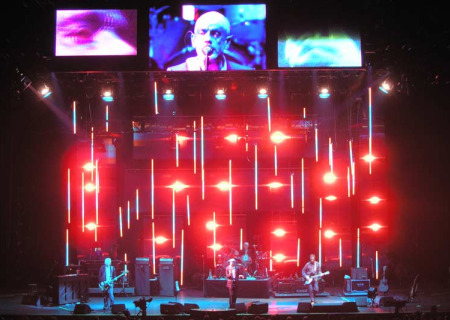
R.E.M. had released a number of concert videos before, but you had to wait until 2007 for their first full concert audio recording. Much like the super-processed Around the Sun was a strange decision for the band given their increasing energy in the 00s, releasing the band’s debut live album out of the tour for such a studio-chained album is similarly odd. There is a hint of a point to prove perhaps: to signal that the album’s songs could form a natural part of the band’s live set, or perhaps even a retrospective attempt to give the songs a chance to breathe that the stifled studio versions didn’t get. Or perhaps it just felt like the right time, with R.E.M. now having fully become a veteran stadium act with the career professionalism and mannerisms of one. Each R.E.M. live release has always taken a snapshot of a specific side or moment in the band’s life: with Live, it’s capturing the band at their most stadium rocking, armed with a catalogue of hits big enough to reach every single person in those giant halls.

Live is, in good and bad, a highly professional live recording. The band perform flawlessly, Stipe has full control of the audience, all the big hits you’d expect to be here are featured and they’re accompanied by a number of fan favourites - you can’t really fault the tracklist. Songs from Around the Sun feature heavily understandably, and there’s even a then-unreleased preview of things to come with the future Accelerate cut “I’m Gonna DJ”. The sound is as pristine as you can get with a live album, and the audience mix is in the exact right balance. Befittingly for its parent album, Live feels just as polished, even overtly so. With live albums, you ideally want to feel like you’re part of the experience, sharing the moment with the band in the same room. It sounds too clean, too sharp for any of that. If a successful live album makes you feel you’re at the gig, Live is more like watching a recording of the concert from your computer.
image
The actual music is, of course, great. The big hits like "Losing My Religion" or "Man in the Moon" are performed with gusto, R.E.M. being very aware of the status the songs have and honouring them by giving them their all. The non-hits are among the album’s best: “I Took Your Name” is a brilliant opener that kicks the album into gear with a bang, and particularly the Up highlight “Walk Unafraid” has somehow transformed from the neurotic and loopy form we know into a real anthem with a backbone of steel and irontight grip on the listener. The main weak link are the Around the Sun songs, and I say this as a semi-defender of that album. If there was any hope of the songs gaining any extra traction outside the studio it’s brushed off fairly quickly, with every backing loop track and overly heavy synth string sample removing the flashes of life the band kick into them on stage. Though, still, there are good eggs: “Final Straw” is a little more raw which works so well for the song, and while “Leaving New York” was a late-period R.E.M. classic from day one, the vocal harmony arrangement the band have opted for its layered second half works wonders and is a joy to hear.

The songs make Live a good listen, but in the grand scheme of R.E.M. live recordings it’s easily the least essential. There’s no real divergences from the studio versions of the songs to go back to, the regular favourites are presented with more gusto on other albums and the only unique material featured here are the somewhat underwhelming Around the Sun songs. The aspect the release highlights - the almost bloated stadium rock experience - isn’t a particularly exciting one in contrast to other recordings. It’s hard to really fault Live per se (the biggest criticism I have is the baffling decision not to even out the disc lengths, leaving you with a scrap-like 5-song EP as the second disc), but there’s never a point you’d be compelled to return to instead of just listening to the studio albums. This wasn’t a particularly adventurous phase for the band, and what you get is a very safe if unthrilling live album.

The album also comes with a DVD version of the gig. Seeing the visuals does not really add anything to the songs, and this tour in general was a lull point where the band were reliably good but not particularly interesting when on stage: veteran musicians doing their day jobs, nothing more. It doesn’t add to or subtract from the score - I forget it’s there half the time - but it’s a decent enough bonus. They have far better, more exciting live DVDs.

Rating: 6/10

4 Sept 2019

R.E.M. - Around the Sun (2004)


1) Leaving New York; 2) Electron Blue; 3) The Outsiders (feat. Q-Tip); 4) Make It All Okay; 5) Final Straw; 6) I Wanted to Be Wrong; 7) Wanderlust; 8) Boy in the Well; 9) Aftermath; 10) High Speed Train; 11) The Worst Joke Ever; 12) The Ascent of Man; 13) Around the Sun

Better than its reputation but it's close - the dreadful overproduction and generally anemic nature of the album are only overcome by the core of largely solid songs hiding underneath.


Key tracks: "Leaving New York", "Electron Blue", "Aftermath"

After Reveal, R.E.M. seemed to be consciously moving towards a wilder, thrillingly energetic rock direction with all guitars blazing, and they were actively mining their past for inspiration. The compilation single “Bad Day”, soundtrack cut “All the Right Friends” and live-only treat “Permanent Vacation” were all songs from the very early days of the band that had only previously been heard as rough demos, but now repurposed very faithfully by a matured, experienced band in a more muscular form. This would become the dominant direction for the band’s last years, with the 80s-guided Olympia concerts, Accelerate and Collapse Into Now all coming from the same path of action. Having reached their third decade, R.E.M. were ready to be the fiercest they’ve ever been.

Which is why Around the Sun continues to be the weirdest thing in the entire R.E.M. discography. In-between this perfectly linear, logical progression in sound is this borderline random curveball with no rhyme or reason. Around the Sun is devoid of all the energy the band were clearly full of, slowly descending back to the ground right as the band were lifting off. It barely register above mid-tempo even in its wildest moments (which is an exaggeration to say to begin with), and this is after the band stopped themselves from going even further along that path - there’s some anecdotes going around where apparently Peter Buck’s main take on each song was to make it even slower. It comes off like the intention was to consciously stagnate.

The production is the big bad, though. After their generally good standards across their back catalogue and the particularly gorgeous production of the last two albums, Around the Sun drops the ball completely. It’s compressed, monotonous and completely devoid of any dynamics or life, all one-tone sonic wallpaper that stifles over everything. There’s little to no spirit to any of the musicianship and the only reminder that this is R.E.M. instead of a collection of session musicians are Stipe and Mills’ vocals. Stipe does his best to sound connected but the production washes it over with a wave of lethargy. The best descriptor for Around the Sun is plodding and it’s not flattering at all. The impression it leaves is R.E.M. stopping their new wind still and taking their third decade towards an early retirement home.
It’s likely to come as a surprise then that Around the Sun still turns out decently, all things considered. This is in spite of its flaws - the general malaise and the stifling production are two constants the album never shakes off, and Around the Sun could be twice the album it is if it was free of them. But the songs, for the most part, still work. Around the Sun is an album of slow-burners that occasionally come off a little over-long or samey, but it’s kind of hard for R.E.M. not to do something that sticks. There’s enough minor stand-out moments to make most songs register positively, even if sometimes describing them individually seems pointless. You can say most of the same things about “Make It All Okay” or “I Wanted to Be Wrong” than you can about “The Ascent of Man” or “The Worst Joke Ever”, for example - similar structures, similar tricks, all mid-tempo without committing too much into any particular emotion, but with a standout melody or section somewhere in them that gives them something unique remember them for. It’s R.E.M. in mid-life crisis stadium torch song mode and whilst it’s not their most flattering form, they do find ways to make it work throughout. Here and there the occasional blunder rears its head: the bouncy but overtly fluffy “Wanderlust” is just too air-headed to be anything but filler, and the protest song “Final Straw” probably would have more bite to it if it didn’t sound so plastic thanks to the utterly cluttered production trying to spruce up what is at its core a folk protest song. It’s a shame in case of the latter, because there’s potential there to be something far more emotional. It’s an example of the epidemic Around the Sun is fallen ill of, with an album-load of decent ideas crying out for a better presentation.

Lion’s share of the good will is done by the opening trio, which is actually a genuinely great run of songs. “Leaving New York” alone is a R.E.M. classic: a gentle, bittersweet mid-tempo in the style that R.E.M. at this point excel in, with a glorious chorus that is so obviously golden from the first time you hear it. The real star are the backing vocals, which start fairly innocuously but soon become the song’s driving force, with around four different vocal layers trading lines and harmonies towards the song’s end. “Electron Blue” is the liveliest song of the collection, with everyone sounding engaged and Stipe especially delivering his most memorable performance on the album, backed by layered percussion and Buck’s wild e-bow textures. It’s also the one song where the album’s production choices actually compliment the tune: the shiny, pure aesthetic of the sound mashes particularly well with the musical ideas and lyrical concepts (the song being about a sci-fi drug made of light). “The Outsiders” is a strange but compelling one. R.E.M. have expressed their love for hip-hop before but “The Outsiders” comes closest to really bringing it out, with a steady, tight beat which completely leads the song and is so obviously inspired by the genre that when Q-Tip makes a guest appearance towards the end, finishing the song off with a verse of his own, it’s a perfectly natural fit. Stipe doesn’t rap, but his dreamy, murmured tone lends to the song’s hypnotic feel and even the chorus barely lifts a finger, only just giving Buck’s lead guitar line more prominence. It’s a song that builds a very particular, slightly off-kilter mood but which works so well and is easily the most interesting song on the record.

Other key highlights include “Aftermath” which is an incredibly unassuming little pop song that doesn’t make much ruckus about itself but sounds so effortless that it whisks away the rest of the album’s stiffness away: it’s a real smile-maker, a rare moment on the album where R.E.M. sound like they’re feeling what they’re playing, and it makes it one of the great unsung gems of their back catalogue. The title track (the first one in R.E.M. discography!) is also a particular stand-out: it whisks away any structural routines, with a clear split down the middle between its sky-reaching first half and the gently descending second part. It’s a strange ending to Around the Sun because where the rest of the album is sometimes conventional to a fault, in its last steps it breaks away completely from the simple sing-along choruses and gentle melodies. It’s out of place and hints at an album that’s perhaps meditative but taking a path of its own devising - a more interesting album made out of the same building blocks.

But that’s obviously not what we have. Instead, Around the Sun is an odd moment of ennui and stagnation which doesn’t slot comfortably if you view it as part of the bigger picture, and which feels distant from how engaged and personal R.E.M. were before. It sounds older than its years, if you can call an album that - it’s something you’d expect from a band who aren’t fully into what they’re doing anymore. Around the Sun is a clear dip in judgment, but credit where it’s due to R.E.M. for still getting through it fine enough. Even when half the time the music resembles career musicians clocking in shifts, these professionals know what they’re doing when it comes to making decent songs, even if not career highlights per se.

Rating: 7/10

1 Sept 2019

R.E.M. - Reveal (2001)


1) The Lifting; 2) I’ve Been High; 3) All the Way to Reno (You’re Gonna Be a Star); 4) She Just Wants to Be; 5) Disappear; 6) Saturn Return; 7) Beat a Drum; 8) Imitation of Life; 9) Summer Turns to High; 10) Chorus and the Ring; 11) I’ll Take the Rain; 12) Beachball

Up's electronica elements mixed with the lush orchestral production of the early 90s records, which when combined turn into a quintessential summer record.


Key tracks: "I've Been High", "Beat a Drum", "Imitation of Life"

After Up’s deeply personal, soul-cleansing exercise, Reveal carries an aura of reconnection with the greater world. As incredible as Up was, the primary impression it leaves is its very insular sound and mood, where you have to dig a little deeper to find the still strongly beating heart of R.E.M.’s songwriting. Reveal, then, presents as much of an 180 turn as Up did. The traditional band roles in more prominent display again again (including an increased presence of session drummers), even if there’s still a lingering element of R.E.M. taking cautious steps forward as a three-person incarnation in tune with Up’s soundscapes, with programmed drums, frequent synthesizers and emphasised keyboard parts making up much of the album. But as albums, they’re night and day - where Up was the melancholy late hours spent awake lost in thought; Reveal is the brand new morning. It’s a decidedly more upbeat album, full of harmonies rather than controlled chaos. There’s a clear desire for the band to smile again, resulting in a shift in gears to a more traditionally R.E.M.-esque album. Even the opening song welcomes you in: “Good morning! How are you? The weather’s fine, the sky is blue…”

“The Lifting”, the said opener, is a grand start and continues with the band’s tradition of strong openers, and is in fact one of the best in that regard. It’s light as a breeze, bouncing on every step like a liberated free spirit, throwing an infectious hook after another as Buck’s familiar jangle appears and the drums carry an infectious rhythm. Stipe has entertained the thought that the song is about the same overworked soul as Up’s “Daysleeper”, and thus it’s another semi-intentional shedding of the previous album’s weariness, bringing the melancholy narrator to the open sunlight. It’s an overwhelmingly joyous song above all, but doesn’t aggressively try to be one, like e.g. the decidedly hyper-upbeat “Stand” or “Shiny Happy People”. There’s genuinity to it and its spiralling conclusion, with Stipe yelping full of energy, is a moment of honest delight - and in that sense, it leads the way perfectly. Reveal is open and inviting, in tone and in music - positive, melodically rich and full of hooks. After Up’s experimentation Reveal places simple songcraft back in the spotlight, and while there’s still great importance placed on the production of the material, the songs presented here are first and foremost guided by their melodies.

Much of what makes Reveal jump alive is still how the band treat the studio as an integral instrument in its own right, and the ambience that’s pushed through the ideas making up the album’s world of sound. There’s a level of obsession in details prevalent throughout, carefully layered sounds and minor parts forming into a greater whole as R.E.M. seek a particular feeling throughout. Reveal is a pastoral album, a record aimed for summer through and through - the cover, the May release date, the constant lyrical references to the season and especially overt touches like sampling crickets make it abundantly clear, and the sound itself is appropriately lush, warm and inviting. The production is pristine enough to let all these details come through clearly, but there’s not a trace of studio sterility. The instrumentation emphasises bright keyboards, clean guitar parts and gentle touches of electronic programming, with Up’s dissonance brushed away as far back as possible. Even in its more introspective moments the band reach out their hand rather than wallow away.

The production’s other main role is tying together Reveal’s different strands. R.E.M. are in transition here, with one foot in the electronic soundscapes they’ve played around with for the previous couple of years, while the other foot is kicking back for a full band feel. Thus Reveal is, despite its unifying atmosphere, a diverse album. The traditional R.E.M. band sound makes a comeback frequently, but with a twist in how it goes about its arrangements, though there is a precedent. Before Reveal, the band released the (fantastic) soundtrack single “The Great Beyond”, re-introducing R.E.M. as a full-band rock act but one with an expanded sonic palette built upon Up’s studio wizardry and the willingness to tap into new soundscapes through precise arrangements, and it’s like the blueprint that Reveal’s foundations are based on. Thus for example the guitar-driven “Disappear” and “She Just Wants to Be” sound like natural extensions of where the band were in the 90s, but there’s a kind of grace and aural richness that sounds new. It’s at times akin to a 21st century update on studio magic of 60s classic pop psychedelia years.
image
The first two singles, “Imitation of Life” and “All the Way to Reno”, are such great examples of this - and they are among the band’s most obvious hits in how irresistibly melodic and sing-along-y they are. To R.E.M.’s credit they don’t sound remotely like they were engineered to be so and instead they are, once again, rich and soulful. The former is an unashamed pop anthem with one of the band’s most simply thrilling choruses (and some fine, contrasting lower-end string stabs and the suddenly bittersweet bridge cutting through the song and reducing the risk of saccharine overload). The latter is a relaxed, effortlessly lush melodic stroll rich in harmonies and arranged gorgeously: of all the songs in Reveal, it carries the strongest comparison to “The Great Beyond” and goes for the same almost-wistful euphoria, successfully as well. In complete contrast, “I’ll Take the Rain” is a gut-puncher - a bittersweet, heartaching ballad among the band’s most fragile, swerving Reveal’s final run with a sudden emotional curveball. With one of their most poignant choruses, it goes all the way to the top, its sadness piercing through with Buck’s chiming guitar lines (and an actual guitar solo!). It’s a powerful song, utilising Reveal’s warmth in a wholly different way than the rest of the album.

The keyboard/synth-oriented songs on the other hand are dreamy, serene moments of still among the lively full band cuts. “I’ve Been High” is arguably the most extreme of the lot, as there’s nary a trace of live instrument in its pseudo-synth pop sound. It’s a colossally beautiful, haunting deep cut however, full of graceful melancholy and soothing dreaminess breaking through the sad haze - and its last minute, from its career standout bridge to the rise it takes in its finale and Stipe’s evocative lyric lines, is absolutely incredible. “Beat a Drum”, “Summer Turns to High” and “Beachball” on the other hand are prime examples of what I mean when I talk about Reveal as a summer album, evoking the spirit of the season and the lazy holidays with their warm sound. The latter two directly make the comparisons, the electro-acoustic “Summer Turns to High” obviously so while the mellow float of “Beachball” somehow manages to take the feeling of watching the sun go down at the end of a perfect summer’s day and turn it into music, gently bobbing along with its minimalistic beat. “Beat a Drum” is a little masterpiece as well, with Mills taking control through his softly swaying bass riff, the gentle piano leading the song and enriching the chorus through his backing vocals. The chorus, incidentally, is another one that manages to evoke so much so effectively through what is in the end a very few lines and a fairly straightforward progression; and yet, it’s one of the album’s most magical moments, a true blooming of warm summer air in music.

The one song most driven by the production, “Saturn Return”, is a little marvel on its own: all tightly-wound atmosphere with little elements bouncing back and forth between the headphones, constantly switching its lead instrument from Buck’s feedback-heavy guitar line to Mills’ delicate piano, floating on top of a persistent drum machine up until the near end when the live drums kick in for a moment. It’s the most Up-esque moment on Reveal, a bridge between the two that reminds the band haven’t completed moved away from it. It’s quietly one of Reveal’s key tracks: an unassuming oddity at first, eventually revealing itself to be an integral centrepiece and a curious shadow cast over the album’s summer day.

The one remaining song, “Chorus and the Ring”, is a strange one, not really going anywhere yet towards its end it reaches a certain kind of crescendo of its own ilk where you find yourself strangely captured by the song. It’s an odd one out on an album that otherwise has a very direct touch with its songwriting (“Saturn Return” included), and perhaps the only slightly dimmer spot in what is otherwise one of R.E.M.’s very finest records. That’s not a light statement, but it feels almost borderline obvious, because Reveal seems to have it all. Stipe is in brilliant lyrical form, with so many great lines that lead your imagination flying, the production is golden and everyone involved with the actual playing of the music are delivering a sharp performance. And as an album, Reveal is certainly one of their most melodic: it embraces a type of songwriting which leans on harmony and goes for hooks within hooks, almost overwhelmingly so. That’s always been a strength for R.E.M. and Reveal revolves around it, making it the core theme for the album together with the lushness and the summer vibe. If you can think of a picturesque sunset on a peaceful summer’s evening following a pleasantly hot day, and experiencing that comforting feeling of everything being perfect and carefree in life like the best summer vacation you’ve had - that’s where Reveal wants to take you.

And it does. “Beachball” closes the album with Stipe repeating “you’ll do fine” as the sun goes down in the horizon, and you can tell that after all the sadness and uncertainty, there was hope again in the band’s ranks.

Rating: 9/10