Showing posts with label John Frusciante. Show all posts

6 Dec 2019

John Frusciante - Enclosure (2014)


1) Shining Desert; 2) Sleep; 3) Run; 4) Stage; 5) Fanfare; 6) Cinch; 7) Zone; 8) Crowded; 9) Excuses

Frusciante nearly masters his new electronic sound finally, but sadly doesn't quite deliver on the actual song front.


Key tracks: "Sleep", "Fanfare"

When John Frusciante first announced his electronic reinvention, he posted a public letter describing his vision, the sound he aimed for and the ways he'd reach it. The releases that followed weren't quite there: for all the good parts, the EPs and album following the release all sounded like public practice sessions, to various degrees of success. They featured Frusciante bouncing around ideas, testing out new production methods and stretching his songwriting style to meet these new guises. After all that practice, Enclosure comes close to reaching that goal; for the first time, the music Frusciante's producing sounds like it's fully in sync with his vision.

The reason for this is that if the experiments of the prior releases had the uncomfortable habit of slipping into borderline amateurish execution occasionally, on Enclosure Frusciante has figured out the formula of how to marry his new sound with the way of writing songs he's comfortable with. While Enclosure retains some of the quirks of the past few releases, it sounds consistent and thought-out, instead of just him recording and releasing any odd idea he's halfway done tinkering with. Even the actual lyric sheets are back: there's just a single instrumental among the songs ("Cinch") and everything else is atypically wordy for this period of Frusciante, although his lyrics have started to become increasingly more obtuse and resembling a word salad, and in places they get downright questionable ("I'm in the zone, nigga" is one dubious way for a white guy to open a song). Enclosure has a clear intent behind it, like an actual album rather than a collection of takes.


Musically, Enclosure is an album of little extremes. On one hand, I do appreciate a lot of what Frusciante does here sonically: some of the synth sounds he's picked are particularly delicious, veering towards lo-fi analogue vibes with a particularly atmospheric touch, almost reminiscent of old game score sound sets. It's the kind of album that makes you appreciate very particular sounds, and it works particularly well with a good set of headphones when you can pick those apart. But then, Frusciante hasn't quite shaked off the weakest parts of the prior albums. He's still obsessed about drum loops and switching between them on a fly, at worst nearly every ten seconds. For the most part Enclosure isn't quite as bad about it compared to some of the previous works and some of the tonal and tempo switches are actually decently executed. The drums for the large part don't sound quite as out of place either, but sometimes it all comes tumbling down - e.g. the acid house drums of "Stage" actively distract from the rest of the song and become its sole, jarring focus. On a couple of occasions the entire production aesthetic starts to falter, in particular on "Run" which sounds like a demo version of the boss theme to some late 90s video game. It's not as cool as it sounds; it's a lapse in judgement after the album had started so promisingly, through the moody buildup of "Shining Desert" and the following "Sleep" where those ever-changing drum loops actually really work for the first time.

For the most part though, the extremes of Enclosure meet to create acceptable averageness. I'm glad Frusciante's gone back to making songs rather than sound tests, and I enjoy the ones on Enclosure, but they're far, far away from his most memorable work - and a lot of the time a fair distance away from being properly memorable to begin with. There's a single song I'd place anywhere near a Frusciante essentials list and that's "Fanfare", a moody anthem of sorts where the production tricks (and especially the drums) calm down from the way of a solid core melody and an underlining, evocative tone with a little bit more oomph than anything else here: it sounds like a classic kind of Frusciante song, just with a new set of clothing on it. But while the majority of the rest please in terms of their production and mood, they're deceptively weak as actual songs. Frusciante rambles his litanies, occasionally stumbles across a good melody and then buries it away. There's nothing to take forward, bar the thought that something at some point sounded good but you can't quite remember how it goes. Some songs get close, particularly "Sleep" that has liveliness and fire that's anything but its namesake, as well as "Zone" which oversteps its clunky start with its near-anthemic rise on its latter half. Frusciante can still do some strong melodies, he just also knows how to brush them away just as quick.

Maybe Frusciante himself realised that in some level as well. After another prolific handful of years, Enclosure has the distinction of closing another particularly prolific era for Frusciante, and beginning a long hiatus. Following its release, we wouldn't hear back from him again properly for a while: he released some material under the Trickfinger alias and cleared out the archives with a couple of compilations of unreleased sketches and demo material available for download, and then disappeared largely off the record; even the second Trickfinger album published some time after was just a collection of outtakes from the first record. Later on he'd publicly state that he was content with just making music for himself, with no wider audience releases in mind. At the time of writing this review, in 2019, Enclosure is the last real album Frusciante's released and there has been no sign of another coming anytime soon. Sadly, for being an album that sounds like a culmination of the work that came before it and potentially the last thing we'll hear in a very long time, it ends the era by uneventfully fizzling out.

Rating: 5/10

20 Nov 2019

John Frusciante - Outsides EP (2013)


1) Same; 2) Breathiac; 3) Shelf

Three tracks worth of Frusciante tinkering with his music programs and little else. 


Key tracks: "Same"

Calling Outsides an EP in the greater sense of being a bite-size cohesive body of work is a bit of a misnomer. It's more of a single with two b-sides, except the single is a 10-minute experimental cut.

That song, "Same", is a 10½ minute guitar solo backed by a short drum loop, which Frusciante chops up and repurposes and rearranges throughout those ten minutes in a variety of ways. The solo is merely an excuse for him to test loop manipulation and the song doesn't particularly grow or intensify during its length, but still morphs restlessly as the same beats switch shapes. It's the best song overall on the EP, genuinely good even, but after the first 6-7 minutes it's said everything has to say and the rest is simply made for zoning out if you're in that kind of mood. And it's certainly better than its "b-sides". "Breathiac" is a pile of noise and the worst thing Frusciante has committed on record since the 90s drug days finished - it's a mishmash of dissonant sound with no reason or rhyme, and it's hard to really think what Frusciante aimed to do with it. "Shelf" doesn't begin any better and is initially just a half-brained sound collage, but towards the end an actual song begins to emerge and the final couple of minutes actually get genuinely good, offering exactly the kind of artsy synth pop John promised back when he first announced going electronic. 

The common thread between the three songs is the sound of Frusciante moving further with electronic sound, somewhere more abstract and, at least within his own scope, boundary-breaking. The crux is that they're experiments first, songs second if even considered at all. Outsides is for Frusciante first and foremost, and I can't help but think that the sole reason why there's an official release of this for a wider audience is more to do with the label than Frusciante having a particular artistic itch to scratch. It has its enjoyable parts but none of it feels like it has any impact, whereas Frusciante's prior EPs at least had some element that might bring you back to it later. Outsides isn't a weak release as much as it is forgettable; the sort of thing that even a big time fan could foresee themselves giving a pass.

Rating: 5/10

6 Nov 2019

John Frusciante - Letur-Lefr EP (2012)


1) In Your Eyes; 2) 909 Day; 3) Glowe; 4) FM; 5) In My Light

Round one for Frusciante's re-invention. An EP of one-offs before the actual album, but somehow this pulls the trick far better than its big brother.


Key tracks: "909 Day", "In My Light"

John Frusciante officially confirmed his departure from the Red Hot Chili Peppers at the end of 2009, though he'd been unofficially out of the picture for a little bit longer than that. One of the reasons cited was getting tired of the rock star life and the music he was playing; so, after moving away from the Peppers, he pushed his guitar to the side and started focusing on electronic music. 2012 would also see the debut release of Frusciante's new chapter, PBX Funicular Intaglio Zone, but it was first preceded by Letur-Lefr EP: described as the pathway to Frusciante realising his new vision, it was meant to consist of random songs that Frusciante created while still developing the sound he was aiming for. Now, you can easily make the argument that it probably benefits from its shorter length, but for a set of trial runs Letur-Lefr is actually a far tighter body of work than the main album.

Much like PBX Funicular Intaglio Zone, Letur-Lefr's theme is Frusciante exploring new territories, but unlike the subsequent album, Letur-Lefr is much more playful about it. Perhaps chalk that down to it effectively being a collection of things done just for fun, but where PBX has the sound of an ambitious project being let down by its creator's choice of production, Letur-Lefr is giddy with new ideas. There's a fair few ideas new to Frusciante's solo records scattered across even only these five songs, and particularly from a production standpoint the new era seems to be as much about Frusciante fitting himself into that role above being the sole frontman. There's a great hip-hop influence throughout and a handful of rappers, most prominently RZA and Kinetic9, feature throughout and on "FM" Frusciante takes the backseat completely from the way of the guests, which acts like a surprisingly successful try-out for a new job as a hip-hop producer (Frusciante would in fact go on to produce a full album for Black Knights later on, though I've not heard how well this turned out).


Synthesizers and drum machines aren't a new thing for Frusciante but the heavy emphasis on drum loops in particular really characterises both the sound of the EP as well as its playfulness. The brief instrumental "Glowe" is effectively just a series of different sampled loops glued onto each other by a simple guitar line, but even at barely a minute long with little in the way of a grand idea, it sounds like a ton of fun was had piecing the jigsaw together and it manages to create a hectic groove for itself. "909 Day" is a similar sort of near-instrumental musical quilt collection, and has a similar infectious joy to its wild abandon of throwing everything into the mix - but then halfway flicks into a drastically different gear, its synth stabs moving towards something more epic and atmospheric as the vocals return.

The biggest difference between the EP and the subsequent album are how those abrupt musical changes and beat switches, which would become the signature elements for this electronic period, sound far more more natural and in control here - which, once again, is the opposite of what you'd expect from a series of supposed experiment takes. Perhaps because these were written and recorded during a transitional period of sorts, the songs still take influence from the songwriting and arrangement ideas of Frusciante's prior decade of music, but they're now fearlessly mashed together with all the new ideas he's hatching. If the big center of the EP is the wild west of those ideas, then it's the bookends that really shine the strengths of the new course. Frusciante dubbed his new style as "progressive synth-pop" and "In Your Eyes" and "In My Light" exemplify this the best: both are almost hook-driven and sound both familiar as well as unique to Frusciante's back catalogue, and while they twist and turn and change shape, there's always a red line running throughout them. "In My Light" is particularly brilliant -  it's probably the best thing to come out of this entire period for Frusciante, primarily because of its first half that for an all-too-brief moment becomes a stunningly glorious ascent of swirling synths and falsetto. The song then quickly leaves that section behind and takes the flight following that ascent, racing around briefly like it's already doing victory laps, before settling down again. It goes from aching to awestruck and back again in an impressive instant.

At little over ten minutes Letur-Lefr is over annoyingly quickly, but the more I listen to this chapter of Frusciante's 2012 release couplet, the more it feels like this is the more important piece purely in terms of its quality and the enjoyment derived from it. PBX Funicular Intaglio Zone, while enjoyable to a degree, is a direct continuation of the themes explored here but the wrong lessons have been learned, leading to an ultimatly disjointed album. Letur-Lefr is chaotic as well, but the actual songs sound positively empowered by it while still holding together within their own confinements. You can tell it's a practice round by how it sounds like a sketch page of ideas dotted around, but Frusciante clearly had a really good time trying out each of those ideas and that results in a set of short but really good songs, the likes of which I would happily listen for another ten minutes or more.

Rating: 8/10

1 Nov 2019

John Frusciante - The Empyrean (2009)


1) Before the Beginning; 2) Song to the Siren; 3) Unreachable; 4) God; 5) Dark/Light; 6) Heaven; 7) Enough of Me; 8) Central; 9) One More of Me; 10) After the Ending

A cohesive tracklist, an expanded studio palette and a concept to tie it all together - Frusciante expands his boundaries again as a culmination of his past decade of solo records.


Key tracks: "Song to the Siren", "Unreachable", "Central"

The last time Frusciante was releasing music under his own name, it was a show-off of inspiration: several albums worth of music all recorded in a handful of binge sessions and later assorted into a variety of records, all released within the space of twelve months. This was then followed up a few years later by the release of Stadium Arcadium with the Red Hot Chili Peppers, a scattershot double album which was another result of vastly fruitful recording sessions where no one nixed any song stem that someone thought up. You could imagine that The Empyrean began as an intentional counterpoint for all of that, just to switch things up. It's only ten songs, all of which were designed from the beginning to be firmly together: an album designed as an album first and foremost, with little extra material beyond what was meant to be within it in the first place.

The Empyrean is a concept album but as usual for Frusciante, the lyrics are fairly oblique and more interested in imagery than a solid narrative; so, unless you go actively digging for it the actual story is fairly hard to track and there's a degree of that being intentional. It's meant to be a metaphysical narrative of sorts of an artist dying (literally or metaphorically), traveling through afterlife, confronting God and his own soul, and finding meaning in the universe through art... or something along those lines. When asked, even Frusciante's own explanations have been full of words like "probably" and "maybe", and it's obvious it was never meant to be a clear story as much as it is a framework for the music. In fact, beyond the obvious connections in the song titles nudging towards a greater concept it might not even be that obvious that this is a concept album. But how that concept manifests itself more concretely is in the music itself: the way it's arranged, the way the album flows, the little links or shared melodies across the songs. It's very obvious that a great amount of time has been spent on how the actual album progresses, far more than on any Frusciante album before. Even if you can't find a story in the words, it's obviously in the music.

I want to in particular geek out about the opening trio here: a brilliant showcase of sustaining a mood and building up a resolution across several tracks, with the most patient opening Frusciante has ever featured across his records. Normally his albums open up with their respective signature cuts that introduce the chosen sound with the most instant melodies of the record; instead, "Before the Beginning" is a nine-minute slow-burner instrumental, mainly featuring Frusciante expanding on a relatively simple solo melody with his guitar atop a simple, steady drum beat. It's little more than an intro that could have probably been several minutes shorter, but its long lead-in is a scene-setter for the full album, a lead-in for the listener to sink into. The Tim Buckley cover "Song to the Siren" is a gentle continuation, introducing Frusciante's voice for the first time on the record. The calm pace is kept but instrumentation now expanded and arrangements getting more detailed, and Frusciante interprets the song beautifully - it very much is a literal siren song beckoning the listener deeper into the sound, and it's one of the most vulnerably beautiful pieces Frusciante has committed on record. The almost cold open of "Unreachable" is the wake-up call after the two dreamers before it. Its steady pace is reminiscent of "Before the Beginning" just with a brisker touch, but eventually it culminates into a furious crescendo that finally, after two and a half songs, kicks the album truly into motion. If that sounds like a really slow, meandering opening, it's anything but: the way the opening trio is paced and quietly builds up on one another as a long-form slide into the album's world is spectacular, and when "Unreachable" unfurls after all that subtle build-up, it's phenomenal.


The Empyrean features a similar sort of arrangement galore throughout. The flow of the album is brilliant and there's a clear indication it was designed from the get-go to be listened to as a whole unit. There's little arrangement delights throughout both musically and from a more meta perspective: songs called "Enough of Me" and "One More of Me" that share the same melody, surrounding a song titled "Central" is just the most overt of them. The aim to create a musical narrative leads to a cohesive but an increasingly free-form nature of the actual song structures to guide the ebb and flow of the drama rather than racing for the ABABCB structure, and together with the often extended lengths of the songs Frusciante's familiar songwriting style has gained a gentle prog rock undercurrent. To complement this, The Empyrean also features the richest sound Frusciante has ever featured on his albums to help bring all the nuances to life. It's an all-star cast ranging from frequent solo collaborator Josh Klinghoffer and RHCP-bandmate Flea dealing with most of the rhythm section throughout the album, to one-off guest spots like Johnny Marr (on "Central", where his guitar either drowns under Frusciante's or he chooses to imitate Frusciante's style). A string quartet features regularly - a Frusciante first - to lend select songs a slightly more epic scope. It's all very uncharacteristically indulgent for Frusciante, but after a series of records that had a humble, home-recorded sound, it's positively boastful.

Where it only so slightly falters is that so much of the album is dedicated to act as one narrative piece, that when considered piece-by-piece it comes across less impressive. Apart from the opening trio there's only two other big stand-out songs scattered across The Empyrean, and it's the two lengthy ones, "Dark/Light" and "Central". The other songs feel like they've been written primarily to pad the narrative forward, enjoyable as they are. For example, the keyboard-heavy rock-out "God" and the more traditionally Frusciante-like autumnal mid-tempo "Enough of Me" are good songs, and I particularly love the penultimate section of "Enough of Me" as the song switches onto a brighter note; but measure them against earlier album deep cuts and they're not quite as exciting after all. It's the same across the rest. "After the Ending" makes for a really effective closer with its atmospheric and slightly ethereal sound, sending the listener alongside the protagonist to some great void into the unknown, but as a song it's not much to write home about; "One More of Me" is mainly notable for Frusciante adopting an oddly guttural singing voice and for being a sneaky reprise; and "Heaven" simply sinks between more memorable cuts. For a person like me who always makes too much of a point about the context of the whole album and who listens to these things in full more often than not, this shouldn't really be an issue - and it's not, because while it's on The Empyrean makes a very good sonical journey, in particular through a good set of headphones. But when it takes a good moment or two to remember how some of these songs go following a regular stint of listening to the album, something's a little amiss enough to point it out

But you do have those two latter-album highlights, and what songs those two are. "Dark/Light" moves from a glacial and solemnly spatial piano piece to a bright, choir-starring call-and-answer cut that might go on a little bit too long perhaps, but the switch between the two sounds is a delight each time and the "Light" section is full of wonderful elements, from the choir trading lines with Frusciante to the lively bass riff that's jamming its own thing over the simple drum machine. "Central" is the centerpiece colossus, the Moment that the rest of the album seems to build up to and then spends the remainder recovering from - it sees Frusciante firing at all guns to create a monster of an anthem, with roaring guitar solos, string sections, intense vocals, explosive breakdowns... you name it. It's a huge song and a powerhouse of a performance that sounds almost unhinged if not for the clear precision in its production. Both move well beyond Frusciante's typical musical borders in scope, showing off he can do something larger than life if his mood strikes right. The album would be a greatly lesser work without them, both from the perspective of how much life they bring to the sequence but just from a quality perspective as well; the latter, in particular, is the real winner of the record and the one that rises above everything else the most.

The Empyrean would go to close off an era for Frusciante. The 2000s were a humongous decade for the man musically, not just as as a wildly prolific and consistent solo artist but at the same time also leading the Chili Peppers through the most successful part of their career, solidifying himself as the all-time iconic guitarist for the band who had seen so many of them come and go. Roll forward to the next decade and Frusciante would leave the Peppers for good and subsequently reinvent himself musically, leaving behind his standard rock background and ditching his guitar behind with it. It's hard not to then see The Empyrean as something of a culmination point for the decade it closes off. It's a sum of all the lessons learned and tricks showcased throughout the past decade before they were to be washed away, from distilling its tracklist to the very essentials rather than sprawling 15+ song albums, to bringing back a full-fledged studio production without straying too far away from the living room warmth of the 2004/2005 set of releases. After a decade of sprawling records and recording sessions there's finally an album that's a cohesive unit from its origination to the final release, as if to finally give a nod to certain parts of the audience and say it's always been possible, just never been in the mindset for it. For all that I give it the applause it deserves, because above all The Empyrean is a gorgeously constructed whole - in the right context and place it's absolutely a journey that seizes the attention. It only really suffers when compared against its kin in a wider context, but artistically it's a showcase for Frusciante and at its best it's downright brilliant, even if its sole focus in its own singular experience can be both a boon and fault. It's only that which makes me downrate this slightly; most days of the year I'd find myself moving towards another solo record of his simply because they're stronger to stand out, and that ends up accounting in the rating. It's only when it's on that I actually remember the strengths of The Empyrean.

Rating: 7/10

17 Oct 2019

John Frusciante - Curtains (2005)


1) The Past Recedes; 2) Lever Pulled; 3) Anne; 4) The Real; 5) A Name; 6) Control; 7) Your Warning; 8) Hope; 9) Ascension; 10) Time Tonight; 11) Leap Your Bar

Somber and sparse introspection centered around an acoustic guitar and a heavy voice. Frusciante at his most intimate, but no less carefully arranged.


Key tracks: "The Past Recedes", "Lever Pulled", "Ascension"

It got delayed by a month but Curtains still managed to hit its target window, and with its release John Frusciante completed his absolutely bonkers decision to shove out as many albums as he could within 12 months, most of them within the last half of it (or the last half plus one month, given the delay). You could have possibly expected the last of the lot to be some kind of culminating triumph of a victory lap, but Curtains is anything but. It's the quietest and most delicate of the bunch, intentionally focused on Frusciante and either an acoustic guitar or a piano with select few accompaniments to go with them. Where much of the 2004 collection was clearly coloured by the people Frusciante collaborated with, on Curtains it's largely just about just the man himself, with the few collaborators undisturbingly doing their work in the background.

It's somewhat inevitable for albums like this to have a certain kind of emotional gravitas, and much of Curtains is, as expected, world-weary and melancholy. That kind of weight comes to Frusciante naturally, given his life experience and the struggles he's by this point left behind but never forgotten. Curtains weighs heavy with somber introspection, cut with a hint of the relief that he survived through everything he went through - it brings to the front what's always been coursing behind the lines and melodies in the previous albums. Frusciante puts it well himself in "The Past Recedes", bluntly defining much of his 00s mindset: "to be here you first got to die / so I gave it a try / and what do you know / time was so long ago". But the person who sings those lines isn't a haunted man, it's a gentle voice full of warmth and hope. Curtains is sad album but it's interpreted by someone who's found peace from his ghosts, and its overall feel is more meditative. Somber, but not bleak.


"The Past Recedes" is a gorgeous song: it's also very lush and meticulously arranged, full of layered guitars, backing vocal harmonies and other elements that make it sound orchestrated despite largely just featuring Frusciante on his own. Curtains does this a lot, where it uses the sparse building blocks of each song with powerful intent, so that every time something beyond an acoustic guitar appears it feels monumental, and something as gently crashing as the sudden choruses of "Control" - which throw a great contrast to its fade-in/out verses - feel bold and explosive as a result. The contrasts are so stark that when "Ascension" brings out simple keyboard texture to back Frusciante, it comes across like a stylistic whiplash and the equivalent of sticking an electronic song in a rock album. Songs where things are actually stripped down to the very basics, like how you'd expect from the typical Acoustic Album, are relatively few and far between. The change in approach shows particularly clearly when the full band does come out to play and Frusciante grabs onto his electric guitar - the excellent early album trilogy "Lever Pulled" / "Anne" / "A Name" is like a direct bridge to the earlier albums (most notably The Will to Death) but all the instruments are clearly playing back fiddle to the man in front, gently making their presence known in a cool and controlled fashion - each one treated with the same gentleness as the acoustic.

Even when there aren't any other instruments, Frusciante turns his own voice into one. Rich background vocals aren't an anomaly in his body of work but due to the sparseness of Curtains, their constant presence here is highlighted even further and frequently underline the emotional centerpoints of each song. Similarly, when there's nothing else to steal your attention away it's the voice that gets you, and so a lot of Curtains' most memorable moments come directly from Frusciante himself. Sometimes it's particularly overt: "Ascension" is a showstopper parade of killer vocal hooks in all forms (lead melody, wordless hook, background harmonies, you name it), "Your Warning" becomes the album's big tearjerker song through Frusciante's fragile falsetto sinking into his own loneliness towards the song's end in an utterly heartbreaking and memorable way, and the piano arrangement of "Leap Your Bar" is so skeletal that it's Frusciante's vocal delivery that literally makes the song. When I think back on Curtains without listening to it, it's the vocals that I remember the clearest - they effectively determine each song's general mood regardless of the musical or lyrical content, driving the rest of the composition, and it's the little inflections and details in how Frusciante sings that become the sticking points. Curtains isn't where Frusciante shows off his pipes the loudest and it's instead rather restrained throughout in that department; but it's the album where out of any of his albums he really hammers down the emotional weight his voice has.

Frusciante's overall winning streak throughout this period continues on Curtains, even if out of the albums released under his name it's the least song-y: one not defined by its big songs but rather intended to be taken in as a whole, ideally played in a setting that suits its low-key tones. Or in other words, it's the album that suffers the most if the songs are removed from their context due to the very nature of how subtle they are, gorgeous as they may be; some of Frusciante's most tender work and most beautiful moments can be found concentrated here. His music has always been very personally direct and that's one of his solo material's main appeals - Curtains is that at its most intimate level.

Rating: 8/10

3 Aug 2019

John Frusciante - Inside of Emptiness (2004)


1) What I Saw; 2) The World's Edge; 3) Inside a Break; 4) A Firm Kick; 5) Look On; 6) Emptiness; 7) I'm Around; 8) 666; 9) Interior Two; 10) Scratches

Loud guitars. There's more to it than that, but wish there was also more of things to truly cherish.


Key tracks: "What I Saw", "A Firm Kick", "Look On"

Inside of Emptiness begins with a sturdy riff and a steady beat, and with those two sounds it pinpoints where the focus is on this time. Frusciante albums always (or at least around this point) have a heavy emphasis on guitar as a lead instrument for obvious reasons, but there's emphasis and then there's putting it as the key focus of the arrangements as is done here. The first instinct is to call Inside of Emptiness Frusciante's rock-out guitar album but it'd be more accurate to describe it as the guitar-and-drums record: Josh Klinghoffer has been a constant companion for Frusciante throughout his 2004 recordings but here his drumming gets an equal spotlight in the mix to Frusciante's guitars. You get the impression the origin of these songs was the two J's bashing out songs with their chosen lead instruments before fleshing out the rest much later; you could strip down the songs here to just those two instruments and only in a couple of cases would you lose anything integral to the arrangements.

In general Inside of Emptiness is still clearly within the realm of Frusciante's other 2004 albums, so much of the same sonical elements apply. The more melodic approach to songwriting is still there, the production is cut from the same cloth as the rest of the albums and it's still got the same no-frills approach where sparseness is a key value. Where it stands out is that here it's Frusciante fully leaning on the muscular side of his playing after hinting at hit periodically in the prior albums, where style in the past has been to reserve his unleashed rock and roll guitar moments for particularly climactic moments in chosen songs, now each guitar riff is played out like the intense last section of a song.  and it results in the kind of album that benefits from cranking the volume high. It's the opposite of an oasis among its largely calmer counterparts during the 2004 wave of records.


The big, obvious explosive moments, such as the opener "What I Saw" and the late-album powerhouse "666" jump out as the most defining moments of Inside of Emptiness. These are full of sound wall riffs and loud cymbal-heavy breakdowns, and are what you'd imagine when you think about Frusciante doing a rock-heavy album. "666" even features a curveball demonic scream from Frusciante, amidst its borderline-headbanging riffs courtesy of the album's sole guest spot Omar Rodriguez-Lopez. Not all them are as confrontational: "Look On" is a classic centrepiece anthem with an above-average length of which half is spent on a seemingly everlasting coda, and it's far calmer than the other two songs addressed before. Still with its high-in-mix riffs and multiple stand-out solos as well as lead guitar parts which might as well be solos, it's just as much of a rock beast as the other two. In general, these are the songs that will leave the initial strongest impression - the ones you carry away from the album in the first place because they take such a break from Frusciante's usual albums. They're arguably the album's highlights too, with "What I Saw" especially not just being a great intro to the album but a cavalcade of great hooks in general, and because I'm a sucker for a good extended finale "Look On" is probably my favourite of the lot here and one of the album's standout songs to begin with.

Despite how dominating the hard rockers are in leaving the most lasting impression, they're not actually that characteristic of the full tracklist. There's a handful of slow-burners that are similarly amplified in volume but release it in careful bursts rather than drenching in guitars throughout: "Inside a Break" and "Emptiness" build up a careful momentum coiling up the tension before uncurling into a series of sharp, powerful bursts of sound, and they keep you on your toes nicely. There's also a number of gentler moments that bridge the gap between Inside of Emptiness and the rest of Frusciante's 2004 albums, and while the contrast between, say, "I'm Around" and the melancholy closer "Scratches" with the rest of the album is so wide, they end up forming a natural part of its ebbs and flows. "A Firm Kick" is even one of the best songs on the album: its graceful vulnerability is a flashback to The Will to Death, with its fantastic backing vocal parts and accentuating keyboard arrangement. Between it, the thrashing of "666" and the whiplashingly perky and jolly "Interior Two" Inside of Emptiness covers a surprising lot of ground; it's not just the big rock album it makes itself out to be at first.

It's quite fun to hear Frusciante just kick the energy into overdrive and play the rock hero in his solo records for once in a while, so it's actually a little bit of a shame that the album stretches its territory so much. When it starts stepping on the stylistic lines of other Frusciante albums, it also becomes clear that the songs are on a slightly lesser tier. There are no straight-up weak cuts here, but only "Look On" at most has a chance to stand up among the general highlights of the 00's Frusciante records. It's an album that's great when it's on but whenever it's not, it ends up a little forgotten; one where the songs are good but not so great they'd jump to surface. Discounting Automatic Writing (a side project) and DC EP (an EP), out of the mid-00's group of Frusciante albums this is the weakest one - or least good, however you want to phrase it - and where the others have highlighted the various sides of Frusciante's songwriting one by one, Inside of Emptiness only gets about halfway there. For the supposed riff album it's not as excitingly loud as it could be and if you're in the mood for a more nuanced Frusciante album, there's a lot more of those that do it better. This has always been somewhat buried under the other albums of this era, and I don't mean to dismiss it because I do enjoy it, but the years since have somewhat highlighted where it's lacking and there's some solid ground behind why this seems to be the least mentioned album of the lot.

Rating: 7/10

7 Jul 2019

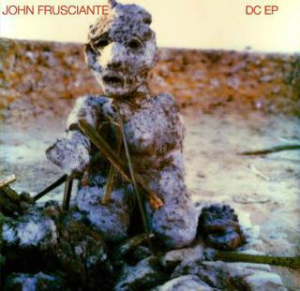
John Frusciante - DC EP (2004)


1) Dissolve; 2) Goals; 3) A Corner; 4) Repeating

Just four enjoyable Frusciante songs. It's nice sure, but lacking in substance.


Key tracks: "Dissolve"

When someone announces they're going to release a record a month for the next half a year, a 15-minute, four-song EP feels like a cop-out - especially before the project's even halfway through. Another way to think about it is that John Frusciante felt these songs just had to be released no matter what, they just didn't fit in any of the other surrounding releases, each of which had their own identifying sound. The songs on DC EP are too optimistic to be on The Will to Death, too mellow for Inside of Emptiness and too fleshed out for Curtains; and if there were only four of those outsiders, then so be it, it's EP time.

There is a story behind DC EP, in that Frusciante chose these four songs in particular to be produced by Fugazi's Ian MacKaye and they were recorded using his instruments, rather than this being another Frusciante home production job. It's not particularly audible (there's literally no distinction between the sound world of this and all the other Frusciante releases from this period) and on closer look it feels like a saving throw for these four discards that couldn't find a place on any other album, in an attempt to get them to stand out for themselves. If that ever was the attempt, it's not particularly successful. You can't shake the feeling that this is a bit of a runt of the litter, and were the songs in a bigger context they'd probably get lost there.


As for the actual songs, "Dissolve" gets the front billing because it's the strongest song here and the one cut which could have had a fighting chance for an album spot. Picking up from the general dynamics of The Will to Death, it shifts through a great deal of tones and musical parts across its length, culminating in a stand-out solo and closing off with a quiet comedown that works really effectively, "Goals" features some particularly lush guitars over a pleasantly gentle backing track, "Repeating" is a hazy lounge bar cut which initially feels like it's going to drag but picks up by the time it reaches its admittedly pretty conclusion, and "A Corner" is just there, indistinctively running its course. Together they make for a foot-tappingly enjoyable quarter of an hour but not one to remember; in fact, it's easy to lose attention to these songs even while listening to them, which is a rarity for Frusciante even at his least successful. 

Like said, it's all fine, but there isn't much to DC EP apart from there being four more run-of-the-mill Frusciante cuts in the world, and it's hard to think why you'd listen to 15 minutes of these over an album of the other stuff.

Rating: 6/10

20 Jun 2019

John Frusciante - Renoise Tracks 2009​-​2011 (2015)


1) Genex 44; 2) Singular Scope 85; 3) Motiern 58; 4) Hew Brenderson; 5) Unending 126 Mix; 6) Culminate; 7) 90/180; 8) Anea 18

I mean, these are discarded demos... but honestly, these sound more refined than most of the other electronic material Frusciante put out.


Key tracks: "Unending 126 Mix"

John Frusciante has always been good with his internet releases for fans: his scattering of free downloadable albums are outtakes for the hardcore followers, but they've been notably insightful ones. Renoise Tracks 2009​-​2011 is ostensibly a selection of songs from the period when Frusciante first abandoned his guitar-oriented direction and moved towards a more free-form electronic sound, billed as practice rounds from when he was still messing around with his new tools. That's the surprising thing about it; this sounds far more like Frusciante is already comfortable with what he's doing and has specific direction in mind, acting like a prelude to his IDM/acid house-oriented Trickfinger records more than his somewhat messy set of electronic albums under his own name. One of Frusciante's electronic sound's bigger downfalls is the aimlessness they often fall victim to - and yet, this set of early attempts sounds much more like an intentional album than the ones that actually had commercial releases.

Renoise Tracks strikes real gold with "Unending 126 Mix", which sounds like what electro-Frusciante has the potential to be but with a focus that material of its ilk generally lacks. High-energy beats come together with a careful application of his guitar and some nice synth samples, with Frusciante's voice bringing them together. It sounds like what you'd expect an IDM track from a rock songwriter to sound like, and it really works. The rest of Renoise Tracks are slight variations on the same themes, altering largely on whether it emphasises the beats or Frusciante himself. It's where you get the only real notion that these were originally intended just for Frusciante himself, uncertain whether to go for a fully instrumental route echoing his inspirations or trying to express his old ways of writing through new means, and finding ways to bring the two together. It's enjoyable to a surprising degree and it's strange how the actual albums released chronologically after these songs didn't develop further on the ideas here.

Renoise Tracks leaves you wanting for something developed from the ideas presented here, even if it doesn't exactly leave you wanting to come back to it frequently either. It's a decent listen but only kicks into a really memorable gear occasionally. Yet, for the time it plays it's engaging and even outside its better moments it has a bunch of neat ideas which maybe could have crossed over onto something really good with a little more development. For what is effectively a group of discarded demos, it's unexpectedly solid.

Rating: 6/10

17 Jun 2019

John Frusciante - The Will to Death (2004)


1) A Doubt; 2) An Exercise; 3) Time Runs Out; 4) Loss; 5) Unchanging; 6) The Mirror; 7) A Loop; 8) Wishing; 9) Far Away; 10) The Days Have Turned; 11) Helical; 12) The Will to Death

The first of the grand rush of 2004, and it starts with a melancholy, autumnal collection of understated melodies.


Key tracks: "A Doubt", "Loss", "The Will to Death"

From the late 90s onwards Frusciante, now back in full health, was bursting with inspiration and the desire to keep playing and creating music. Within half a decade he had already managed to amass a fairly reputable amount of music between the Red Hot Chili Peppers and his restarted solo career, but no one could have expected what was to come next. Only a couple of months after the release of Shadows Collide with People in early 2004 Frusciante announced that he was going to release six more records in six months during the latter half of the very same year: all brand new music, either under his own name or in new projects spearheaded by him. The real shocker is that the madman actually did it - apart from having to delay the last album of the bunch by a month, Frusciante did good on his word and delivered the same amount of albums within a year that most artists take at least a decade to release these days. While most of the songs were written and recorded during the same initial sessions and later grouped together based on the general sound, it doesn't really take anything away from the achievement - especially given the general level of quality he kept up throughout.

The Will to Death was the first album to follow the announcement, and it's a great introduction to the project overall because it shares its general aesthetic choices with the records to follow. The overall concept isn't too dissimilar from Shadows Collide with People musically, and sees Frusciante delivering relatively conventional rock songs with frequent keyboard flourishes and layered arrangements, so it makes for a reasonable bridge.  The production, however, is the big change. All of Frusciante's 2004 rush were recorded in his own home studio, produced by himself with limited overdubs or polish. The albums sound like live takes of Frusciante and his small backing band playing together in the same room, and the sound quality is warm and homely; not quite raw and lo-fi, but distant from any shiny studio glamour. They come across like a glimpse into a private rehearsal space, Frusciante playing right next to you in a personal setting.


The Will to Death's particular characteristic of its own is that it's a very solemn album: the original June release date is completely inappropriate with a record like this that's more at home during gray, rainy days (insert joke about British summers). Compared to the jubilance of creativity that To Record Only Water for Ten Days or Shadows Collide with People were brimming with, where Frusciante sounded happy to just be around playing music, on The Will to Death he's serious and world-weary. The sparse piano-lead "The Mirror" is one of the bleakest songs found on Frusciante's albums and while it's the most overt in this nature, much of The Will to Death is marked by an air of melancholy hanging around; to a point that it sounds practically peaceful in how it's resigned to its own sadness. The album name is a bit of an obvious-in-hindsight giveaway, but the point gets hammered down throughout - on "Unchanging" Frusciante calmly and soothingly sings lines like "it's a pleasure to die, a pleasure to be gone" and "life gave me up and I have no control" and sounds practically relieved while doing so, and "The Days Have Turned" is the most self-loathing set of lyrics Frusciante has written set to a gentle shuffling beat and pretty, minimal guitar. Even the brief instrumental "Helical", as pretty as it is, sounds like it has a sorrowful heart despite its external smile.

That's not to say that The Will to Death is a quiet record. Uncommonly for a Frusciante album it's very much a band record in the sense that the usual rock band trio setup is clearly and powerfully present, and there's a lot of explosive moments scattered throughout where Frusciante kicks up the volume - right from the beginning in fact, with the drum roll intro of "A Doubt" launching into a wistfully chiming guitar riff, and the initial meditative verses pave way for Frusciante eventually going all-out in the song's crescendo, his guitar roaring and voice soaring. Because of the more intimate sound these moments jump out particularly starkly: it's ultimately a production job that favours more mellow moments by default and so when things increase in strength you can practically feel it, such as the verses of "An Exercise" (which flips the usual quiet verses/loud choruses formula upside down) or the hypnotic and appropriately named "A Loop" which grows to a nearly furious intensity. This happens to the best effect in "Loss": despite its name, it's actually (musically) one of the most directly positive moments on the album and its triumphant organ-powered grand finale is one of the album's few moments of genuine light, a Shadows Collide with People moment interpreted in a humbler setting but just as powerfully. And when The Will to Death does dial it down, the results tend to be universally excellent: they're close for comfort but bittersweet in tone, full of the weariness of a man who's been through a lot and is best at channeling that through beautifully simple melody work: the aforementioned "The Days Have Turned" and in particular the understated but devastatingly pretty title track are simple but sublime songs that do not make a big deal about themselves, but have the emotional resonance to cut through any need to make them more complicated with no good reason to.

The Will to Death, in general, follows that very example. It's by and far the least flashy of Frusciante's solo records - even the largely acoustic-focused Curtains has an element of showmanship to it on the very account that it makes a big point about being The Intimate and Stripped-Down Record, and all the others make their presence known very clearly in ways as various as their styles. The Will to Death in comparison is the guy in the corner keeping to himself. It doesn't have Frusciante's flashiest solos or grandest arrangements, and its quiet darkness is really only obvious in hindsight once you begin to read the lyrics - musically it's practically serene in places. But it finds its strengths elsewhere. It's in the lovely guitar work, in Frusciante's vulnerable delivery, in the subtle but touching melodies that leave an impression behind without realising it at first and it's in the cosy, warm production that ties it all together. It's not an album that features many of Frusciante's all-time great classics (I'd pick "Loss" and "The Will to Death" definitely if I were to make a list, "A Doubt" possibly), but it's a perfect example of a record where the whole is greater than the sum of its parts, because when all those individual elements are brought together it creates something arresting and resonating. It's arguably Frusciante's most beautiful solo record, but in a way that's not completely apparent from the initial listens. But as it grows, it becomes arresting in its modest grace.

Rating: 8/10

27 May 2019

John Frusciante - Shadows Collide with People (2004)


1) Carvel; 2) Omission; 3) Regret; 4) Ricky; 5) Second Walk; 6) Every Person; 7) -00Ghost27; 8) Wednesday's Song; 9) This Cold; 10) Failure33 Object; 11) Song to Sing When I'm Lonely; 12) Time Goes Back; 13) In Relief; 14) Water; 15) Cut-Out; 16) Chances; 17) 23 Go in to End; 18) The Slaughter

What Frusciante sounds like when he sets out to make his own big-budget recording. Don't worry about this being stifled by overproduction though; if anything, this is a prime example of how to use the studio space correctly and create your masterpiece.


Key tracks: "Carvel", "Omission", "Time Goes Back"

A persistent characteristic throughout John Frusciante's solo recordings is how modest they are. In contrast to his time with the Chili Peppers and the extensively labored, expensively produced album sessions spent at top-of-the-line studios, Frusciante's own albums have mostly been recorded at home and with only a few additional names in the credits lists. Shadows Collide with People is, to date, the first out of only two exceptions, and it's the major one. It's a big budget, hi-fi experience meticulously recorded in a professional studio; a self-admitted response to anyone who called Frusciante's prior recordings unfinished or messy, going all the way to prove he could do the opposite if he wanted to.

Shadows Collide with People introduces its densely constructed sound right off the bat. Every note played and every sound made has been treated with pristine perfection, there's layers upon layers of vocal melodies and guitars that would make it impossible to accurately replicate it live, and the majority of the tracks are amplified by prominent keyboard and synthesizer parts. Considering the timing, it's easy to see Shadows Collide with People as Frusciante's personal counterpart of his then-band's By the Way, released a few years prior and in itself a melody-rich and studio-heavy album that was heavily weighted towards Frusciante's contributions, featuring many of the same musical cues that Shadows is full of. Familiar Peppers names even feature here, with Chad Smith powerhousing the drums on each song and Flea making a surprisingly understated appearance in "The Slaughter", and with frequent brother-in-arms and future Peppers guitarist Josh Klinghoffer having an audible backing role across the tracklist. But where By the Way was rather blunt dynamically, Frusciante himself helms the producer's seat on Shadows and ensures that the sound world isn't an overproduced and overstuffed mess, and rather each element is given its own space. It's a rich and warm sound, both when filling the room out loud and when intimately observed via headphones. Shadows Collide with People sounds gorgeous, and a great deal of effort has been put forward to make it so without sacrificing anything.

The production values of Shadows are especially noteworthy not just because of the sound itself and its contrast against the rest of Frusciante's discography, but the (possibly coincidental) effect they have had on Frusciante's songwriting as a whole. With the clear sound, the ability to layer multiple elements precisely and the piece-by-piece recording process, Frusciante approaches the songs with the mindset of having all that utility in hand and makes use of it in the song arrangements in a practically liberating way. The songs were written with these possibilities in mind and designed to use all those elements to their advantage, building upon their already-strong core melodies with frequent multi-tracked backing vocals, several guitar parts trading spaces and keyboard textures that are like punctuation or font changes for the thoughts and emotions the songs wish to raise. It's that interesting, and in this case often beautiful, point where the songwriting and the production hold hands so well that they both support one another, and reach to the listener all the more strongly because of their collaboration.

That freedom of possibility brings out two things. One, Shadows is Frusciante's most openly joyous album. Many of its songs could be called downright anthems, Frusciante bellows out the abstract but appropriately scene-setting lyrics with complete conviction and major chords are everywhere. Frusciante's physical and mental rehabilitation post-coming clean is a big part of the man's mythology, but that newfound appreciation for life is the most apparent here, still relatively recent after the recovery: it leads to the passion evident in the performance and the lyrics frequently referencing learning from life's mistakes. This then leads to a kind of positive boundlessness for the album, expressed through Frusciante indulging himself with big choruses, dramatic musical explosions, grand swoons and other notions that might be a bit too 'obvious' and bombastic for your average Frusciante home recording - which, while not experimental most of the time, have their own sense of song structures and lack of reliance for any of the above.

But here you have "Carvel" opening the album with a proper bang after its bubbly intro and sounding colossal from the get-go, only becoming more towering as it goes on and Frusciante keeps dialing up its rock anthem intensity. It's all giant guitar walls, fist-pumping sing-alongs and sort-of-choruses, and it's while unusual to hear Frusciante play something so bold and powerfully direct under his own name, it's near-empowering to hear it: "Carvel" is a phenomenal song that constantly one-ups itself with another section more awesome than the prior one. Meanwhile "Song to Sing When I'm Lonely" and "Wednesday's Song" are two of Frusciante's most straightforward pop songs, and they're both disarming in their sheer melodic wonder - they're the sound of summers and life at its most colourful, brought through a warm sound and rich tune. While the tricks they employ aren't new to Frusciante, the unashamed openness of them has been rarer in his back catalogue.


Behind the production and the structural choices, the songs of Shadows Collide with People are consistently strong. Each of the actual songs offers something new, has the power to stay with you long after the album has finished and strongly resonates even within the greater context of Frusciante's whole discography. That's staggering on its own, but even the interludes (the ones with all the number titles, representing various milestone ages for Frusciante) all feel absolutely crucial to the album's flow - in fact, the hauntingly atmospheric ambient cut "23 Go in to End" is one of the album's big stand-outs, a veil of dreamy sound covering the world in a particularly poignant way. Out the "proper" songs, many - "Carvel", "Wednesday's Song", the achingly lovely Klinghoffer duet "Omission" and the bittersweet beauty of "Ricky" - are among the best within Frusciante's discography. Even "Regret", built entirely on two repeated lines and a couple of similarly recurring melodies, is an impressive example of how the same passage can be wholly different when the production behind them changes and grows, from downbeaten to defiant; it's the underdog that unexpectedly reaches the goal far more impressively than you'd expect. And while much of Shadows'  strength comes from its more delicate moments, it can also be physically powerful when it wants. Smith's drumming, here in its peak strength, injects the songs with a thunderous energy which especially makes the more guitar-heavy rock-out moments even wilder, whether contributing to the majesty of "Carvel" or powering through the brief but punchy "Second Walk", which is downright breath-taking in its sheer speed and in-your-face melodies (particularly when Frusciante bring out the sparkling guitar part towards the end). 

But the light that shines the brightest is "Time Goes Back". It's a marvellously effortless and staggeringly beautiful song that doesn't brag with complex arrangements or intricate structures, but Frusciante's delivery is phenomenal and makes the song sound so effortlessly majestic. It's where many of Shadows' traits all come together to reach the peak: it's blissfully lovely and larger-than-life in its power, melodically rich and thoroughly resonating. Other songs on the album may arguably be more ambitious or more upfront, but "Time Goes Back" hits a special nerve simply by how its delivered. It could just well my favourite moment Frusciante has committed on tape; or so it at least feels every time it reaches its heights and feels like a revelatory moment for the power of music.

That notion is where that top rating comes from. Over the course of this review it may have become apparent that Shadows Collide with People often whelms me, repeatedly and throughout over the course of is duration, and in a way that feels like the first time, every time. As a John Frusciante album it's the strange one. It bears little similarity with anything else the man has released under his own name, both in songwriting and especially the sound. But it simultaneously showcases the best sides of Frusciante in the clearest way: his vocals, his detailed arrangements, his style of guitar playing, and how Frusciante brings those elements out on this record is sublime, often perfect. It's not that the big production makes Shadows stronger than his other albums, it's that the production has taken Frusciante down to a path where he can really show off those ideas. He immerses into the songwriting so well that you can hear the love and devotion he has for his craft that he's famously obsessed about. When an artist puts so much of themselves into something, the excitement becomes a tangible part of what comes out from the speakers and resonates through the listener. It's a series of moments that take one aback with the impact of a gut punch; and once the album has finished, there's that curious, almost physical feeling of the world feeling a little different after going through all that splendour. It's the embarrassingly subjective hallmark of an all-time favourite album.

Take that particular super-subjectivity away and you're still left with an incredible landmark album for Frusciante. It doesn't overshadow the rest of Frusciante's works and I don't hold their more home-knit nature against them in comparison, but if you want the best possible idea as to why Frusciante is a noteworthy artist on his own right, this holds all the tricks.

Rating: 10/10

17 May 2019

John Frusciante - PBX Funicular Intaglio Zone (2012)


1) Intro/Sabam; 2) Hear Say; 3) Bike; 4) Ratiug; 5) Guitar; 6) Mistakes; 7) Uprane; 8) Sam; 9) Sum

Frusciante restarts from scratch with an electronic reinvention, and somewhat appropriately sounds like a newcomer again rather than a seasoned veteran. In a somewhat awkward way.


Key tracks: "Ratiug", "Mistakes"

John Frusciante may be a master of his art when it comes to his guitar but that does not automatically translate to being adept at everything. After leaving the Red Hot Chili Peppers for the second time and burning out from being a rock star, he found a new passion in samplers and music programmers. Frusciante had dabbled with electronic elements before - the programmed loops around the To Record Only Water for Ten Days era, A Sphere in the Heart of Silence – but now it was about a full re-invention of himself as a musician and carving a completely new path onwards. Not a bad thing on its own and PBX Funicular Intaglio Zone (jesus) was released relatively shortly after Frusciante’s retirement and subsequent electronic obsession, a sign that he was still an active creator and had no interest in retiring. Trouble is, the album is also worrisomely close to someone’s first attempts at sampling, looping and programming. Something’s gone awry when parts of an album from a world-famous, seasoned music veteran sounds eerily close to the hapless things I used to make with Fruity Loops and CuBase back when I was trying to make sense of them.

PBX Funicular Intaglio Zone’s big downside is how it actively sabotages itself in the name of Frusciante’s ambitious rebirth. It’s not actually a bad album when you listen to the core of the songs and the actual writing itself, as Frusciante’s still got the know-how of writing a great, evocative musical segment. Unfortunately here they’ve been pushed through a cheap, disjointed electronic production where songs transition from one part to another abruptly like a haphazard cut/paste job and where everything is drowned by (what sounds like) pre-set drum sample loops. The drums are pretty easily the main offender, in fact: they sound cheap, the loops have a habit of changing disjointedly and hyperactively in a way that throws the song off the rails and Frusciante’s apparent keenness on chaotic fills is a constant disruption throughout the album. It’s all very Fisher Price My First Electronic Album, or at the very least like archive material from the very first messing about you do when you get a new plaything. Yet, not only is this a fully-fledged release but also the supposedly more structured and planned album after the directly preceding Letur-Lefr EP collected together some of the initial experimental material. Not that you’d be able to tell.
image
Endure through the haphazard production and you get some good stuff, mostly in the form of scattershot segments throughout the album that manage to shine through the awkward surface and disjointedness of the tracks they’re attached to. Only the appropriately guitar-centric “Ratiug” and bouncy “Mistakes” feel like fully-formed songs on their own right, with a structure that feels natural and consistency across all the elements. The former even finishes off with a rap verse from Kinetic 9, which is somewhat out of nowhere given Frusciante’s back catalogue and yet feels more integrated to the song than some of the drum fills elsewhere on the album. The good parts elsewhere take a lot more work to unearth and understand, requiring patience and a concentrated listen, but there’s enough there to keep the album afloat and occasionally even pretty good: the most notable examples are “Hear Say” and “Bike” which are theoretical album highlights screaming for some coherency. Had these been produced more professionally, we might even be talking about a really good album.

The thing is, I’m all for Frusciante growing his repertoire and have no qualms about him relegating the guitar to a side role (it’s still heavily present here but used for background textures more than anything), but it does come with the expectation that he would still reach his previous standards. Instead, it fails to realise the “progressive synth-pop” concept Frusciante described the album as, and that’s all to do with how the album sounds like he’s still in the middle of learning his new tools. For an artist’s ninth album PBX Funicular Intaglio Zone is almost embarrassingly amateurish. The first album of Frusciante’s artistic rebirth is, rather appropriately, like an awkward debut.

Rating: 5/10

16 May 2019

John Frusciante - Smile from the Streets You Hold (1997)


1) Enter a Uh; 2) The Other; 3) Life’s a Bath; 4) A Fall Thru the Ground; 5) Poppy Man; 6) I May Again Know John; 7) I’m Always; 8) N------ Song; 9) Feminity; 10) Breathe; 11) More; 12) For Air; 13) Height Down; 14) Well, I’ve Been; 15) Smile from the Streets You Hold; 16) I Can’t See Until I See Your Eyes; 17) Estress

The pained ramblings of a tortured soul. If you think there's artistry here then, well, you're a better man than I am.


Key tracks: Uhhh... "A Fall Thru the Ground".

Frusciante’s 90s drug problems really take the wheel here. Niandra LaDes and Usually Just a T-Shirt still had some artistic thought behind it but Frusciante has openly admitted that Smile from the Streets You Hold was released solely to get drug money. You can tell - you can hear he is not in a good shape here. Physically he was little more than a skeleton with rotting teeth, his voice is completely shot and there’s little coherent musical thought in the sparse guitar sketches here. Where there’s a tune, it rarely takes shape: between the lo-fi recording quality, the quick seemingly one-take attempts and Frusciante’s clouded state of mind, even the best parts of the album sound like they were meant to be quickly discarded.

The element that makes Smile from the Streets You Hold an even harder thing to get through is that parts of it are genuinely painful to listen to. Messy songs are one thing - Niandra Lades had plenty of that and I could survive through that fine, even it it’s not a good album in the slightest. Frusciante on death’s door is another matter. He sounds genuinely deteriorated here and often barely hanging there. This is at its worst in “Enter a Uh” (which is the first thing you’ll hear!): over the course of its eight minutes it slowly disintegrates into a chaotic swirl of off-notes and tortured shrieks, sounding like a cry for help or a warning sign (whichever way you want to take it) than a piece of music anyone actually wanted to make. It’s a horrible song and that’s mainly because you can hear Frusciante’s pain through it, and there’s no amount of romanticism of a pained artist in the world to make it anything more than tragic to listen to.
image
That’s Smile from the Streets You Hold at its worst. At its best it offers barely passable ideas. A handful of songs such as “Feminity”, “More” and “Estress” bear marks of Frusciante’s more familiar songwriting style but ripped apart and distorted into little more than brief moments of unmemorable but relieving shades of light among the rest of the album. “A Fall Thru the Ground” is by and far the best song here, and coincidentally (or not) sounds like the most fully realised of the lot: with added instrumentation beyond Frusciante’s guitar, a sense of progression and abnormal clarity, it sounds like it comes from a wholly different mindset and place than rest of the album. It’s not a good song, but it’s the best you get here. And beyond its best parts, Smile alternates between dull rambles that go nowhere and painful snapshots of a suffering musician. It’s not an album that has much musical value to give, and there’s only so many vaguely formed lo-fi strums you can deal with in a row before it goes from novel to tedious. Basically you’ll be listening to this for the experience rather than for its songwriting, a fact that never gets any more enjoyable the longer the album runs for.

The experience isn’t really one to go for either, though. Someone stronger than myself could potentially find some artistic merit in hearing music like this where you can really feel a musician pour his life into the songs, regardless of whether the songs were actually good or not. I personally can’t with this album, because the life in question is too frail and clearly in too much pain. Judging just the music on its own it’s clearly not a good listen anyway, but what makes Smile something that I actively want to turn off is the air around it and the way it’s performed. It’s a struggle to finish, and to start to begin with if we’re honest, because it’s got too much authentic suffering embedded into its fragmented guitar chaos. I wouldn’t hesitate to call this the worst album in my collection because it’s actively repelling, and yet it feels wrong to state that because it’s so clear Frusciante wasn’t aiming for anything with this either, beyond just having something to get more cash with.

If there’s something to this, it’s hearing just how deep Frusciante went before his recovery - his post-drug releases sound downright miraculous once you have this to compare them with.

Rating: 2/10

15 May 2019

John Frusciante - Niandra LaDes and Usually Just a T-Shirt (1994)


1) As Can Be; 2) My Smile Is a Rifle; 3) Head (Beach Arab); 4) Big Takeover; 5) Curtains; 6) Running Away into You; 7) Mascara; 8) Been Insane; 9) Skin Blues; 10) Your Pussy’s Glued to a Building on Fire; 11) Blood on My Neck from Success; 12) Ten to Butter Blood Voodoo; 13) Usually Just a T-Shirt #1; 14) Usually Just a T-Shirt #2; 15) Usually Just a T-Shirt #3; 16) Usually Just a T-Shirt #4; 17) Usually Just a T-Shirt #5; 18) Usually Just a T-Shirt #6; 19) Usually Just a T-Shirt #7; 20) Usually Just a T-Shirt #8; 21) Usually Just a T-Shirt #9; 22) Usually Just a T-Shirt #10; 23) Usually Just a T-Shirt #11; 24); Usually Just a T-Shirt #12; 25) Usually Just a T-Shirt #13

Rough, rambling, drug-addled rudimentary demos. For hardcore fans only, and even then there's likely little to cherish beyond the curio factor.


Key tracks: "As Can Be", "Curtains"

There’s no way I can comfortably say that this is a good album, let’s make that clear from the get-go. Niandra LaDes and Usually Just a T-Shirt was recorded on and off during the months leading to John Frusciante’s first departure from Red Hot Chili Peppers, crushed by anxiety and wasted on the drugs he took to combat it. Frusciante’s adventures with drugs are far from the rock-romantic tales of hedonistic craze and the man you hear on this album is a complete mess heading towards even worse. To combat Peppers’ ever-increasing popularity Frusciante’s first solo releases were barebones bedroom recordings, but the only thing the lo-fi nature of the album achieves is not leaving him any room to hide his deteriorating health.

From a fan’s point of view this is an interesting album though, because you can hear Frusciante’s style evolving. There’s a big gap between the funk rock riffs he wielded during his first stint in the Peppers and the more melodic signature style he came back with in the late 90s, and Niandra LaDes and Usually Just a T-Shirt shows the first steps on that path of change. There are some neat instrumental parts scattered throughout the abundance of tracks that aren’t far away from his later lo-fi recordings, and you can even hear his songwriting style starting to take shape. Frusciante’s first two solo albums tend to be isolated from his later records - and for a good reason - but Niandra LaDes makes a decent point about not being quite as far from them as you would have expected. In fact, as a collection of instrumental early demos this could have been a far better curio: Frusciante’s voice is largely shot and he alternates between mumbling, wailing and occasionally shrieking – none of which are particularly comfortable to listen to.


The more fascinating material is largely restricted to the album’s first, Niandra LaDes half. These songs were purposedly recorded to be released as a solo album, with Frusciante taking time to develop each song before he saw it was fit for release. You can easily hear potential for a genuinely good, fleshed-out version in a number of them and even in a rudimentary state like this they still make for a decent, even if not completely enjoyable listen. It’s only really Frusciante’s voice and haphazard performance letting them down. When the Usually Just a T-Shirt half switches on is when the album begins its decent into a patience-grinding crawl. The thirteen untitled songs that make for the second part were recorded in a seemingly semi-improvised manner in a single take during Frusciante’s last tour with the Peppers, this time far more drugged out. The nondescript songs are largely aimless and sound terrible, and they’re such a struggle to get through that the faint positives of the first half vanish completely from memory. Even when it’s not outright terrible it’s just terribly dull, and that’s not much better - in any case, it’s largely incoherent rambling.

Even without the second half Niandra LaDes in itself still wouldn’t be anything that would ever receive actual proper listening time - in its own way it’s fascinating to hear much like any embryonic demos are for a big fan, but in musical terms it’s closer to the dump pile. The best description for it is that it’s a mess, and the only reason why it’s not a case study for why drugs are bad is because the follow-up took it way further. At least with this one Frusciante had some artistic motivation, claiming he recorded it because the world needed more “interesting music”. That, unfortunately, doesn’t automatically equate to decent. 

Rating: 3/10

24 Apr 2019

John Frusciante - From the Sounds Inside (2001)


1) So Would Have I; 2) Three Thoughts; 3) I Go Through These Walls; 4) Murmur; 5) Saturation (Unmastered); 6) Interstate Sex; 7) Dying (I Don't Mind); 8) The Battle of Time; 9) With Love; 10) I Will Always Be Beat Down; 11) Fallout (Unmastered); 12) Penetrate Time (Lou Bergs); 13) Slow Down; 14) Nature Falls; 15) Beginning Again; 16) Leave All the Days Behind; 17) Place to Drive; 18) How High; 19) Fallout (Demo); 20) Leaving You; 21) Sailing Outdoors

Demos and outtakes from the To Record Only Water sessions. Rough but if you liked that album, there's plenty more where that came from here.


Key tracks: "So Would Have I", "Interstate Sex", "I Will Always Be Beat Down"

Just to prove a point on John Frusciante riding a tidal wave of inspiration following his successful recovery from drugs, To Record Only Water for Ten Days was just the tip of the ice berg of the initial batch of Frusciante 2.0 solo recordings. While the 16 songs of that album were ones John decided to release officially, he soon followed up the album with free internet release for fans: a 21-song collection of outtakes from the same sessions, later dubbed as From the Sounds Inside.  

While To Record Only Water had a lo-fi nature to it already thanks to its barebones production and limited, Frusciante-centered arrangements, From the Sounds Inside takes it a notch further. It's a ragtag collection of loose ends and discarded songs, with varying recording qualities throughout and lacking the (limited) polish their parent album had, with audible static and fuzz covering most of them. Most of the songs float around 1-2 minutes and are more sketch-like in nature, with a few longer songs like "Three Thoughts" and "Interstate Sex" breaking from the norm. The actual style is exactly the same as on To Record Only Water, largely built around Frusciante's voice, guitars and drum machines; few To Record tracks even pop up on Sounds, with an unmastered version of "Saturation" and "Fallout" in both unmastered and demo forms. The differences to the album versions are minimal, apart from the fuzzier sound quality, so their inclusion here is confusing at best. 

Image result for john frusciante 2001


Otherwise it's surprisingly good though, and proof that more of the same isn't unwelcome if you loved the first part. Once you get past the rough recording quality (which may not be an issue to some, and I've certainly grown accustomed to it), there's strengths to be found in the songs. It is obviously a collection of discarded and undeveloped material, but to the credit of Frusciante's creative boom at the time he's managed to inject each song with at least something of note, whether it's simply a great guitar part or vocal melody appearing for a moment, a neat outro or a particularly memorable drum machine arrangement, or in the best case something great that lasts throughout the song. Most of the tracks blend together but it's a thoroughly enjoyable blend, with many of the same traits that made To Record Only Water so strong appearing throughout, even if in a diluted form. And there are some obvious peaks: the before-mentioned "Three Thoughts" and "Interstate Sex" stand out because they've clearly been very fully fleshed out in every other way than production, "So Would Have I" is strong enough to have made decent company in the parent album with a little further development thanks to its subtle but strong key melody, and "I Will Always Be Beat Down" gets particularly good when a wonderful synthesizer pattern appears during its final half.  

Had these songs been honed down and perfected, perhaps the quantity slightly reduced and having them flow better as an album, you could easily have had a really good 'real' follow-up album to To Record Only Water. On its current form it's a ramshackle collection but it's a really good one at that; something extra clearly for the fans, but there's enough quality in it to grant it a clear longevity. It's a group of rough gems hiding underneath one another, and if you enjoyed its parent album it's a logical thing to try and find. Sadly this has yet to be released "properly" despite Frusciante occasionally mentioning his wishes to do - even the cover art up there isn't official, just one of the commonly accepted fan-made variants, and the tracklist names vary as the original files were untitled. It's a shame this hasn't been the case - if it was, it could hold up as something beyond just an obscure hardcore fan treat. 

Rating: 7/10