Showing posts with label Moby. Show all posts

30 Aug 2019

Moby - Hotel / Hotel Ambient (2005)


 Disc One: Hotel: 1) Hotel Intro; 2) Raining Again; 3) Beautiful; 4) Lift Me Up; 5) Where You End; 6) Temptation; 7) Spiders; 8) Dream About Me; 9) Very; 10) I Like It; 11) Love Should; 12) Slipping Away; 13) Forever; 14) Homeward Angel; 15) 35 Minutes [hidden track]
Disc Two: Hotel Ambient: 1) Swear; 2) Snowball; 3) Blue Paper; 4) Homeward Angel (Long); 5) Chord Sounds; 6) Not Sensitive; 7) Lilly; 8) The Come Down; 9) Overland; 10) Live Forever; 11) Aerial

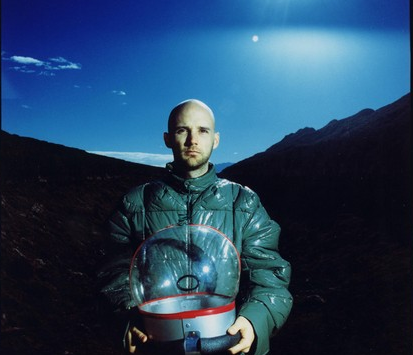
Moby as a rock star. The tunes are there but it's not a perfectly comfortable fit.


Key tracks: "Raining Again", "Dream About Me", "Slipping Away". Hotel Ambient: "Swear"

Moby, always the honest nice guy, has openly admitted that he spent most of the 00s cruising around on auto-pilot, trying to write popular music that he felt was expected of him rather than what he was personally inspired to write. He had become a global superstar and was treated as such and he struggled to cope with it. His last album 18 had struck a few huge international hits with “We Are All Made of Stars” and “Extreme Ways”, which were effectively rock songs played through an electronic filter and where Moby took a proper front role in his music. Thus, when two rock songs became some of the biggest hits of his career, he didn’t want to disappoint his million-head audience and saw this as people wanting more of the same. He grabbed his guitar and started writing big rock hits, taking on a true frontman role for the first time when facing the big audience. Technically he had already done this once before with Animal Rights but this time people actually wanted to hear the songs.

Which brings us to our main point of contention: Moby is not a rock star. He’s a great musician, a fantastic producer and an all-around lovely guy but not a rock star. He’s a good performer but his voice isn’t cut out for stadium-sized rock songs and his lyrics can’t take being so exposed. He mumbles rather than soars, his vocal range is fairly limited and he’s the kind of writer who’s willing to earnestly use “thou” just to get a rhyme in (“Lift Me Up”). Furthermore, his preferred style of production is fantastic for the line of music he normally associates himself with, but the clean, polished sound takes the edge off any attempt at a rock song. Moby mentions in the liner notes how he doesn’t want to make sterile music, which is downright ironic considering how cleanly-shaven and dirt-free Hotel is. Listen to the drum and piano intro to “Raining Again”: what tries to be an energetic build-up comes across flat, like a basic pre-set rhythm loop on a set of cheap keyboards. The music in Hotel is something that wants to be played loud but lacks the balls for it, written by someone whose forte lies in instrumentals and which is performed by a man who’s far more comfortable behind his synthesizers than he is in front of the microphone.

It’s also still good music, even though it really doesn’t make a lick of sense considering all I’ve said. For the duration of the entire album you’re repeatedly reminded of the myriad of issues stemming from the points raised above, and yet nearly every track manages to survive through it. With most it’s a simple case of the actual songs being good to listen to. Rock-Moby isn’t a particularly intricate or complex songwriter and Hotel is largely made out of very basic verse/chorus/verse structures (with a big emphasis on the chorus part), but that worked well for him with “Extreme Ways” and “We Are All Made of Stars” and it works well for him here. It helps the songs overcome their weaknesses: “Raining Again” blows away its limp intro into a faint memory as it turns into a joyous stadium-stomper and despite its lyrical shortcomings “Lift Me Up” is an exciting roof-raiser that acts like a rock-rearranged dance track. Now and then Hotel also uses its building blocks exquisitely and everything falls into place the right way. The clean and shiny production compliments the sunny and happy feeling of “Dream About Me” perfectly and really emphasises its utter loveliness, while “Slipping Away” utilises Moby’s weary voice for a perfect bittersweet punch when combined with the song’s melancholy melodies.

image

Hotel goes on for 15 songs (including the intro and the hidden track) and besides the ones already mentioned, particularly noteworthy are also the bombastic “Spiders” (with even more baffling lyrics) and the New Order cover “Temptation”, which successfully turns the original electro-stomper into a sweet, quiet ballad sung by the guest vocalist Laura Dawn. The run mostly goes without a hitch even if some parts point out the album’s inherent awkwardness more than others. Only the cringy bedroom jam attempt “I Like It” veers into the bad territory: it tries to be sexy but is sung by two people who really can’t sing sexy, and it bears so little relevance to the album’s general concept to the point that it almost actively sabotages it. Hotel generally starts spreading its wings in the latter half, with the pure dance interjection “Very” and the two instrumental ambient pieces at the end making appearances like the album had started to get bored of its own concept. The general unravelling makes the last parts of the album a little bit more of a trek that could’ve done editing, but it still manages to hang in place. And for what it’s worth, the “official” closer “Homeward Angel” is a wonderful, glacial piece of piano-lead ambient pulled off in the way Moby does best, like a reminder that despite the excursion to new waters he’s still in touch with his old strengths.

The ambient theme, as a matter of a fact, is just as notable as the rock material during the Hotel era. The special edition of the album came with the bonus disc Hotel Ambient, which got almost as much promo time on the album’s website as the main disc itself. It’s a selection of 10 original ambient tracks as well as an extended version of the already wonderful “Homeward Angel” and as far as bonus discs go, it’s borderline essential; especially if you enjoy Moby’s ambient works. The production that didn’t quite fit the main album is much more suited towards the minimalist electronic compositions, coming off as glacial and crystalline rather than sterile. As expected of an ambient album it’s not a particularly hook-driven collection, but each song feels as distinguishable as anything on the more obviously different main album. “Swear” and “Blue Paper” in particular are actual delights, as well as the extended version of “Homeward Angel” obviously. What makes the songs stand out from a lot of other ambient, including the majority of Moby’s own material, is that the atmosphere it produces is bright and perky for most parts, rather than the usual dreaminess. It’s the kind of ambient album you’d play during the day rather than at night.

One of the reasons I sometimes find numerical ratings really awkward are cases like Hotel. To me Hotel Ambient – which at the end of the day is a bonus disc – is such an essential part of Hotel that I find it hard to separate the two: together they’re the full Hotel experience and that brings a whole load of nerdy rating-related issues, especially when very few are going to get access to the extras (although Hotel Ambient has since been re-released separately on digital platforms). The main Hotel itself is hard to rate as it is, anyway. It’s a strange album where I can hear every single flaw and which I find easier to criticise than praise, yet when it comes down to it I’m more than happy to play it from start to finish and enjoy the ride. Part of it is probably honest nostalgia: Hotel’s release ties down to the period of time where I had started to become a heavy internet user and artists had begun to take advantage of the online world.  One of my biggest memories surrounding Hotel relates to the pre-album hype around it on Moby’s own website, which hosted a Flash animated mini hotel to explore and where you could find samples of the upcoming songs from. I spent ages there in awe of fancy modern gimmicks and repeating the samples, and I still associate the album with all that. The other part is that there’s a really good album within Hotel, but the inspirational wires got mixed somewhere and the musical ideas appeared in the head of the wrong artist. It’s a strange case of the artist sounding more comfortable with the bonus material than the main album itself and the whole thing has been puzzling me ever since the album was released. Hotel is the height of Moby’s post-Play wilderness years and while it has a way of getting you into it, it never stops being a slightly awkward dress-up performance.

Rating: 7/10

28 Aug 2019

Moby - 18 (2002)


 1) We Are All Made of Stars; 2) In This World; 3) In My Heart; 4) Great Escape; 5) Signs of Love; 6) One of These Mornings; 7) Another Woman; 8) Fireworks; 9) Extreme Ways; 10) Jam for the Ladies; 11) Sunday (The Day Before My Birthday); 12) 18; 13) Sleep Alone; 14) At Least We Tried; 15) Harbour: 16) Look Back In; 17) The Rafters; 18) I’m Not Worried at All

Part an attempt to follow up on a hit, part an attempt to deal with tragedy. A confused but often beautiful collection of songs.


Key tracks: "Signs of Love", "Extreme Ways", "Harbour"

Most of Moby’s albums tend to follow one big musical concept or another, often explicitly stated in the liner notes that accompany each release. 18 is the outlier: despite being seemingly obvious about its angle at first glance, it’s a little bit more complicated and unclear than that.

The preceding album Play had hit it big, way bigger than anyone anticipated, and suddenly Moby had been thrusted into worldwide super stardom with countless new fans and casual appreciators. 18 should have been an easy victory lap. Instead, this was something the formerly eager genre-flipper Moby struggled to deal with. There were expectations now - both from the audience and the label - and he was a global superstar now. Moby mentions in the liner notes that he wrote over 80 songs for the album which is either a premium humblebrag or a sign of artistic desperation, writing things over and over while trying to figure out just how to respond to the sudden demand. In its core, it’s audible that 18 started out as a response to his sudden, hit-making reputation.

Then 9/11 happened. Moby was a proud New Yorker at the time and the incident hit uncomfortably close to home. He explicitly mentions the event in the liner notes and while it’s never referenced directly within the album itself, its shadow looms all over the album. Moby needed to write a big hit follow-up but he was still processing the tragedy and coping with the confusion and numbness of the aftermath. This inevitably ended up leaving its print on the subsequent writing sessions, with Moby now not only having to write for a new audience but trying to do it under a drastically different mindset.
image

This uncertainty turns 18 into a curious collection of music. It openly wants to be embraced, and unsurprisingly its overall sound is reminiscent of Play, with the same bittersweet, soulful grooves and string-laden melodies dominating the production, and it’s clearly been intended as a direct follow-up. It even follows a similar set of songs, from the structure of a hook-driven first half and a more mellow second half to even direct song counterparts: most obviously “Porcelain” and “Signs of Love” as the whispering ballads, “Bodyrock” and “Jam for the Ladies” as the party cuts and “My Weakness” and “I’m Not Worried at All” as the hymnal closers, with the new songs not really copying the old tracks but clearly carrying the same intent and placement as their original counterparts. Elsewhere Moby tries to reflect his new superstar status by turning over for a more rock-driven approach with “We Are All Made of Stars” and “Extreme Ways” (and to a lesser extent, “Harbour”), which bring the man himself into the spotlight more confidently than ever. They’re trendily produced and radio-ready, clear attempts to break Moby through from being just a guy behind a DJ deck into a legitimate frontman and a more obvious songwriter for a potential crossover audience.

Yet, it’s all filtered through that post-9/11 melancholy. The heart of 18 is an aching one and it rarely allows itself to smile with certainty. Where there is an energetic beat there’s undoubtedly also a beautiful, sad melody laid on top of it and as the album gets further, energetic distractions like “In My Heart” and “Jam for the Ladies” become exceedingly rare as the sad, mid-tempo atmospherics take over. “Extreme Ways” may be an attempt at a rock anthem but it’s resigned and weary, Moby desperately gasping out “then we fell apart” in its chorus and sounding completely detached and cold elsewhere. Moby’s attempt to find some meaning in tragedy breaks through any crack it can find within the songs, turning what sounds initially like another big hit follow-up into a strangely wistful set of songs.

All that leaves 18 a little confused itself and in fact, that’s become the album’s signature trait. No matter how you mix the tracks together or switch the way you view them, the songs on 18 just do not really gel together smartly. They’re too all over the place, trying to say a load of different things and uncertain of what to focus on. And there’s just too much of it - Moby’s never been much of an editor but at over 70 minutes long and spanning across 18 songs, the sheer amount of songs doesn’t help 18’s case. The thing is, the melancholy side of 18 is actually a really strong one, musically. The moodier second half is where the album really shines: the title track, “At Least We Tried”, “Harbour” (featuring the ever-powerful Sinead O’Connor) and “I’m Not Worried at All” are all superb, all wonderfully haunting, beautiful and almost tearjerkingly wistful. Add in a number of the stronger songs from the first half (“Signs of Love” and “Extreme Ways” in particular - the latter genuinely is a great song, partially because of its sheer melancholy) and you’d actually have a potentially incredible album of ache, loss and finding the light. As it is, that’s not what we really have, and I’m not really sure how exactly to define what we do have.

Rating: 7/10

26 Aug 2019

Moby - I Like to Score (1997)


 1) Novio; 2) James Bond Theme (Moby’s Re-Version); 3) Go (1997 Mix); 4) Ah-Ah (1997 Mix); 5) I Like to Score; 6) Oil 1; 7) New Dawn Fades; 8) God Moving Over the Face of the Waters (Alternative Mix); 9) First Cool Hive (Alternative Mix); 10) Nash; 11) Love Theme; 12) Grace

An uneven collection of soundtrack discards, where the best songs are ones that had already been released on earlier albums.

  
Key tracks: "James Bond Theme (Moby's Re-Version)", "New Dawn Fades", "First Cool Hive (Alt. Mix)"

Despite his oft-cinematic soundscapes, so far Moby hasn’t found himself scoring films yet. He was, however, a frequent sight on various soundtrack releases at one point. Even just by the late 90s and before Play his “appears on” credits had become a long, expansive list. An odds and sods compilation like I Like to Score is thus, in theory, the kind of quick cash grab that actually has a decent purpose for fans, pulling together songs scattered across a multitude of releases for easy sourcing.

I Like to Score is understandably a big old mixed bag. Most of these songs were taken from “music inspired by” types of soundtrack CDs and are thus more like ordinary one-off tracks rather than anything particularly score-like - and understandably the styles and sounds vary greatly, given the period on display mostly consists of his dance years but the studio album right prior was the distorted angst oddity Animal Rights. A good chunk is familiar from Moby’s past albums, presented here with minor mixing and editing tweaks: even “Go” is here though it was never part of any soundtrack, but its Twin Peaks sample and the chance to reissue one of Moby’s early hit singles must have been enough for the label to include it. And what do you know, they’re also the album’s best songs: “Go”, “First Cool Hive” and “God Moving Over the Face of the Waters” all rank among Moby’s best songs of the 90s and the remixing is barely noticable so none of their original charm has been lost. Even “Ah-Ah”, which was just another song on Moby’s debut, still jumps out here.
image
Given the nature of the compilation the incohesiveness is perfectly understandable, but coupled with the wildly varying quality it really doesn’t make the album more than a curio at best. Pairing random key early tracks with novelties like “I Like to Score” and “New Dawn Fades” (the former a short take on porn funk, the latter a full-on Animal Rights-’d up take on Joy Division) is only going to make the latter pale in comparison, and the wild mood and style swings make it a difficult album to actually ever want to listen to. Moby’s take on the iconic James Bond theme sums up 90s action move soundtracks perfectly and isn’t half bad, but hilariously feels completely like a fish out of water simply because of how obviously it stands out among all the soundtrack compilation filler around it. And, well, filler it largely is. Decent filler with occasional flashes of goodness (“Love Theme” in particular), but clearly nothing that Moby felt he would waste by placing it on some random soundtrack somewhere.

The back cover pre-assumptively states “Music from films Vol. 1” - a sequel hasn’t happened, despite Moby scoring a legitimate movie hit by licensing “Extreme Ways” for the Bourne trilogy some years after this compilation. Really, I Like to Score is less about its film connection and acts more like an outtakes collection to mop up some loose ends before Moby would switch gears in his musical career with the release of Play. Even for a fan, this is far from being as interesting as you’d initially think and it’s completely clear that most of this album’s merits fall to the songs that the film directors heard on Moby’s albums and found them so strong they felt they had to license them for their movies. Those songs also work better on their original albums than here. But if it’s completionism that you’re after, this fits the bill just fine.

Rating: 5/10