Showing posts with label 1995. Show all posts

3 Jul 2022

Radiohead - The Bends (1995)

1) Planet Telex; 2) The Bends; 3) High and Dry; 4) Fake Plastic Trees; 5) Bones; 6) (Nice Dream); 7) Just; 8) My Iron Lung; 9) Bullet Proof... I Wish I Was; 10) Black Star; 11) Sulk; 12) Street Spirit (Fade Out)

Talk about a growth spurt.

Key tracks: "The Bends", "Fake Plastic Trees", "Street Spirit (Fade Out)"

Radiohead are traditionally seen as a band who are not bothered by the expectations of others and thus they fearlessly do exactly whatever it is they want at any given time. This is for the most part completely true (and it's why most of their albums sound completely unexpected), with the exception of The Bends. At this stage the band were dealing with critics who had already labelled them a one hit wonder after "Creep", audiences who only wanted to hear "Creep" and a record label who really, really wanted them to record more "Creeps", and so there was an incredible amount of pressure on the band for their sophomore. What made things worse is Radiohead had never been too keen on their sudden smash hit to begin with (the signature guitar disruptions were an attempt to sabotage the song, which backfired spectacularly) and thanks to its runaway fame, they had already began to despise the song they felt had became an anchor around their necks - the first informal taster for The Bends was "My Iron Lung" which was a very unsubtle dismissal of "Creep". Rather than cave in to the pressure of the follow-up, Radiohead's motivation for their second album became the need to demonstrate to the world that there was more to them than just one song and that whatever they released needed to shut up any doubters who were dismissing the band as already-has-beens.

So The Bends is all about Radiohead proving their worth and it does it with flying colours. While it’s a clear continuation from the grunge-era guitar walls Pablo Honey rather than a radical shake-up, Radiohead are not just showing a whole lot more ambition and range here but they're also not so subtly showing it off and flexing their capabilities. There’s a wider range of tones and moods than Pablo Honey ever had and running through the album is constant and obvious experimentation with production choices, arrangements and atypical song structures; even Yorke has stepped up with his lyrics, starting to develop his own characteristic voice. "Planet Telex" is a very intentional starting point for the album because it demonstrates from the lift-off that this isn't the same Radiohead who made their humble appearance a few years ago, its spacey atmospherics, loop-like drums and electric piano distancing the band as far as they can from the previous album's limited soundworld. Though "Planet Telex" is the furthest out there that The Bends goes, much of the album sounds like Radiohead challenging themselves to do something new with every song like each track began as a songwriting exercise to write something in X sound or style. It's never predictable where the album goes and just when you think you've figured The Bends out, it throws another curveball or sidestep to a different style and sound with the next song.

That's much of the album and not all, and thanks to that it becomes ridiculously obvious what the lowlights are. The Bends is a classic by its reputation and due to its importance in the wider Radiohead timeline, but it's not a classic wholly on its songs - otherwise we wouldn't have "Sulk", "Black Star" or "Bones" cluttering the tracklist. They're so close to Pablo Honey that their inclusion here was either the band throwing an uncharacteristic bone to the past audiences or they simply didn't have as much new material as they thought they did and thus some b-roll material was thrown in to fill the album. It's the only way to explain the gap between their middle-of-the-road rock antics and the rest of the album: if The Bends is about looking forward, then these three songs inexplicably revert back to the past. On Pablo Honey they may have stood out more positively but in the new company they're in they're sticks in a mud and almost haplessly straightforward compared to everything else going on.

That "everything else" meanwhile really is one of music's great and unexpected level-ups. Half the album was released as singles in one way or another and they're largely all incredible and miles ahead of anything on the last album. "Planet Telex" soars with its space-age textures, "High and Dry" is a rare glimpse of Radiohead in an unabashed pop mode in a way they'd these days rather forget about even though songs like this demonstrate how brilliant they were at it, "Fake Plastic Trees" launched a thousand other British rock ballads draped in strings and none of them ever bettered the earnest emotional power of the original, "My Iron Lung" is a noisy and unpredictable kiss-off that gets more delightfully sassy as it goes while bridging this and the last album together in a very natural manner, and "Street Spirit" as the closing chapter points the way forward to the next, previewing the anxiety and depression of OK Computer as it submerges itself into a gorgeous, haunting darkness that's scarily blissful towards the vocal runs of the end (a sentiment like "immerse your soul in love" has never sounded more foreboding). The direct guitar anthem "Just" is the only one that's never particularly grabbed me and it's for no real reason why that I could point out (great video though!), but I do find that the borderline joyously bouncy "The Bends" actually does everything it does but better, and in my imaginary timeline these would have swapped their single and deep cut statuses; "The Bends" also very powerfully brings the album back to earth after the shock cold open of "Planet Telex" which further adds to its impact. "Nice Dream" and "Bullet Proof" in-between are both slow and atmospheric, too gentle to jump out but beautifully serene enough to sink into, showcasing the band's growing desire to build and sustain moods rather than simply go out loud at all times; plus, the sudden wake-up call of "Nice Dream"'s ending is the most memorable structural whiplash thrown at the listener on the record.

The thing is, The Bends is clearly a transitional album: not only for Radiohead themselves whose story would start in earnest with OK Computer (as most people would attest to),  but also for British rock as a whole as you can easily point to specific songs here that acted as launchpads for the entire careers of other groups. That's a ridiculous amount of accolade and cultural importance which can easily obstruct that at the end of the day this is still an album by a band caught in the middle of a more significant development phase. Therefore, all the usual hallmarks of transitional albums apply here too despite The Bends' significance in the Radiohead biography: it's one foot in the future and the other still stuck in the past, moments of brilliance and exciting peeks in future directions interspersed with old ways still lingering around and hints of change that have yet to be fully realised. A good half of this album is inarguably brilliant and still stands strong with the rest of the band's discography even if they undoubtedly became a much more exciting band later down the line, and though the other half of the tracklist is more hit and miss there is a rush of excitement in hearing the band figuring out who they are with such vivid ambition. Often that energy and ambition also translates to genuinely excellent pieces of 90s guitar crunch. Over the years I've gone back and forth and back and forth with The Bends (in RYM it's probably one of the albums I've most changed the rating to), from early indifference to various honeymoon phases when it cracked through my defenses and then wild pendulum motions depending on which aspect of the band resonates with me more at any given moment. It probably tells as much about me as a listener as it does about The Bends' nature as an album in-between phases and while I've now landed somewhere between "good" and "really good" with it, don't let the comparatively "low" (pft) personal rating fool you. This is still an essential 1990s rock album for its influence alone.

Rating: 7/10

5 Oct 2021

CMX - Rautakantele (1995)

1) Rautakantele; 2) Yöllisiä; 3) Palvonnan eleitä; 4) Talviunia; 5) Kirosäkeet; 6) Ennustaja; 7) Päivälintu; 8) G; 9) Pelasta maailma; 10) Linnunhammas; 11) Veden ääri; 12) Pirunmaitoa; 13) Hiljaisuuteen

Beautiful songs pushing through a production that tries to stifle them.

Key tracks: "Kirosäkeet", "G," Pelasta maailma"

Aura was a big deal and so a good amount of pressure was always going to be involved when it came time to follow it up, and from the outset Rautakantele looked to be destined to fail. The motivation difficulties that would lead then-drummer Pekka Kanniainen to become an ex-drummer in a few years time became more apparent as Kanniainen struggled to attend writing or practice sessions. Disagreements about the production of the album gave the band the idea to self-produce the record, which didn't go quite according to plan and the band's regret about how the album sounds would become the first thing they’d ever mention when discussing the record. Given the studio time had been booked and the band had plenty of songs in bank they started the recording sessions without their drummer, which meant that most of the material that was recorded leaned towards the softer side of CMX's spectrum - so much so that towards the end of the sessions there were so many doubts within the group about how the album so far had turned out that they quickly recorded a number of songs more in vein with what you'd expect from CMX.

Somehow, through all that, Rautakantele survived. The touch of tenderness and the open embrace of something more graceful that Aura introduced to CMX's sound is followed upon and even emphasised on Rautakantele, through the abysmal production job. The drums are so anemic it makes you wonder if it was a direct snapback to the issues the rest of CMX had with Kanniainen (“Palvonnan eleitä" alone has probably the worst hi-hat sound I’ve ever heard in an actual studio release), the guitars are completely depthless be it acoustic or electric, and everything else is simply so flat this may as well be a 2D release. But the songs bloom through the concrete, and the skeletal sound and the frequent more raw outbursts of volume turn Rautakantele into an album that's both beautiful and ugly at the same time. The troubles that lead to the album are reflected within its tones, with a sense of melancholy and discord across it but through it all, there's a bright warmth that pulls through against the odds reflected in its nonetheless rich arrangements, filled with more playful guitar parts, adventurous vocal lines and a frequently appearing three-piece backing vocalist set whose soft cadence smoothen Yrjänä’s gravel and always become the best part of any song they appear in. Rautakantele like a barren country field in the middle of winter: stark and lifeless, but still picturesque with all the snow over it. 

Much of the album is made out rock songs with serene hearts, where underneath the scarred guitars there's an abundance of strong melodies, and it's at this intersection of heavy and tender where Rautakantele is most often at its best. It’s where you find the anthemic "Kirosäkeet", vulnerable power-ballad-in-making "Talviunia", "Ennustaja" which is awash with playful vocal melodies that beam through and the simply sublime "G" that escalates into a flurry of backing vocal harmonies over one of the band's most - almost spiritually - heavenly choruses. The more traditionally CMX-esque bursts of manic energy like the rhythm-flailing title track and the entertainingly twisted “Palvonnan eleitä” (that speak-song second verse!) support their gentler counterparts and lend the album a surprisingly rapid pace - and even they have a melodic flourish that gives them an airier footing. It all feels - for the first time with CMX - light as air, with none of the pressure behind the scenes detectable; anything but really, as the band has never sounded this effortlessly great.

It is the slow and hymnal heart of Rautakantele that’s become synonymous with the album though, with an intimate touch rare for a CMX album. It's that side which also offers "Pelasta maailma" which became one of CMX's great evergreens shortly after its appearance, and little wonder why. It's a startling song, really, because it's so honest with its romance and peace. No hidden tricks, no cheeky twists: simply a ballad the size of a small personal universe, colouring the night sky with the northern lights in tune with its wistful woodwinds, heartbeat of a drum machine and a genuinely touching vocal performance from Yrjänä and the backing vocalists. "Päivälintu" and "Veden ääri" are more traditional acoustic campfire ballads and are more unarmed than anything the band has recorded before, and "Yöllisiä" even proves that it's possible to mix CMX's erratic whimsy into these new ideas as it topsy-turvies around its strums like a court jester - and then suddenly clearing the table with a moment of quietly touching resonance as the backing vocals begin to gather behind. You even get a literal hymn, “Hiljaisuuteen”, to close the album: a choir piece that has all the holy heavy-heartedness of an actual church song, Yrjänä backed by a multi-head chorus all a cappella who bid a hallow farewell to the album which strikes straight into the heart for this little atheist who grew up in a habitually Christian country. The transition from "Pirunmaitoa" - angry and growling at start but moving into a calmer extended instrumental jam in the way the band enjoyed tiding their albums to the close at the time - isn't perfect, but I'm not sure what exactly could lead flawlessly into "Hiljaisuuteen" either, and as an actual ending it feels just perfect. I don't think I'd ever be able to rank it among my favourite CMX songs as a song, but it's up there with my favourite album closers of theirs, haunting the space long after its brought the disc into its silent end.

“Hiljaisuuteen” is by no means representative of Rautakantele but despite the initial surprise it makes perfect sense for it to exist here. There’s strands of serenity, intimacy and almost spiritual calm throughout the album and after those strands have spent the album wading between rowdy guitars, gentle embraces of melody and a rudimentary production that threatens to strangle the life out of them, a hymn is a natural place for them to gather together. In its own way it makes sense that the band would retreat into a clearer headspace when all four walls around them kept crashing down, and the first thing that comes to my mind from Rautakantele is just how clearly it’s guided by vision, allowing itself to sound so uninhibitedly pretty even if it means shaking away the edge the band had carried - and will go on to carry - with them; to the extent that no matter how long the discography has grown it still remains unique in that extent. The strength of the songwriting and the weakness of the production makes it a strong but wounded album, clearly imperfect but its strengths glow so strongly they sweep away the shadows. If it sounded better maybe it would be an all-time great - and yet in a way its that crippled grace that the record bears which makes it so alluring.

Rating: 8/10

14 Sept 2021

Lambchop - How I Quit Smoking (1995)

1) For Which We Are Truly Thankful; 2) The Man Who Loved Beer; 3) The Militant; 4) We Never Argue; 5) Life's Little Tragedy; 6) Suzieju; 7) All Smiles and Mariachi; 8) The Scary Caroler; 9) Smuckers; 10) The Militant (Reprise); 11) Garf; 12) Your Life as a Sequel; 13) Theöne; 14) Again

This is where Lambchop set their form, and if you're familiar with that form you'll already know exactly what to expect. In good and bad.

Key tracks: "We Never Argue", "Suzieju", "Theöne"

The Lambchop formula, if you will, finds its footing here. Their first album saw Kurt Wagner and his gang with one foot in alt country and one foot in slacker-esque alt rock, and now the weight's started to shift towards the former. "Americana" is arguably a better descriptor than country through: Lambchop doesn't really have the twang of a country act, but the sweeping strings, smooth orchestration and quiet acoustic murmurs all have their roots in the vintage American songbook, which Wagner interprets through his own peculiar personality traits. Lambchop albums differ by tiny factors usually detectable only by seasoned veterans of the band's music, and on How I Quit Smoking that factor is the mere act that it lays down the tracks for the next two decades. The influence of the first album is still deep in the album's psyche, though. You know how on early 90s alternative rock or indie rock albums you've got that one much slower song - sometimes with strings - that isn't really a ballad but more of an introspective moment of calm that's there to balance the album's flow? Imagine an entire album of those back to back, just remove the excess rock artistry from the equation (I can’t imagine this was a particularly exciting time to be a drummer for Lambchop, for example).

In general though, if you know Lambchop you know how this goes. Wagner mutters surrealist everyday vignettes (which often elicit a genuine chuckle), the tempo barely ever goes beyond calmly trodding ("All Smiles and Mariachi" is the only uptempo number here and I use that term extremely loosely) and overall it all goes on for a little too long while sounding a little too similar throughout, but it's nonetheless all very pleasant to listen to. How I Quit Smoking isn’t really about the power of songcraft or individual set pieces, it’s one long sustained mood where barely anything happens unless you view it through a microscope. At their most Lambchoppiest the band's music can get downright samey, and How I Quit Smoking is what you'd point towards as a solid example of that. It sets the band's norms but because of that, it also doesn't tinker around with them like some of the later albums do and so it is particularly one-note. Its charms are practically passive, the songs more of a mindset and a moodscape that present themselves without causing a stir - but if you're in a Lambchop mood it works wonder. That near-perfect collaboration between mood and music is likely why there are so many people who like this band, including me - sometimes there's no other music that would work better than Wagner's quiet grace. 

Nonetheless, to give How I Quit Smoking some credit of its own there are a few particular pieces of excellence that do stand out. "We Never Argue", "Life's Little Tragedy" and "Suzieju" forms the album's charmingly swooning core, full to their brim with the kind of elegance that would become more familiar across some albums down the line. "We Never Argue" also presents the album's catchiest vocal melody and the flute hook of "Suzieju" is the musical equivalent, so they're the bops of the record if you will, if that makes a difference. "Theöne" is a superlatively beautiful string-laden number which ends the record with an honestly touching way, with "Again" serving as its quick all-strings reprise to officially close things down. Those aren't the only parts of the album that jump out, but they're the notable ones in a sea of gentle guitar melodies, Wagner's murmur and barely-there percussion hits from one song to another, some of which are nicer than others. The only real point of criticism is that "The Militant" doesn't need to appear twice, because even if the "reprise" version has a different tone to the first version and so arguably justifies its existence, it's still the same song and bloats a tracklist that already feels like a dragging Sunday afternoon at times.

Otherwise though, unless you're insistent on listening to things chronologically (or you feel particularly inspired by this review to listen to this out of the blue, in which case, why?) by the time you get to this album you know the drill, and you'll likely have accepted it already. Lambchop have done better albums - many genuinely great - and then they've done albums like How I Quit Smoking that offer exactly what you expect and which works exactly how you'd like it to. Regardless of whether it's actually a truly memorable album is almost a moot point - it's comfortably Wagnerian at its most base form.

Rating: 6/10

8 Feb 2021

SIG - Hyvää syntymäpäivää: 18 hittiä (1995)


1) Hyvää syntymäpäivää; 2) Tiina menee naimisiin; 3) Vuosisadan rakkaustarina; 4) Leijailen; 5) Elämä vie mua; 6) Ludwig Van Beethoven; 7) Jos sä rakastat minua; 8) Kolme sanaa sinulle; 9) Matti Inkinen; 10) Sadan vuoden yksinäisyys; 11) Älä sinä huoli; 12) Jos taivas on vain pienille enkeleille; 13) Viipuripop; 14) Lauantaina; 15) Kartsaa; 16) Kerro mitä on rakkaus; 17) Marianne; 18) Purppura

18-hit budget compilation from a band who had about three that have survived the age of time.


Back when car CD players were a new thing, my dad got into the habit of buying all kinds of CDs from mid-price sections and bargain buckets - often budget "best of" compilations - to play during driving. I lived in a small town so none of our shared journeys would ever take more than 3-4 songs, and in the occasional case where we'd exceed that my dad demonstrated his very liberal use of the skip button. I've thus ended up with particularly strong memories associated with a very small handful of songs from a number of all kinds of acts from the 70s and 80s.

SIG were a Finnish example of the typical path a lot of groups took around the 80s, starting out early in the decade with a more punk-oriented sound, but soon shaping into a more of a new-wave act and getting a couple of hits out of it. Those hits are the first three songs on this compilation and they're the best it has to offer. They're the kind of Big Pop Classics that will always get airplay and stay evergreen - partially because SIG were cunning enough to have them centered around particular themes that would ensure their inclusion in any themed compilations for decades to come (birthdays, weddings and head-over-heels romance perfect for Valentine's, respectively). They're corny, a bit dated and somewhat ramshackle but that's part of their charm, and they're completely fluffy but sometimes you don't need anything else but a good hook.

I have no recollection whatsoever about the rest of the compilation, and given the songs are mostly just inferior copies of the first three songs there's not much need to go beyond those initial moments either. There's also a couple of attempts at ballads (forgettable) and a few inexplicable stabs at rockabilly (godawful), further highlighting how preposterous the "18 hits" claim in the title is. SIG aren't a classic band or anything that really needs any relevance beyond their minor part of collective Finnish pop culture consciousness, and it's clear which songs are the reason this compilation is a thing in the first place. Me owning this copy (which is the very same disc my dad used to play) is solely because of faint nostalgic reasons and it's fun to know that even though our music tastes are worlds apart, we'd both go on a skip spree with this one.

Rating: 4/10

10 Oct 2019

Sparklehorse - Vivadixiesubmarinetransmissionplot (1995)


1) Homecoming Queen; 2) Weird Sisters; 3) 850 Double Pumper Holley; 4) Rainmaker; 5) Spirit Ditch; 6) Tears on Fresh Fruit; 7) Saturday; 8) Cow; 9) Little Bastard Choo Choo; 10) Hammering the Cramps; 11) Most Beautiful Widow in Town; 12) Heart of Darkness; 13) Ballad of a Cold Lost Marble; 14) Someday I Will Treat You Good; 15) Sad & Beautiful World; 16) Gasoline Horseys

Sparklehorse at their most lucid; still slotting nicely into the wave of 90s indie eccentrics. Classic US indie sound but something's still amiss.


Key tracks: "Saturday", "Cow", "Someday I Will Treat You Good"

An important part of the Sparklehorse mythology is Mark Linkous’ accidental drug overdose: both Linkous’ mindset and music changed permanently after the incident that rendered him clinically dead for a few fleeting moments and which he never really recovered from fully. The traditional Sparklehorse elements consist of a beautiful haziness, an oddly uplifting melancholy and a frail joy to be alive despite how aching it can be. Vivadixiesubmarinetransmissionplot was Linkous’ only album recorded under the Sparklehorse moniker before his near-death experience and it lacks the overaching atmosphere and mood that dominates all the other Sparklehorse albums. It’s strikingly lucid: lively, clear and often without any filters or vocal effects. If Linkous’ overdose sent him to an everlasting melancholy weariness (which would, sadly, ultimately be the end of him), on Vivadixie he’s wide awake. 
Without that haze Linkous slots in nicely within the mid/late-90s US alternative/indie scene - very quirky and eager to play by its own rules but equally very tuneful, with the dry production and tight band interplay associated with the sound. Linkous is backed here by members of Cracker whose experience playing together translates even to his songs and while it’s clear that he’s in charge, there’s an attempt here to present Sparklehorse as a full, real band, certainly moreso than later on. Linkous’ penchant for fragile beauty is already showing up but it’s frequently interrupted by moments of interspersed wild liveliness and borderline raucousness, filtered through his usual surrealist lyrical imagery. The ramshackle “Rainmaker” and “Hammering the Cramps”, the honest-to-god unabashed alternative anthem “Someday I Will Treat You Good” and especially the absurd, banjo-twiddling, guitar-revving alternate dimension stadium anthem “Cow” show off Linkous’ whimsy and vigour that would largely get buried underneath later on. They’re also Vivadixie at their best - the album really comes to life when the band do as well and in particular “Cow” is a standout moment in the whole Sparklehorse discography, even if it’s hindered by its pivotal hook moment being something as (intentionally) inane as “pretty girl, milking a cow”. But then, that too is part of the consciously odd charm.

The tender side of Sparklehorse that would later on become the defining one is still a running presence throughout
 Vivadixie, though favouring sparser arrangements as a contrast to the more energetic full-band plays. They are good songs - and the chorus of “Saturday” features one of Linkous’ all time loveliest melodies - but there’s plenty of them and they all rely on the same bag of tricks. It doesn’t make e.g. “Spirit Ditch” or “Sad & Beautiful World” any less pretty, but they do start to run samey as they start piling up. Linkous had already been active in music for quite a while before this album, but there is a hint of him still figuring out his solo voice here - it’s very much a diamond in the rough kind of debut, and it’s most apparent in the calmer moments you can’t help but compare with all the similar ones from the later albums. 
The matter of the fact is that for me, the reason I fell in love with Sparklehorse was that overarching, wistful beauty that covers the music all across his later albums. While generally Linkous’ is by and far the same songwriter here as he would always be, the particular mood and resonant atmosphere that really make his music are missing. There are other elements filling those gaps on Vivadixie but there are rough edges here and there, both in form of songs that are almost there but not quite yet, as well as in decisions like including the completely pointless, sound collage-esque interludes. Linkous would later on go to say that he had little idea what he was going for with the album and you can get a sense of that, even if the music’s really good. Vivadixie is arguably the least of the four Sparklehorse albums, but you could still confidently say thjat it’s nonetheless a borderline essential album in his small discography, thanks to its high points. And in addition, it’s an interesting glimpse into Linkous’ sound without its most identifiable element - the start of a what-could-have-been path before it got derailed into a different direction.   

Rating: 7/10

5 Jul 2019

Scatman John - Scatman's World (1995)


1) Welcome to Scatland; 2) Scatman's World; 3) Only You; 4) Quiet Desperation; 5) Scatman (Ski-Ba-Bop-Ba-Dop-Bop); 6) Sing Now!; 7) Popstar; 8) Time (Take Your Time); 9) Mambo Jambo; 10) Everything Changes; 11) Song of Scatland; Bonus tracks: 12) Hi, Louis; 13) Scatman (Game Over Jazz)

The first album I ever owned and you're never going to make me fall out of love with it.


Key tracks: "Scatman's World", "Quiet Desperation", "Scatman"

This next museum exhibit here, on your left ladies and gentlemen, is the seminal album by the First Artist That I Ever Loved. In the days when various artists hit compilations were my main source of music, Scatman John came with such a force that I begged my parents to buy the album for me. I've lost my old cassette to god knows where but oh boy that cassette was on play so, so very much. Scatman John was my childhood musical hero and I played this album loudly in my bedroom over and over again, singing along to the English words which I didn't even understand.

John stood out in the 90's eurodance scene. He wasn't a handsome shirtless young man paired with a model-perfect lady to sing the choruses. If you look at his music videos he looks completely out of place in them among all the young folks, with his wrinkles, old man mustache and retro garbs. His music was the trendiest thing there was at the time but John himself looked like someone who would have been more in his element in a smoky jazz club band. Which is where he started from, with his drift into the eurodance scene being a series of coincidences with unexpected results.

I'm all grown now and I can see what he was trying to do. He wanted to reach out to us kids. Give a listen through Scatman's World and pay attention to the lyrics. In fact, it's enough if you just pay more attention to the words in his two big hits. John wants world peace. John wants racial equality. John is teaching us to respect our fellow humans no matter the colour, he's teaching us to finish our education and follow a straight and honest path, he wants us to know that we need to leave this world in a good condition for the generations that will eventually follow us. He teaches how we can overcome all our odds if we try. He's telling us about the darker side of life, the homeless and the misjudged, and what we should do to prevent all that. And he is telling us about the magical Scatland where human race will, hopefully, eventually drift towards, where peace and love towards all man reign.


He wanted to reach to us kids and tell us about these important lessons in life. What better way to do that than to place his messages over the trendiest, catchiest music of the moment? Of course it's cheesy beyond belief, but John never comes across insincere when he drops these obvious anvils and just about dodges sounding corny as well. He goes for the save-the-world mentality, and he pulls it off. The only unbearably cheesy moment is the closing ballad "Song of Scatland" but even that's almost heartwarming if you can get over just how camp it is. In retrospect, given his untimely loss to cancer, it actually becomes quite touching, hearing the album end in a thank you and a good night.

The songs are still ace. The hit singles are all classics, particularly "Scatman's World" - "Scatman" gets all the nostalgic love and is brilliant as well, but I always felt that "Scatman's World" manages to top it. It uses the same elements but in a more refined fashion; you can almost detect a tinge of bittersweetness to it, and it's that underlining seriousness that really makes for the song's impact. "Quiet Desperation" carries that wistful tone and is a surprisingly, powerfully introspective moment hiding within an eurodance album. The more overt pop songs are great too, of course - the hi-energy "Sing Now!", the sunshine shuffle "Popstar", the obvious back-up single option "Only You". Only the Latin influenced "Mambo Jambo" (because it was law there had to be a Latin song on a 90s pop album) fails to leave much of a positive impression, much like most of these tacked on Latin excursions in eurodance albums. Scatman's World is eurodance in its best bliss - solid beats, 90s house pianos, awesome vintage synth sounds, and of course John's vocals, flicking between the speak-singing and the immortal scatting. The two bonus tracks tacked on to the end of the album are rather terrible, but easily discardable in the digital age.


It is absolutely impossible for me to rate this album in any sort of way that would have any meaning in comparison to all my other ratings, because this is where it all began for me and for that, it will always be a great record for me. I guess the main takeaway for all the people who aren't me is that there's more to the album than "Scatman" and if you find yourself in favour of that song for absolutely any reason, there's an album full of the same vibe that keeps up pretty well to its biggest hit. 

Rating 8/10

29 May 2019

Kent - Kent (1995)


1) Blåjeans; 2) Som vatten; 3) Ingenting någonsin; 4) När det blåser på månen; 5) Jag vill inte vara rädd; 6) Vad två öron klarar; 7) Den osynlige mannen; 8) Pojken med hålet i händen; 9) Ingen kommer att tro dig; 10) Stenbrott; 11) Frank

Cookie-cutter inexperienced rock band debut album from the 90s. Flaws and charms in its guitar wall melancholy.


Key tracks: "Blåjeans", "När det blåser på månen", "Stenbrott"

Kent were quite inarguably one of the biggest success stories the Nordic region has had. Dubbed “Sweden’s biggest rock band”, they’ve been paving their own way to great effect and achieved largely anything a band of their kind could hope for: international hits, constant critical acclaim, no particular flops worth a mention, managing to turn a b-side into a pseudo-hit, going through a full sound reinvention and pulling it off perfectly, and finally settling down by steadily releasing consistently good albums after the radio hits died down - all done with the sort of complete creative independence a lot of bands of their stature have had to fight for. It’s good to mention their future for the sake of context and getting the grasp of just how far they’ve come, because on their debut we’re dealing with none of the above. In 1995 Kent were a group of young guys escaping the mundanity of their small town life by playing music and who had barely just settled on a line-up and a name when they were signed up.

Based on just that, you can kind of guess where this is going. Kent is spirited, impassioned, and so indebted to the moody, post-grunge British rock scene of the 90s that you’d only need to switch the sung tongue and it’d be right at home. Kent make their entrance with the way and the sound that hundreds of young bands just like them started their journey with during the time period - moody, dour and propelled by quiet/loud dynamics, with echoes of Manic Street Preachers, early Radiohead (The Bends was released almost exactly on the same day as Kent, fun fact) and other contemporaries. The band members were in their mid-twenties when the album was released but it’s a hotbed of all the teenage anxiety they had been bottling for years, and Joakim Berg’s inexperienced voice barely holds itself together. There’s not a lick of originality present, but there is plenty of passion and Berg’s charisma is already starting to bubble through. At times, it’s the only thing really carrying the songs.

image

Like a lot of the albums of this kind, Kent as well is little more than just a launchpad. I mentioned before that Kent haven’t had any real failures in their lifetime and I stand by that, but it’s really obvious the band were still completely green at this stage despite years of active grassroots activity. They play well enough but the songs themselves lack depth, coming off as decent enough to listen to but rather nondescript when it comes down to leaving an impression. The best cuts - “Blåjeans”, “När det blåser på månen”, “Stenbrott” - wouldn’t be the highlights they are if they were on any other album and even their memorability is partially based on silly little details; “Blåjeans” sticks in your head because of its placement as the first ever Kent track sequentially, “När det blåser på månen” has a hilariously melodramatic lift-off countdown by its end and the abrupt guitar lick in the chorus of “Stenbrott” is a thoroughly daft but efficiently memorable hook. This isn’t meant to be a backhanded compliment or a dig at the other songs because the album does get the bare minimum of foot-tapping, head-nodding approval rating at the very least, but the album’s overall generic nature is undeniable and the songs aren’t so great it’d be easy to ignore.

That said, the best thing that the album has going for it is in fact that typical 90s sound - it’s definitely a heavy load completely subjective and unashamedly personal associations talking, but the little touch of nostalgic warmth that the dry 90s rock sound brings is probably just as, if not even more crucial to the overall enjoyment it brings than the actual songs are. But as far as any real merit or general importance goes, Kent doesn’t have much of it. Its main talking point is that it’s Kent’s debut album and in all likelihood, without that connection it would probably be lost in time completely, filed along with countless others of its kind. There’s no hidden deep cuts or a random hit song equivalent to the “Creep” scenario to keep it in general consciousness - it’s just five guys with guitars and drums and a will to make something more out of life. That gets them somewhere, at least, but Kent’s debut is quite obviously the weakest thing they’ve done.

Rating: 5/10

21 Apr 2019

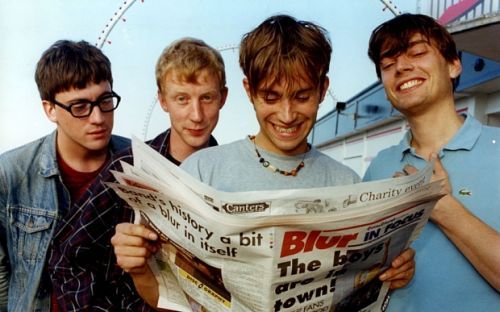
Blur - The Great Escape (1995)

Image result for blur great escape


1) Stereotypes; 2) Country House; 3) Best Days; 4) Charmless Man; 5) Fade Away; 6) Top Man; 7) The Universal; 8) Mr. Robinson’s Quango; 9) He Thought of Cars; 10) It Could Be You; 11) Ernold Same; 12) Globe Alone; 13) Dan Abnormal; 14) Entertain Me; 15) Yuko & Hiro


Rating: 4/10


And you wonder why britpop ended up suffering from such a grand hangover...


The sound of Britpop eating itself. The Great Escape begins with a track called “Stereotypes” and you couldn’t think of a more fitting beginning: it’s as if Blur suddenly became caricatures of themselves overnight. 
Blur have successfully escaped their potential legacy as Britpop has-beens due to the style switch and strength of their latter works, but the era looms heavily over The Great Escape. It was released when everything had suddenly escalated: the band were superstars and trend-setters and the media’s frenzy over the Blur vs Oasis “rivalry” was in full steam. Parklife had been a humongous success both commercially and artistically but the band were ready to move on, only to find that they were still expected to head in the same direction. The Great Escape was paraded like it was to be a victory lap, a culmination of the era and the weapon to beat their rivals, but it’s more a Britpop hangover: Blur are already over the sound and they don’t care, but they’re begrudgingly pushed to go with it anyway. 
When you stop caring you go on autopilot. As unfair (and plain wrong) as it is to imagine Blur as just a bunch of snotty Britpop lads, The Great Escape is like the band is trying to justify any lazy mental images people have of them. Musically it’s largely Parklife reheats, just with little of the original inspiration or wit left. The songs try to be upbeat and energetic but they’re thoroughly joyless, running through the motions. Lyrically Albarn tries way too hard to tap into the same quirky vein the character studies of Parklife came from, overdoing it to the point of them already coming across cliché. Occasionally there’s an attempt to break free of the conventions as the band try to explore new territories but even they feel unfocused: the sudden style switches of “Mr. Robinson’s Quango” and the hazily dreaming “Yuko & Hiro” are enough to raise an ear in attention but as songs they’re just not too captivating: album highlights that in another era would be clear b-side filler. Somewhat amusingly it’s the before-mentioned “Stereotypes” that’s actually one of the genuinely better cuts, rocking out with a little bit of life and swagger that’s otherwise missing from the album.
image
To top it off there’s “Country House” – not only one of the worst things Blur ever packed into their albums but also one of the most soulless creations that came out of the Britpop. It’s undeniably catchy, sure, but it does it so cheaply as it shamelessly tries to pack in a hundred different things to catch attention in hope that something sticks. Nursery rhyme level choruses, sing-along encouraging backing vocals, melodic Beatles nods, lyrical Oasis nods, horn sections, la-la-la sing-alongs and crammed-in vocal yelps all fight for attention with eachother in what’s the the pop song equivalent of trying to close a suitcase that’s way too full. Every now and then it appears in my head, I think maybe I’ve been too harsh on it and it’s probably better than I remember it being, but upon re-listens it always proves its nature time and time again. It’s a cacophonic mess and the fact that it was a number one speaks more about the intensity of the era (it was the chosen single to battle head-to-head against Oasis’ single at the time) than the actual quality of the song. 
There’s a one mighty bright spot though, and that’s “The Universal”. If the rest of The Great Escape showcases its era at its most cynical and just where it went wrong, here’s where it went gloriously right. “The Universal” is a beautiful, beautiful torch song in such a timeless way – you can tell from the first listen that it’s a genuine classic of the kind that will live on for decades, and it has. It might be dystopian tale of futuristic drugs, but it’s the single song on the album where Albarn sounds earnest and like he genuinely gives a damn. The strings swell, the chorus explodes, all the lights flash and there’s not a dry eye in the house. Its only downside is that a song of its magnitude would really have deserved a better place to sit in. 
Otherwise… well, it’s hard for me to say anything of great detail about The Great Escape. I’ve owned it for years and I had heard it a number of times before it came to my collection. I also regularly put it on out of curiosity and to see if I’ve not just misjudged it in the past, and it’s still left barely any imprint after all these years. Outside “Country House” it’s not even particularly awful, it’s just completely uninspired, fluctuating between dull and misjudged. You come off it disliking the era no matter the nostalgia I might have for the 90s and feeling worse about the band despite the great albums lined up on the same shelf. It’s a lazy album that undermines the band who perform it. The only great escape that resulted from it is how Blur decided to kill off the trend they helped to create on their next release and move away somewhere completely different.