Showing posts with label 2014. Show all posts

1 May 2022

Foster the People - Supermodel (2014)

1) Are You What You Want to Be?; 2) Ask Yourself; 3) Coming of Age; 4) Nevermind; 5) Pseudologia Fantastica; 6) The Angelic Welcome of Mr. Jones; 7) Best Friend; 8) A Beginner's Guide to Destroying the Moon; 9) Goats in Trees; 10) The Truth; 11) Fire Escape

Imposter syndrome wrapped in larger than life pop songs, when no one expected it.

Key tracks: "Are You What You Want to Be?", "Ask Yourself", "Best Friend"

I don't revere "Pumped Up Kicks" as much as many others do but I'm comfortable enough with it that I think its place in the 2010s commercial indie canon is well deserved. It could also never have been anything but a one hit wonder for Foster the People. Not only because the general public's attitude towards artists of this ilk in the 2010s was very much use-it-and-lose-it, hooking onto a random single from a field where ultimately most artists still tried to focus on albums and who perhaps never were in a position to be able to even follow up the freak hit's success to begin with (how many of these crossover acts actually had more than one real hit?). It was also likely to do with how Torches wasn't going to yield that many further rewards to begin with, bearing the sound of a songwriter trying to write another "Pumped Up Kicks" nine more times and not coming close, if you allow a little generalisation. But that song was a big hit and naturally the album was a success because of it, and eventually the time came to record another one and with it more potential hit songs. I don't think Mark Foster believed for a second he could ever pull it off.

The prevalent theme of Supermodel is the fear of losing everything you've worked for, and above all losing track of who you really are. It's full of questions on whether you truly are the person you could or even should be, whether the life you've wrapped around yourself is really the one you want to live and if you can ever feel content about it, whether you can live your life without trying to look back too much on your past decisions regardless of the collateral damage you've caused along the way - and that's just the first three songs. Supermodel is ridden with anxiety as its narrators question everything about everything, full of desperation to cling onto the things you do have and the constant fear that all of that will one day leave you. It's imposter syndrome as a concept album. It could just as well be simply writing exercises, but Mark Foster sounds exhausted and so ready for a good gut-spill throughout the record that I'm willing to believe there's a good amount of truth in there too. This is the big follow-up album to a genuine hit record by a songwriter who - for all intents and purposes based on his texts - is completely mortified of the prospect of failing the expectations, being considered a fraud or a dumb luck fluke for his past achievements and isn't sure if he even deserves to be in this position to begin with. So to beat his demons, he confronts them and writes an album about them. Supermodel isn't a happy record and its wounds feel raw rather than the kind of relatable melancholy much of Foster the People's peers dabble in. It is at times a surprisingly hard-hitting album as it waves its existential questions around, and primarily because of how sincerely Foster seems to be asking them rather than the lyrics themselves (which, to be fair, are pretty good and often very smart in their turns of phrase).

How those emotions are framed is another thing, and it's actually a little maddening just how invisible Supermodel has become in the wider discourse when as an album it goes a considerable length to be anything but. If Torches could be considered rather one-dimensional in its sound, Supermodel is a clear attempt to avoid that criticism once and for all; a friend of mine once said the album sounded like Foster the People trying to mirror every single one of their peers all at once. It's an occasion where "caleidoscopic" sounds like a genuinely befitting descriptor, where so many different sounds and colours explode all around the songs; hints of psychedelia, nu-disco, earnest singer/songwriter "indie" and stadium pop are peppered throughout in equal measures until they form into a singular, multicoloured bouquet of fireworks. Supermodel considers that big emotions require big musical notions, and so each song moves with giant motions, layered with elements and ideas and reaching for the heavens with every gasp. Even the barebones acoustic palate cleansers - "Goats in Trees" and the acceptingly disquieted closer "Fire Escape" - sound engulfing in their attempted intimacy. 
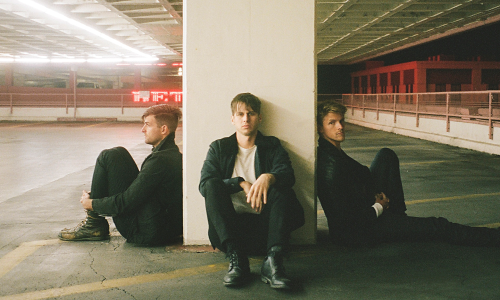
In short, Supermodel dares to dream larger than life - and that's why it's so great. That opening run of songs as mentioned above not only confront the listener with the album's running themes head-on but also revel in how wide Foster and his bandmates have cast their net this time. The world-travelling opener "Are You Who You Want to Be?" was the first thing I heard back from this album back in the day, buried in a surprisingly influential year-end mix a friend had made, and it was hard to believe it was the "Pumped Up Kicks" guys: the tropicalia percussion, rhythmically erratic vocal flows and the pogoing chorus that suddenly bursts to life make for a wild, exciting and unexpected ride that never gets old. The album's centrepiece statement is "Ask Yourself", an existential pop masterpiece that runs abandon with the energy of a stadium anthem while in lyrics and performance it panickingly tries to find the nearest corner to crawl in a fetal position in. It's the album's thesis and ideas rolled into one song. The 80s-influenced floor-filler "Coming of Age" is the most upbeat and liberated the album finds itself in, all yacht rock synths and handclap-worthy melodic beats, and still carries that big vulnerable heart with it. All three are among the best pop songs of the 2010s, and each one is firing entirely different guns yet hitting the same targets. It's commendable how every song on Supermodel not just takes the listener to a brand new journey but how well it pulls it off, the album restlessly trying on new skins like it's paranoid that the moment it stands still it loses focus. With that urgency comes inspiration and that constant surprise becomes one of the record's key strengths, all the while the overall production aesthetics still manage to tie these separate together from one another. It's an album that sounds like it's both unravelling and which retains pitch-perfect control of itself at any time, and that's a really difficult combination to pull off well.

The other thing aspect that jumps out is that it's not afraid to properly lean into its pop inspirations either big time. "Pumped Up Kicks" was an incredibly catchy pop hit dressed up in humble ramshackle fittings, and for the sequel Foster the People have allowed themselves to embrace the power of massive melodic hooks without having to hold back. The songs on Supermodel are ambitious and unashamedly universal and they make the classic mix of downbeat lyrics mixed with upbeat music sound like something fresh and noteworthy again. The sharpness runs through even the more outlying cuts, i.e. the psychedelic flourishes of "Pseudologia Fantastica" (where those MGMT comparisons finally have some ground) and the crunchy, almost shoegaze-y textural walls of "A Beginner's Guide to Destroying the Moon", both which hint at an entirely different album and even a band but which still hold the same widescreen melodies. The choir & horn-propelled firecracker "Best Friend" runs back and forth with the energy of Sonic the Hedgehog having a panic attack while its bass lays down the meanest groove of the album and the song having an overall feel of someone sticking a number of choruses together and pretending they're verses et cetera, and even the heartwrenching epic "The Truth" sweeps grand motions right from the emotional core of the record, hand raised into the sky and beckoning everyone who hears it do so in resonant unison. Grand gestures crash into skyscraping melodies and spine-seizing rhythms.

I rarely find myself going on such hyperbole mode, especially from an album by an artist I otherwise don't really have time for: I've made my opinion on Torches clear enough and anything following Supermodel has sounded like the works of a band who have found themselves at complete loss of direction and unable to get their bearings back. But the results speak for themselves. This was an album I didn't expect much from and yet found something more from it than I could have ever anticipated.   Supermodel is one of the best pop albums of its decade and at least half of it is well secured in the pantheon of the decade's key tracks, and as a cohesive piece of work it's both became a source of shared joy with likeminded people as well as a record that has hit a little too personally at times as the arrows it's fired have suddenly breached my defenses. It's such a vibrant yet emotional record that it's absolutely wild to me it's never mentioned by anyone ever. This is Foster the People's actual legacy, not their one hit.

Rating: 9/10

21 Jun 2021

Kent - Tigerdröttningen (2014)

1) Mirage; 2) Var är vi nu?; 3) Skogarna; 4) La belle epoque; 5) Svart snö; 6) Allt har sin tid; 7) Innan himlen fall ner; 8) Din enda vän; 9) Godhet; 10) Simmaren; 11) Den andra sidan

A potentially interesting album left cruising on autopilot.

Key tracks: "Mirage", "Skogarna", "La belle epoque" 

Kent went from a clear rock band to a hybrid of synth pop and rock all the way back in 2007 and you would reckon that by the time I would talk about their 2014 album, that change wouldn't be something that needs to be mentioned any longer. We get it, they changed sound, and nearly a decade after it happened it's now the norm for the band, no longer anything strange or bewildering. But Kent did keep tweaking that sound, exploring different frontiers that the change had cleared the pathway for, and so while there is a clear split of two halves in the band's discography, Kent had avoided repeating themselves after that halfway point. Even so, it is 2014's Tigerdrottningen where there’s a sense of Kent being plateaued. First hearing the album at its release, it was the first time my main takeaway from a new Kent album was that it sure sounds like a Kent album through and through: no surprises, no revelations, simply exactly what I expected to hear from them at this point and little more. And long story short, and review TL;DR, but that's still the primary take I have on Tigerdrottningen. It's where the comfortable corner the band had established for themselves had started to sound perhaps too tight.

Tigerdrottningen is so close to being a really fascinating album. It's a really charged record, sometimes even angry and even though the music is still predominantly bright, there's a sharper hit to its production that sounds urgent and determinedly pointed. Joakim Berg has clearly reached some kind of a boiling point and there's a heavier political lean to the album’s lyrics, often just as simple off-the-cuff lines absolutely laced with poison. It comes to surface on "La belle epoque", a near-formless rant about the state of modern Sweden and the hypocrisy among its citizens, and "Skogarna" which distills the hollow hopelessness of being stuck somewhere you have no affinity for in a political climate that ensures that hope never grows (and there's a fantastic self-referential line too about hearing your old hit song from the nearby radio, which is given the honour of the final twist of the knife in the gut). Many Kent albums have traded on melancholy, but Tigerdrottningen is fed up about it and sounds like it’s about to take action. But it can’t keep up what it hints at.

Tigerdrottningen's flaws aren't in how it does nothing new - and if we are honest, it does present some tweaks to Kent's standard formula, most clearly with the backing vocalists who follow and sometimes trade lines with Berg across the record, giving the band's traditional vocal harmonies their own distinct character. Rather, the problems lie in how absurdly frontloaded the album is and how badly it trails off afterwards, with the first four tracks offering a genuinely compelling vision of a record built on angry synth rhythms, which turns out to somehow lead into a disappointingly plain finale that bins Kent’s tradition to always finish on a grand high. The bulk of Tigerdrottningen is decently enjoyable but completely running on creative autopilot and it leaves little trace apart from the occasional obvious catch like the English-language movie sample that starts off "Din enda vän" is by far the song's most memorable part. Few sparks of light guide the way, i.e. the intensifying end of "Allt har sin tid" and the miniature line-trade drama of "Godhet" (both songs where the backing vocals shine), but for most parts Tigerdrottningen lacks in the areas Kent usually shines and doesn’t seem too bothered to try too hard to either. It's not so much unmemorable as it is just transparent: they’re songs you enjoy enough to keep listening to when they come up on shuffle, but there’s a reason why that’s the heaviest exposure they get. This is Kent running through the motions, channelling Kent The Brand rather than the band that would seek to innovate and reinvent with each new move, and the songs stick as much or as little as you'd expect in that regard.

But there is that initial quadruplet of tracks where Tigerdrottningen is on a mission you want to believe in. "Mirage" is a mirrorball that someone has smashed to pieces and now wields one of the shards as a blade; a disco giant that barely holds its bitterness in control, reinterpreting Kent in a way that much of the rest of the album tries to live up to and doesn't reach. "Var är vi nu?" goes for the stadium anthem antics of the previous album but creates a powerful lament out of it, properly introducing the album's backing vocalists and makes a strong business case for keeping them around (and Kent would). "Skogarna" and "La belle epoque" are, as mentioned, Tigerdrottningen's two most obviously angry songs and (perhaps not coincidentally) the record's two greatest moments, yet they interpret that intensity in such different ways. "Skogarna" is bubbling and bouncy, bearing the album's most chart-friendly chorus that's a beautifully pure euphoric rush of fluttering synths, hiding the song's true heart so effectively. Meanwhile "La belle epoque" throws it in the open. It puts Berg's voice right in the center, breathlessly running from one sarcastic and nihilistic line to another, resembling a spoken word poem that someone put over on a steady programmed beat and strings that sound like a mob forming a circle around you, only coming up for air for its brief, dramatic choruses. If Tigerdrottningen is Kent on autopilot, it's unbelievable how they managed to still come up with four songs this strong; and it's downright cruel for the listener they were put right in the beginning, one after another. 

A mid-tier, disappointing Kent album is still, overall, a good album - just not one that inspires. Despite its pointed lyrics Tigerdrottningen is ironically an album that has very little to say, from a musical perspective: rather than coming up with something novel it rephrases previous ideas instead, and the few new tricks it does employ are more window dressing than anything substantial. It leaves an impression of Kent either running out of ideas or finding themselves unable to build a whole album out of the ones they did have. For a band on their third decade and album count in double digits, it’s inevitable that a record like this happens and kudos to Kent for making it this far before it happened - but like so many of those records, even though it’s a decent album, even a fan knows deep down in their heart that it just isn’t anything special despite its moments of old brilliance flashing through.

Rating: 6/10

16 Aug 2020

Manic Street Preachers - Futurology (2014)


1) Futurology; 2) Walk Me to the Bridge; 3) Let's Go to War; 4) The Next Jet to Leave Moscow; 5) Europa Geht Durch Mich (feat. Nina Hoss); 6) Divine Youth (feat. Georgia Ruth Williams); 7) Sex, Power, Love and Money; 8) Dreaming a City (Hugheskova); 9) Black Square; 10) Between the Clock and the Bed (feat. Green Gartside); 11) Misguided Missile; 12) The View From Stow Hill; 13) Mayakovsky
Deluxe Edition Bonus Disc: Original demos: 1) Futurology; 2) Walk Me to the Bridge; 3) Let's Go to War; 4) The Next Jet to Leave Moscow; 5) Europa Geht Durch Mich; 6) Divine Youth; 7) Sex, Power, Love and Money; 8) Dreaming a City (Hugheskova); 9) Black Square; 10) Between the Clock and the Bed; 11) Misguided Missile; 12) The View From Stow Hill; 13) Mayakovsky Bonus tracks: 14) Blistered Mirrors; 15) Empty Motorcade; 16) The Last Time I Saw Paris

German roads gave the Manic Street Preachers a vision of the way forward, and have revitalised their creativity.


Key tracks: "Futurology", "Europa Geht Durch Mich", "The View From Stow Hill"

I've been making a concentrated effort to review the Manic Street Preachers back catalogue over the past few months, mostly in order of release. I've done this sort of chronological blitz through the band's back catalogue a few times over the years  - not counting listening to these albums as and when they came out - and I'm sharing this behind-the-scenes glimpse here because going through the records in order always makes Futurology's position in that line-up clear, and it's hard not to think about the album with that in mind. While there's an obvious personal bias (call it nostalgia if you will) factor to how I value the band's first seven albums so highly, they were all also products of the band operating ahead without fear; they've never been the most challenging band, but during that initial stretch of albums they were frequently challenging themselves and introducing new ideas. In the late 2000s that fizzled out to some degreee and the band started to tread on eggshells, operating a little too safely in a particular musical space they had degreed their comfort zone. I bring this up (once more, if you've stumbled into this review after the others) because it's actually relevant here instead of an aging fan complaining, and 2013's Rewind the Film showed the signs of Manics correcting their course. It contained traces of the same spirit and modus operandi that the band's first decade and a half had, with signs pointing towards the trio realising that something had happened to their sense of adventure and maybe breaking out of that comfort zone was necessary again. And if Rewind the Film was the promise being made, then Futurology is where they held true to it.

As the story goes, the origin of Futurology is tied in with that of Rewind the Film, with the two albums coming out of the same sessions and split into two separately released chapters. Neither of them are an afterthought, and I strongly believe the band when they've said they were on a creative high to a point where two separate albums were a legit possibility. And still, Futurology gives the impression that this is what they were originally moving towards before Rewind the Film started to rear its head along the way. That album spread its wings surprisingly wide around its acoustic base concept (less charitable would call it ‘slightly incohesive’ but that’s too negative) almost as if the original idea wasn't quite enough to make up a full record. Compare this to Futurology, which is a traditionally meticulously planned Manics album through and through, with a firm musical concept and a high-design visual theme to go with it, both of which you could distill into a Nicky Wire promotional tagline. It’s too much to just be one half of one period and the way its sound bled to Rewind the Film at places indicates as much. It's almost a high level concept album, the kind of thing that passion projects are sparked out of when someone gets an idea into their head they just can't shake - and it would go a long way to explain how invested the band sound in it.

It's impossible to convey just in words how rejuvenated and new the Manics sound on Futurology. If there's an overarching theme to the album that overshadows all the other running themes through it, it's that of the Manics throwing their previous rulesets into the recycling bin and following their whims to places they may have felt too reserved to go to across the past few albums. The twist is how it manifests in the strangest way - besides the obvious differences in sound (and we'll get to that in a minute) Futurology is one of the few times where the band have really leaned against their offbeat sense of humour. Where Rewind the Film was a sad album of middle-age depression and loneliness, Futurology is a cheeky bastard. Wire has said the album is the most optimistic album they've made and despite the usual Manics lyrical tropes rearing their head (war, alienation, despair, the lot) the band are having fun with them to an almost self-aware fashion. Wire is still in an introspective mode following Rewind the Film but he's no longer completely defeated by his demons, and either spends time reflecting on them with insight or even actively snarking at himself. In a delightfully twisted way it's a joyous album, and that odd positivity is reflected in the wild adventurousness of the record. Its curveballs are full of the kind of free-spirited levity that the Manics have mostly hidden in their b-sides in the past - now it's coming out in broad daylight and Futurology revels in it.

To match this, the subdued and largely acoustic fields of Rewind the Film are gone and in their place are mirror-glad skyscrapers and modernist angles. Futurology is a sharp, dynamic album that rushes forward while looking forward as per its title, the band making a ruckus with Bradfield's guitars in lead after they had been quieted down for Rewind the Film, with programmed elements and synthesizers intermingling at every step. Manics have dabbled with electronic elements in the past but in more introspective settings; this is the first time they find their way into the band's favoured mode of bold guitar rock. There's an abstract European, and more specifically German, influence to it - it was recorded in Berlin (and the band were very self-aware how it was their "Berlin album") and inspired by their travels across Europe and the sense of escapism they associate with the continent. There's a kind of propulsive, repetitive rhythm to most tracks that could vaguely be associated with krautrock motoriks, while the synthesized elements together with the live band dynamic bring forth associations with other famous Berlin-based experiments across rock history. The band hired Alex Silva as the producer, who they had previously worked with on The Holy Bible, and while the two albums are sonically worlds apart, Silva brings out the same kind of zealous drive from the band to Futurology: like The Holy Bible, Futurology is an album guided very clearly by a particular vision and everyone involved is throwing in everything they have to get that vision turned into reality. There's parts of the album where the lines between a "rock" album and something else start to blur and veer across to something subtler and stranger, and yet it still comes off louder and more bolsterous than many of the Manics albums that deliberately tried to tap into those rock and roll ideals directly. This in practice means that the band's strengths are in full display but with a new set of clothes on, which the title track at the start so strongly shows: "Futurology" is a traditional Manics anthem at heart but with a new paint coat over it and a brandy lit fire under its belly that makes it a propulsive, earnest manifesto for the record. It's an opener that sounds better each time you hear it, because the way it runs through the album's ideas becomes more and more evident the more you hear it start the journey.


The title track also features Wire singing its towering stadium-ready chorus, his rough voice bringing a hint of vulnerability to the lining of the song - it's his first time (outside his solo songs) leading the chorus of a Manics song, and a single at that, after so many cameos and verse trade-offs with Bradfield. The experimenting around Bradfield taking a backseat in lead vocals that was first shown on Rewind the Film continues its casual development here, but you could easily argue that the whole premise has been realised better this time around: or in other words, the other vocals are now used to augment James rather than replace him outright. Wire doesn’t get any solo songs (unless you count the seemingly unscripted shouting in the otherwise instrumental “Mayakovsky”) but his supporting vocal spots are prominent and play off Bradfield's lead vocals excellently, two songs feature choirs (a proper one in “Misguided Missile” and a gathering of studio visitors in “Let’s Go to War”) to give Bradfield a boost from the behind, and where the guest vocal spots are back they’re not obscuring James completely. The three songs with featured vocalists are all clear duets this time, with Bradfield and the collaborators exchanging lines between one another and sharing equal parts of the songs' weights. The co-headliners are overall great as well and probably even better utilised than on Rewind the Film which already did a great job with it, with Georgia Ruth Williams lending a tenderness to the contemplative slow cut “Divine Youth” that contrasts with James’ stadium-ready vocals and Green Gartside’s very distinctive nasal tone working in tandem with the general dreamland surreality of “Between the Clock and the Bed”.

And then there’s “Europa Geht Durch Mich”, the album’s unofficial theme song and the epitome of the record’s fixation with its country of recording. It’s a ridiculous song, and there’s no better way to describe it: built upon a hulking stomp that sounds like someone is pounding an industrial complex, it’s lead by what sounds like an air raid siren and culminates in the German actress Nina Hoss sing-shouting taglines about Europe in German. It’s somewhere between krautrock and industrial dance clubs, and it’s absolutely not the work of people who take themselves Very Very Seriously. And that’s why it’s so great, and there’s no better song to tie the album together - literally, as echoes of it cameo across the album’s length. There’s an irreverence to it that’s not entirely unlike the antagonising wink-wink posturing of Generation Terrorists or the more chaotic parts of Know Your Enemy, but reinterpreted by a group of veteran musicians on a road trip across some fantasy Europe. That off-kilterness isn't just restricted to "Europa Geht Durch Mich" either - the sci-fi secret agent theme "Dreaming a City" that's so unlike any other Manics instrumental so far (and easily the best one they've released by this point), the bitterly gleeful group chorus of “Let’s Go to War” that marches onto death with a smile on its face and the completely bonkers futuristic disco-rock of “Sex, Power, Love & Money” are things that are hard to believe they exist after years of the band taking themselves very seriously on record.

Futurology isn't all absurd style experiments and studio curios, and between the lines there's an honest and serious Manic Street Preachers album waiting to emerge. The likes of "The Next Jet to Leave Moscow", "Black Square" and "Futurology" are timeless Manics songs, but now playing around with the same risk-embracing attitude as the rest of the album. “Walk Me to the Bridge” is a standard straight-to-point latter-day Manics lead single but this time it's genuinely exciting and continues to be just as thrilling and refreshing no matter how many times you hear it, with a fantastic, almost menacing bass-driven structure that explodes into a blitz of synths in its chorus. That continuous sense of freshness and excitement runs across throughout, sometimes for the simple reason that the band are hitting all the exact right notes you look for in their music, like with the propulsive and beautifully sarcastic "The Next Jet to Leave Moscow", the soaring title track or the undeniably massive "Misguided Missile" where the finale - choirs blowing and all - sounds immense in a nigh-physically moving way. Other times it's in the sense of discovery within the deep production layers, reminiscent of prior richly immersive albums like Lifeblood and This Is My Truth Tell Me Yours - "Between the Clock and the Bed" loops and swirls around beautifully, and the layers of the brilliant "Black Square" hide little secrets in some of the album's strongest melodies, culminating in a breakdown that literally breaks the body of the song away for a moment of chaotic rush before the chorus hits again stronger than ever. The half-acoustic half-electronic "The View From Stow Hill" not just bridges the two sibling albums together, but it radiates the classic beautiful melancholy that the band have always mastered and knocks it out of the park so well that even Wire namedropping Twitter and Facebook in the lyrics manages to sound decent. It's a beautiful song with a particularly resonant chorus melody, and ranks among the band's best album closers - or it would, if "Mayakovsky" wouldn't burst through the door like Kramer and rowdily thrash around the room. Futurology is a cheeky album, and it does not want you to forget about that right as you imagine the record is about to end in a genuinely poignant note.

It's a baffling but genuinely rather fun way to end the album and even after you've gotten used to it and know it's coming, it still feels like a surprise every time it appears - just like "Futurology" feels more resonant each time it starts the album and never loses its freshness. The disparate parts of Futurology could come loose at any moment but the Manics hold them down through a very strong vision for what they've set out to do, and the earnest willingness to take risks along the way which pays off fantastically. To go back on my personal experiences - and this is my review so I can - the great triumph of Futurology is that it's so clearly reminiscent of the band's golden years in its vigour, creativity and spirit; it reminds me of the Manics I was obsessed with and like that particular iteration of band has returned after a period where it felt like they were in danger of becoming another veteran band releasing good but inessential records to pad out their catalogue for fans only. But Futurology is anything but padding: it's a creative resurrection and revitalisation that builds on the potential that Rewind the Film hinted at, in a way that is downright joyous from fan's perspective but doesn't need that stamp of approval to stand up, because it's consistently exciting just from the point of view of a fan of music in general. Futurology features Manics' best songwriting in years, a style of production and choice of soundworld that brings the best out of those melodies and gives them to kick to send them soaring, and it's a return of the attitude the band had when they were on their peak. Twelve albums in and hitting their third decade, here the Manics sound as thrilling and vital as they've ever been in their prime. As the title track states: "we'll come back one day - we never really went away".

The deluxe edition offers the standard demo versions: no hidden secrets this time, just a few extra Wire lead vocals, a fully English-language version "Europa Geht Durch Mich" and a couple of takes with just James and his guitar (and occasionally a drum machine), otherwise it's mainly rougher takes and some surprisingly finished versions that are 90% close to the final version. The three bonus studio tracks are the more exciting thing, as the band had started to ween away from strict singles and b-sides at this stage and bonus drops like this have replaced them. "Blistered Mirrors" occupies the sort of halfway point between Rewind the Film and Futurology that most of the non-album tracks from these two eras exist in, and is the weakest of the lot to the point that there's not much to say about it. "The Last Time I Saw Paris" is the closest to the main album in its Euro-fetishism and guest vocals, with an uncredited vocalist (who I believe might be James' wife) providing spoken word narration across a sweeping cinematic backing. And while it's really neat and wonderfully lush, the award goes to "Empty Motorcade" - full of urgency as it speeds down the highway on its part-programmed rhythm, running on the main album's dynamics and escalating into a chorus that some would say is too good for a bonus track.

Rating: 9/10

5 Aug 2020

Afternoons - Say Yes (2014)


1) Graffiti Artist; 2) Say Yes; 3) Saturday Morning; 4) Bored Teenagers; 5) Gloria; 6) Love Is a Western Word; 7) Oh Heather; 8) Perfect Wilderness; 9) Said I Might; 10) The Intervention; 11) We're Just Below the Sun

Semi-posthumous pick-n-mix pop bombast from a spectacularly unlucky band who finally got the chance to get their music out.


Key tracks: “Say Yes”, “Bored Teenagers”, “Love Is a Western Word”

Here's a brief summary of the history of Afternoons. The band formed out of another band, Irving, with the two lead members feeling that their latest ideas did not work with their current band; they split off, tried to find members to join the project they now called Afternoons, and eventually recruited their old Irving bandmates when they found no one else who they gelled with. A local radio station gets really hyped out about the initial recordings and the word-of-mouth reputation starts spreading, and the band got picked up by a label and begin plans to get recording their debut under a Grammy-winning engineer. Suddenly, the aforementioned radio station shuts down without warning, taking down the initial grassroots buzz with it. Then a clash with a Welsh band also called Afternoons forces this Afternoons to change their name to Shadow Shadow Shade, rendering all their printed promotional material useless. Their management tells them to drop the album they've been working on and to record a new one from scratch, and once it's done and ready to go out, the management's promo tactic is to not promote the record at all so no one knows about it. Closely following this, the band's booking agent literally disappears in an earthquake and upon rescue, quits the industry, leading to a cancellation of the upcoming tour. Then the band's label get bought out by another label and the band are immediately dropped - at which point they simply call it quits. Because after all that, why not?

I went on a little research trip around the internet to find out a little bit more about this band that I discovered in a mixtape and who have very little information of them online, and I did not expect to bump into one of the unluckiest groups known to man.

Some years after the dissolution of Shadow Shadow Shade the band re-formed under their original name to release the album they originally shelved around 2009 - i.e. Say Yes, this very album - but they have since been so quiet that I doubt the reunion lasted any longer than that. For the band the release of Say Yes looks to be more about bringing closure than a second (or third) start. For the listener, knowing the context, it's an interesting piece of internet indie mythology. Here's a group who could have easily become part of the blog canon; the size of the sound present on Say Yes would've slotted right in with the early-stage Polyphonic Sprees and Arcade Fires, complete with big group vocals all over the place and horns galore but just with more synths (before either band discovered synths). I'm going to say it right off the bat that this isn't a lost classic that is desperately due a posthumous appraisal, but it's very good in what it is: the debut album of a band with a whole lot of ideas.


The piece of initial lore about the core members feeling stylistically restrained in their original band seems plausible, because the one thing that jumps out from Say Yes is that it reinvents itself with nearly every song. There's a common ground between each track through the production and certain elements (lots of group vocal harmonies in particular) tie the songs together, but you could take each song out of its context and convincingly argue that they're from completely different albums. "Love Is a Western Word" hits all the golden late 00s blog-indie tropes, "Graffiti Artist" and "Bored Teenagers" go full-on synth pop, "Oh Heather" is a Nick Cave ballad before it flicks into a super-processed club stomper, "Perfect Wilderness" flirts with a darker acoustic edge that's at odds with the rest of the record's shining synths, "Said I Might" threatens to go rockabilly, "We're Just Below the Sun" would've been at home on MGMT's Oracular Spectacular and yet, somehow, the pompous parade march of "Say Yes" still sounds out of place amongst all of these. You can't help but respect the ambition and Say Yes does manage to make something oddly cohesive out of its wild disregard for consistency: it’s a bit of a mess but it’s almost close to making a statement out of the mess.

But really it’s just a slightly unrefined debut from a band with a ton of potential. There’s a number of great songs here - “Say Yes” is positively explosive, the swooning synth epic “Bored Teenagers” would have been a shoe-in on any respecting songs of the year list in a world that was kinder to the band, and “Gloria”, “Love Is a Western Word” and “Oh Heather” could have stood a chance too. The whole mid-section of the album is a minor triumph of uninhibited and unrestricted creativity, synths frolicking in wild abandon set to propulsive rhythms and the band’s sincere attempts in building choruses and singalong moments that would unite strangers in festival fields. It's a pick-and-mix indie pop bombast. As a part of the scattershot nature of the album though, sometimes the band either quite don’t hit the target (both “Said I Might” and “Perfect Wilderness” have good ideas that don’t realise as well as they could), offer lesser variants of established tricks (“Saturday Morning”) or just fade in the background ("The Intervention"). You can tell why there was buzz around the band and why they were threatening to be the next big thing, and also that maybe album number two (if we ignore the Shadow Shadow Shade album, which is very different) would have taken them there.

You can't help but root for Afternoons though, even if retrospectively, and I am left wanting a little more. There's a vision behind Say Yes and Afternoons were a band with clearly a lot of things to say, and you can almost imagine a series of equally diverse, even more exciting albums in the horizon. Unlike many of my single-album internet fancies, this wasn’t just a case of the great random number generator of life not picking a band in their favour but it was seemingly actively wanting to sabotage them, which makes the album all the more sympathetic. It’s got as many great possibilities as it does great songs - and the silver lining is that the album eventually got the chance to get out there and get a chance to live a second life among random passers by like me.

Rating: 7/10

Physical corner: n/a, digital only release (to my knowledge)

12 Mar 2020

R.E.M. - Unplugged 1991 & 2001: The Complete Sessions (2014)


CD1 (1991): 1) Half a World Away; 2) Disturbance at the Heron House; 3) Radio Song; 4) Low; 5) Perfect Circle; 6) Fall on Me; 7) Belong; 8) Love Is All Around; 9) It's the End of the World As We Know It (And I Feel Fine); 10) Losing My Religion; 11) Pop Song 89; 12) Endgame; 13) Fretless; 14) Swan Swan H; 15) Rotary Eleven; 16) Get Up; 17) World Leader Pretend
CD2 (2001): 1) All the Way to Reno (You're Gonna Be a Star); 2) Electrolite; 3) At My Most Beautiful; 4) Daysleeper; 5) So. Central Rain (I'm Sorry); 6) Losing My Religion; 7) Country Feedback; 8) Cuyahoga; 9) Imitation of Life; 10) Find the River; 11) The One I Love; 12) Disappear; 13) Beat a Drum; 14) I've Been High; 15) I'll Take the Rain; 16) Sad Professor


The iconic Unplugged gigs, unedited. Cosy and acoustic, with the decade's difference creating a wide enough gap for both concerts to have a unique vibe. They were made for this format.


Key tracks: It's hard to choose particular songs given the general solid nature of both sets, so just to set the general gist here's the openers of both nights: "Half a World Away", and "All the Way to Reno".

R.E.M. were one of the few artists who took part in MTV's iconic Unplugged series more than once, and while the two sessions were only a decade apart they couldn't have taken place during more different times for the band. In 1991 R.E.M. had just become one of alternative rock's biggest names with their breakthrough album Out of Time featuring a notably acoustic bent, and so the Unplugged venue was a natural fit for the band to play through their recent hits and a selection of popular back catalogue favourites. Ten years later, their sound had turned studio-heavy and characterised by keyboards, programmed parts and synthesized effects. This time around R.E.M. found themselves having to reinvent songs from scratch to match the unplugged format, re-imagining the arrangements to an entirely different set of instruments as they opted for a set list dominated by deep cuts. There's a single shared song across the two sets - "Losing My Religion", obviously and deservedly - but otherwise the two evenings were completely unique from one another, and would likely have been close to such even with further repeat inclusions due to context alone. Unplugged 1991 & 2001: The Complete Sessions brings both performances together for the first time, and it's the first essential release of the band's post-retirement archive clear-out.

Out of the two, the 1991 concert is the more intimate one - or perhaps cosy is the better word here. The atmosphere is closer to a group of friends spending an evening playing together rather than a group of recent hitmakers performing a concert to strangers. The mood is jovial throughout: upbeat singalongs like "Get Up", "Pop Song 89" and "It's the End of the World" are all over the set, you've got charming curios such as the goofy instrumental "Rotary Eleven" and Mike Mills singing the naturally cheesy "Love Is All Around", "Radio Song" gets a lounge groove makeover, and other such jolly moments. That same closeness also benefits the somber moments of the session and many of them, such as "Half a World Away" and "Perfect Circle", get standout performances where already great songs sound drop-dead gorgeous. One of the core tenets of MTV Unplugged was to bring the artists closer to their fans not just by stripping down the sound but also in physical proximity, and the warm and inviting nature of the 1991 session is a great example of it in action.


In contrast, the general vibe of the 2001 performance is a little closer to that of a band standing in front of an audience: everyone's a little less chatty and there's no whimsical curios this time, and instead the outing is a little more seriously focused on the music alone. But then, the songs themselves aren't as natural a fit for the format. The bulk of the 2001 concert is taken from Up and Reveal, whose studio layers have not just been peeled off but often re-interpreted entirely: Stipe prefaces "I've Been High" by calling it "unabated", before the band move onto reinventing the synth-heavy original into an acoustic ballad. "I've Been High" bears the most radical change of the lot but many of the songs still bear a stark bareness to the studio materials - often bringing something new to the table for them, and always successfully. The innate beauty of the Up cuts get a chance to stand out loud when the electronic noise is left home, and the Reveal songs bridge across time to demonstrate their shared genes with the 1991 songs. The set list choices outside those two albums are rather tastefully chosen as well, and e.g. "Find the River" and "Cuyahoga" are such perfect fits for this format. The latter in particular just further drills it in how it's one of the great hidden gems of the band's back catalogue, and playing it softer removes none of its melodic brilliance. 

Both concerts are stand-out performances if we are honest, and neither is clearly better than the other either (though if we had to pick, I'd probably go for the feel-good first disc over the more professional seriousness of the second). Despite the shared concept, both have their individual strengths and obviously individual songs, and they're both brilliantly executed: the song selections leave nothing wanting, the band's live strength is up high both times and the new arrangements are often lovely. Binding the two sessions together like this is great, and not only for the convenience factor. Part of this set's charm is not just in hearing the subtle differences between the two sets, but also picking out the similarities. When the vastly different material is brought together under the same sonic umbrella, it really brings into light the core R.E.M. sound they all share despite the years between them. No matter how far they strayed away from a more acoustic-oriented style on record, their style of songwriting consistently moulds into that form well. What arguably helps is that both sets also feature a number of helping hands on stage, bringing the sound into further life: it's not quite as stripped down as you'd think, but it's arguably better this way as it gives the alternative arrangements a chance to shine better as it allows for the important musical details to still come through.

Being able to keep the richness of the sound helped in how successfully the band adapted to the format, which in turn surely played a part in them getting invited twice to the show. In fact, their mastery of it is the reason both of these sets have become classic chapters of MTV Unplugged history. Bringing the recordings out from the murky world of bootlegging has helped to canonise their landmark nature: even in the greater live R.E.M. discography alone this release stands out, and even more so in the extremely hit and miss Unplugged live album discography. As someone who did have those bootlegs for many years, having it officially here has only enhanced the seemingly endless replayability of them: when bound together, despite their differences the two gigs work as a really good whole and it's rare that I'll only ever listen to just one of the two anymore. Of all the R.E.M. live releases the Unplugged sets are arguably closest to the token Famous Live Recording for the world outside the main fanbase, and I find it hard to really disagree either: it certainly feels like the most essential R.E.M. live album to own.


Rating: 8/10

6 Dec 2019

John Frusciante - Enclosure (2014)


1) Shining Desert; 2) Sleep; 3) Run; 4) Stage; 5) Fanfare; 6) Cinch; 7) Zone; 8) Crowded; 9) Excuses

Frusciante nearly masters his new electronic sound finally, but sadly doesn't quite deliver on the actual song front.


Key tracks: "Sleep", "Fanfare"

When John Frusciante first announced his electronic reinvention, he posted a public letter describing his vision, the sound he aimed for and the ways he'd reach it. The releases that followed weren't quite there: for all the good parts, the EPs and album following the release all sounded like public practice sessions, to various degrees of success. They featured Frusciante bouncing around ideas, testing out new production methods and stretching his songwriting style to meet these new guises. After all that practice, Enclosure comes close to reaching that goal; for the first time, the music Frusciante's producing sounds like it's fully in sync with his vision.

The reason for this is that if the experiments of the prior releases had the uncomfortable habit of slipping into borderline amateurish execution occasionally, on Enclosure Frusciante has figured out the formula of how to marry his new sound with the way of writing songs he's comfortable with. While Enclosure retains some of the quirks of the past few releases, it sounds consistent and thought-out, instead of just him recording and releasing any odd idea he's halfway done tinkering with. Even the actual lyric sheets are back: there's just a single instrumental among the songs ("Cinch") and everything else is atypically wordy for this period of Frusciante, although his lyrics have started to become increasingly more obtuse and resembling a word salad, and in places they get downright questionable ("I'm in the zone, nigga" is one dubious way for a white guy to open a song). Enclosure has a clear intent behind it, like an actual album rather than a collection of takes.


Musically, Enclosure is an album of little extremes. On one hand, I do appreciate a lot of what Frusciante does here sonically: some of the synth sounds he's picked are particularly delicious, veering towards lo-fi analogue vibes with a particularly atmospheric touch, almost reminiscent of old game score sound sets. It's the kind of album that makes you appreciate very particular sounds, and it works particularly well with a good set of headphones when you can pick those apart. But then, Frusciante hasn't quite shaked off the weakest parts of the prior albums. He's still obsessed about drum loops and switching between them on a fly, at worst nearly every ten seconds. For the most part Enclosure isn't quite as bad about it compared to some of the previous works and some of the tonal and tempo switches are actually decently executed. The drums for the large part don't sound quite as out of place either, but sometimes it all comes tumbling down - e.g. the acid house drums of "Stage" actively distract from the rest of the song and become its sole, jarring focus. On a couple of occasions the entire production aesthetic starts to falter, in particular on "Run" which sounds like a demo version of the boss theme to some late 90s video game. It's not as cool as it sounds; it's a lapse in judgement after the album had started so promisingly, through the moody buildup of "Shining Desert" and the following "Sleep" where those ever-changing drum loops actually really work for the first time.

For the most part though, the extremes of Enclosure meet to create acceptable averageness. I'm glad Frusciante's gone back to making songs rather than sound tests, and I enjoy the ones on Enclosure, but they're far, far away from his most memorable work - and a lot of the time a fair distance away from being properly memorable to begin with. There's a single song I'd place anywhere near a Frusciante essentials list and that's "Fanfare", a moody anthem of sorts where the production tricks (and especially the drums) calm down from the way of a solid core melody and an underlining, evocative tone with a little bit more oomph than anything else here: it sounds like a classic kind of Frusciante song, just with a new set of clothing on it. But while the majority of the rest please in terms of their production and mood, they're deceptively weak as actual songs. Frusciante rambles his litanies, occasionally stumbles across a good melody and then buries it away. There's nothing to take forward, bar the thought that something at some point sounded good but you can't quite remember how it goes. Some songs get close, particularly "Sleep" that has liveliness and fire that's anything but its namesake, as well as "Zone" which oversteps its clunky start with its near-anthemic rise on its latter half. Frusciante can still do some strong melodies, he just also knows how to brush them away just as quick.

Maybe Frusciante himself realised that in some level as well. After another prolific handful of years, Enclosure has the distinction of closing another particularly prolific era for Frusciante, and beginning a long hiatus. Following its release, we wouldn't hear back from him again properly for a while: he released some material under the Trickfinger alias and cleared out the archives with a couple of compilations of unreleased sketches and demo material available for download, and then disappeared largely off the record; even the second Trickfinger album published some time after was just a collection of outtakes from the first record. Later on he'd publicly state that he was content with just making music for himself, with no wider audience releases in mind. At the time of writing this review, in 2019, Enclosure is the last real album Frusciante's released and there has been no sign of another coming anytime soon. Sadly, for being an album that sounds like a culmination of the work that came before it and potentially the last thing we'll hear in a very long time, it ends the era by uneventfully fizzling out.

Rating: 5/10