22 Feb 2020

Lady Gaga - ARTPOP (2013)


1) Aura; 2) Venus; 3) G.U.Y.; 4) Sexxx Dreams; 5) Jewels 'n' Drugs (feat. T.I., Too Short & Twista); 6) Manicure; 7) Do What U Want (feat. R. Kelly); 8) ARTPOP; 9) Swine; 10) Donatella; 11) Fashion!; 12) Mary Jane Holland; 13) Dope; 14) Gypsy; 15) Applause

Excessive, chaotic, high-energy. Gaga battles against an impending popularity comedown by frantically going all over the place, turning her internal battles into off-kilter pop monsters. It's messy, but she knows it.


Key tracks: "Venus", "G.U.Y.", "ARTPOP"


Lady Gaga loved fame. Her first two albums were dedicated to it and to the tragi-romantic notion of how too much fame can affect a person. Appropriately, she gained her own fame through it and ironically, when her imperial phase had hit its peak and she needed to keep on top of her own fame, she felt the effects too. But rather than crumble under pressure or push herself away from it, Gaga plunged herself right into it. Some artists end up recording 'fame hangover' albums where their music takes a sudden turn following exposure to something they couldn't deal with, but ARTPOP is instead the heavy binge right before that comedown; the musical equivalent of someone diving right into their addiction with full disregard to its danger. If Gaga was addicted to her own perception of her status in the pop culture world, this was her reckless junkie phase.

While Gaga was always explosive on stage, it's worth watching some of her live performances from around this tour. They're the show of a woman outright possessed on stage, pushing herself to her limits and often reducing her vocal range to a guttural scream over a series of songs that each come out more outrageous than the last, the breakdowns becoming more intense as the tour continued on. Gaga has later come clean on just how much of a bad mental state she was in at the time: she was feeling vulnerable as she was retrospectively dealing with her abused past and second-guessing her own moves all the time, which fed into a snowball of desperate measures to prove her stature. This is the era where her infamous clothing got even crazier, where she talked a great deal about a companion app to the album that'd revolutionise how music is experienced (it ended up just being some photo filters and a lot of Peter Molyneux-esque forgotten features), she was planning to be actually launched into space for a performance... Little of it actually came true in any realistic fashion, but you could tell Gaga was constantly pushing herself to be something gigantic, in a way that felt far-fetched even to her own standards. But amongst all that music needed to be made, and her mania filtered into the album and so, ARTPOP became the one real-life monument to this particularly tumultuous period.

ARTPOP is still a pop album - it's just every pop album you could think of. The character Gaga had created for herself was starting to crack and the fragments started pulling away from each other. Here's the emotional balladeer; here's the crazy art chick; here's the perfectionist dance pop superstar; here's the hip-hop hook girl. She had no filter and no idea was considered too much. The swerving opener "Aura" was originally called "Burqa", tip-toeing around the controversy right on the doorstep of all the covert islamophobia rising in media; "Swine" was a call-out against the gossip blogger Perez Hilton who Gaga felt backstabbed by after a period of fake friendship, and which on stage took form of a scream therapy session that got more maddening the further she toured (by SXSW she was literally puking out neon paint). The message of "Do What U Want" was that anyone could take advantage of Gaga's body but no one could ever own her mind, as an abstract response to how media and paparazzi were treating her - and she invited already-infamous R. Kelly to sing a completely point-missing verse that just made it that much seedier. Somewhere among this she became obsessed over the concept of taking pop art and flicking the theme upside down, by way of an incoherent vision of bringing art into pop music; there wasn't really any kind of logical red line in her rambles, but it's the reason for all the Koons balls in the artwork, promotional material and referenced in the lead single "Applause". "Applause" itself is an adrenaline-fueled art statement of a song that's more a manifesto of Gaga's concept for the record than an obvious chart-topper, barely catching its breath for its anthem of a chorus. This was right as pop had started turning towards the Lorde-led eat-the-rich chill vibes, and here Gaga was literally singing about people praising her in a way that many perceived as egocentric - and she sounded like she's absolutely terrified if it would ever end.

It doesn't take a long-winded analysis to realise just how all over the place ARTPOP is, but that's where its power stems from. Born This Way holds its place as one of the key pop albums of its decade because of how completely fearless it is in its execution and vision, with Gaga taking inspiration from so many different things and meshing them into something that shouldn't work but does. ARTPOP is the same but just way more unhinged, however it's got that same adventurous spirit and most importantly, Gaga is still operating on that same songwriting high that she wrote Born This Way on. When she's at her best, Gaga brings together the kind of hooks pop dreams are made of with mad ideas no one else could think of. Take "Venus", which is an absolutely ridiculous song: the stop-start rhythm with its punctuating title drops which range in tone from ecstatic to utterly bored, the ludicrous lyrics that move from "let's blast off into a new dimension - IN YOUR BEDROOM (... Venus!)" to the middle-eight where she lists off the solar system one-by-one like the planets are her groupies and where she counters her own brattishly stressed "ur-ANUS" with a histrionically shrieked "don't you know my ass is famous?!", and the sheer 70s b-movie glam space opera histrionics at all. And yet, not only it's an instantly powerful hook after another but it has two obvious choruses and both could be the shining moment of a hit song in its own right. It's stupid, but it's completely irresistable and a really wonky version of pop heaven.


ARTPOP makes an art out of throwing something unexpected and baffling into the mix and creating something of a landmark through it. It's in the gloriously ugly bass fills that steal the chorus of "Sexxx Dreams" (and its instantly iconic, endlessly quotable spoken word bridge), the sudden mosh pit ending to the otherwise impeccably slick and suave "G.U.Y" that turns an artist tag shoutout into a album highlight, or the fact that "Fashion!" features both David Guetta and Will.i.am in co-production duties and yet Gaga has such a tight control over them that the song is a glacially smooth, wondrously decadent French disco jam rather than the horror you'd expect from such a duo. The album's production drills this down, full of weird quirks of its own from raunchy distortions and split-second breakdowns to playing around with volume to a disorienting degree. It's every bit as hi-fi and hyper-produced as you'd expect from the new album of a global pop superstar, but where the odd element you'd expect to be there have been replaced by malfunctioning synthesizers and traditionally unattractive sampler choices. It does actually serve the songs too: the chaos is a creative force, a cavalcade of synthesizers and programmed elements all clashing into noisy layers that Gaga channels into a frantic, manic energy for her pop powerhouse songs. The production of ARTPOP is a wondrous thing in all its excessive obnoxiousness, because it matches the excess of the songs. It's big, maximalist pop but closer to auteur in its execution.

The best way to prove that the jumbled nature works for the album's advantage is that the song which lacks of all of it is also the worst on the record, i.e. the piano ballad "Dope". While there are other songs with questionable antics, they pull through by compensating elsewhere: e.g. you can just about ignore R. Kelly's presence on "Do What U Want" because everything else about the song is a gloriously huge pop mammoth breaking down china shop walls, and while "Jewels 'n' Drugs" is perhaps a slightly misjudged attempt to slip into mainstream rap by way of creating what sounds like an AI designed the most stereotypical rap song you could think of, every single person who appears in it is so full of charisma that they salvage the song with their presence. But "Dope" is a bad, clichéd metaphor ("your love's a bigger drug than the actual drugs, okay") and it's a dull, fake-earnest song that goes for histrionics over emotion. Gaga has done piano ballads elsewhere and they are all far better, and if she wanted to soothen the album's wall-scaling energy down with it, she demonstrates it perfectly well elsewhere on record that she doesn't need to remove everything for that. The already mentioned "Fashion!" is a frictionlessly gliding groove that's simply stylish as all heck without going towards anything outrageous, and the title track is an actual masterpiece - a hypnotic half-siren song, half-dance anthem full of ethereal atmosphere, over which Gaga lays one of her best arrangements and melodies and which culminates in a genuinely triumphant middle-eight where she lays down everything she meant with the "artpop" concept and drives it across so clearly with her performance that even the listener gets it. Some days I legitimately consider it as Gaga's outright best song.

Whether ARTPOP works as an album is another thing. It's one wild ride of a tune after another, but at 15 songs is absolutely way too much of it. It's practically exhausting towards its final segments, and whether it's because of that or the songs themselves, the latter third just doesn't carry the same excitement anymore. "Dope" is what it is, "Mary Jane Holland" is a lesser version of the mid-tempo jams of Born This Way and even though "Gypsy" is as classic and "normal" of a pop song as you can find here and Gaga sounds genuinely earnest in her love for her fans in it, it lacks the pizzazz and sounds too plain for its surrounding elements. It's enough to halt the high you were riding and if it weren't for "Applause" at the end, the final part of the album would be a completely disappointing slide to a quiet fizzle. On its own "Applause" still isn't so much of a standout; when it was first released, it came across as a disappointing first taste of the new era following the footsteps of Born This Way. But as a closer to the album, it makes so much more sense because it's less of a stand-alone song and closer to a summation of all the album's themes from concepts to production, all the way to closing both the song and the album as a whole by spelling out the album's name for no particular reason. It's the grand finale, the appropriate bow for applause. It just about saves the album from completely falling off the rails as it ends, even if I'd much rather just have a shorter but stronger record.

To some extent, the end of the album also marked a curtain call for Gaga. ARTPOP was a commercial success (though arguably because of the strength of her previous albums) but in terms of public consciousness and general consensus now, it flopped - its singles run was full of cancellations, last-minute replacement choices and aborted videos and its campaign was a messy string of Gaga jumping from one idea to the next, and they shot the album's chances of ever regaining a real foothold or a hit. Following this, her own private demons made her resent some of the choices she had taken and the public largely wrote her off as a desperate attention seeker following some of the aftermath from the first two points. Gaga herself would move away from the pop world as much as possible following ARTPOP, by sinking time into side projects and acting and eventually emerging with a whole new sound for the eventual follow-up record. You listen to the album and watch some of the era-specific videos and you sort of understand why, because it is such an inherently disorganised selection of songs and concepts and with every televised performance, Gaga is dangerously close to tripping the fine balance between serving iconic moments and trying too hard, the line which she used to be able to dance around carefully. But listening to the album, it also feels like it never got a chance to truly show its worth because there's so many things here that are so compelling and exciting, and so very thoroughly Gaga - they just got buried in the process. ARTPOP, flawed as it is, is one of my favourite things Gaga has released, even if it took me a long time to get any kind of clear footing with it. Within its sleeves is proof of Gaga's talent, but it also comes with a big asterisk at the end of the sentence. It's the pop version of a tortured artist splashing colours on a canvas and eventually throwing the entire canvas on the floor, manically explaining that the whole room the canvas is in is part of the art piece after all. During ARTPOP's best moments, Gaga manages to be viciously convincing about those ideas being perfectly on-point.

Rating: 7/10

18 Feb 2020

Wilco - A Ghost Is Born (2004)


1) At Least That’s What You Said; 2) Hell Is Chrome; 3) Spiders (Kidsmoke); 4) Muzzle of Bees; 5) Hummingbird; 6) Handshake Drugs; 7) Wishful Thinking; 8) Company in My Back; 9) I’m a Wheel; 10) Theologians; 11) Less Than You Think; 12) The Late Greats
Special edition bonus CD: 1) Panthers; 2) At Least That’s What You Said (Live); 3) The Late Greats (Live); 4) Handshake Drugs (Live); 5) Kicking Television

Deeper dive into more experimental sonic textures and introspection. More Tweedy than anyone else, but it's Wilco at their most fascinating and captivating.


Key tracks: "At Least That's What You Said", "Wishful Thinking", "Theologians"

Jeff Tweedy is one of the most unassuming frontmen in modern rock. He looks like your uncle who retired to his farm years ago, and he speaks like your uncle who’s just come for a visit and quietly giggles and mumbles by his coffee cup. On the stage he stands still, delivers a dad joke or a wry observation between songs and when the music is actually on, he keeps focus on his role. These days, that role is mostly just the singing bit – the other guitarists in Wilco, especially the mighty Nels Cline, keep such a steady hold on the guitars that a good chunk of the time it’s hard to tell whether Tweedy’s playing something of just lazily strumming the air in front of his guitar. A great number of the songs he sings might be melancholy but the guy himself is a jolly man having a carefree time and acts almost like he just happened to stumble on the stage and behind the microphone. There’s a lot of heaviness in his heart and troubles in his past but you’d never know that from his light-hearted demeanor.
A Ghost Is Born is a Jeff Tweedy record. It says Wilco on the front but at this point Wilco were in a state of flux, in-between classic line-ups: after Jay Bennett had left and Jorgensen had joined, but before Cline and Pat Sansone had become a part of the crew. Tweedy’s always been Wilco’s heart and soul but he’s always had someone to play against to, an instrumental virtuoso of some kind that reins him in and has an equal presence in the music. This time it’s all about Tweedy; a very troubled Tweedy, both physically and mentally in ill health. So if he wants to have an 11-minute krautrock jam, so be it. If he wanted to tribute his crippling migraines with a 15-minute noise adventure, he could do so without any restrictions. Who’s going to stop him? At this stage the rest of Wilco were composed of John Stirratt who’s the poster boy for a loyal comrade-at-arms, Mikael Jorgensen who had only just joined and Glenn Kotche, the man who had seen with his own eyes just how easily Tweedy could sack someone who he saw was in the way of his vision, ie his predecessor drummer. And because someone has to do it, if someone has to play lead guitar then this time Tweedy’s just got to pick it up himself.
The guitars on A Ghost Is Born are amazing. Fascinating, even. They have a tendency to mostly just hang around with basic rhythmic patterns, and then suddenly and out of nowhere they wake up with an otherworldly scream. Jeff Tweedy, when fueled by migraines and painkillers, is an amazing guitarist. Erratic, but amazing. Wilco’s latter day output has often been characterised by Cline’s downright monstrous guitar treatments as he unleashes the most bewildering noises out of his electric guitar, but Wilco’s beginning as that kind of guitar band lies here. “At Least That’s What You Said” devotes half of its runtime to a full-on guitar solo that goes all the way from tasteful classic guitar licks to the sound of every single string exploding (and is one of my favourite guitar solos recorded, natch), the mellow “Hell Is Chrome” bursts out wailing electricity out of nowhere in the middle of the song and the monotonous, long verses of “Spiders (Kidsmoke)” grow more and more frantic each time they appear as Tweedy’s guitar lines go progressively more unhinged as the song progresses. The guitars define A Ghost Is Born and possibly Tweedy himself during its creation: they exist in their own world, calmly doing their own thing until they suddenly have a panic attack, a freak out, a breakdown. A Ghost Is Born feels comfortable in its own skin and sounds pretty mellow, until suddenly it falls apart and reveals that maybe it’s not quite that after all. Underneath its mid-tempo, softly produced exterior is a pained atmosphere that doesn’t quite know how to stand still and which is growing wearier by the minute. Much like Tweedy himself.

Despite being such a no man’s land between Wilco’s most famous line-ups,
 A Ghost Is Born ends up sounding like Wilco in a microcosmos – maybe it’s because it’s defined by the man that’s the very center of Wilco. It has the sonic experimentations of Yankee Hotel Foxtrot, the hooks of Summerteeth, the subtler personality of the earlier albums and the mature rock vibe of the albums that would follow it. It mashes facets of the band wildly together, from having fun rock-out numbers like “I’m a Wheel” to the existential ballads like the breathtakingly glorious “Wishful Thinking”. The laidback “Theologians” and “Company in My Back” have that sort of alternate universe hit single feel the band has been displaying during its entire life, although for all of the latter’s hypnotic rhythms and earworm choruses it would never get airplay with its expletive-centered chorus. “At Least That’s What You Said” has the commandeering tone of Wilco’s past epic openers and sends life-affirming vibes through one’s spine, reminding once again why music can be so magical. Here and there there’s a piece of sweetness and loveliness like “Hummingbird”, making sure everything’s OK. 
The most far-out moments are also the boldest on A Ghost Is Born and I’m glad they exist. The twitchy extended jam of “Spiders” gets its life force from how its loose rock-out choruses break the almost endless, repetitive verses, leaving behind an air of jubilation and excitement (and we’ve already discussed how brilliant the guitar in the verses is). “Less than You Think” spends the first few minutes of its life as a minimalist piano ballad and the next thirteen as a constantly evolving and ever-growing cacophony of static and noise, and is by its very design a definite opinion-splitter, but I’ve always found it a mystifyingly rewarding. For thirteen minutes it feels like you’re transported to a whole different realm of existence, where your mind is cleansed of all thoughts and resetting you into a zen-like existence. The transition between it fading away and the straightforward, feel-good rocker “The Late Greats” starting to play is marvellous: existential followed by simple fun, long followed by brief, experimentation followed by going back to basics. “Less Than You Think” takes you away and “The Late Greats” welcomes you back to Earth with a big hug. It’s a fantastic closure for the album and only really works perfectly if you take the time to go through the full “Less Than You Think” experience.
I’m convinced this is Wilco’s magnum opus. The amusing thing is that if you were to ask me classic Wilco songs, the ones that blow my mind repeatedly over and over again, I’d probably list a fair few titles before I’d get around anything on A Ghost Is Born (for the record, I’d definitely name for “At Least That’s What You Said” and “Wishful Thinking” among the first). But while the highest of highs might be found on other Wilco albums, A Ghost Is Born is the most consistent, perfectly flowing experience out of them all. It defines the band in so many ways and showcases many of their best qualities, the ones that make them such a rewarding band to listen to, and the way all the songs work together in one unit is outstandingly well done. And yet, for all that it still sounds like a completely unique work in their back catalogue. The sum of the parts is morphed into something new and different, powered by one man’s unbroken vision. And his migraines, I guess.
The version of the album I have comes with a bonus disc of goodies. The three live cuts are all great – Wilco is always a fantastic live band and it shows here as well – but they have zero to give if you already own Kicking Television, which is a full-concert documentation of the very same tour as these are from. The studio tracks are pretty obvious outtakes but entertaining in their own right. “Kicking Television” is another rocker in the vein of “I’m a Wheel” and sounds like a fun live moment that loses a little of its momentum in the studio. “Panthers” sounds gorgeous and is produced and arranged to perfection, but at the cost of songwriting – all beautiful sound, little in the way of a memorable melody. All of these can now be found on Alpha Mike Foxtrot as well, so I’ve little reason to put the disc on anymore or advise anyone to hunt it down.

Rating: 9/10

9 Feb 2020

Manic Street Preachers - Generation Terrorists (1992)


1) Slash 'n' Burn; 2) Nat West - Barclays - Midlands - Lloyds; 3) Born to End; 4) Motorcycle Emptiness; 5) You Love Us; 6) Love's Sweet Exile; 7) Little Baby Nothing; 8) Repeat (Stars and Stripes); 9) Tennessee; 10) Another Invented Disease; 11) Stay Beautiful; 12) So Dead; 13) Repeat (UK); 14) Spectators of Suicide; 15) Damn Dog; 16) Crucifix Kiss; 17) Methadone Pretty, 18) Condemned to Rock 'n' Roll

An over the top mess of eyeliner, spray paint and hard rock riffs. But what fun it is.


Key tracks: "Slash 'n' Burn", "Motorcycle Emptiness", "Stay Beautiful"

The goal was to sell sixteen million copies and then break up in a blaze of fire. The cover art was meant to be a photo of the infamous Piss Christ art exhibition and when that failed, the band wanted the packaging to be made out of sand paper so the record would destroy the albums you placed next to it on the shelf. Each song comes with its own quote in the liner notes, from Sylvia Plath to Chuck D, in a wild mix of reading list braggadocio. Manic Street Preachers were going to bring down everything you held dear and take their place as your object of worship whether you wanted to or not - the only love song they had written blatantly stated "you love us", and that wasn't a request.

In reality though, Manic Street Preachers were four young men from Wales with more guts than skill. The supposed rhythm guitarist couldn't even play his instrument, but it's okay because the lead guitarist had more skill than everyone else in the band combined - and the drummer didn't play on the album because he got so obsessed with getting the slickest possible drum sound that the final product is all MIDI programming. They intended their debut album to be too big to ignore, so it was intentionally stuffed to its brims to create something monolithic. Behind the self-built hype machine, you had four nobodies testing just how much bravado they could get away with while having a giggle antagonising every member of the press they came across.

Generation Terrorists certainly was an entrance to remember. Its mixture of 80s hard rock guitars, punk rock power and snappy pop hooks was already out of place and somewhat outdated by the early 90s, but the band had such belief in it you'd be forgiven for thinking they had come up with the sound all on their own. The lyrics are frequently more preoccupied with how many literal references and dictionary deep cuts could be crammed into them, syllable counts or coherency be damned, while the politics the band proudly held up and front were tailored into snappy, attention-grabbing pull quotes. It is, politely put, a mess of an album. But it's a beautiful mess, and the band openly embraced and identified with that very notion - "we're a mess of eyeliner and spray paint"; "we won't die of devotion / understand we can never belong"; "rock and roll is our epiphany / culture, alienation, boredom and despair". When they weren't holding up a finger at the world, they were proudly in love with their own disillusionment and lack of belonging.

There was a chance the band could have realised their lofty ambitions - there is a classic record's worth of material within Generation Terrorists. A lion's share of the credit goes to James Dean Bradfield: Nicky Wire and Richey Edwards may have been the face of the band and in charge of the high-level concepts and themes, but Bradfield carries them. He was a little ridiculous himself and fully in cahoots with Wire and Edwards' plans, but he had the most musical talent out of the lot. He was obviously wearing his Guns 'n' Roses fan club badge on his sleeve and frequently indulges in over-the-top shredding solos; culminating in "Condemned to Rock 'n' Roll", the wonderfully pompous closer of the already-pompous album, which is basically Bradfield showing off his guitar chops (both original and clear rip-offs) for several minutes and it's really hard not to love the sheer audacity of it. But he was already a strong frontman with vocal chops powerful enough to inject real passion and conviction into the shtick his band is pulling, and more importantly his actual songwriting is already well beyond his years here. The actual meat of Generation Terrorists is in riff-laden, glammed-up hair metal/punk rock hybrids and while ludicrous and over the top (thus perfectly befitting their image at the time), Bradfield hits a bullseye chorus after chorus, blasts a signature earworm riff for nearly every tune and has the perfect melodic vocal delivery to any of Wire and Edwards' shout-along lines. "Slash 'n' Burn", "You Love Us" (beefed up here compared to the quirkier early version with its singalong ending replaced by more solos), "Born to End", "Stay Beautiful", "Love's Sweet Exile", "Another Invented Disease", "Methadone Pretty"... that's a run of songs that could constitute for one band's hit singles collection on its own, and only some of those make up Manics'. But those strikes just keep on coming, and each one is a born and bred anthem of pure rock and roll power, performed with the zeal of furious young men wanting to rule the world.


Bradfield's talent also provides the band with the capability to stretch their wings beyond what you would expect, snd scattered throughout Generation Terrorists' running length are flashes of ideas beyond the initial scope. "Little Baby Nothing" continues the love affair with 80s cheese the album is generally characterised by but turns the direction towards honest rock power anthems, and it's utterly marvellous in it because somehow there's still actual sincerity in there: in particular its finale, with Bradfield and guest star Traci Lords (they couldn't get Kylie Minogue like they wanted so their next choice was... a porn star, in true early Manics fashion) raising their voices for their final lines as the fireworks go off behind them is the kind of genuine rock and roll dreams coming true that Meat Loaf could only yearn for. Moving further beyond the established ruleset, the early pre-album b-side "Spectators of Suicide" is transformed from a traditional rock slowburner into an atypically atmospheric dreamscape - there's a surprising ache to its ambience and after already a full album's worth of high intense energy, it's a needed break, even if it loses a little of the original version's gravitas. The undeniable standout is "Motorcycle Emptiness" in all its fame and glory, as stunning as it is baffling: sandwiched between these glammed-up rock takes is a majestic, carefully arranged skyscraper of an anthem that predicted the late 90s Britrock sound to a T, and which really reveals that there's so much more depth to this ramshackle group than the first glance would show. It's a song that could have appeared in any later Manics album and still sound incredible, with its career-defining signature riff and awe-inspiring middle eight, but because where it's placed it sounds even more phenomenal. It's a once in a lifetime kind of song for a band, and here they're just wheeling it out like it's an accidental fluke.

But then there's the rest, and Generation Terrorists' one genuine issue is the inarguable fact that in the process of wanting to make the album bigger, the band threw in a whole load of material that never had an actual place on the record. Some of it is literal, genuine filler that no one would have given a second thought to a minute after recording it: "Damn Dog" is a short cover of an obscure in-universe film song which screams throwaway in concept alone let alone execution, and the Stars and Stripes version of "Repeat" is an aimless remix that tries to inject some vaguely US-styled big-budget beats into a song that isn't particularly interesting even in its original, monarchy-cursing punk take (here labeled as "Repeat (UK)", another three-minute should-be cast-off). While Bradfield's knack for melody is enough to insert at least one memorable hook or another into even the weaker songs, it's still not enough to warrant the need to include the likes of "Tennessee", an early demo that maybe didn't need a reappearance, or "Crucifix Kiss" which is the winner of the album's most uninspired song award - and it really is just dull, in the kind of rare way where nothing of interest registers between going in from one ear and out the other.

The duds are lucky to be in such a good company because they are carried across the finish line by their stronger comrades, but they do slog things down and even when they grow on you, it's akin to developing a tolerance for them for the rest of the album's sake while suppressing the reflex to hit the skip button. Key part of that is the overwhelming charisma of the whole record. The band never genuinely believed they were making an all-time immortal record, but they are absolutely 100% in on their own game, which cuts through the album's silliness, bloat and poor production. The tunes are tailor-made for pogoing and air guitaring, the band's strong personality is constantly present and as clumsy as its lyrics often are, they are perfect soundbites to shout along to music like this. So while the filler is not forgiven, the album's too much fun for the weaker tracks to do too much damage, with only "Repeat (Stars and Stripes)" effectively pausing the album to a halt simply because of the jarring style change. The rest you can deal with, even if you give them a judging side-eye.

If that sounds like too much familiarity required to brush off the flaws then that's fine, because these days Generation Terrorists is largely a fans-only affair. It's hard to imagine someone new coming across this in this day and age and get excited about it, and it certainly doesn't offer anything for people who seek out more things akin to the band's big albums. But for the established fans, it's a way of hearing their favourites operating at the peak of their early day nonsense and that's a valid thing to get your kicks out of. There are great songs but there's also a sufficient amount of clunkiness that's jarring to anyone at first listen and it only becomes endearing once you get to grips with the band's history and the context behind the record, like jumping into a prequel without being familiar with the actual core of the franchise first. Once you find yourself beyond that border though, the album becomes a joyful relic of the past in a way that's clearly biased, but unashamedly so. Of any Manics album this is the one that's grown on me the most over the years because the biggest gap stylistically in their catalogue is between this and everything else and it took some time to adjust; but it while may not be the kind of immortalisation they sought out, the charm inherent in Generation Terrorists is still intact and working after all this time.

Rating: 8/10

6 Feb 2020

Studio Killers - Studio Killers (2013)


1) Ode to the Bouncer; 2) Eros & Apollo; 3) All Men Are Pigs; 4) Who Is in Your Heart Now?; 5) Friday Night Gurus; 6) Flawless; 7) Jenny; 8) In Tokyo; 9) Funky at Heart; 10) When We Were Lovers; 11) True Colours

Cartoon colours, unbeatable attitude and a production to take over the dance floor. Masterclass pop.


Key tracks: "Ode to the Bouncer", "Who Is in Your Heart Now?", "Jenny"

Around 2012-2013 I was going through a pop music revival phase. The first music I ever loved was dance pop and while it’s always held a place in my interests for that very reason, over the years it became completely overshadowed and overpowered by rock music - at first through extroverted frontmen and flashy guitar solos, later primarily by endless amounts of introversion and melancholy. It got to a point where I found myself at a point where synth stabs, dance beats and unashamedly infectious hooks started sounding like the most refreshing, exciting thing around. Pop was worlds away from what I was otherwise constantly listening to and it began to sound brand new.
“Ode to the Bouncer”, which opens Studio Killers’ self-titled debut, arrived with a perfect timing and became a point of obsession very quickly. It has absolutely everything you could dream of a pop banger to have. The production is full of glitz and detail, reaching for a futuristic sound yet with a respecting nod towards past dance music trends. The lyrics are full of sharp wordplay, cunning puns and unapologetic sass and attitude that make what’s being sung just as exhilirating as the tune itself. The hooks are big and bold and hit a ton right off the bat. It’s a monster of a pop song that wipes the floor with its contemporaries and competitors. It took me roughly to the halfway of the first chorus to be smitten. It was a perfect case of the right song at the right time.
Studio Killers’ debut turned out to be a thrill ride - and still is. It’s a breath of fresh air even though it doesn’t invent any new wheels: instead, it ups its contemporaries through the level of devotion it has for its art. It radiates with confidence about its own strengths, masters the craft of melody and uses its foundational elements so immaculately that the music comes out revelatory. The fabled Perfect Pop Song is a rush of instant excitement to a downright physical level, a jolt of energy that gets you giddy just by how impactful its rhythm and melodies are, the Studio Killers album is close to repeating that throughout an entire record and if you were to ask me what I actually seek in modern dance pop, handing this album over would be enough. That in retrospect the once-mindblowing “Ode to the Bouncer” would actually turn out to be dethroned by half the album speaks to the level of inspiration and quality control here.

What really makes the album is the impact of its personality - anyone can nail songs and production but it’s this where the biggest differences in this genre are made. Studio Killers are ‘virtual band’ where the musicians involved operate under pseudonyms and characters, and that comes automatically with a heavy emphasis on design and style. Thing is, it’s an easy thing to half-ass:
 Gorillaz took about halfway through to the first album to unravel into just Damon Albarn and his mates inviting guests to the studio and it’s questionable if their cartoon antics really have any point anymore. Studio Killers on the other hand flesh out entire character arcs over the course of a 11-track pop album to the point where they feel as vital as any people behind music. Big thanks to this is the sheer quality of the lyric writing, which can bend from take-no-prisoners sass and attitude to surprisingly profound depictions of human relations, by way of Leonard Cohen and Simone de Beauvoir namechecks and “I can’t believe they just said that” level of punning (“sailors of the sleaze / all hands on dick”). These not only make the big bops instantly quotable and the slower songs surprisingly evocative, but they help to bring the characters to life and make the album feel personal: the virtual characters are actual characters. Under the giant synths and CGI art is a great big soul.
It matters. It’s the key element that the album needs to take it from a group of great songs to a great album, a full experience from start to finish. It’s a sensory explosion that tickles every sense of a music geek – golden production to vanish into with headphones, intricate songwriting where each piece feels essential and each melody bears impact, a groove that feels in the backbone and lyrics that hold up. What flaws it has are barely there - the near-instrumental “Flawless” is a great soundscape but always comes out a little jarringly, like an interlude that got out of hand, and “Tokyo” doesn’t shine quite as bright as the rest of the album. But look at what we have in contrast. The piano intro, synth stabs and whistle bridges of “Eros & Apollo” are one more jubilant than the other, the EDM build-ups of “Funky at Heart” turn a trendy cliché into something that sounds borderline profound, “Who Is in Your Heart Now” soars like a ballad never ordinarily could, “When We Were Lovers” gets right into your feelings. “Jenny” is a monster on its own - a pop song so colossal it could dominate the world, armed with a merciless killer hook, spiced by its cunning lyrics and (more importantly) the sheer desperation in the voice that sings them and topped by a suave accordion punctuation. The tracklist is one of the most fun musical rollercoasters I’ve ridden on.
Studio Killers a joyous burst of colour, love and energy, and everything I wanted and needed to hear in 2013. It had a monumental impact, dominating my personal airwaves for most of the year. For most people the idea of music like this coming off as mindblowing might feel surreal given it’s everywhere and how it gets shafted by “serious” music listeners (and let’s not pretend the “poptimism” movement is anything different) - I mean, we’re supposed to get into jazz or something as we get older right - but it offers a kind of bliss and body-powering energy that I hadn’t found myself honestly and analytically appreciating for the longest time beyond a small number of acts that were more akin to exceptions. Studio Killers did a lot of that course realignmnent. Its impact has remained even now and it still feels just as thoroughly exciting, and that’s what cements its status as a fantastic record.

Rating: 9/10

28 Jan 2020

LUMP - LUMP (2018)


1) Late to the Flight; 2) May I Be the Light; 3) Rolling Thunder; 4) Curse of the Contemporary; 5) Hand Hold Hero; 6) Shake Your Shelter; 7) LUMP Is a Product

Laura Marling and Mike Lindsay collaborate on a headphone-friendly and frustratingly short dream sequence journey.


Key tracks: "Late to the Flight", "Curse of the Contemporary", "Shake Your Shelter"

I started losing track of Laura Marling's career rather soon after it began. I loved her debut but she found her signature sound after it, and unfortunately for me her more somber folk leanings just left me longing for more of her first album's playfulness. There was the occasional nice little ditty but it took until 2018 for me to really pay attention again. "Curse of the Contemporary", the lead single from LUMP - Marling's collaboration with Tunng's Mike Lindsay - was the most refreshing thing she had been a part of in what felt like forever. The sneakily foot-tapping groove underneath the manipulated guitars was a fantastic fit for Marling's still ethereal and charismatic voice, and after an extended period of that voice getting lost between shades of gray and beige it was great to hear it flourish in something full of life again.

"Curse of the Contemporary" is a bit of a red herring for LUMP's self-titled debut, in that it's the only song across the brief seven-track set (of which only six are really songs) which has that kind of mischievous sense of fun to it. LUMP is, for most parts, very much the opposite. The electronic-oriented production is characterised by vast amounts of space, with carefully selected instrumental details growing their presence ever-so-subtly across the stretched out minutes. Marling's verses, oft repeated and rarely shifting into any other recognisable songwriting sections, are more akin to mantras where the rhythm and tone are just as important, if not more, than the actual words. Marling's voice is a fantastic one, and here she's often using it in a way completely different to what I'm used to from her. The soundscapes she and Lindsay then craft around those vocal parts have a slight sense of dream-like askewness; lots of ethereal moodiness to sink into, if it wasn't for a foreboding feeling of everything teetering over the edge just out of sight.

LUMP's strengths lie in that atmosphere. The segued-together songs form one large aural ambience where the differences between the songs may not necessarily strike out if you're not actually paying attention. LUMP is a headphone album, through and through - you only get everything out of it once you're actually in a position where you can literally hear all the small movements and can focus on them, and this is particularly true for the first half. The gorgeous slow start "Late to the Flight" is whatever you could call a lullaby that softly brings you back to the waking life, and "May I Be the Light" flutters and stutters nervously with a specifically chosen set of instruments slowly tying it down towards its end - both different in their own ways, but so obsessed with keeping a certain kind of sonic cohesiveness which paints them in vastly the same colours. It's only the cymbal crashes in the pseudo-rock-out finale of "Rolling Thunder" that first burst the cloud wide open briefly, signaling the album's incoming decision to sit up and make a stand for its second half.


As positively hypnotic as LUMP can be, it never gets as exciting as it does on "Curse of the Contemporary". Marling's multi-tracked vocals form a layer over layer on top of the swirling, ghost-like guitars, and the song picks up in twitchy intensity as it dances away towards its conclusion: it sounds like two collaborators hitting off perfectly outside their usual comfort zones and brainstorming a party of their own. It's the rightful stand-out song of the album, and while it's completely out of sync with the rest of the record stylistically, its placement right in the middle works out fantastically naturally as part of the overall flow, where the first half feels like a intro building itself piece by piece and then the second half serves as the comedown from the rollercoaster ride.

Following its centrepoint, LUMP showcases another side of itself - one that starts giving a bit of a backbone to its ambience while still operating from its dream-like shell. The bubbling synth buzz and pounding beat of "Hand Hold Hero" disturb the record's overall serenity with a number of juxtaposing sounds, threatening to rise up and march out but holding itself back by a thread. "Shake Your Shelter" becomes another key standout: of all the songs on the album's calmer spectrum it's the most fleshed-out in its arrangement, sounding like an alternative rock slowburner coming from somewhere deep underwater, with the weight and cold dark foreboding of the dark water surrounding it. It's arguably the most conventional cut of the record but it gives the short run of songs a fitting finale by bringing all the sound elements of the project together. Its only ugly spot is how abruptly it leads to the premature end of the actual outro track "LUMP Is a Product" - for such a collected album, it finishes in a rush.

(Fun fact: "LUMP Is a Product" differs rather drastically between the digital and physical versions of the album. On CD/LP it's little more than an ambient intro with vaguely audible, heavily processed vocal clips; digitally, it features Marling audibly reading out the album's credits that would otherwise be found in the actual physical liner notes. Notch for the streamers - it's a far more intriguing of a closer with Marling's spoken word acknowledgments on it than without.)

The quick closure is a shame because for its short duration LUMP is an intriguing, exciting little collaboration piece, and it ends just as it's really began to entice you. It's great to hear Marling, whose voice I've always loved, partake in something where she sounds properly engaged again, and there's something truly entrancing to the songs here when they get going. It misses just that little extra dash of something more to make it a magical listen, which makes it particularly pesky that it also bears the hallmarks of a one-off project where the lightning might never strike again - but it's something that stays with you, simply because the presence of Marling in this Twin Peaks dream sequence ambient pop dimension works so well.


Rating: 7/10

21 Jan 2020

Bon Iver - 22, a Million (2016)


1) 22 (OVER S∞∞N); 2) 10 d E A T h b R E a s T ⚄ ⚄; 3) 715 - CR∑∑KS; 4) 33 "GOD"; 5) 29 #Strafford APTS; 6) 666 ʇ; 7) 21 M◊◊N WATER; 8) 8 (Circle); 9) ____45_____; 10) 00000 Million

Another album, another re-invention - abstract and electronic, yet impossibly human. Vernon tries to make sense out of the world within himself, while giving the door to the listener to do the same.


Key tracks: "10 d E A T h b R E a s T ⚄ ⚄", "666 ʇ", "8 (Circle)"

2016 in retrospect was a watershed year for a lot of the personal and collective anxiety many of my generation and the later ones have been experiencing. It's when dodgy, out-of-touch politics really reared their ugly head in force all around the world at once and many of the issues of late 2010s (and probably the foreseeable future, 2020 writing here) became a tangible part of reality. It was a year of turmoil and it launched a lot of people into a spiral of discordant thoughts, muddled up and trying to figure out their place in a world that had stopped making sense.

Justin Vernon didn't mean to do it, but he inadvertently created the right album for these wrong times. 22, a Million began as a dream-like log of one man's struggle to balance between his public role and his personal feelings - the change from the one-man cabin operation of For Emma, Forever Ago to the wide open breakthrough fame following Bon Iver, Bon Iver was never going to be a comfortable fit for a man so obviously introverted, and once the Grammy appearances and high-profile collaborations had quieted down, Vernon went on a hiatus. The future of Bon Iver as a project became a series of vague umms and ahhs from Vernon, completely uninterested in returning to mass adoration and uncertain what he'd do next. It wasn't until a moment of clarity during another self-imposed exile that Vernon returned to his main project, and in hindsight it's all really obvious that the next step for Bon Iver would be to obscure things from view. Cryptic visual design from the symbol-heavy artwork to the surreal lyric videos, the even more cryptic song titles, Vernon insisting on covering his face on every single promo picture - all built up to a sound that would be as far a stretch from the warm and rich double self-titled as that was from For Emma's sparseness. Reflecting on the relationship between the huge global audience of "a million" that he had somehow cultivated and himself - the "22" - Vernon decided that the only way for him to reconcile with his new visibility was to take things down and rebuild them all over again.

22, a Million is chopped-up and fragmented: it plays around with sound levels, samples and song structures while Vernon twists and filters his own voice to inhuman levels. The preceding album's warm soulful anthems are still clearly there in the very heart of Vernon's songwriting, but he has broken those recognisable elements into tiny pieces, distorting the resulting shrapnel and glued them back together into new shapes. Synthesized falsettos, skittering samples and frantic drum loops coat the album's sound world, the production busily stretching itself to create a hedge between Vernon and the listener. You can peak through the gaps but there's a lot of noise on the way - less a maximalist production, and moreso one that's simply hectic with details and trace elements. With that, Vernon's lyrics have also become increasingly more oblique, littered with made-up words and non-sequiturs to the point that even if you see eye-to-eye with his musical vision, the actual meaning of the songs can still remain a mystery. It wasn't an album made for you, it was an album made for Vernon to sort out his own chaotic thoughts into something coherent, and in turn the music reflected the same process.

Despite the cautiously confrontational nature and his radical reinvention, what's been left completely intact is Vernon’s otherworldly way to tap into something universally beautiful with his music. In-between all the at-first seemingly chaotic elements, there are masses of incredible melodies, heavenly harmonies and and the kind of human warmth that no laptop wizardry can take away. 22, A Million is an intimate but inviting experience that hides a lot more within it than the first glance, solely focused on its attention-grabbing sound (and those song titles), would reveal. The same songwriting foundations that brought the immediately captivating, anthemic power of the likes of "Holocene" and "Flume" are still making its presence known throughout, and Vernon himself has stayed the same. Still impeccably earnest and totally living each note of each song through his entire being, his honest love for his own music leads him to infuse 100% of himself into it; that belief in your own craft is impossible to hide, even when he's obstructed by technology. So much in fact, that I'd argue this is Vernon at his most personal: it may be far more collaborative in nature than the one-man show of his debut, but its search for clarity and that you could hold onto comes completely from its creator, and he makes it audible that it all comes directly from the heart

 
When the album was finally released, at the tail-end of 2016, the world as a whole needed that kind of moment of clarity amidst all the overload of bad news and bad times. needed it - I'm projecting a lot here because 22, a Million became a sort of a sonic wall to lean into while convalescing from the world around me. That its beauty hid within a Geocities gif storm production was - and is - essential: because when the clouds clear away and those different strands find their connection point within the songs, the bits where the disarray starts forming into shape, it's breathtaking. The first two records might have made it more obvious but it's very, very hard for Vernon not write beautiful songs, and I'd say that's the strongest reason why he's gained a following; with every song a soul-searching ballad begging to form a bond with the listener, but transformed along the way into different shapes through the collaborators he brings with him and the changing visions he has for his path. The ones chosen here may be a little unorthodox compared to the first two records, yet the bliss remains.

And 22, a Million is, by far and most of all, a very beautiful album. "33 "GOD"" and "666 ʇ" are anthems that embrace the world within their soaring arms while big drum beats crash and pound - they're those epic communal moments of the previous album finding a new form and understanding of dynamics. "29 #Strafford APTS" is the opposite, a folky campfire song that harks back to Bon Iver's roots, a tranquil and straightforward piece where the only trace of the rest of the album is its infrequent vocal manipulation, but its contrast to the rest is soft and comforting. "715 - CR∑∑KS" and "21 M◊◊N WATER" are in a practical sense just interludes - passages of music that bind the album's movements together - but they're integral moments of stillness in the high-speed attention race of the rest of the album, with the former in particular taking the experimental nature of the Blood Bank EP's "Woods" and creating a song that's a catalogue standout despite being a vocoderised a cappella cut. The tribal march of "10 d E A T h b R E a s T ⚄ ⚄" (where its drums sound like they're coming from somewhere beyond) is brief but powerful, its horn rise towards the end threatening to become colossal before the song cuts itself off - following the quiet scene-setting intro of "22 (OVER S∞∞N)" it's a wall-shattering alarm clock into the real world, and the transition between the two is still incredible. 

By the end, the album's restless nature finds its peace. The stunningly disarming couple of "8 (Circle)" and "00000 Million", as well as the brief bridge of "____45_____" that binds them together, is an incredible closing set: they're the sound of all the weight in the world being lifted from one's shoulders. "8 (Circle)" ascends into the heavens sounding pure, free and wholly released as horn sections and layered vocal harmonies trace its journey. It's where the album's hectic heart starts beating slower, its in-this-context massive five-minute length a serene trail without a single interruption. "00000 Million" lays the album to rest with a gentle piano and hymnal vocal, in what is one of Vernon's most touching and starkly, emotionally naked songs. There's this clichéd feeling where a truly great album closer can really feel like the closure of a journey, the credits roll that gives you the tools to reflect on all you heard before and bringing it all together: "00000 Million" absolutely hits that ideal and quietly wakes one up back into reality again, refreshed and anew.

It's what Vernon needed. It's what I, as a listener needed. And it's why 22, a Million is such a powerful album. It's hit the point where the personal becomes truly inseparable from the pretendingly objective. The songs are fantastic, quirks and all - it's Vernon's peak in terms of both the writing and his arrangements coming together to create something bigger than the two parts alone, an album with a true vision. But it's also an immensely resonant album, the sort of record where its creator has poured blood, sweat and tears into it because he needed to, and that emotional force is an integral part of the material. It lifts a great record into something important - something that stays with you for a long, long time after it's gone. The first two albums had the sound that they would always become someone's classic album - the deconstructed version Vernon laid out here has become mine.

Rating: 10/10

13 Jan 2020

Blossoms - Blossoms (2006)


1) One Night; 2) Downtown; 3) Sonando de la Luz; 4) Dust to Dust; 5) Love Me for a While; 6) Get Laid; 7) Celebration; 8) Go Get It!; 9) Skyhigh; 10) Beach

Not the British 2010s crew, but a group of wild-spirited party monsters from mid-00s Finland with an infectious groove and floor-filling jams to back it up. 


Key tracks: "One Night", "Love Me for a While", "Beach"

There are party albums - records that go down a storm in any social gathering - and then there are albums that sound like they're part of the party. Each song is a sensory experience that takes you right in the middle of the crowd full of frenetic energy, soundtracked by someone's friend's band playing in a packed-up corner and making joyous noise that everyone is lapping up - and the band is actually good as well. Blossoms' (not that more famous British band from the 2010's) debut sounds like the ideal kind of house party that only exists in someone's exaggerated imagination, and its greatest feat is how just tangible that feel is in their music.

I saw Blossoms live shortly before the release of this album and while the stage was tiny and the audience almost as small, they commanded the vibe to perfection and turned a mid-day open air stage into what felt like a tight nightclub set. The greatest thing that the self-titled debut does is what so many albums try but never quite grasp, and that's perfectly capturing that raw power and chemistry the band had while performing. The songs are straight-forward and to the point, there's no messing around and nothing to hide in - the rhythm section keeps it four-to-the-floor while the band flick between funkier rock and groovier pop, the hooks are underlined for obvious sing-along purposes and everything leads to the big obvious chorus designed to get the audience jumping. But Blossoms know what they are doing and the band operates on a telepathic level to pull it off, and the album captures that completely. A lot of it is thanks to frontman Aki Toivoniemi: his Nordic accent is strong but so is his charisma, and it's that party ringleader aura that pulls the brash and bold album together. If there is one main takeaway here, it's that Blossoms were natural born stage commanders.


Two of the songs here are already familiar (to a tiny subsection of people like me): "One Night" and "Beach" were both found on the band's also self-titled debut EP and have been re-recorded here on account of becoming the obvious standouts of the EP, and both sound better than ever. "One Night"'s girl-boy cruiseship disco duet sounds bigger and bolder, and the promising could-be-hit has now gone through a training montage and is now kicking down doors to claim its throne, with a beefier backbone powering the great melodic strength of the original. The original duet partner Sara Nurmi reprises her role as well which is a delight, because her chemistry with Aki is perfect: it's equally great that she is almost part of the band throughout the record, with her vocals appearing throughout the album and working so well with Aki's with their intertwining vocal hooks. "Beach" is the one moment where Blossoms get a little more serious, closing the album with a yearning and intense rumination on life's fleeting nature: it's atypical for the band, but it's a powerful, crunchy rock and roll finale that's as close to perfection as the album gets. Of the wholly new songs, the sweat-dripping dancefloor cruiser "Get Laid" and the pogoing "Downtown" with its Britrock-flirting chorus are instant standouts; the real big one is "Love Me for a While" though, which builds from its suave string-accentuated funk rock into a series of jam finales which each could go on for minutes alone, tightening the groove bit by bit. On an album full of house party anthems, it's a giant destined for a larger stage.

The ten feel-good anthems presented here are consistent throughout: Blossoms have a clear formula that they know how to pull off and which the album barely ever deviates from. The thing with having such a clear chosen direction is that it makes the difference between the big keepers of the record and the rest that much clearer, and so is the case here too, but it's nothing to the extent that would break the tone. The album gets a little newspaper bop on the head from the faux-Latin flair of "Sonando de la Luz", whose occasional charms aren't enough to overcome my allergy for cheap Latin references, but that's the album's only real tripping point. Even on the rare occasion where things aren't necessarily quite as exciting (e.g. "Go Get It!" is a bit of a lesser retread of the relentless energy of "Downtown" and "Get Laid"), Blossoms' wild spirit picks things up - it really is an album where the interaction between everyone participating in its recording absolutely shines, and it always takes me back to that brief live appearance I saw. I'd wager that even without that personal reference point, it's clear just how captivating the band's energy throughout the record is.

Blossoms feels like it could have been the first steps of a future cult next big thing but for reasons unknown the band ended up on near in-definite hiatus following this and that alternate timeline never happened (and I would have called it a split had I not learned of the surprise follow-up album roughly a decade after this one). Very few seem to be aware of this ever existing but given its strengths in what it does, it's become a regular entry in various party mixes, playlists et al I've had a hand in over the years. So, at least in a microscopic scale Blossoms' talent for a good celebration still makes itself known. There are musically greater albums than this that sound less convincing about their creators' chemistry than this low-key self-release, and that's always going to be to Blossoms' credit.

Rating: 7/10

9 Jan 2020

Peter Buck - Peter Buck (2012)


1) 10 Million BC; 2) It's Alright; 3) Some Kind of Velvet Sunday Morning; 4) Travel Without Arriving; 5) Migraine; 6) Give Me Back My Wig; 7) Nothing Matters; 8) So Long Johnny; 9) L.V.M.F.; 10) Nothing Means Nothing; 11) Hard Old World; 12) Nowhere No Way; 13) Vaso Loco; 14) I'm Alive

Peter Buck is bored after the R.E.M. retirement, records an album for funsies. No more, no less. Leave all expectations behind and you might find something to raise a smile.


Key tracks: "10 Million BC", "Nothing Matters", "Vaso Loco"

Despite his public persona being Mr Grumpypants, Peter Buck's solo debut is actually a fun, lighthearted effort - and it's not too surprising that's the case. Buck's attitude to music has always been very grounded - rather than go on about artistic merits and deep concepts behind each note, he's the kind of guy who plays music because he finds it fun. He's never been one to take the lead or complain that he didn't get enough creative spotlight in his former day R.E.M. day job. He's also expressed his dislike of the typically lengthy and detail-focused album recording process several times in the past, preferring to record things quickly and by the gut. Thus, Peter Buck turning out to be a lighthearted, quickly recorded set of songs written and recorded purely because he found it fun to play some new tunes with his friends, with the spark of inspiration being Buck's battle against boredom rather than anything more auteur-like, makes perfect sense.

Because of his cooperative role in R.E.M., the question of what a Peter Buck solo album would sound like has never had even hint of an answer. As it turns out, it contains a lot of things. Rough garage rockers, The Velvet Underground-pastiches, hip-hop loops, keyboard ambiance, novelty covers and sweet singer/songwriter pop all all appear in semi-random fashion, peppered throughout by random banter ("if that ain't art, I don't know what is"). The plethora of guest vocalists contribute to the patch quilt feel and the album comes closer to a ragtag compilation of obscure songs from the 60s and 70s than to something largely helmed by one artist and his vision. The occasional lead vocal from Buck himself, gruffing and huffing his way through a distorted microphone, is there mainly just to give the occasional reminder on whose name the album is released under. 


Take it only by its songwriting and it's hardly an impressive album, even less so if you expected Buck to bring over anything even reminiscent of the R.E.M. catalogue here. There's a few songs where it feels like some time was actually spent the writing of the song, such as the upbeat shout-along "So Long Johnny" and the psychedelic rock offshoot "Nothing Matters", though even they feel a little like pastiches rather than something to judge on their own merit. But taking the album at that face value almost feels like missing the actual point. Peter Buck - the album - wasn't created out of artistic expression and it's not going to offer it. It's silly and it's fun, and it never tries to be anything beyond that. Its best parts are the ones that represent that side of it the most: the ridiculous hip-hop loop "LVMF", the punk rock freakout "Vaso Loco" and the infectious hard rock of "10 Million BC" are the most memorable takeaways from the album, none of them anything to write into a review about as songs but all surprisingly infectious stupid fun nonetheless.

The album's random nature, the incredibly limited release and Buck's own motivations for doing it all speak for it being a deliberately low-key release made purely for personal kicks and laughs. But it has its simple charisma I can't deny, even if it'll likely take me the same five years between now and the next time I play it as it did between now and the last time I listened to this. It's the kind of album you completely forget about but which will one day turn up in a shuffle and get you smiling for a moment, because it's goofy enough to charm you for a while even if it's a complete throwaway otherwise. I wouldn't be surprised if Buck himself thinks the same way, either.

Rating: 5/10

3 Jan 2020

Manic Street Preachers - New Art Riot EP (1990)


1) New Art Riot; 2) Strip It Down; 3) Last Exit on Yesterday; 4) Teenage 20/20

Sloganeering naïve punk with no subtlety but some fun hooks.


Key tracks: "New Art Riot", "Strip It Down"

I'm probably approaching this from the completely incorrect angle but even though this is the debut EP (following a couple of limited print singles) of a group of politically aware young Welsh punks wanting to disrupt the pop culture system, it's just so gosh dang adorable. The young Manic Street Preachers are fiery and hungry for glory, but the future powerhouse vocalist James Dean Bradfield is still bright-eyed and squeaky-voiced, the songs are simple chug-along riffs full of energy and devoid of nuance (and they don't care one bit), and the lyrics are more akin to a selection of wannabe-activist slogans strung together than anything coherent. If there's such a thing as charmingly youthful, then this is it. The baby photos of your favourite band.

Maybe that does New Art Riot EP a little dirty because it has its musical charms too. The Manics showcased here are still far, far away from where they'd be even the following year when they would release their first landmark single "Motown Junk"; these are simple, one-note songs where the sole idea they have going for them is usually presented within the first 30 seconds. But they're catchy songs in a purely primitive fashion. The title track threatens to become almost anthemic in its chorus and has the clearest The Clash influence of the lot, "Strip It Down" is a speeding car heading hundred miles an hour towards the nearest wall and has a ton of fun with it - both are a load of fun in the right mindset. The latter half of the EP isn't quite as up to scratch, though the "we're dead end dolls and nothing's moving" refrain of "Teenage 20/20" ends the EP with a dose of excellent teenage arrogance. "Last Exit on Yesterday" is the obvious slip between the cracks because it's just kind of there, doing the same as the other three songs but without the one big hook that'll lodge it in your mind unexpectedly.

New Art Riot isn't a classic or even a particularly noteworthy debut EP, but it's where the Manics get themselves together for the first time. The singles before this aren't acknowledged or remembered by anyone but the hardcore fans and there's a very good reason for that. This still isn't the grand arrival of a new musical force either, but for the first time there's a hint of the bratty attitude of the early Manics actually mixing up with something musically interesting, and that serves as the launch pad for the real noteworthy singles released up next. New Art Riot meanwhile is a fun little thing best enjoyed by the fans who are hungry enough to get this far down in the discography: there's a certain naïve joy to hearing the future rock powerhouse being a wild bunch of young punks.

Rating: 6/10

Red Hot Chili Peppers - By the Way (2002)


1) By the Way; 2) Universally Speaking; 3) This Is the Place; 4) Dosed; 5) Don’t Forget Me; 6) The Zephyr Song; 7) Can’t Stop; 8) I Could Die for You; 9) Midnight; 10) Throw Away Your Television; 11) Cabron; 12) Tear; 13) On Mercury; 14) Minor Thing; 15) Warm Tape; 16) Venice Queen

A mature, introspective work from... Chili Peppers? It works far better than you'd think.


Key tracks: "Dosed", "Can't Stop", "Venice Queen"

By the Way, Red Hot Chili Peppers’ eight studio album, is effectively an album by two people.

One of them is John Frusciante. The tale of of Frusciante’s near-death and rebirth is a part of modern rock history: his return to the Peppers all sobered up in the late nineties was a large part of the band becoming one of the biggest in the world as his rejuvenation had blessed him with creativity and talent that made him the one member even the haters admired. Frusciante was in fact so overflowing with creativity that he could barely contain it. The first half of the 00s features an insane burst of activity in his solo career and in the band he started upsetting the formerly iconic harmony between its members. By the Way, the second album of Frusciante’s second coming, is the ur-example of it.

For all purposes it’s as much a John Frusciante album as it is a Red Hot Chili Peppers one: his touch and direction are everywhere from the dominating layered guitar melodies to the carefully arranged keyboard flourishes, and his backing vocals have such a great presence throughout the album that you could argue he’s become the co-lead vocalist in the band. Peppers had always been a band where four clear individuals used their individual talents in brotherly harmony - this time they had a clear leader. Sound-wise it’s not too a long distance away from Frusciante’s 2004 solo release Shadows Collide With People, in fact - you’d be surprised how much the two albums share in common in their DNA.

The other person is Anthony Kiedis. Kiedis’ reputation is somewhat that of an anti-Frusciante: his technical skills aren’t really much to praise for and he tends to be seen as the group’s biggest liability. Unfairly so, because he is undoubtedly the Peppers’ frontman and a large part of the band’s charisma throughout the years has come from him. He may not be much of a lyricist or a perfect singer but he’s always been the heart and soul, the connecting thread between the eras. He’s always operated his duty with bravado and pomp, only leaving himself emotionally vulnerable at the rarest of times which has worked to the band’s advantage: it’s made the rare personal moments all the more special. However, around the By the Way sessions he had found himself in an unusually introspective mood. Drug relapses and subsequent recoveries, loss of a close friend and general weariness of age had started to get to him and had left him contemplative. For the first time Kiedis didn’t want to just jump around and share his love of California, and he approached the next album sessions with a different kind of mindset.

By the Way began as another Peppers album of funky basslines and powerful guitars, but Kiedis’ wistfulness made natural friends with Frusciante’s wish to go to a more melodic direction and soon they began to take over the show; Flea has later reminisced that this was the album he felt the most creatively dismissed and isolated on, being shafted aside as the good ship Frusciante took over the wheel. The vast majority of the songs on the album are driven by Frusciante’s keen ear for melodies and the arrangement while keyboards play a bigger part than they ever have on a Peppers album. These back an unusually somber Kiedis who reflects on life, death and love - his typical random word generator ramblings are still present but half the time even then he croons them out in a way that indicates that at least for him there is a real meaning there.
image
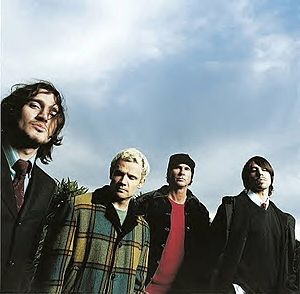
As a result By the Way is an album where the Peppers are reflective of their age and where two of them in particular are catching up to the craziness of their lives. In other words, it’s a mature album - in the genuine sense rather than as a lazy shorthand for the energy dropping down. Even the band photos inside are somber and melancholy, a far cry from the wild and colourful rock & roll craziness of the past. It’s a personal and emotionally open album - not their first of such kind as One Hot Minute made it there first, but where that album was aggressive and confrontational By the Way takes a more toned down and ultimately hopeful tone. It’s not a sad album full of middle-age melancholy despite the photos, but a lush and often quite beautiful one that’s full of world-worn positivity. It’s an album lead by two people who went through hell, survived and now reflect back on it while resting under the sun at last.

None of that means it’s an album full of ballads. Not only do the more melodic pieces vary greatly in tone and tempo, but there’s a decent number of more muscular cuts thrown throughout the tracklist. Some actively remind you of the past works to show they’re still the same band (the sudden funk rock attack “Can’t Stop”, jam-esque “Throw Away Your Television”, the Californication evolution “By the Way”), while others incorporate the new mood into the familiar rock aesthetics (the atmospheric hidden gem “This Is the Place”, the dark and brooding “Don’t Forget Me"). It’s as varied an album as anything the band have ever released, even if the percentage of midtempo cuts is higher this time - but they all sound distinctly different, and in all honesty they set up the standard this band should attempt to match with their other slower cuts. On the flipside, it’s also as overlong as anything the band have released since the 80s and comes with the usual filler caveat. The sixteen-strong tracklist could have been reduced by some for a better album, namely the overrunning novelty country shuffle (!!!) “Cabron” and the happy-go-lucky but somewhat throwaway ska-pop “On Mercury”, both of which seem like they were thrown in to lighten the mood when it wasn’t actually needed at all.

But it’s those mid-tempo tracks and the melodic emphasis where the real grandeur lies. John Frusciante was honestly a genius at this point, riding his imperial phase wave high and mighty as he glimmered with inspiration. By the Way is a genuinely gorgeous and beautiful album, which even now feels odd to say about a Red Hot Chili Peppers album but the evidence is right there. The approximately five million layered guitar melodies frolicing and dancing around in “Dosed”, the ethereal keyboards of “Warm Tape”, the sunset finale of “Minor Thing” or the majestic strings of “Midnight” - they’re all discography highlights when it comes to being honestly straight-up lovely and gorgeous, and just as well as songs in itself. Even the musically slightly weaker cuts like “Tear” or “I Could Die for You” are lifted up to something special as soon as Frusciante decides to step into the spotlight with his guitar, his keyboard arrangements and especially his vocals backing up Kiedis’ surprisingly suave voice. “Tear” even gives Flea his minor special contribution with a charming little trumpet solo that gives it that little something extra. “Venice Queen” at the end is the victory lap: half atmospheric and dreamy, half wild and energetic like a sudden wake-up call, building into a towering anthem of remembrance and celebration as the band and Kiedis in particular, in what is possibly his most invested vocal performance, bids farewell to Kiedis’ close friend who left this earthly realm before the album sessions. It’s easily among the band’s very best songs, and it sounds like it was the most effortlessly composed thing they ever did.

The same applies for most of the album. The band is clearly playing against their presumed type, but they go about it effortlessly and successfully. There is the obvious caveat that if it’s the energetic bouncers and funky basslines that you want and expect from a Peppers album, this isn’t it. By the Way is barely even a rock album and the funky monks are equally elsewhere. When the album was released this caused so much drift among fans, including some incredibly divisive opinion splits between my friends and myself back when we loved everything the Peppers had ever released to that point. But age has done nothing if not improve the album and point out its strengths. Both Kiedis and Frusciante were on the top of their game in both performance and songwriting and while taking such a creative control was ultimately a bad thing for the band - the rifts between Flea and Frusciante healed but never seemed to vanish entirely - it resulted in the most beautiful and sublime album they’ve released. It’s a different side to a band that’s often seemed one-dimensional to non-fans and downright revelatory in some ways. Above all else though, it’s a discography quirk that is in fact one of the best things under their name.

Rating: 9/10